How to tell if your headache is starting in your neck
I remember sitting at my desk, popping ibuprofen like they were Tic Tacs, wondering why the pressure behind my eyes wouldn’t budge. I thought it was stress or maybe I needed new glasses. It wasn’t until I tried to turn my head to check a blind spot while driving—and felt a lightning bolt of pain shoot up my skull—that I realized the problem wasn’t in my head at all. It was three inches lower.
Your Neck is Often the Secret Culprit
For years, I made the mistake of assuming every throb in my temples was just a standard migraine. I’d dim the lights, lie down, and wait for the storm to pass, completely ignoring the fact that my shoulders were hunched up to my ears. This is a classic case of what pros call a cervicogenic headache. It’s a fancy way of saying your neck is screaming for help and using your head as a megaphone. Most people don’t realize that the hidden link between neck pain and spinal health is often the root cause of that debilitating pressure. If you’ve been focused solely on your forehead, you’re looking at the wrong end of the problem.
Can a stiff neck really cause a massive headache?
It sounds a bit far-fetched, doesn’t it? We’re taught to think of headaches as brain-related issues. But here is a surprising fact: According to the American Migraine Foundation, cervicogenic headaches are considered secondary headaches, meaning they are a symptom of an underlying structural issue in the cervical spine. Early in my journey, I wasted months trying to fix my brain with caffeine and dark rooms when I really needed to look at why your screen height is the real cause of your headaches. I was essentially trying to fix a leaky ceiling by mopping the floor.
Spotting the Signs Before the Throb Starts
The first thing you need to do is pay attention to how your head moves. Does the pain flare up when you look down at your phone for too long? If so, you might be dealing with a structural trigger rather than a chemical one. You can actually unlock neck pain relief by simply identifying which movements make the pain worse. I once ignored a dull ache at the base of my skull for a week, only for it to turn into a three-day ordeal that kept me away from work. Don’t be like me. Have you ever noticed that your headaches seem to get worse after a long day of sitting at your computer or hunched over a laptop? If so, we need to talk about your alignment.
Turn Your Workspace into a Recovery Zone
Think of your head like a bowling ball balanced on a broomstick. If that ball tilts forward even a fraction of an inch, the broomstick—your neck—has to work ten times harder to keep everything from toppling over. This constant tension is exactly what triggers that band-like pressure around your temples. The first thing I did to break my headache cycle was raise my monitor. I used to look down at my laptop like I was bowing to a king, which kept my cervical spine in a constant state of distress. By lifting the screen so my eyes hit the top third of the display, I stopped the ‘magnet effect’ that pulls the chin forward. This is a fundamental part of effective neck pain management a step-by-step guide. I actually used a stack of heavy textbooks to get the height right before I finally invested in a real riser. It looked a bit chaotic on my desk, but my neck didn’t care about the aesthetic; it cared that it didn’t have to fight gravity all day. 
Kill the Tech Neck Slump Before it Kills Your Focus
We are all guilty of the ‘tech neck’ slump. Whether we are waiting for a coffee or sitting on the couch, we tend to drop our heads into our chests to scroll through our feeds. I started implementing the phone grip adjustment to prevent tech neck pain, which essentially means bringing the phone up to eye level rather than dropping your face toward your lap. It feels slightly ridiculous at first—like you are trying to take a very high-angle selfie in the middle of a grocery store—but it instantly removes nearly forty pounds of pressure from the delicate vertebrae in your upper spine.
Rebalance the Muscles Holding Up Your Head
Your neck muscles act like guy-wires on a tent. If one wire is pulled too tight, the whole structure starts to lean and eventually collapses. To find balance, I integrated the simple wall drill to reverse forward head posture into my daily routine. I remember a specific afternoon at a public library when the burning sensation between my shoulder blades became unbearable. I slipped into a quiet corner, leaned my back against a bookshelf, and tucked my chin straight back until I felt a deep stretch at the base of my skull. It was a messy moment of desperation, but within two minutes, the ‘lightning bolt’ pain behind my eyes began to fade. It felt like my brain was finally getting the blood flow it had been deprived of for hours.
Fix Your Sleeping Setup to Save Your Mornings
You spend a third of your life in bed, yet most of us treat our pillows like an afterthought. If you are a side sleeper, following the side sleepers guide to pillow placement is a complete game changer for preventing morning stiffness. I only realized why your pillow choice matters more as you age after waking up with a ‘stuck’ neck for three consecutive days. A pillow that is too flat or too soft allows your head to sink toward the mattress, kinking the neck in a side-bend all night. I eventually switched to a firm, contoured support that maintains the natural curve of the neck, and the frequency of my morning tension headaches dropped significantly.
Stop Stretching Your Neck Until You Read This
In my early days of dealing with chronic tension, I spent hours every week pulling my head toward my shoulders, trying to ‘lengthen’ those tight muscles. It felt good for about five minutes, and then the headache would come roaring back even harder. Here is the nuance most people miss: tightness is often a protective mechanism, not a flexibility issue. When your nervous system senses instability in your spine, it commands your muscles to lock down like a parking brake. If you keep trying to pull that brake off without fixing the underlying instability, your body will only tighten further to compensate. I found that why stretching a tight muscle isn’t always the answer is the most important lesson for anyone stuck in a chronic pain loop. You aren’t ‘tight’; you are unprotected.
Does my neck stiffness mean I need more mobility or more strength?
This is the million-dollar question. Most people assume they need to be more ‘bendy,’ but for many of us, the problem is actually a lack of stability in the deep neck flexors. According to research published in the Journal of Orthopaedic & Sports Physical Therapy, individuals with chronic neck pain often demonstrate significantly weaker deep cervical muscles compared to healthy controls. When these deep stabilizers fail, the large, superficial muscles—the ones you can feel—have to work overtime. This is why overcoming chronic neck discomfort insights from top chiropractors often involves strengthening the front of the neck rather than just stretching the back of it. 
The Posture Trap No One Tells You About
We’ve all been told to ‘sit up straight’ since we were kids. However, I’ve seen many people—myself included—take this so literally that they create a military-style rigidity in their spine. This constant ‘on’ state for your postural muscles is just as exhausting as slouching. In fact, why your perfect posture is actually making you stiff is a common pitfall for the health-conscious. If you are forcing a curve or pinning your shoulders back with white-knuckled intensity, you are cutting off the fluid movement your discs need to stay hydrated. Sometimes, why sit up straight is actually bad advice for some becomes clear when you realize that ‘stacking’ your joints is about relaxation, not rigid effort.
Why I Always Check My Feet When My Neck Hurts
It sounds like a reach, but your body is a closed kinetic chain. If your foundation is off, the top of the tower will wobble. I once spent months chasing a ‘pinched nerve’ in my neck only to realize my old, worn-out sneakers were causing my pelvis to tilt, which in turn forced my neck to crane forward to keep my eyes level with the horizon. This is exactly why we look at your feet when your neck hurts in a professional assessment. Everything is connected. Have you ever fallen into this trap of treating the symptom while ignoring the source? Let me know in the comments. If you’re ready to look at the whole picture, you can contact us to start mapping out your actual triggers.I’ve realized that recovering from a chronic flare-up is only half the battle; the real work is in the quiet, boring moments of maintenance. Once I got my headaches under control, my biggest fear was waking up one day and feeling that familiar, sickening pull in my neck again. To prevent that, I stopped looking for ‘big fixes’ and started focusing on the small, daily wins. I committed to the 3-minute morning routine to lubricate your joints, which acts like a daily oil change for my vertebrae. It’s not about intensity; it’s about reminding my nervous system that it’s safe to move in every direction before I sit down for eight hours of focus. When it comes to tools, I’ve tried everything from vibrating massage guns to those weird plastic ‘back crackers’ you see on late-night ads. Most of them are just noise. However, one specific tool I swear by is a high-density lumbar roll. I keep one in my car and one in my office chair because I finally learned the correct way to use a lumbar roll in your office chair. Most people put it too high or too low, but when you wedge it exactly into that small of your back, it creates a ‘forced’ upright posture that doesn’t require any muscular effort. If you’re struggling with gear, you should check out how to set up your home office on a budget to see how I bypassed the high-end ergonomic traps. 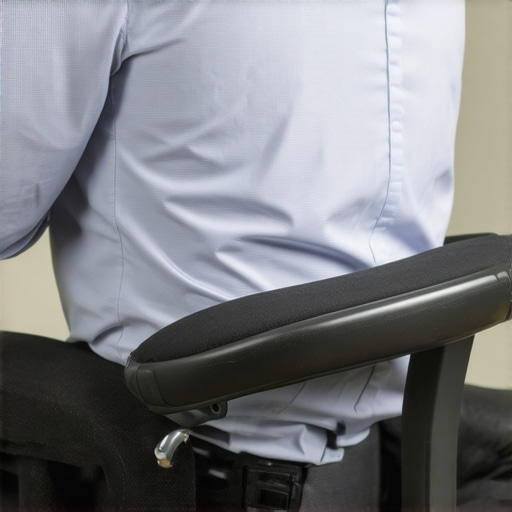
How do I maintain my spinal health long-term?
The secret isn’t more stretching; it’s varied movement. Dr. Stuart McGill, a world-renowned expert in spine mechanics at the University of Waterloo, often discusses the ‘capacity versus demand’ ratio. If your daily demand (sitting at a desk) exceeds your capacity (the strength of your stabilizers), you will always end up in pain. To scale my results, I started using the isometric hold that builds a bulletproof core. It’s a specific, static contraction that teaches the body to stay rigid where it needs to be so the neck can stay loose and fluid. Maintaining your gains means you have to constantly ‘audit’ your environment. I actually set a recurring alarm on my phone every 50 minutes to perform the 5-minute desk reset for busy professionals. I truly believe the future of this field is moving toward real-time biofeedback. We are already seeing wearable sensors that vibrate when your head tilts past a certain degree. In five years, your workstation will likely adjust its height automatically based on your fatigue levels, using cameras to track your eye level. Until that tech becomes mainstream, we have to be our own sensors. I recommend you try this tonight: instead of scrolling on your phone in bed, spend exactly sixty seconds performing the wall stretch that opens up tight chest muscles instantly. It’s the single best way to ‘undo’ the day’s damage before you close your eyes.
The Hard Truths About Recovery That I Finally Had to Accept
For a long time, I thought a quick ‘crack’ of my neck was the solution whenever I felt tight. I learned the hard way that chasing that temporary relief was actually delaying my healing by creating more instability. One major breakthrough was realizing that relieve neck back discomfort using these expert methods requires looking at the whole system, not just the spot that hurts. My ‘lightbulb moment’ happened when I stopped viewing pain as the enemy and started seeing it as a dashboard warning light. My headache wasn’t the problem; it was the signal that my alignment was failing. I also realized that consistency beats intensity every single time. I used to do an hour of stretching once a week and wonder why it didn’t work, but real change only happened when I committed to five minutes of movement every morning. Finally, I learned that neck back pain solutions insights from wellness experts are most effective when you actively audit your environment instead of just waiting for the next flare-up.
The Simple Gear That Actually Made a Difference
#IMAGE_PLACEHOLDER_E#
I’ve spent a lot of money on expensive gadgets, but only a few have earned a permanent spot in my daily routine because they address the root cause of tension. First, I stopped relying on cheap chair cushions and invested in a proper support. Learning how to use a lumbar roll without making your back stiffer was the turning point for my workday comfort, as it naturally stacks the spine. Second, I simplified my exercise routine to focus on true stability rather than just ‘strength.’ Understanding why your core routine is failing your spine helped me realize I was overworking my outer muscles while my stabilizers stayed dormant. Lastly, I keep my screen at eye level at all times—whether I’m at my desk or using a tablet on the couch—which is the cheapest and most effective fix I ever made.
Your Path to a Head-Clear Future Starts Today
Living with chronic neck tension and debilitating headaches can feel like you’re walking through a thick fog every day. But remember, your body is incredibly resilient and capable of change at any age. By implementing neck pain no more expert chiropractic solutions that work and making those small, intentional adjustments to your daily habits, you can break the cycle of pain. You don’t have to live in a dark room waiting for the storm to pass. With the right tools and a little bit of patience, you can get back to focusing on what matters most in your life without the constant throb in your temples holding you back. Which part of your daily routine do you think is hitting your neck the hardest? Let me know in the comments below!