How a simple tennis ball can fix your mid-back knots
I remember the moment vividly—after a long day at my desk, feeling that familiar, stubborn knot in my mid-back tightening like a vice, I thought, there has to be a better way. Despite trying countless stretches and massages, nothing seemed to truly loosen that stubborn tension. Then, one afternoon, in a stroke of curiosity and desperation, I grabbed a tennis ball. That tiny, seemingly insignificant object surprisingly became my game-changer. I didn’t expect much, but within minutes, I felt a difference that made me wonder: could a simple tennis ball really fix those knots?
Unlocking Mid-Back Relief with an Unexpected Tool
The truth is, many of us suffer silently with mid-back knots, often dismissing them as minor discomforts or part of aging. But those knots can significantly impact daily activities, from bending to picking up groceries to simply enjoying a good night’s sleep. The good news? Relief might be closer than you think—literally under your nose—and it’s more accessible than you might imagine. Today, I promise to share how a tennis ball helped me conquer my back tension and how you can do the same.
Is Your Skepticism Holding You Back from Relief?
I’ll admit, I was skeptical at first. It sounds almost too simple—just a tennis ball to fix muscle knots? But early on, I made a mistake many others do: I assumed that professional treatments were the only answer, and I dismissed do-it-yourself methods as ineffective. The breakthrough came when I realized that my initial approach to self-care was all wrong. Instead of pressing too hard or ignoring the pain, I learned to gently target those tight spots and let my body do the healing. If you’ve been neglecting simple solutions because they seem naive, consider this: sometimes, the simplest tools are the most effective.
Research supports this approach too. A study published in the Journal of Bodywork and Movement Therapies indicates that self-myofascial release techniques, like using a tennis ball, can significantly reduce muscle tightness and improve mobility (Brosseau et al., 2012). So, if you’re tired of musculoskeletal discomfort lingering or worsening, maybe it’s time to give this easy, cost-effective method a try. Are you ready to reclaim your movement and say goodbye to those pesky knots? Keep reading, because I’ll guide you through exactly how I used that tennis ball to transform my back health—and how it can work for you too.
Target Your Tension Points Strategically
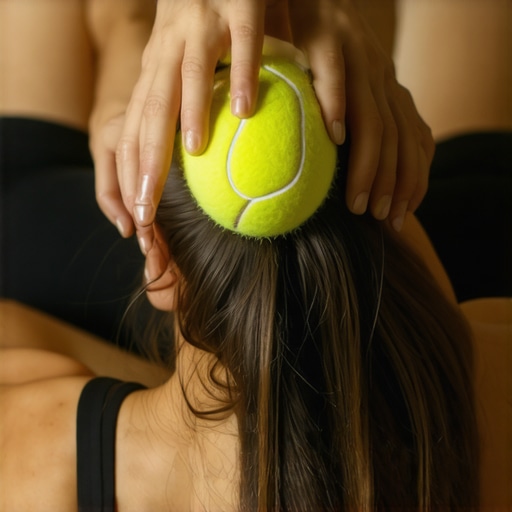
Start by identifying the tight spots in your mid-back. Lie face down on a firm surface like your bed or the floor. Place the tennis ball directly under a knot or area of discomfort. Support your head and neck with your hands, maintaining relaxed shoulders. Gently shift your body weight onto the ball, applying slight pressure—think of it as giving your muscles a soft, focused massage. The key is to be gentle; pressing too hard can cause discomfort or muscle guarding. My first attempt involved a messy, awkward wiggling motion, but I quickly learned to adjust the pressure and position for clarity—this deliberate control amplifies relief.
Use Breathing as a Relaxation Tool
While the tennis ball applies pressure, breathe deeply and steadily. Visualize your breath flowing into the tense muscle, encouraging it to soften. This rhythmic breathing helps reduce tension, making the release more effective. One time, I caught myself holding my breath, leading to increased discomfort. When I remembered to breathe intentionally, the knots softened noticeably. Think of your breathing as a gentle wave—gradually calming the storm in your muscles, enhancing the effect of the pressure. For stubborn knots, adding a 2-minute breathing cycle during pressure application can boost results.
Target Multiple Areas with Sequential Rolling
Don’t fixate on a single point. Move the ball slowly across the problematic region, like a mini conveyor of relief. Use small, circular or linear motions, like tracing the contours of your muscle tissue. This method prevents adaptation—your muscles won’t get used to the pressure—and ensures a broader relief area. I attempted this on a particularly knotted spot and ended up with a faint bruise—an overzealous practice! Lesson? Be mindful of the pressure intensity and duration. A gentle glide, repeated multiple times, unravels the muscle tightness without overdoing it.
Incorporate Dynamic Movements for Lasting Results
Once the pressure is applied, perform gentle limb movements—like arm raises or twists—to mobilize the loosened tissues. Imagine it like unlocking a jammed gear; the combination of pressure and movement restores fluidity. I recall doing a slow shoulder shrug right after pressing out the knot; the subsequent range of motion felt vastly improved. This technique prevents the muscle from stiffening back up and fosters long-term mobility. Integrate these movements into your routine for sustained relief, especially if you spend hours seated or in static postures.
Consistency Reinforces the Benefits
Make this a routine. Short, daily sessions are more effective than occasional, intense efforts. Set a schedule—perhaps after work or before bed—and stick with it. Remember, muscle knots develop gradually; so will their relief. I found that with consistent practice, the knots diminished in size and discomfort, leading to smoother movement. Think of it as brushing your teeth; regularity ensures long-term health. The sooner you start applying these targeted techniques, the quicker you’ll notice less stiffness, better posture, and more ease in your daily activities.
Many believe that back and neck pain are straightforward issues solvable through simple stretches or by visiting a chiropractor; however, the reality is far more nuanced. A common misconception is that pain directly correlates with tissue damage, prompting aggressive treatments that often overlook underlying causes like spinal misalignments or nerve interference. In fact, research suggests that structural abnormalities visible on imaging do not always match symptom severity, leading to unnecessary interventions. For example, some patients with significant MRI findings experience little to no discomfort, while others with minor issues suffer greatly—highlighting the importance of a comprehensive, functional approach, as emphasized in [chiropractic care insights](https://quackersspinal.com/enhance-mobility-naturally-with-chiropractic-care).Maintaining your back and neck health over time demands the right combination of tools, consistent practice, and a strategic approach. Personally, I rely on a set of specialized equipment and techniques to ensure ongoing mobility and pain relief. One essential tool I recommend is the **percussive massage gun**. Devices like the Theragun or Hypervolt allow for targeted muscle relaxation, especially after long days at a desk or intense workout sessions. I use mine almost daily to keep muscles supple and prevent knots from forming, as it effectively enhances blood flow and accelerates recovery.
Another invaluable addition is the **foam roller**, specifically the high-density types with textured surfaces. I prefer the Grid Foam Roller because its firm surface provides deep tissue myofascial release, which complements the self-massage techniques I incorporated after discovering the tennis ball method. Regular rolling on the thoracic region improves overall mobility and decreases stiffness, aligning well with strategies outlined in [Revitalize Your Mobility](https://quackersspinal.com/revitalize-your-mobility-proven-strategies-for-back-pain-relief).
In terms of software or apps, I utilize guided mobility routines from **PhysioWorld** and **MobilityWOD**. These apps offer personalized stretching sequences that focus on spinal health, and I follow their videos to integrate dynamic movements into my daily schedule. These routines are built around evidence-based practices and help maintain alignment and flexibility.
Looking ahead, I predict a trend leaning towards **smart wearable tech**—like biofeedback devices that monitor muscle tension and posture in real-time. As technology evolves, these tools will provide immediate feedback, encouraging consistent self-care habits and preventing issues before they escalate.
**How do I keep my back and neck functioning smoothly over time?** The key is consistency and adopting a multi-layered approach—combining manual tools like massage guns and foam rollers with smart tech and tailored exercises. Remember, just like chiropractic techniques that I’ve explored, the right tools amplify your efforts, ensuring sustainable results. Don’t forget to incorporate movements that focus on core stabilization and spinal alignment, which are critical for long-term health.
One advanced tip you might try today is the **30-second diaphragm release** using a soft ball. This technique helps normalize breathing patterns and relieves tension in the thoracic area, promoting better posture and reducing neck strain. Incorporate this into your routine and notice how your body responds over time. Staying proactive with these tools ensures your mobility remains resilient, and pain stays at bay.
Over the years, I’ve learned that genuine progress in back and neck health often comes from embracing simplicity and listening to your body. One of the most profound insights was realizing that my skepticism about DIY solutions like using a tennis ball was really just fear of not controlling the problem entirely. Once I let go of that hesitation, I discovered that consistent, mindful self-care could be surprisingly effective and empowering. Also, I discovered that understanding my body’s subtle signals—like when a knot starts to form—helped me act proactively rather than reactively, preventing chronic pain from taking hold. Lastly, committing to a routine, however small, builds resilience over time, turning temporary relief into lasting mobility and comfort.