The correct way to use a lumbar roll in your office chair
I’ll never forget the Tuesday my lower back finally gave out after a six-hour marathon of spreadsheets. I was sitting in what I thought was the ‘perfect’ $800 ergonomic chair, but by 3 PM, my spine felt like a rusted hinge. I had this sharp, nagging pinch right at the beltline that made even standing up feel like a chore. For months, I tried every gadget under the sun, only to realize that my fancy chair was actually working against my body’s natural mechanics. I was a victim of the ‘slump,’ and no amount of high-tech mesh was going to save me until I figured out the simple science of lumbar support. Today, I’m going to show you exactly how to transform your existing setup so you can leave work without that crushing sense of physical exhaustion. [image]
Stop Fighting Your Chair and Start Supporting Your Spine
One of the biggest mistakes I made early on was assuming that more padding meant more comfort. I used to wedge a giant, oversized pillow behind me, thinking I was doing my spine a favor. Instead, I was actually pushing my entire torso forward, creating a whole new set of issues for my neck and shoulders. I didn’t realize that the built-in lumbar support in modern chairs often misses the mark entirely because it’s designed for an ‘average’ person who doesn’t exist. According to the Mayo Clinic, the primary goal of any back support is to maintain the natural inward curve of the lumbar spine, which significantly reduces the pressure on your intervertebral discs. When you get this wrong, you’re not just uncomfortable; you’re literally compressing your future mobility. Before you can fix the chair, you have to understand the basic relationship between better posture and mobility. It isn’t just about sitting up straight like a soldier; it’s about giving your muscles a chance to relax by letting the roll do the heavy lifting.
Does a cheap piece of foam really fix years of slouching?
You might be skeptical that a simple cylindrical roll can outperform a high-end designer chair. I get it. I was the person who thought ‘real’ solutions had to be expensive. But the truth is, a lumbar roll is a precise tool, not a generic cushion. If you’ve ever felt like your back is ‘locked’ after a long day, have you considered that your chair might be the culprit rather than your age? Positioning is everything, and if you do it poorly, you’ll just be looking for how to use a lumbar roll without making your back stiffer. We are going to fix that right now by identifying the ‘sweet spot’ for your specific spine.
Find the Small of Your Back Before You Sit
To get this right, you have to stop thinking of your back as a flat board and start seeing it as a suspension bridge. That bridge has a natural arch—the lumbar lordosis—and the moment that arch flattens out, the ‘cables’ (your muscles and ligaments) start to fray. Reach back right now and feel the curve just above your hips. That’s the target. If you just toss a roll into your chair haphazardly, you’re likely hitting your sacrum or your mid-back, which actually makes the problem worse. This is the hidden reason your desk chair feels uncomfortable even if you spent a fortune on it. You need to anchor the roll exactly in that hollow space to effectively revitalize your mobility and keep your discs from bulging under the weight of your own torso. 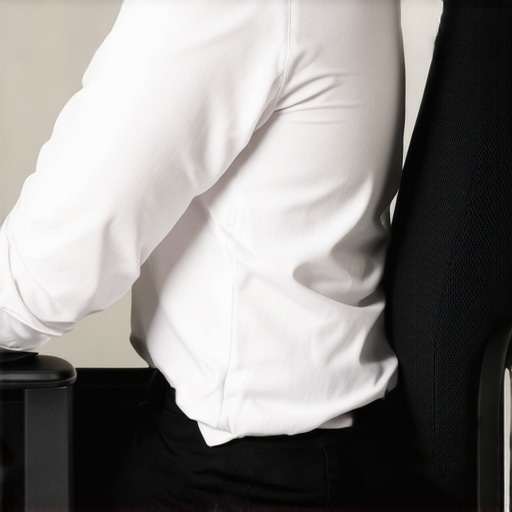
Ditch the Slouch with the Bottom-Back Technique
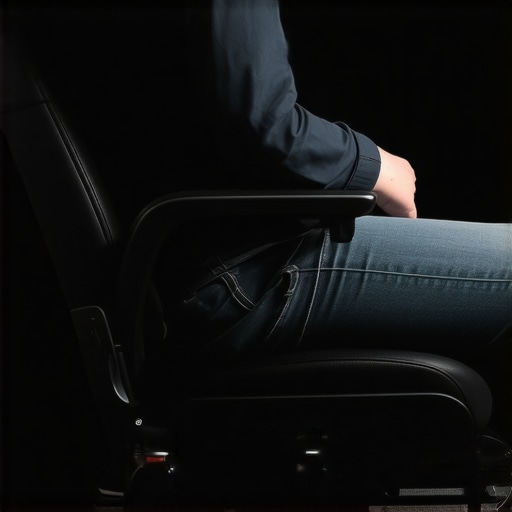
Most people sit down and then try to shove the support behind them. This is a losing battle. Instead, stand up and place the lumbar roll on the chair back at roughly belt level. Now, when you sit, scoot your ‘sit bones’ all the way to the back of the chair first. If there is a gap between your butt and the chair back, the roll will just push your hips forward into a slouch. I learned this the hard way during a cross-country flight where I tried to use a rolled-up sweatshirt as a makeshift support. Because I didn’t scoot back first, the sweatshirt slid down, wedging under my tailbone and tilting my pelvis into a painful ‘posterior tuck.’ By the time I landed, I was walking like a question mark. To avoid this, ensure your hips are firmly against the backrest before you lean back into the roll. This simple adjustment is part of a solid 4-point check for a healthier home office setup.
Adjust the Roll Height Until It Clicks
Once you are seated, lean forward slightly and move the roll up or down until it feels like it’s filling the void of your lower back perfectly. It shouldn’t feel like a hard lump; it should feel like someone is gently holding your spine in place with their hand. If you feel pressure on your ribs, it’s too high. If you feel like your pelvis is being pushed off the seat, it’s too low. Finding this sweet spot is essential to restore your back mobility because it allows your deep core muscles to switch off for a moment.
Why Your Feet Must Stay Flat
You can have the best lumbar support in the world, but if your feet are dangling or tucked under your chair, your pelvis will tilt and ruin the alignment. Your knees should be slightly lower than or level with your hips, with your feet planted firmly on the floor. This creates a stable base that prevents the roll from shifting. There is a direct link between ankle mobility and lower back stability; when your feet are grounded, your lower back doesn’t have to work nearly as hard to keep you upright. If your chair is too high, grab a footrest or even a stack of old textbooks. The goal is a 90-degree angle at the hips and knees to keep that lumbar curve protected all day long.But even with the perfect 90-degree setup, many people still complain about a ‘tight’ sensation in their legs and lower back.
Why Stretching Your Hamstrings Might Be Making Your Back Pain Worse
Most people are told that chronic lower back pain is a result of tight hamstrings. The common advice? ‘Just stretch more.’ But in my experience, and according to recent research published in the British Journal of Sports Medicine, passive stretching can often be counterproductive if the muscle is actually inhibited or neurologically ‘guarded’ rather than physically short. When you aggressively pull on a muscle that is trying to protect an unstable spine, your body reacts by tightening up even further. This is why stretching a tight muscle isn’t always the answer. If your pelvis is tilted forward, your hamstrings are already being pulled taut like a bowstring. Stretching them further just irritates the nerve and weakens your support system.
Why do your hamstrings still feel tight despite stretching every single morning?
The sensation of ‘tightness’ is often a sensory illusion created by the nervous system. It’s a warning signal, not a request for a stretch. If you find yourself constantly reaching for your toes with no lasting relief, you might be trapped in a cycle of neurological tension. This is a common ‘oops’ factor I see with DIY recovery: people mistake a stabilizer muscle’s cry for help as a flexibility issue. Instead of more yoga, you might actually need to master the dead bug exercise to provide the stability your spine is desperately looking for. 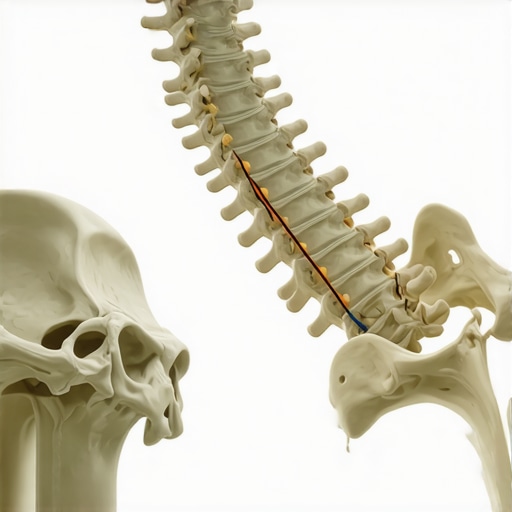
The Ice Trap and Other Common Recovery Blunders
Another major mistake is reaching for the ice pack every time your neck feels ‘stuck.’ While ice is great for a brand-new, swollen injury, it can actually be the enemy of mobility for chronic stiffness. Cold temperatures cause tissues to contract and slow down blood flow, which is the exact opposite of what a restricted joint needs. In fact, why icing a stiff neck might be making it harder to move is because you are essentially ‘freezing’ the very muscles that need to relax and glide. Switching to moist heat or gentle movement is often the key to restoring your range.
Stop Ignoring the Connection Between Your Hips and Your Head
We tend to treat the body like a series of isolated parts, but your spine is a closed kinetic chain. I’ve seen countless patients spend months focusing on effective neck pain management without ever looking at their foundation. If your pelvis is unlevel—perhaps because you’re part of the group that needs to know why you should never sit with a wallet in your back pocket—your neck has to tilt to keep your eyes level with the horizon. This is why we look at your pelvis when your neck hurts. To truly enhance mobility naturally, you have to stop chasing the pain and start looking for the source. Have you ever fallen into this trap of treating the symptom instead of the cause? Let me know in the comments. To get started on a more holistic approach, you can always contact us for a personalized assessment.Once you stop the immediate bleeding of bad posture, the real challenge begins: consistency. I used to think I could just ‘fix’ my back once and be done with it. But spinal hygiene is like brushing your teeth; you do not do it once and expect no cavities forever. This is where back pain recovery how chiropractic care transforms lives—it teaches you the transition into a maintenance phase. Personally, I do not go anywhere without a D-shaped lumbar roll. Unlike the circular ones that roll around like a log, the flat back of the D-roll stays flush against the chair. This stability is crucial when you are trying to regain full mobility after injury and want to ensure your discs are not shifting while you focus on work.
How can I keep my spine feeling this good for the long haul?
The secret is not just buying more gear; it is about establishing a repeatable daily flow. Every morning, I spend exactly three minutes doing a series of controlled articular rotations. I have found that the 3-minute morning routine to lubricate your joints is the literal difference between a productive day and one spent reaching for the ibuprofen bottle. It is about signaling to your nervous system that it is safe to move through your full range. I also keep a lacrosse ball in my desk drawer for what I call ’emergency maintenance.’ When that mid-afternoon shoulder burn starts, I do not ignore it. I use the ball against a wall to pin and stretch the tissue. If you do not have a lacrosse ball, you should learn how to use a tennis ball to release upper back tension; it is a softer entry point but just as effective for resetting the fascia before it hardens into a knot. 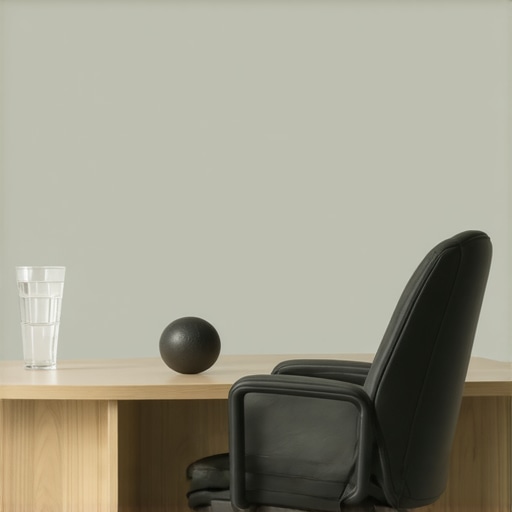 One ‘pro’ tool I have integrated into my daily life is a specific diaphragmatic breathing practice. Biomechanist Kelly Starrett, author of ‘Becoming a Supple Leopard,’ notes that the diaphragm is actually a primary spinal stabilizer. If you are not breathing properly into your belly, your lower back muscles have to pick up the slack, leading to that chronic ‘tight’ feeling. Learning how to breathe through your diaphragm to reduce lower back pressure acts like an internal weight belt. It reinforces the stability you build during the dead bug exercise. Looking ahead, I predict we are going to see a massive shift toward wearable biofeedback sensors. Imagine a small device on your shirt that vibrates gently the moment your lumbar curve flattens. We are moving away from passive furniture and toward active, real-time coaching. Until those tools are standard, my best advice is to pick one specific tip—like the D-roll or the morning lubrication flow—and commit to it for seven days. You will be surprised how quickly your body responds when you stop giving it mixed signals.
The Subtle Cues I Ignored for Too Long
After years of trial and error, I’ve realized that the ‘perfect’ chair is a myth if you don’t have the awareness to use it. Here are the three most important lightbulb moments from my journey: First, pain is almost always a lag indicator. By the time your back hurts, the mechanical failure likely began hours—or even days—earlier. This is why you need to master the 10-second posture check you can do anywhere. Second, stability must come before mobility. You can’t stretch your way out of a spine that lacks core support. Third, your environment is your greatest ally or your worst enemy; if you make it hard to slouch, your body will naturally default to a safer position.
The Daily Arsenal for a Pain-Free Spine
I don’t believe in having a room full of expensive gadgets, but these specific tools have fundamentally changed my daily comfort level. I highly recommend a D-shaped lumbar roll over a traditional circular one because it doesn’t shift when you move against the chair. It is a simple, cost-effective tool to boost your back health. [image] I also suggest keeping a tennis ball in your desk drawer; learning how to use a tennis ball to release upper back tension is the ultimate ‘desk-side’ therapy for mid-afternoon fatigue. Lastly, I frequently refer to the principles of movement mechanics to achieve mobility mastery, which ensures my joints stay lubricated even during heavy work weeks.
Your Future Self Will Thank You for This Choice
The journey to a healthy spine isn’t about one radical change; it’s about a dozen tiny habits that stack up over time. Whether you start by properly adjusting your seat height or committing to a morning joint flow, the most important thing is that you stop accepting daily stiffness as an inevitable part of aging. You have the tools now to revitalize your mobility and reclaim your focus at work. Don’t let your desk dictate your health. Have you found a specific chair adjustment or a simple tool that finally gave you relief from that afternoon ache? Let me know in the comments below!