Why your shoulder pain is actually coming from your neck
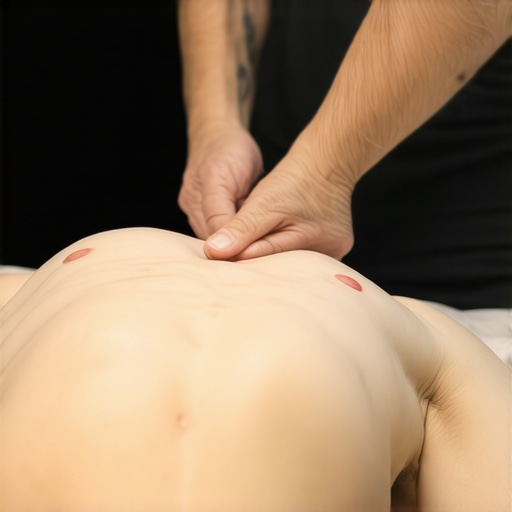
I was hunched over my steering wheel during a three-hour commute when that familiar, searing heat bloomed under my right shoulder blade. I did what I always did: I reached back with my left hand and tried to dig my thumb into the muscle. I even pulled over to do some aggressive arm circles, thinking my rotator cuff was just “tight.” It was a classic mistake. For three months, I treated my shoulder like it was a broken machine, but the pain wouldn’t budge. It wasn’t until I finally sat down with a pro that I realized I was focusing on the victim, not the bully. My shoulder was perfectly fine—it was my neck that was sending out the distress signals. If you have been struggling with why your shoulder blade burns after a long drive, you know exactly how frustrating that phantom pain can be.
Your shoulder is just the messenger for a grumpy neck
The truth is, our bodies are masters of disguise. When a nerve in your lower neck gets compressed or irritated, it does not always scream at the source. Instead, it sends a referred pain signal down into your shoulder blade or the top of your arm. I spent so much time on rehab exercises that never worked because I did not understand the hidden link between neck pain and spinal health. It is a common trap: we assume that where it hurts is where the problem lives. But in the world of spinal health, the bully is often a few inches higher than the victim. A surprising fact from the Journal of Orthopaedic & Sports Physical Therapy notes that cervical radiculopathy—essentially a pinched nerve in the neck—is frequently misdiagnosed as a shoulder strain because the symptoms are almost identical.
Is this all just a gimmick to get me into a clinic?
I get it. You are skeptical. You think, “My shoulder feels stiff, so it must be my shoulder.” I thought the same thing. But think about your house: if a lightbulb in the kitchen is flickering, you do not necessarily replace the bulb first; you check the breaker box. Your neck is the breaker box for your upper body. If things are misaligned up there, the lights in your shoulders and arms are going to flicker. I wasted an entire summer icing the wrong joint because I did not want to admit my posture was the root cause. If you have been doing the 10-second reset for when your shoulder blades start burning and still feel like a knotted mess, it is time to look at the cervical spine. Have you ever spent weeks focusing on one spot only to find the pain has not budged an inch? I would love to hear your story in the comments. Before we dive into the specific movements to fix this, we need to distinguish whether you are dealing with a muscle tear or something originating from your vertebrae. Sometimes, it is even worth checking how to tell if your shoulder blade pain is actually a rib issue, as that can mimic neck-related shoulder pain too. Let us get into the mechanical why behind this connection so you can finally get some real relief.
Stop Pulling on the Nerve and Start Moving the Hinges
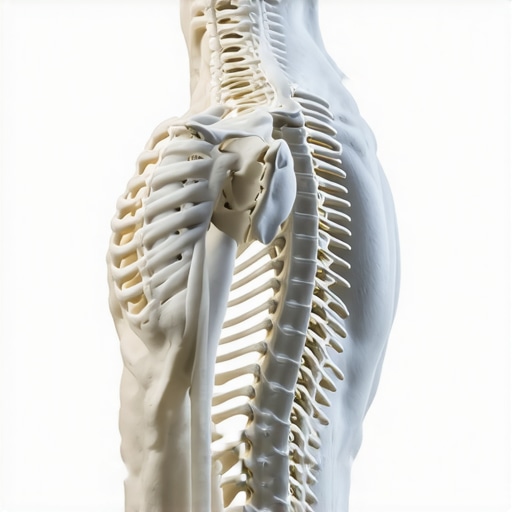
To stop the burning, you have to stop treating your body like a collection of isolated parts. Think of your spine as a high-tension power line. If the pole at the top (your neck) is leaning, the wires lower down (your shoulder blades) are going to be under way too much stress. I remember trying to ‘strengthen’ my way out of the burn by doing heavy cable rows every single morning. I thought if my back was stronger, the pain would vanish. Instead, every rep felt like someone was poking a hot needle into my ribs. My chiropractor finally explained that my forward-leaning posture was keeping the nerve on a tightrope; every row was just strumming that nerve like a guitar string. This is why the real reason your head feels heavy by the afternoon is often the mechanical key to your shoulder relief. If you don’t reset the hinge, the muscle will never relax.
Fix the Shelf Where Your Head Sits
The most immediate way to take the ‘tug-of-war’ off your shoulder blade is to address the cervical curve. When your head drifts forward even an inch, it doubles the weight your upper back muscles have to support. You need to create a stable shelf for your skull. This starts with mastering the simple wall drill to reverse forward head posture. By tucking your chin and lengthening the back of your neck, you open up the small windows in your vertebrae where the nerves exit. If those windows are clamped shut, no amount of massage is going to stop the burning. 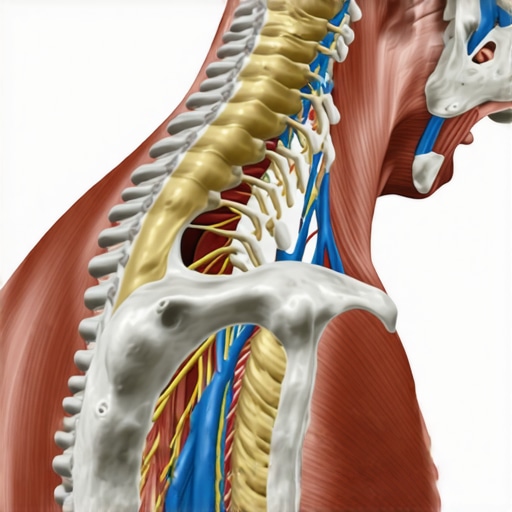
Why Side Stretching Often Backfires
When the side of your neck feels tight, your instinct is to grab your head and pull it to the opposite side. Don’t do it. If your shoulder blade is burning because of a pinched nerve, that aggressive stretching just puts more tension on an already irritated nerve root. It is essential to understand why stretching your neck to the side might be causing more spasms rather than relieving them. You aren’t ‘loosening’ anything; you are aggravating a protective mechanism. Instead of pulling, focus on opening the front of the body. Most of us are stuck in a ‘closed’ position from phone use. Using the 60-second move to open up your chest after a day at the desk allows the shoulder blade to slide back into its natural pocket, which takes the physical stretch off the nerve.
The Maintenance Check You Can Do Anywhere
Consistency is the only thing that beats chronic nerve irritation. You can’t fix ten hours of slouching with five minutes of stretching. You need a frequent ‘reset’ button. I use the 10-second posture check you can do anywhere every time I’m at a red light or waiting for the microwave. It’s about retraining your brain to recognize where ‘neutral’ actually is. Often, we think we are standing straight, but our pelvis is tilted and our neck is craned. When you implement chiropractic secrets to boost neck comfort and function, you’re not just looking for a quick fix; you’re rebuilding the structural integrity of the entire upper chain.
The Tightness Trap Most People Fall Into
Let us dig deeper into why your recovery might be stalling despite your best efforts. The biggest mistake I see—and one I lived through for years—is the obsession with ‘tightness.’ When your neck or shoulder feels stiff, your immediate reaction is to stretch it until it gives way. But here is the contrarian truth: that tightness is often a protective ‘brake’ your brain is pulling to prevent you from injuring your spine further. If you force a stretch on a muscle that is actively guarding an unstable joint, you are effectively cutting the brake lines on a car parked on a hill. This is precisely why stretching a tight muscle isn’t always the answer. Research published in the Journal of Bodywork and Movement Therapies highlights that ‘perceived tightness’ is frequently a protective neuromuscular response rather than a physical shortening of the muscle fibers. By relentlessly pulling on those fibers, you might actually be increasing the inflammation around the nerve roots in your cervical spine. 
Why Does My Flexibility Increase While My Pain Stays the Same?
This is the advanced nuance that separates a temporary fix from long-term relief. You might find that you can turn your head further after a yoga session, yet that burning sensation under your shoulder blade remains as sharp as ever. This happens because you are gaining ‘passive’ range of motion without the ‘active’ stability to support it. If your vertebrae are misaligned, your body uses muscle tension as a secondary support system. When you strip that tension away through aggressive stretching without addressing the structural alignment, your nervous system panics and creates even more spasming the next day. This is a core pillar of mobility mastery and expert tips for back pain prevention and recovery. You cannot have healthy movement without a stable foundation. Have you ever fallen into this trap of stretching your way into more pain? Let me know in the comments.
Stop Chasing Range and Start Finding Stability
Another ‘oops’ factor is focusing solely on the area that hurts. Most people treat their neck like an island, but the spine is an integrated chain. I’ve seen cases where chronic neck tension was actually driven by a pelvic tilt that the patient didn’t even know they had. That is why we look at your pelvis when your neck hurts. If your base is crooked, your neck has to work ten times harder to keep your eyes level with the horizon. Beyond the pelvis, we often find that the link between ankle mobility and lower back stability plays a massive role in how you carry your upper body. When you work with a professional to restore your range through chiropractic care, the goal isn’t just to make you ‘bendy’; it is to ensure every link in the chain is sharing the load correctly. Real relief comes when you stop fighting your body’s protective mechanisms and start addressing the structural reasons why those mechanisms were triggered in the first place.
Ditch the Fancy Gadgets and Grab a Tennis Ball
I used to think I needed a thousand-dollar ergonomic chair to survive a workday. I was wrong. I have found that the most effective tools for maintaining a healthy neck are often the cheapest. For example, knowing how to use a tennis ball to release upper back tension has saved me more money in massage therapy than I would like to admit. You do not need high-tech rollers; you need a tool that can pinpoint the exact spot where your levator scapulae meets your rib cage. It is about precision, not pressure. Beyond the tennis ball, the biggest game-changer for me was a simple stack of books. If your eye line is not hitting the top third of your monitor, you are doomed. This is why your screen height is the real cause of your headaches, as it forces your suboccipital muscles into a permanent state of contraction. 
How do I keep my spine in check long-term?
The secret is not one big adjustment; it is a thousand tiny ones. I swear by the 4-point check for a healthier home office setup every single morning. If I skip it, my shoulder blade starts that familiar whisper by 2 PM. I also integrate the 5-minute desk reset for busy professionals during my lunch break. It is not about being perfect; it is about being consistent. According to a study published in the journal Applied Ergonomics, taking micro-breaks as short as 30 seconds every 20 minutes can significantly reduce the risk of cumulative trauma disorders. This is the cornerstone of unlocking neck pain relief and expert tips for lasting comfort.
The Future of Posture is Invisible
I believe we are moving toward a future where posture wearables—small sensors that vibrate when you slouch—will be seamlessly integrated into our clothing. We are already seeing early versions of this, and honestly, the real-time biofeedback is the missing link for most people who cannot yet ‘feel’ their spine. But until your shirt can talk to you, you have to be your own sensor. Take five seconds right now: is your chin tucked, or is it reaching for the screen? I challenge you to go adjust your monitor height by at least two inches today and see if that burning sensation under your shoulder blade doesn’t settle down by the end of the week.
Three Vital Lessons My Grumpy Neck Taught Me
After years of chasing phantom pains, a few lightbulb moments changed everything for my recovery. First, I realized that my shoulder was merely the victim and my neck was the true bully; focusing only on where it hurts is a recipe for chronic frustration. Second, I learned that ‘passive’ flexibility can actually be a trap if you don’t have the structural stability to back it up. Finally, I understood that my body’s ‘tightness’ was actually a protective response, which is why stretching a tight muscle isn’t always the answer. By shifting my focus to alignment rather than just pulling on sore fibers, I finally started seeing real progress in unlocking neck pain relief that actually lasts.
The Simple Tools I Trust for Daily Maintenance
You don’t need a specialized clinic in your living room to keep your spine happy. I rely on three basic things:
- A Tennis Ball: Knowing how to use a tennis ball to release upper back tension is my secret weapon for those high-stress afternoons.
- A Monitor Stand: Keeping my eyes level with the top third of my screen stopped the forward-head drift that was crushing my cervical discs.
- The Dead Bug: I regularly perform the dead bug exercise because it trains the core to stabilize the spine, preventing the pelvic tilt that often radiates tension up to the neck.
Move Toward a Life Without That Persistent Burn
Pain is often a signal that your structural ‘breaker box’ is overwhelmed. By addressing the way your head sits on your shoulders and how you support your spine during the day, you can reclaim your comfort. You don’t have to accept that searing heat as a permanent part of your commute. Once you address the root causes of why your shoulder blade burns after a long drive, you can get back to enjoying the road instead of dreading the arrival. Have you ever found that a simple ergonomic tweak fixed a months-old pain? Let me know in the comments below!