The 30-Second Pec Stretch to Fix Slumping Shoulders
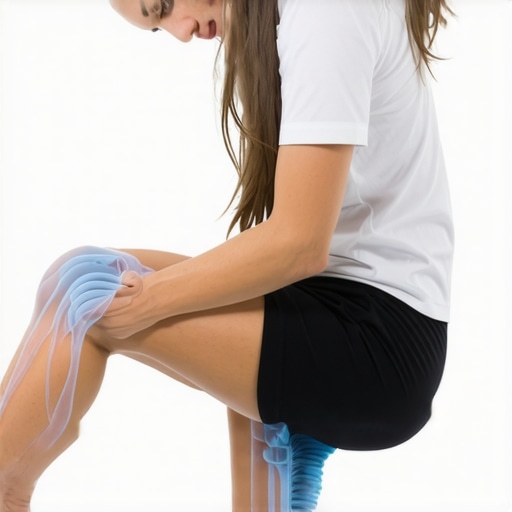
I was looking at a photo of myself from last Thanksgiving, and honestly, I didn’t recognize the guy in the frame. I looked like a human question mark. My head was jutting forward, and my shoulders were so rolled inward that it looked like I was trying to protect my ribcage from an invisible attacker. It wasn’t just about looking tired, though; I felt it. My upper back was constantly noisy, full of pops and dull aches that made me feel twenty years older than I actually am. I spent a long time understanding back pain as a consequence of getting older, but the truth was much simpler and, frankly, a bit embarrassing. I was tight—really tight—in all the wrong places. [image placeholder]
Stop Fighting Your Back and Start Freeing Your Chest
For the longest time, I thought the answer was just sitting up straighter. I’d force my shoulder blades together until my muscles burned, only to find myself slumped over again three minutes later. I even bought one of those posture corrector harnesses off an Instagram ad. Big mistake. It just did the work for me, leaving my actual muscles even weaker and more confused. The real lightbulb moment came when a buddy pointed out that my chest was the culprit. Because I spend so much time on my laptop, my pectoral muscles had physically shortened, pulling my shoulders into that permanent cave-in. If you’ve ever felt that burning sensation between your blades, you might be surprised to learn it’s often a tug-of-war your back is losing against your tight chest. According to research cited by the Journal of Physical Therapy Science, forward head posture and rounded shoulders can significantly reduce your lung capacity because your ribcage literally cannot expand fully. This isn’t just about looking alpha or confident; it’s about being able to breathe and move without a constant low-grade hum of pain.
Is a 30-second move really enough to fix years of slouching?
I get the skepticism. I’m the king of if it sounds too easy, it’s probably a scam. But here’s the thing: we aren’t talking about a permanent cure-all that allows you to hunch over a phone for 12 hours a day. We’re talking about a reset button. Much like the Brueggers relief move, this pec stretch targets the root of the tension. When I first tried it, I felt this intense, almost sweet release through the front of my shoulders that immediately made my back feel less pulled. It was the first time in years I felt like I wasn’t fighting my own anatomy just to stand up straight. Before we dive into the how-to, I want to know: have you ever caught your reflection in a store window and been shocked by how much you were slouching? It’s a wake-up call, isn’t it? If you’re tired of feeling like your backpack is pulling you down even when you aren’t wearing one, it’s time to stop overcomplicating things. We’re going to pair this with some simple habits, like the scapular squeeze that relieves mid-back tension, to finally get those shoulders back where they belong.
The 30-Second Doorway Reset You Can Do Anywhere
The most effective way to peel your shoulders back isn’t through sheer willpower; it’s through a simple doorway. Think of your tight chest muscles like a set of over-tightened guitar strings. If you just pull on them without slackening the tension, you risk strain or just end up creating knots elsewhere. To perform the reset, find a sturdy door frame and place your forearms against the sides, with your elbows at roughly shoulder height. Step through the door slowly until you feel that ‘sweet’ pull across the front of your chest. This isn’t a contest to see how far you can lunge; it’s about signaling to your nervous system that it’s okay to let go. When you relieve neck back discomfort using these expert methods, you’ll notice that the front of the body dictates what happens in the back. I remember trying this at a crowded rest stop during a six-hour drive to visit family. I was so stiff I tried to use the bathroom door frame. Someone walked in while I was mid-stretch, looking like I was trying to hug the building. I felt ridiculous, but for the next hour, that heavy, dragging sensation in my shoulders was gone. 
Breathe Your Way Into Better Alignment
Most of us are chest breathers, especially when we’re stressed or staring at a screen. This shallow breathing keeps our ribcage locked in a downward position, which effectively anchors our shoulders in that slumped-forward look. To break this cycle, you need to treat your breath like an internal jack that lifts your entire torso. As you hold the doorway stretch, focus on inhaling deeply into your belly and then expanding your ribs outward. You should feel your sternum rise toward the ceiling. Learning how to breathe properly to reduce tension in your shoulders turns a simple stretch into a structural overhaul. It’s the difference between temporary relief and actually teaching your body a new way to hold itself. If you skip the breath, you’re just tugging on a rusted hinge; with the breath, you’re actually cleaning out the grit.
Why Your Brain Keeps Forgetting to Stand Straight
You might wonder why you have to keep doing this. The reason is that your brain has a ‘map’ of where it thinks your body should be. If you’ve spent years hunched over, your brain thinks that’s home. This is where professional intervention becomes a game-changer. When you restore your range how chiropractic care enhances movement, you are essentially updating the software in your nervous system. An adjustment clears the interference, making it easier for your brain to recognize that ‘shoulders back’ is the new default. Without addressing the underlying joint restrictions, you’ll constantly feel why your shoulder blades feel like theyre burning after typing because the muscles are working overtime to compensate for a stuck spine. You have to revitalize your mobility proven strategies for back pain relief by combining these manual resets with consistent daily movement to make the changes permanent.
Here is the hard truth that most fitness gurus won’t tell you: you cannot simply stretch your way out of a decade of desk work. While that doorway move I mentioned earlier is a fantastic reset, relying on it as your only solution is like trying to fix a crumbling foundation with a fresh coat of paint. Everyone says you just need to be more flexible, but in my experience, chasing flexibility without addressing stability is how you end up in a cycle of chronic soreness. When you boost mobility ease pain chiropractic techniques unveiled, you start to realize that a ‘tight’ muscle is often a weak muscle trying desperately to hold your skeleton together. If you keep stretching a muscle that is already overextended—like those burning ones between your shoulder blades—you’re actually making the problem worse by weakening your body’s natural bracing system.
The dangerous myth that more stretching equals more relief
The biggest ‘oops’ factor I see is people treating their bodies like a piece of cold taffy. They feel a pinch and immediately try to pull it apart. However, pushing into a stretch until you feel sharp pain or numbness is a major trap. This can lead to ‘protective tension,’ where your nervous system actually tightens the muscle even further to prevent you from injuring the joint. This is especially true after an accident; you need chiropractic secrets to regain full mobility after injury to ensure you aren’t just tugging on a localized trauma site. I’ve seen people spend months aggressively stretching their hamstrings only to find out the tightness was actually a nerve being pinched in their lower back. Have you ever fallen into this trap of stretching a spot that just keeps getting tighter? Let me know in the comments.
Why does that ‘loose’ feeling disappear just ten minutes after you stretch?
If you find yourself constantly needing to ‘crack’ your neck or redo a stretch every hour, you aren’t actually changing your physiology; you’re just providing a temporary hit of dopamine to your brain. This happens because your joints might be ‘stuck’ or subluxated, preventing the muscles from ever reaching a resting state. To truly restore your back mobility proven chiropractic strategies are necessary because they address the structural alignment that allows muscles to relax in the first place. A study in the British Journal of Sports Medicine highlights that static stretching alone does very little to improve long-term functional movement if the underlying joint mechanics are faulty. You’re essentially trying to open a door with a rusted hinge; no matter how hard you pull on the handle, the hinge is the part that needs the oil.
Stop ignoring the joints and focus on the architecture
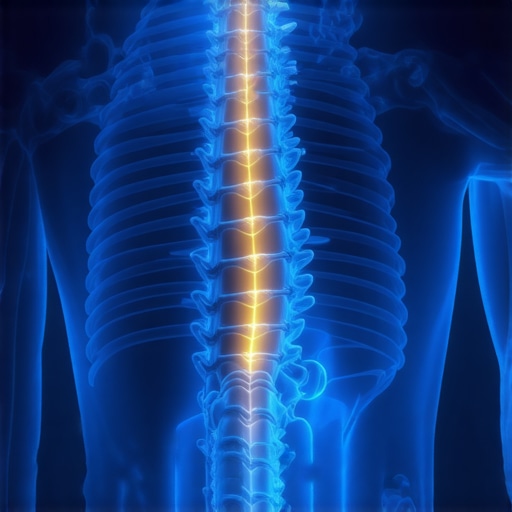
We need to move away from the idea that our bodies are just collections of independent parts. Your neck, shoulders, and mid-back are part of a single architectural unit. When you use the single best exercise for thoracic mobility, you aren’t just moving your ribs; you’re changing the way your entire spine distributes weight. This is the nuance that separates beginners from experts. If your mid-back is a frozen block of ice, your neck will always be the victim that has to overwork. This is why neck back pain solutions insights from wellness experts always emphasize a global approach rather than just rubbing the spot that hurts. Professional care ensures that the ‘stuck’ segments of your spine are moving again, so your daily stretches actually have a chance to work. Without that foundational shift, you’re just spinning your wheels and wondering why the ‘burning’ sensation won’t go away.
Stop treating your laptop like a workstation
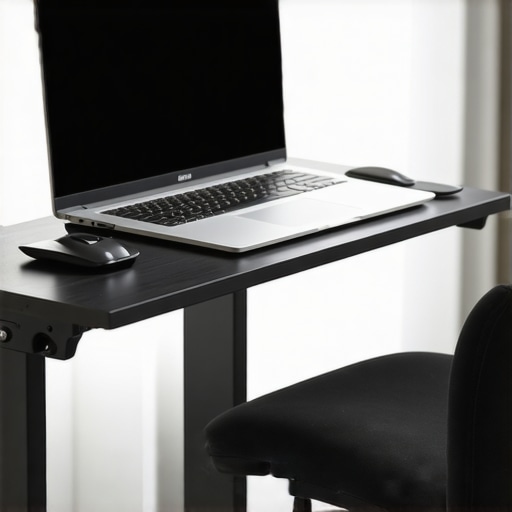
For years, I made the mistake of thinking my ultra-slim laptop was a tool for productivity. In reality, it was a tool for neck destruction. The keyboard and the screen are physically too close together, which forces you to choose between hunching your shoulders or straining your eyes. I finally broke the cycle by investing in a high-quality vertical riser and a separate mechanical keyboard. This setup allows me to keep my eyeline level with the top third of the screen, which is essential because why your laptop stand is still causing neck strain is often down to the height being just an inch or two off. If you are still typing on your laptop keys while the screen sits on your desk, you are essentially asking your cervical spine to hold a 12-pound bowling ball at a 45-degree angle all day. I highly recommend performing the 5-second check to see if your monitor is too low right now; it was the single biggest change I made to my home office.
How do I keep my spine feeling this good for the long haul?
Maintenance isn’t about doing a two-hour gym session every Sunday; it’s about the micro-habits you sprinkle throughout the day. Dr. Stuart McGill, a world-renowned expert in spine biomechanics from the University of Waterloo, often talks about ‘spinal hygiene.’ This means avoiding unnecessary spinal flexion—like bending over at the waist to pick up a sock—immediately after waking up when your discs are most hydrated and vulnerable. I’ve started using how to use a tennis ball to fix that spot under your shoulder blade every evening while I watch TV. It’s a low-effort way to break up the myofascial adhesions that build up from stress. Combining these small self-care moments with mobility mastery expert tips for back pain prevention and recovery ensures that I’m not just waiting for the next ‘flare-up’ to happen before I pay attention to my body.
The day your shirt tells you to stand up straight is coming
I’m fascinated by where the world of spinal health is headed. We are already seeing the rise of wearable biofeedback—think of it like a Fitbit for your posture. In the next few years, I predict we will have ‘smart’ clothing with haptic sensors that gently vibrate when your shoulders begin to roll forward. This real-time feedback loop will be a game-changer for those of us who lose track of time during deep work sessions. However, technology is only half the battle. You still need to chiropractic secrets to boost neck comfort and function to ensure your joints are even capable of sitting in that ideal position. Without the proper structural alignment, even the smartest shirt in the world can’t fix a joint that is physically locked in place. I’ve personally found that regular adjustments are the ‘software update’ my body needs to make sense of all the data my brain is receiving. Seeing how back pain recovery how chiropractic care transforms lives firsthand has made me a believer in the hybrid approach: high-tech monitoring paired with high-touch manual care. Don’t wait for a wearable to tell you you’re in trouble—take the first step today by checking your monitor height and seeing how much of a difference two inches can make.
The Subtle Shifts I Wish I’d Made Sooner
Reflecting on my journey, the biggest takeaway was realizing that consistency beats intensity every single time. I used to think I needed a grueling hour-long routine to see results, but the real progress happened in the thirty-second intervals between emails. I also learned that you can’t just bully your body into submission; you have to listen to the signals it sends. If something feels like a ‘bad’ pain, it probably is. Seeking neck pain no more expert chiropractic solutions that work isn’t an admission of defeat—it’s actually the fastest way to get back to the activities you love without the constant worry of a flare-up. Finally, I discovered that unlocking neck pain relief is as much about mental awareness as it is about physical stretches. When you stop bracing against the world, your muscles finally have permission to let go.
Tools That Actually Earned a Spot in My Daily Routine
I’ve tried every gadget under the sun, but only a few have stood the test of time. A simple lacrosse ball for trigger point therapy is indispensable for those stubborn knots under the shoulder blade. I also swear by a high-quality lumbar roll for my office chair to maintain that natural curve. For those looking for a structured path forward, I highly recommend mastering back neck pain relief tips from the pros to build a foundation that lasts. If you’re ever unsure of where to start or feel like you’ve hit a plateau, don’t hesitate to reach out and contact us for personalized guidance. Having a roadmap makes the journey to effective neck pain management feel much less overwhelming.
Your Spine Deserves a Fresh Start
You don’t have to live with the ‘human question mark’ reflection forever. By addressing the architecture of your body, focusing on your breath, and utilizing professional support when needed, you can reclaim your height and your comfort. Your journey toward better mobility and back pain relief starts with that very first intentional breath in a doorway. It’s time to stop surviving and start thriving in your own body. Which of these ergonomic changes or stretches are you most excited to try this week? Let me know in the comments below!