Why Your High Heels Are the Real Cause of Your Neck Tension
I remember standing in the middle of a wedding reception, three hours into wearing my favorite four-inch stilettos, feeling like a million bucks—until the next morning. I woke up completely unable to turn my head to the left, convinced I’d just slept on a bad pillow. It took me years of trial and error to realize that the burning tension in my neck wasn’t about where I rested my head, but what I put on my feet. Today, I want to share exactly how your footwear choices ripple through your body and why your neck is often the first place to complain when your feet are suffering.
Your neck pays a heavy price for that extra height
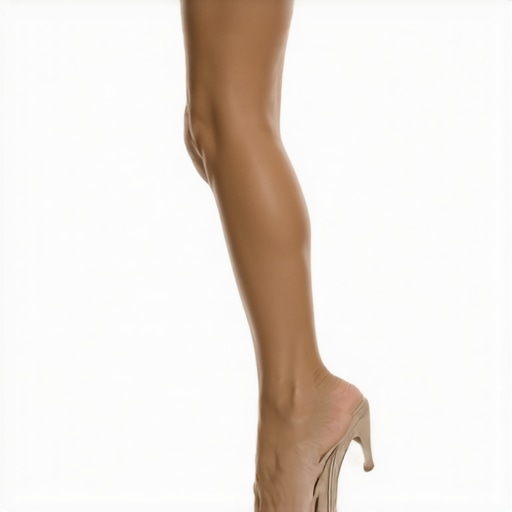
When you slide into a pair of heels, you aren’t just getting taller; you’re shifting your entire center of gravity forward. To keep from falling on your face, your body compensates by tilting the pelvis and arching the lower back. This kinetic chain reaction travels all the way up your spine. I used to make the mistake of focusing only on neck stretches or buying expensive creams, never once considering that how your foot arch affects your lower back pain was actually the blueprint for my neck discomfort. According to research published in the Journal of Chiropractic Medicine, high-heeled shoes significantly alter the lumbar and cervical curves, forcing the neck muscles to work double-time to keep your vision stabilized. It’s a mechanical nightmare that we often ignore for the sake of fashion.
Is it actually worth giving up my favorite shoes?
You don’t necessarily have to burn your shoe collection, but you do need to understand the trade-offs. The skepticism is real—I used to think my shoes only affected my calves. But once you see the hidden link between neck pain and spinal health, you can’t unsee it. If your foundation is tilted, everything built on top of it will eventually lean or collapse. Have you ever noticed that heavy, localized burning in your shoulder blades after a long night out? That’s your body struggling to maintain its spinal alignment. I want to know—have you ever woken up with a mysterious crick in your neck after a fancy event? Let’s talk about it in the comments.
Build a better foundation from the ground up
Think of your body like a skyscraper. If the foundation—your feet—is tilted even by a few millimeters, the penthouse at the top—your head—is going to sway and experience structural stress. When your shoes don’t provide the right support, your body doesn’t just let you fall over; it recruits every muscle from your ankles to your jaw to keep you upright. This is why you feel that familiar, nagging tightness at the base of your skull after a long day on your feet. You aren’t just tired; your neck muscles are exhausted from acting like guy-wires on a leaning tower.
Audit your shoe rack for hidden spinal stressors
I once spent three months trying every ergonomic pillow on the market, only to find out the real culprit was a pair of ‘comfort’ flats I wore to the office. They were so worn down on the outer edges that they forced my ankles to roll outward, which sent a ripple of tension straight to my mid-back. You need to look at your shoes from the back. If the heel is shaved down more on one side, you are essentially walking on a slant every single day. Learning how to tell if your sneakers are ruining your spinal alignment is the first step in stopping the cycle of morning neck stiffness. 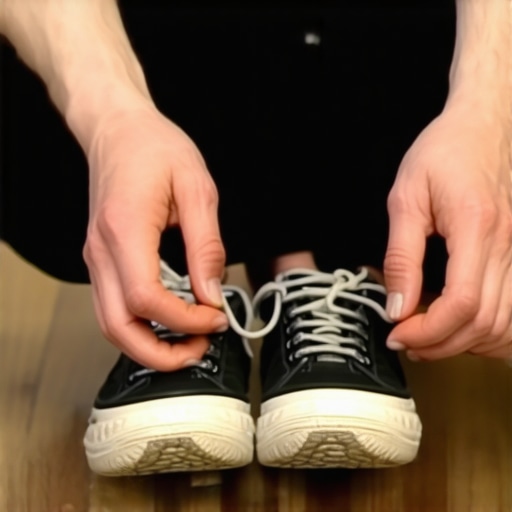
Release the tension climbing up your legs
Most people treat neck pain by rubbing their neck, but that’s like trying to fix a leaky ceiling by mopping the floor. The tension often starts in your calves. When your shoes lack proper arch support, your calf muscles tighten to compensate. Because the human body is connected via a continuous line of connective tissue called fascia, that tightness pulls on your hamstrings, tilts your pelvis, and eventually forces your neck to jut forward to maintain balance. This is a primary reason why tight calves cause lower back tension and eventually migrate into cervical discomfort. Try stretching your calves against a wall for sixty seconds and notice if your neck feels slightly ‘lighter’ afterward.
Fast neck relief while you fix your foundation
While you work on upgrading your footwear, you need immediate ways to shut down the pain signals. If your shoes have already forced your head into a ‘forward’ position, your suboccipital muscles are likely in a state of constant spasm. You can reset this using the chin tuck drill to combat tech neck instantly, which helps realign the vertebrae. If the pain feels sharper or travels down your arm, you might be dealing with more than just muscle fatigue. In those cases, the 30-second fix for a pinched nerve in the neck can provide the temporary decompression needed to get through the day.
Check your balance to find the root cause
A quick way to see if your feet and spine are communicating properly is to test your stability. Stand on one leg with your eyes open, then try it with your eyes closed. If you find yourself wobbling immediately, your brain isn’t getting the right feedback from your feet, likely due to poor shoe choice or a misaligned pelvic floor. You can how to balance on one leg to check your spine to see where the disconnect is happening. This isn’t just a balance trick; it’s a direct window into how hard your neck is working to keep you centered.It’s easy to think that if your neck hurts, you just need a stronger core to ‘hold yourself up.’ But here is the nuance most people miss: core strength without foundation stability is like putting a high-performance engine in a car with no wheels. I’ve seen athletes with shredded midsections who still suffer from debilitating cervical tension. This happens because why your core strength isn’t stopping your back from hurting is often tied to the fact that your brain is prioritizing balance over posture. If your feet aren’t sending the right signals, your core over-clenches, creating a rigid trunk that forces your neck to take the brunt of every movement.
Can a six-pack actually hide a failing spine?
In many cases, yes. Excessive ‘bracing’ of the abdominal wall can actually lock your pelvis in a position that flattens the natural curve of your lower back. This lack of shock absorption means every step you take in those unsupportive shoes sends a literal jolt up to your skull. This is where overcoming chronic neck discomfort requires looking past the muscles and at the neurological feedback loop. Research in the Journal of Manipulative and Physiological Therapeutics highlights that distal joint dysfunction, particularly in the ankles and arches, forces the cervical spine to over-compensate for even minor balance shifts. 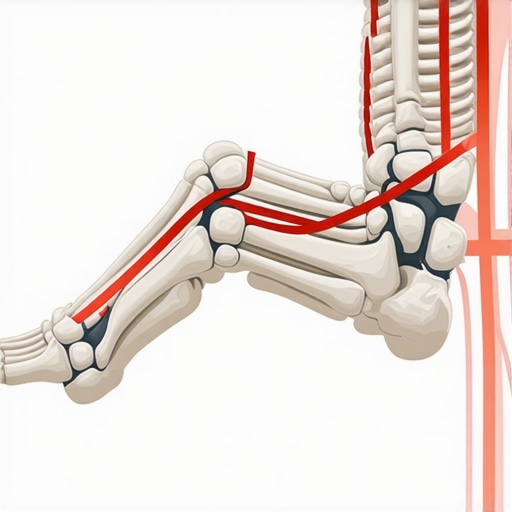
Stop stretching your way into more pain
Another common mistake is the ‘more is better’ approach to mobility. I used to spend twenty minutes every morning pulling on my hamstrings, thinking I was helping my back. The truth is, why stretching your hamstrings won’t fix your lower back pain is because that ‘tightness’ is often a protective tension. Your brain is keeping those muscles tight because it doesn’t trust your foundation. If you force them to relax without fixing your footwear or your foot-to-brain connection, your body will simply tighten your neck muscles even further to maintain stability. It’s a vicious cycle of ‘protective guarding.’ Also, please, why you should never crack your own neck in the morning—it creates hypermobility in the wrong places, making you even more reliant on those already exhausted muscles. Instead, consider how why your pelvic floor might be the secret to solving back pain and neck tension, as it acts as the true ‘internal’ support system that bridges the gap between your feet and your head. Have you ever fallen into the trap of thinking a more intense workout would fix a ‘mechanical’ shoe problem? Let me know in the comments.
The three tools I never travel without
I’ve spent thousands of dollars on specialized gadgets over the years, but I’ve found that the most effective tools in my kit are often the simplest. For example, a $5 lacrosse ball is my secret weapon for travel. This isn’t just about rolling out tired feet; I use it specifically to target the ‘sticky’ spots in my hips that are forced into flexion during long flights. Learning how to use a massage ball to release hip flexor tension can stop a chain reaction of tightness before it ever reaches your neck. Another non-negotiable is a portable laptop stand that fits in my bag. I used to think I could just ‘be careful’ while working from coffee shops, but your spine is lazier than your intentions. You need physical barriers that prevent you from slouching, and understanding how to adjust your monitor to avoid eye and neck strain is the difference between a productive afternoon and a week of headaches. 
How do I maintain these results for the long term?
Maintenance isn’t about a grueling two-hour gym session once a week; it’s about what I call ‘spine hygiene.’ Dr. Stuart McGill, the world-renowned expert and author of Back Mechanic, argues that we often injure our spines through the cumulative effect of small, poor movements rather than one single event. This is why mobility mastery expert tips for back pain prevention and recovery focus so heavily on the transition movements, like how you get out of bed or how you pick up your keys. I personally set a silent vibrating timer on my watch every hour. When it goes off, I perform a quick postural reset to ensure I haven’t drifted into a ‘forward-head’ position. It’s about building a subconscious awareness that protects you when you aren’t thinking about it.
Wearable tech is about to change everything
Looking toward the next five years, I predict we will see a massive shift away from ‘ergonomic’ chairs and toward wearable haptic sensors. We are already seeing early versions of this—tiny devices that clip to your shirt and buzz when you slouch. In the future, this tech will likely be integrated directly into our clothing, providing real-time data on our spinal loads. This will make it much easier to implement the 20-20-20 rule for desk workers and neck health because your clothes will literally remind you to look away and reset. Even the simple change to your desk chair for better focus will become data-driven, with sensors telling you exactly when your glutes have ‘turned off’ from too much sitting. I want you to try one specific thing tomorrow: commit to the 20-20-20 rule for just three hours of your workday and see if that 4:00 PM neck burn starts to fade.
Three Hard Truths About the Feet-Neck Connection
One of the biggest realizations I had was that expensive doesn’t always mean ergonomic. I used to buy high-end designer flats thinking they were better for me, but they often offered zero arch support, leading to a collapsed kinetic chain. Now, I prioritize structural integrity over labels. Another lesson? You can’t stretch your way out of a mechanical shoe problem. If your shoes are forcing your pelvis to tilt, no amount of yoga will provide lasting neck pain relief. Finally, listen to the ‘whispers’ of your body. That slight tingle in your thumb or that tiny ache in your calf is a signal that your alignment is shifting long before the full-blown neck agony arrives.
Gear That Actually Earned a Spot in My Closet
I’ve narrowed my daily toolkit down to three essentials that support my spine from both ends. First, a high-density massage ball is non-negotiable for releasing foot fascia after a long day of standing. Second, I never work remotely without a way to keep my screen at eye level—I finally learned how to set up your laptop at a coffee shop pain-free so I don’t undo all my foot-health progress. Third, I follow a specific morning spinal hygiene routine every desk worker needs to prime my joints before I even put my shoes on. These aren’t just ‘nice-to-haves’; they are the functional pillars of a pain-free life.
Time to Reclaim Your Natural Alignment
Changing your habits can feel overwhelming, but you don’t have to overhaul your entire wardrobe in one afternoon. Start by checking the tread wear on your most-worn shoes today. Your journey toward effective neck pain management begins with that very first conscious choice about what you put on your feet. You deserve to move through the world without a constant cloud of tension hanging over your shoulders. Focus on the foundation, and the rest of your body will finally find its balance. Which pair of shoes in your closet do you suspect is the real culprit behind your stiff neck? Let me know in the comments below!