The 5-second check to see if your monitor is too low
I’ll never forget the Tuesday afternoon I finally hit my breaking point. I was three cups of coffee deep, staring at a spreadsheet, when a sharp, electric twinge shot from the base of my skull right down into my shoulder blade. I’d spent months blaming my ‘stiff’ pillow and the ‘stressful’ project I was working on, but the real culprit was staring me right in the face—literally. I was looking down, just slightly, for eight hours a day. It turns out, that tiny tilt is enough to turn your head into a sixty-pound weight that your poor neck muscles are desperately trying to hold up. Today, I’m going to show you how to stop the cycle of neck and back pain with a simple test that takes less time than it does to sneeze. We’re going to fix your line of sight so you can finally revitalize your mobility without needing a complete office overhaul. Have you ever finished a workday feeling like your head weighs a hundred pounds, or found yourself squinting at the screen while leaning forward like a turtle?
Get Your Screen Out of the Basement
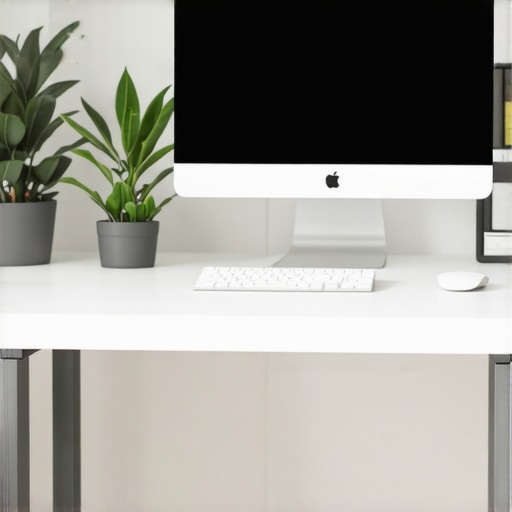
One of the biggest mistakes I made early on was assuming that if I wasn’t ‘slouching,’ I was fine. I even used to stack random, wobbly textbooks under my monitor thinking I was a genius, but I never actually measured the line of sight. The truth is, your perfect office chair is still making you slouch if your eyes aren’t level with the top third of your screen. When your monitor is too low, you naturally perform a ‘forward head poke.’ According to a study published by the Journal of Physical Therapy Science, for every inch your head moves forward, it gains 10 pounds of weight in terms of the load on your cervical spine. That’s a lot of extra work for a few small muscles! This is exactly why your screen height is the real cause of your headaches and that nagging mid-day fatigue.
Is a few inches of height really worth the effort?
It sounds too simple to be true, right? We’re conditioned to think big problems like chronic stiffness require big, expensive solutions. But often, it’s these micro-adjustments that prevent long-term damage. I used to think I needed a standing desk or a professional massage every week, but once I raised my screen, unlocking neck pain relief became a reality rather than a chore. I stopped making the mistake of letting my eyes dictate a slumped posture and started forcing my environment to meet my needs. Now, let’s dive into the exact check you can perform right now to see if your setup is sabotaging your health.
Stop the Slouch with the Top-Third Rule
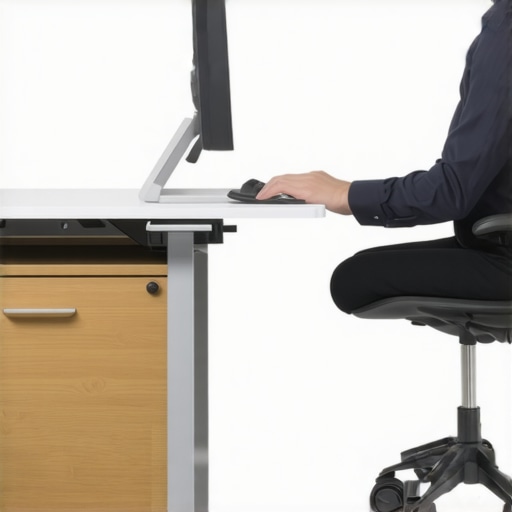
I remember the day I grabbed two thick reams of printer paper and shoved them under my monitor. It looked ridiculous, definitely not the sleek office vibe I wanted, but within twenty minutes, the fire in my upper back started to dim. This wasn’t magic; it was physics. You need to position your monitor so your eyes naturally land on the top third of the glass. If you’re looking at the middle or bottom, you’re essentially asking your neck to act like a crane. This simple change is one of those expert methods to relieve neck and back discomfort that works because it stops the strain before it starts. If you find yourself still leaning in despite the height, it might be how your eyes are secretly dictating your posture rather than just the desk height itself.
Keep Your Monitor at Arm’s Length
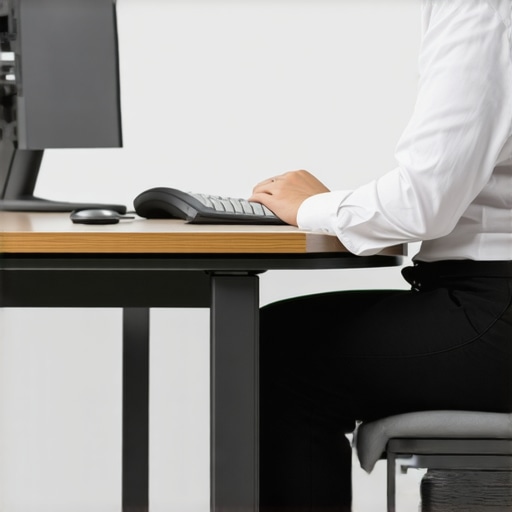
Height isn’t the only factor. If your screen is too far away, you’ll naturally turtle your head forward to see small text. I call this the zoom-trap. To fix it, sit back in your chair and reach your arm out; your middle finger should just barely touch the screen. This distance keeps your focal point stable and prevents you from losing your better posture and mobility as the day drags on. If you’re using a laptop, this is nearly impossible without a separate keyboard, which is why setting up your home office on a budget often requires prioritizing a peripheral keyboard over a fancy chair to allow the screen to sit higher.
Check Your Foundation From the Floor Up
Most people focus on the neck because that’s where it hurts, but the spine is an interconnected chain. When I finally fixed my screen, I noticed I was still fidgeting because my feet weren’t flat. If your chair is too high to allow your feet to rest firmly on the ground, your pelvis tilts and your lower back loses its natural curve. This is why we check your pelvis to solve mid-back tension during professional assessments. Everything from your ankles to your ears needs to be stacked. Think of it like a Jenga tower; if the base is off, the top has to lean to stay balanced.
Try the 10-Second Reset Every Hour
Even with a perfect setup, your muscles get bored and start to sag. Every hour, perform a quick scan of your body. Are your shoulders creeping toward your ears? Is your chin drifting toward your chest? Performing the 10-second posture check you can do anywhere ensures you aren’t falling back into old habits that lead to a hidden link between neck pain and spinal health issues. You can even try the 30-second reset for tech neck fatigue if you feel that familiar tightness creeping back in after a long meeting. It’s about building a bulletproof routine that protects your joints through every email.But let’s be honest: most of the advice you’ve heard about ‘good posture’ is actually setting you up for failure. We’ve been conditioned to believe that ‘straight’ is synonymous with ‘healthy,’ but that’s a dangerous oversimplification.
Stop Trying to Sit Like a Statue
The biggest mistake I see in my clinic isn’t just slouching—it’s the ‘ergonomic freeze.’ This is where people find a supposedly perfect position and then lock themselves into it for hours. In my experience, why your perfect posture is actually making you stiff is due to a lack of postural variability. Your spinal discs are like sponges; they need movement to pump nutrients in and waste out. If you stay static, you’re essentially starving your spine.
Why Stretching That Tight Muscle Might Be Making It Worse
Here is the contrarian truth that surprises most of my patients: that tight knot in your upper trap isn’t always something you should stretch. This is the ‘Oops’ factor that keeps people in a cycle of pain. If a muscle is tight, it might be ‘guarding’ a joint that is unstable or misaligned. When you stretch it, you’re removing the body’s only defense mechanism. This is why stretching a tight muscle isn’t always the answer and why you often feel better for five minutes, only for the pain to return with a vengeance.
Can a Pelvic Tilt Really Give You a Headache?
It seems counterintuitive to look at the hips when your neck is screaming, but the spine is a closed kinetic chain. A study published in the *Journal of Manipulative and Physiological Therapeutics* demonstrated that cervical movement is significantly influenced by the position of the lower spine. This is exactly why we look at your pelvis when your neck hurts. If your foundation is slanted, the top of the tower—your head—has to compensate by tilting, leading to chronic strain that no amount of neck massage will fix.
Chasing Symptoms Instead of Systems
Many people fall into the trap of thinking a ‘strong core’ means doing hundreds of crunches, but why your core routine is failing your spine is often because it focuses on superficial muscles while ignoring the deep stabilizers. To achieve true mobility mastery, you have to treat the body as an integrated system. Lasting back pain recovery isn’t about one ‘hack’; it’s about restoring the natural relationship between your joints. Have you ever fallen into this trap of trying to ‘sit perfectly’ only to end up in more pain? Let me know in the comments. If you’ve been chasing the same ache for years, overcoming chronic neck discomfort usually requires looking at these hidden nuances that others miss.
I’ll be honest with you: my office looks a bit like a physical therapy clinic. After years of trial and error, I realized that chasing the ‘perfect’ chair was a fool’s errand. Instead, I focused on a few high-quality tools that actually support my anatomy rather than trying to force my body into a generic mold. If you want to revitalize your mobility, you need to stop buying gadgets and start investing in systems. I spent hundreds on ‘ergonomic’ chairs that claimed to have built-in support, but they always hit my spine in the wrong place. Now, I use a portable lumbar roll. Why? Because I can move it exactly where my lumbar curve needs it most. Learning the correct way to use a lumbar roll in your office chair was the single biggest turning point for my lower back health.
The Three Tools I Use Every Single Day
Aside from the lumbar roll, there are two other non-negotiables in my setup. First is a mechanical keyboard paired with a vertical mouse. This keeps my forearms in a neutral ‘handshake’ position, which prevents the tension from traveling up into my shoulders and neck. Second is a simple $20 lacross ball for self-myofascial release. I don’t use it to just roll around aimlessly; I use it to target specific trigger points that I know are my personal ‘weak links.’ Dr. Stuart McGill, a world-renowned expert in spine biomechanics and author of *Back Mechanic*, emphasizes the importance of ‘spinal hygiene’—the idea that it’s not just the big exercises that matter, but the way you move during the 23 hours you aren’t at the gym. This is why I prioritize mobility mastery through small, frequent adjustments rather than one massive weekly workout.
How I Built a Bulletproof Spinal Hygiene Routine
Maintenance isn’t about being perfect; it’s about being consistent. I’ve integrated what I call ‘movement snacks’ into my workday. Every time I finish a phone call, I perform the isometric hold that builds a bulletproof core right at my desk. It takes thirty seconds and resets my nervous system. If you’re serious about effective neck pain management, you have to stop seeing your body as a collection of parts and start seeing it as a connected chain. This mindset shift is how I’ve managed to stay pain-free even during 60-hour work weeks. It’s also the foundation of how back pain recovery actually works in the long term.
How do I maintain my spinal health over time?
The secret is adaptation. Your body changes as you age, and your environment should too. I’m constantly auditing my setup. In the next five years, I predict we’ll see a massive shift toward AI-driven wearable sensors that don’t just tell you to ‘sit up straight,’ but actually map your specific spinal load in real-time and suggest specific micro-movements to prevent fatigue before it starts. Until then, you have to be your own sensor. Pay attention to the early warning signs—the slight ‘twinge’ or the ‘heavy’ feeling in your shoulders. These are signals, not just annoyances. If you want to stop the cycle for good, I challenge you to try the isometric hold mentioned above today. It’s the first step in moving from reactive pain management to proactive spinal health.
Lessons from a Decade of Chasing Pain-Free Workdays
Looking back at my own journey, the most humbling realization was that my body wasn’t ‘broken’—it was just screaming for a different environment. I spent years thinking why your perfect posture is actually making you stiff was a mystery, only to realize I was holding myself too rigidly. Here are the core truths I’ve learned: First, stop searching for a magic chair. A $1,000 seat won’t save you if you don’t understand the truth about built-in lumbar support in modern chairs—it’s often poorly placed for your unique curve. Second, pain in your neck is frequently just the messenger for an imbalanced base, which is why we check your pelvis to solve mid-back tension during real-world assessments. Finally, the best exercise is the one you actually do every sixty minutes, not the hour-long gym session once a week.
The Essentials I Keep Within Arms Reach
I don’t believe in cluttering your desk with gadgets, but these three items changed the game for me. The Portable Lumbar Roll: Most chairs fail because they aren’t adjustable. Learning the correct way to use a lumbar roll in your office chair is more valuable than any ‘ergonomic’ label. Stuart McGill’s ‘Back Mechanic’: This book is the gold standard for understanding how to move without irritating your discs. A Lacrosse Ball: It’s the simplest tool for expert methods to relieve neck and back discomfort, allowing you to pin-point tension in seconds.
Start Rewriting Your Body’s Story Today
You don’t have to accept a ‘stiff neck’ as a standard part of your professional life. The transition from chronic aches to back pain recovery begins the moment you stop treating symptoms and start respecting your body’s systems. Every small adjustment, from your screen height to your pelvic alignment, adds up to a spine that supports you rather than holding you back. You have the tools, the science, and the plan—now it’s time to move. Have you ever found a specific stretch that actually made your neck or back pain worse? Let me know in the comments below!