How to Breathe Properly to Reduce Tension in Your Shoulders
I remember sitting at my desk three years ago, my neck feeling like a rusted hinge and my shoulders practically touching my earlobes. I was so wound up that I couldn’t even turn my head to check my blind spot on the drive home. It was a visceral, throbbing tightness that I thought was just part of ‘getting older’ or maybe a sign that I needed a more expensive office chair. I even tried every gadget under the sun, but nothing clicked until I realized I was literally suffocating my own muscles. My biggest mistake was ‘chest breathing’—constantly sucking in my stomach to look a certain way while taking shallow, frantic sips of air that forced my neck and traps to do all the heavy lifting. If you’ve ever wondered why your shoulder feels heavy after typing for hours, you are likely stuck in the same ‘shrug-breath’ trap I was. Today, I’m going to show you how to reclaim your rib cage and finally drop those shoulders for good. Have you ever caught yourself holding your breath or taking tiny, shallow gasps when a stressful email hits your inbox?
Get Your Shoulders Down for Good
Here is the hard truth: your shoulders were never meant to be primary breathing muscles. When we get stressed, we default to accessory breathing, using the small muscles in our neck and chest to pull the lungs open. This creates a vicious cycle of neck muscles tightening during stress, which leads to more shallow breathing. I spent years in this state, thinking I just had ‘bad posture.’ I’d try to force my shoulders back, which only made things worse because I was fighting against my own internal pressure. The real shift happened when I learned to let my belly move. According to researchers at Harvard Health, deep diaphragmatic breathing signals the nervous system to lower cortisol levels and move the body out of a ‘fight or flight’ state, which is often the root cause of that chronic upper-body armor we wear. Using a 10-second breath fix can actually reset the tension levels in your mid-back faster than a foam roller ever could.
Is Breathing Properly Actually Worth the Effort?
It sounds too simple, doesn’t it? I was the ultimate skeptic. I thought breathing was something our bodies just ‘did’ and that focusing on it was a waste of time compared to lifting weights or stretching. But when I actually committed to breathing into my lower ribs, the ‘knots’ I’d been chasing for months started to melt away. If you combine this with the Brueggers relief move, you aren’t just stretching; you are retraining your entire nervous system to stop treating your shoulders like a shelf for your stress. It’s not about doing more; it’s about doing less with the wrong muscles so the right ones can finally take over.
Expand Your Ribs Like a Growing Balloon
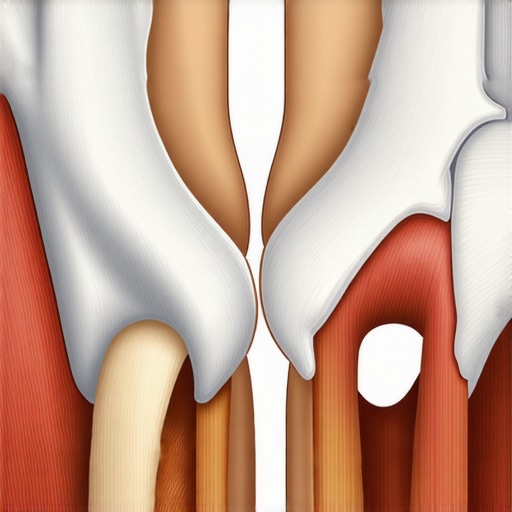
To stop your shoulders from hiking up, you have to give your breath somewhere else to go. Most of us treat our torsos like rigid tubes, but your rib cage is designed to be dynamic and flexible. Think of your ribs like a bucket handle; they should swing out and up as you inhale, rather than your collarbones lifting toward your ears. I remember my first real attempt at this while stuck in gridlocked traffic on a rainy Tuesday. I intentionally let my stomach go soft—dropping the ‘beach body’ ego—and tried to push my breath into my side ribs. It felt messy and uncoordinated at first, almost like my ribs were rusted shut from years of shallow breathing. My brain kept trying to pull my shoulders up to ‘help,’ but I forced myself to keep them still. After about five cycles, I felt a release in my mid-back that felt like a tight knot finally unraveling. When you learn how to breathe into your lower back to reduce muscle spasms, you provide an internal stretch that no massage therapist can reach. You aren’t just taking in oxygen; you’re using air pressure to mobilize your spine from the inside out, creating space where there was once only compression and stiffness. #IMAGE_PLACE_HOLDER_B#
Stop Pulling and Start Floating Your Scapula
We’ve all been told to ‘pull your shoulders back and down.’ The problem? That usually just trades one type of tension for another, turning your upper back into a wall of hard, overworked muscle. Instead of a forceful, military-style pull, focus on a gentle reset. You want your shoulder blades to feel like they are floating on your rib cage rather than being pinned against it. Imagine your collarbones are getting wider, reaching out toward the walls on either side of you like an opening fan. By performing the scapular squeeze that relieves mid-back tension, you’re training the muscles between your blades to support your weight so your neck doesn’t have to do all the heavy lifting. I used to do this at my desk every hour, and the difference in my afternoon fatigue was night and day. It’s about creating a stable base for your head to sit on, which is a key part of how we restore your back mobility with proven chiropractic strategies.
Release the Hidden Tension in Your Jaw
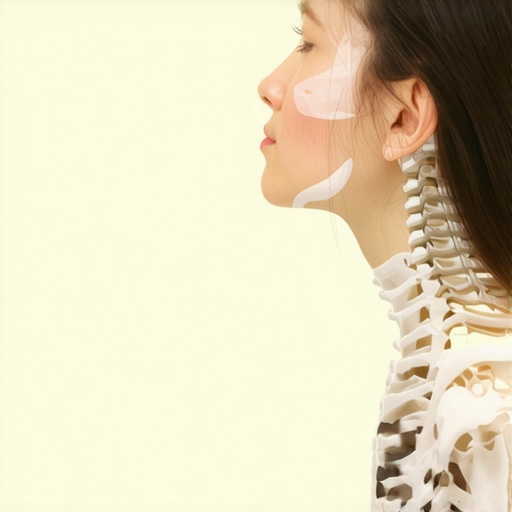
You might not feel the connection immediately, but your jaw and your top neck vertebrae are closely linked—when one is angry, the other is miserable. If you are clenching your teeth while trying to relax your shoulders, you’re fighting a losing battle against your own anatomy. Your nervous system perceives a clenched jaw as a sign of danger, keeping those ‘fight or flight’ neck muscles on high alert. I started using the 10-second fix for jaw tension related to neck pain every time I noticed my shoulders creeping toward my ears during a stressful project. Simply letting your tongue rest on the roof of your mouth and keeping your teeth slightly apart can act as a circuit breaker for upper body tightness. Think of it as a ‘softening’ of the face that trickles down to the traps. It’s these small, mechanical shifts that accumulate into long-term relief without needing a gym membership or expensive gadgets.Most people think the solution to chronic tension is to find one ‘perfect’ position and stay there. I’ve seen hundreds of people try to force their bodies into a rigid, military-style stance, only to wonder why they feel more exhausted than ever. The hidden nuance that most beginners miss is that the human body thrives on movement, not static perfection. If you are constantly trying to hold a specific pose, you are effectively creating an isometric contraction that lasts for hours, leading to the exact fatigue you’re trying to avoid. When you are mastering back neck pain relief tips from the pros, you realize that the goal isn’t to be a statue; it’s to be fluid.
Stop Forcing Your Shoulder Blades Together
One of the biggest ‘oops’ factors I see is the advice to ‘pin your shoulders back.’ While well-intentioned, this often results in people jamming their scapula against their ribs, which limits the natural glide of the shoulder girdle. This over-correction is often why your perfect office chair is still making you slouch—or at least feel like you are. When you force this position, you compress the mid-back and can actually trigger a mid-back pinch, similar to why practicing at an indoor golf simulator often leads to mid-back stiffness. You aren’t fixing your posture; you’re just moving the stress from your neck to your thoracic spine.
Why Does My Mid-Back Hurt Even When I Sit Up Straight?
This is the advanced question that separates the experts from the novices. The answer lies in the concept of ‘active stiffness.’ A study published in the Journal of Physical Therapy Science found that prolonged static postures, even those deemed ‘correct,’ lead to significantly higher muscle fatigue and spinal stiffness compared to frequent micro-movements. If you are sitting ‘straight’ but holding your breath and clenching your core, you are starving your muscles of oxygen. This is particularly common in women, and it’s a major reason why your sports bra might be causing mid-back pain; the added external pressure combined with internal rigidity creates a ‘corset effect’ that halts rib mobility. #IMAGE_PLACE_HOLDER_C#
The Best Posture Is Your Next Posture
Instead of fighting your body, focus on frequent resets. The secret to long-term comfort is a dynamic spine that knows how to load-share. This is a core philosophy when we restore your range how chiropractic care enhances movement. We don’t just ‘pop’ bones; we’re retraining the nervous system to stop over-protecting areas that should be moving freely. When you stop obsessing over ‘straightness’ and start focusing on ‘openness,’ you’ll find that overcoming chronic neck discomfort becomes a natural byproduct of a better-functioning system. Have you ever fallen into this trap of trying to hold yourself too still? Let me know in the comments.Maintaining that ‘open’ feeling isn’t about being perfect 24/7; it is about having a toolkit for when life inevitably gets in the way. I have found that the real key to mobility mastery expert tips for back pain prevention and recovery is less about the hour-long gym session and more about the thirty-second ‘check-ins’ throughout the day. When I am traveling or stuck in back-to-back meetings, I do not just hope my neck survives; I use specific strategies to relieve neck back discomfort using these expert methods.
Put Your Progress on Autopilot
Longevity in spinal health comes down to what Dr. Stuart McGill, a world-renowned expert in spine biomechanics, calls ‘spinal hygiene.’ It is the cumulative effect of how you brush your teeth, how you tie your shoes, and how you sit. If you are not consistent, you are just firefighting. To make this sustainable, I suggest you boost your back health simple yet effective chiropractic hacks that fit into your existing routine. For me, that means doing a quick rib-opening breath every time I refill my water bottle or wait for a slow-loading webpage. As we get older, these small habits become even more critical because our recovery time naturally slows down. This is also why why your pillow choice matters more as you age; you cannot afford to undo eight hours of progress every night with a poor sleep setup.
My No-Nonsense Gear List
I am a minimalist when it comes to gadgets, but two things have truly earned their spot in my routine. First, I finally mastered how to use a tennis ball to fix that spot under your shoulder blade. It is cheap, portable, and gets deeper into the tissue than most expensive electronic devices. Second, if you are going to invest in tech, you need to know how to use a massage gun on your lower back safely without irritating the nerves or causing a flare-up. These are not just toys; they are practical ways to enhance mobility naturally with chiropractic care principles at home. I use my massage gun specifically on my hip flexors to take the tension off my lower back before a long day of sitting. #IMAGE_PLACE_HOLDER_D#
How can I keep my mobility gains from disappearing?
The future of this field is moving rapidly toward real-time biofeedback. In the next few years, I predict we will see wearable sensors that do not just tell you to ‘sit up straight’ but actually monitor your breathing depth and rib expansion via skin conductivity or ultrasonic movement. Imagine a shirt that gently vibrates when you have not taken a deep diaphragmatic breath in ten minutes. Until then, you have to be your own sensor and rely on professional guidance to restore your back mobility proven chiropractic strategies. By staying consistent with unlock neck pain relief essential chiropractic tips for 2025, you can ensure your body stays resilient even as you age. Here is my advanced tip for you to try today: Perform a ‘breath check’ while driving. If your stomach is not moving against the seatbelt, you are shrugging your way to work. Try this on your next commute and notice how much lighter your shoulders feel by the time you arrive.
The Day I Realized “Sitting Straight” Was Making Me Worse
The hardest lesson I had to learn was that my obsession with “perfect posture” was actually a form of self-sabotage. I spent years trying to be a statue, which only created more active stiffness and localized fatigue. I finally understood the hidden link between neck pain and spinal health isn’t about standing like a soldier; it’s about movement. If you find yourself holding your breath to keep your back straight, you are actually starving your muscles of the very oxygen they need to relax. My biggest breakthrough came when I realized why your back feels better when you keep moving—it’s because our bodies are dynamic engines, not static pillars.
Tools That Actually Earned a Spot in My Daily Life
I’ve wasted hundreds of dollars on vibrating posture sensors and ergonomic braces that did nothing but make me more tense. Now, I keep it simple. I rely on how to use a tennis ball to fix that spot under your shoulder blade for those deep, nagging knots. I also became a stickler for my sleep environment because I realized why your pillows should be replaced every eighteen months is a non-negotiable for anyone over thirty. Finally, I’ve integrated boost mobility ease pain chiropractic techniques unveiled during my morning routine to ensure my joints are primed for the day ahead. These aren’t just “hacks”; they are the foundation of a resilient body.
Your Body Is Not a Project to Be Finished
It is easy to get frustrated when the tension returns after a long day, but remember that healing is a process of refinement, not a one-time fix. Seeing how back pain recovery how chiropractic care transforms lives has taught me that the goal isn’t perfection; it’s the ability to bounce back faster. You have the tools now to drop your shoulders, expand your ribs, and reclaim your comfort. Don’t wait for the “perfect” time to start; just take one deep breath into your lower ribs right now. What’s the one “good posture” rule you’ve been trying to force that just isn’t working for you? Let me know in the comments.