The 30-second reset for tech-neck fatigue
I was three hours deep into a spreadsheet last Tuesday when it happened—that familiar, searing burn right between my shoulder blades. I tried to roll my neck, but it felt like gravel was grinding in my joints. I’d made the classic mistake of thinking I could just out-hustle the pain. Spoiler alert: you can’t. For years, I thought the only way to fix this was a marathon session with a foam roller or a standing desk I’d never actually use. I was wrong. I spent way too long trying to “force” perfect posture, only to end up more rigid than a 2×4. Today, I want to share the exact 30-second ritual that saved my sanity and my spine. If you’ve ever felt like your head was a 100-pound weight dragging your chin to your chest, this is for you.
Stop treating your neck like a crane for a bowling ball
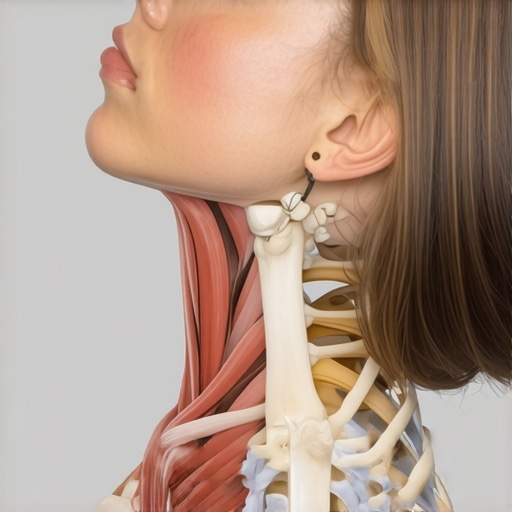
The math of our anatomy is actually pretty brutal. Your head weighs about 10 to 12 pounds in a neutral position. But the moment you tilt it down to check a notification or finish an email? Everything changes. According to research published in Surgical Technology International, a 60-degree tilt—the standard “phone-staring” angle—puts about 60 pounds of pressure on your cervical spine. That is insane. No wonder we feel like we’re carrying the weight of the world on our shoulders by 3 PM. Early on, I used to think the solution was to force myself to sit up straight with my shoulders pinned back. I looked like a toy soldier and felt even worse. It turns out that perfect posture is often a recipe for stiffness. What we actually need is a reset that addresses the neurological “clench” our bodies get into when we stare at screens for too long.
Is a 30-second move actually enough to reverse hours of slouching?
I get the skepticism. It sounds like one of those “one weird trick” ads. But here’s the thing: we aren’t trying to rebuild your entire muscular system in thirty seconds. We are trying to give your nervous system a “clear” signal. When you’re hunched, your brain starts to think that’s the new normal. We need to break that loop. I used to ignore the burning in my shoulder blades until I literally couldn’t turn my head to merge into traffic. Don’t be like past-me. Does your neck feel tighter at the end of the day than it did when you woke up? Have you ever noticed that “afternoon slump” where your chin just starts gravitating toward your desk? Understanding why this happens is half the battle. If you’ve been struggling with this, you might also find that your screen height is the real culprit. We need to stop the cycle of damage before we can start the healing, and it begins with one simple movement.Think of your cervical spine as a precision instrument that has been jammed. When we slouch, we aren’t just stretching muscles; we are putting a ‘kink’ in the garden hose of our nervous system. This is why relieving neck back discomfort using these expert methods works—it isn’t about brute force, it’s about neurological re-alignment. The most effective move I’ve found is what I call the ‘Drawer Slide.’ Imagine your head is a drawer and your neck is the track. Most of us have our ‘head drawer’ pulled out way too far, stressing the sliders until they’re ready to snap. To fix this, you don’t need a gym; you need to understand how to guide the drawer back into its slot without slamming it.
Reset Your Internal Compass with the Drawer Slide
The first step is to stop fighting your body. Most people, when they feel tight, try to roll their shoulders or pull their head back with massive effort. This actually triggers a ‘guarding’ reflex. Instead, I want you to sit or stand tall and imagine a string pulling the crown of your head toward the ceiling. Not your forehead, not your nose—the very top of your skull. As you feel that upward lift, gently glide your chin straight back. Do not tuck it down to your chest like a scolded dog. Keep your eyes on the horizon. This subtle movement is the foundation of the 30-second move to stop mid-day shoulder burn. You’ll feel a slight tension at the base of your skull—that’s the ‘reboot’ happening in real-time.
Anchor the Shoulders Without the Rigid Squeeze
Once the chin is retracted, the second half of the ritual involves your shoulder blades. I used to make the mistake of pinning them together like I was trying to hold a coin between them. All that did was trade neck pain for mid-back cramps. The real secret is to let your arms hang heavy like two wet ropes. While keeping your chin glided back, imagine your shoulder blades are sliding down into your back pockets. This creates space between your ears and your shoulders. I remember a specific Tuesday when a deadline was looming and my trapezius muscles felt like they were made of concrete. I tried to just ‘push through,’ but my typing speed slowed to a crawl. I finally stopped, leaned against the nearest doorframe, and did a version of the simple wall drill to reverse forward head posture. It took maybe 45 seconds. The result wasn’t just a reduction in pain; it was the sudden ability to take a full, deep breath. If you’ve ever wondered why your mid-back feels like it needs to pop, it’s usually because these two areas—the neck and the shoulders—are playing a game of tug-of-war where your spine is the rope.
Why Your Lungs Hold the Key to Neck Freedom
The final piece of this 30-second puzzle is the breath. You can have the best alignment in the world, but if you are chest-breathing, your ‘secondary’ respiratory muscles—the ones in your neck—will stay turned on. When I finally learned the connection between shallow breathing and back pain, everything clicked. While holding your ‘drawer slide’ position, take one slow breath into your belly. Feel your lower ribs expand sideways. As you exhale, imagine all the tension in your jaw melting away. This is how you transition from just ‘fixing a posture’ to mastering back neck pain relief for the long haul. It’s a physical conversation with your brain that says: ‘We are safe, we are aligned, and you can let go now.’The ‘Drawer Slide’ is a game-changer, but here’s where most people trip at the finish line: they treat their body like a piece of rubber that just needs to be pulled. Most of us have been taught that if something feels tight, we should stretch it. But why stretching a tight muscle isnt always the answer boils down to the way your nervous system protects your joints. If your brain perceives instability, it will ‘lock’ those muscles to prevent injury. Trying to force them open is like trying to pick a lock with a sledgehammer; the system just jams harder.
The Stretch Trap That Keeps You Stiff
One of the most common mistakes I see is the ‘pull and hold’ method. We’ve all done it—grabbing the side of our head and yanking it toward our shoulder until something gives. This often triggers a protective mechanism called the stretch reflex. Instead of relaxing, the muscle fibers actually contract to protect the joint from what it perceives as a threat. This is exactly why static stretching might be prolonging your back pain. You aren’t teaching the muscle to be long; you’re teaching it to be on high alert. I spent years in this cycle, wondering why my morning yoga routine left me feeling more brittle by noon.
Why does your neck feel even tighter after a long stretching session?
It’s an advanced nuance, but it comes down to proprioception—your brain’s ability to sense where your body is in space. When you over-stretch a ‘tight’ area without addressing the underlying stability, you create a momentary gap in your brain’s map. To compensate, the brain sends an emergency ‘stiffen up’ signal. According to research published in the Journal of Strength and Conditioning Research, excessive static stretching can actually reduce the power and stability of the surrounding musculature. This is why I always advocate for chiropractic secrets to regain full mobility after injury that focus on active resets rather than passive pulls.
Stop Bracing Like You’re About to Get Punched
Another ‘oops’ factor that sabotages your progress is the cult of the ‘perfectly engaged core.’ We are told to keep our abs tight at all times, but why your strong core might actually be too rigid is a major contributor to upper back tension. If your midsection is locked down like a bank vault, your ribcage can’t move when you breathe or turn. This force is then shunted upward, straight into your neck and shoulders. It’s like trying to drive a car with the parking brake on—you’ll get there, but you’re going to burn out the engine. True relief requires a shift from ‘forcing’ to ‘flowing.’ By integrating mobility mastery expert tips for back pain prevention and recovery, you learn that mobility isn’t the same as flexibility. Mobility is strength through range of motion. It’s about being able to move into a position and actually control it. Have you ever fallen into this trap—stretching a tight spot only to have it feel like a coiled spring an hour later? Let me know in the comments, and let’s figure out where your ‘system jam’ is coming from.Once you stop making the classic mistakes, the next step is building a fortress around your progress. I call this ‘Spinal Hygiene.’ Just like you wouldn’t expect your teeth to stay white without daily brushing, you can’t expect your neck to stay mobile if you only think about it when it hurts. For me, the most significant shift happened when I stopped looking for a ‘magic chair’ and started focusing on my eye-to-screen relationship. This is precisely why your screen height is the real cause of your headaches. I now use a gas-spring monitor arm that allows me to adjust my screen height based on whether I am sitting or standing. Most people set their monitor too low, which slowly drags their cervical spine into that 60-pound-pressure ‘tech neck’ position we discussed earlier.
The Two Simple Gadgets That Actually Changed My Workflow
I’m often asked which fancy equipment I use. Honestly? It’s not the expensive stuff. I swear by a vertical mouse and a mechanical keyboard. A vertical mouse keeps your forearm in a neutral ‘handshake’ position. When you use a standard flat mouse, your forearm rotates, pulling on the muscles that connect all the way up into your neck. According to a study in the Journal of Biomechanics, even small, repetitive micro-strains from poor wrist positioning contribute significantly to the cumulative loading on your upper traps. If you’ve been feeling that ‘one-sided’ tightness, this could be the culprit. I also finally learned the correct way to use a standing desk without hip strain. The secret isn’t just standing; it’s shifting your weight every fifteen minutes and keeping your keyboard at elbow height so your shoulders don’t have to shrug up to type.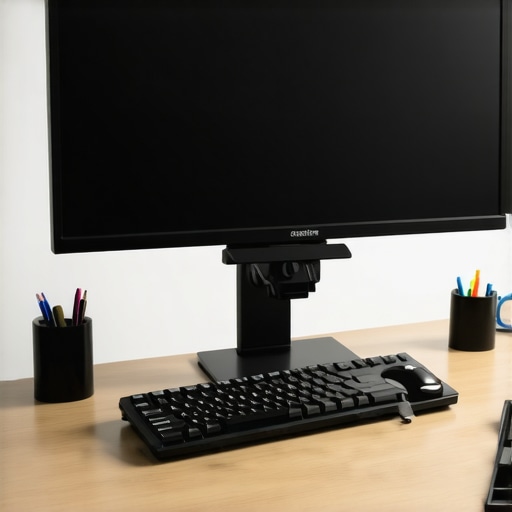
How can I maintain my spinal mobility over the long haul?
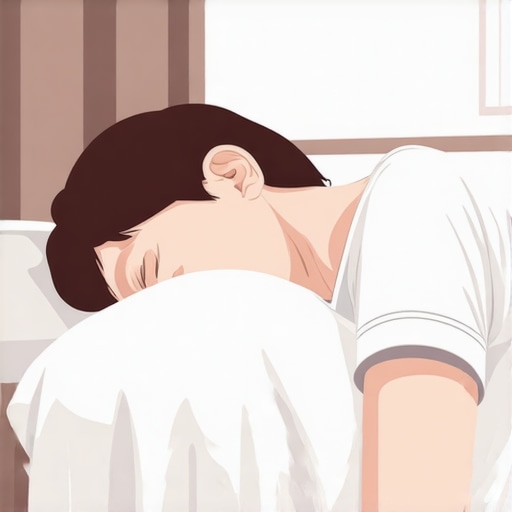
Maintenance isn’t about hour-long gym sessions; it’s about micro-interventions. I’ve integrated the 5-minute desk reset for busy professionals into my daily calendar. Every two hours, I step away from the blue light. This is vital because why your vision problems might be causing your neck pain is often overlooked—eye strain leads to ‘craning’ forward to see text, which wrecks your alignment. At night, I pay close attention to my recovery environment. Learning how to choose the right pillow height for your body type was the final piece of the puzzle for me. If your pillow is too high or too low, you are essentially spending eight hours in a side-bent or flexed position, undoing all the good work you did during the day. Looking forward, I predict we’ll see a massive rise in ‘haptic’ wearables—small sensors you wear on your back that vibrate when you begin to slouch. We are moving toward a future where biofeedback helps us stay in tune with our bodies in real-time. If you want to start ‘scaling’ your recovery today, I challenge you to try the ‘Drawer Slide’ move while standing against a wall—it adds a level of feedback that forces your nervous system to engage those deep stabilizers. Check out more overcoming chronic neck discomfort insights from top chiropractors to see how the pros keep their own spines in check.
Why My Most Painful Days Actually Had Nothing to Do with Muscles
One of the biggest shifts in my journey was realizing that my body wasn’t ‘broken’—it was just over-communicating. I spent years treating every knot as a physical problem to be smashed, but the real breakthrough came when I addressed the neurological stress. I learned that unlocking neck pain relief requires a calm mind as much as a straight spine. If you are constantly ‘bracing’ for your next email, no amount of stretching will fix that underlying tension.
Another major lightbulb moment was the realization that my environment was whispering to my nervous system all day long. You can boost mobility and ease pain by changing how you interact with your tech, rather than just trying to ‘fix’ your body afterward. Your spine is a living, adapting structure, not a static pillar. When I stopped fighting my anatomy and started working with my nervous system, the chronic burning in my shoulders finally faded into the background.
The Essential Toolkit for Long-Term Spinal Health
If you want to move beyond the ’30-second reset’ and into permanent comfort, I highly recommend looking into a few specific resources that I use daily. First, a high-quality gas-spring monitor arm is non-negotiable for anyone desk-bound; it allows your eyes to lead your posture rather than your chin. Second, I frequently revisit revitalize your mobility proven strategies to keep my daily routine from becoming stagnant. Finally, I trust professional chiropractic adjustments to clear the ‘static’ from my nervous system that my own stretches simply can’t reach.
#IMAGE_PLACE_HOLDER_E#
Your Move Toward a Brighter, More Mobile Future
You don’t have to live in a state of constant physical ‘noise.’ By incorporating these small movements and adjusting your workspace, you are giving your body the permission it needs to let go of defensive tension. This journey toward better health isn’t about achieving a perfect military posture; it’s about consistency and listening to the subtle signals before they become screams. Start your next ‘Drawer Slide’ right now and feel the difference in your daily neck pain relief. You’ve got the tools and the knowledge—now it’s time to reclaim your movement.
Which part of your workday usually triggers that first sign of stiffness? Let’s chat in the comments below!