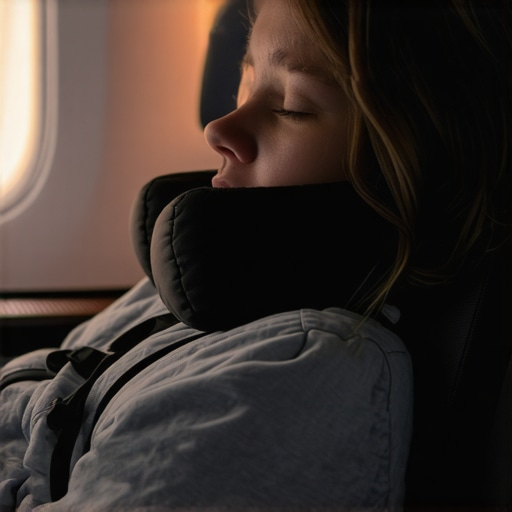
The Best Way to Sit on a Plane Without Landing with a Stiff Neck
I’ll never forget the time I landed in London after an eight-hour red-eye, only to realize I couldn’t actually turn my head to see the taxi driver. I was stuck in a permanent tilt, looking like a confused puppy for the first three days of my trip. I had the ‘best’ travel pillow money could buy, yet I still managed to wreck my cervical alignment before we even hit cruising altitude. We’ve all been there—shuffling off the plane, rubbing that burning spot between our shoulder blades, and wondering if we’ll ever feel normal again. Today, I’m sharing the hard-won secrets of how to sit on a plane without wrecking your posture so you can hit the ground running, not hobbling.
The Hidden Cost of Static Sitting at 30,000 Feet
When you’re crammed into a middle seat, your body enters a sort of survival mode. We tend to freeze in place to avoid touching our neighbor’s elbow, but that lack of movement is a recipe for disaster. I used to make the classic mistake of thinking that if I just found one ‘perfect’ position and didn’t move for four hours, I’d be fine. In reality, your back feels better when you keep moving, even in a tight space. According to the Mayo Clinic, sitting for long periods without proper support or movement can lead to muscle fatigue and decreased blood flow, which is why that stiffness feels so heavy once you finally stand up. Have you ever woken up mid-flight with a sharp pain and wondered if you’ve permanently pinched something?
Are those expensive wrap-around pillows actually worth the hype?
It’s the million-dollar question in the terminal gift shop. Most people think a pillow is a magic fix, but your pillow might be trapping your neck in a bad angle instead of supporting it. I’ve seen more people hurt themselves with poorly placed cushions than without them. The key isn’t just the cushion; it’s how you use it to maintain a neutral spine.
The Window Seat Trap and Your Cervical Health
We all fight for the window seat so we can lean our heads against the wall, but that’s exactly where I went wrong for years. Wedging your head against the fuselage forces your neck into a lateral bend that your muscles have to fight against for hours. This often leads to that dreaded sensation where your neck crunches when you turn your head later that day. To fix this, we need to talk about creating a ‘neutral’ environment, even when the seat design is working against us. It’s about small adjustments that provide effective neck pain management while you’re still in the air. Let’s dive into the literal nuts and bolts of seat setup.
Build a Foundation That Won’t Crumble
The biggest mistake I see—and I’ve made it myself more times than I care to admit—is letting the lower back round out into a ‘C’ shape the moment the seat belt sign goes off. This happens because airplane seats are often designed for aesthetics or durability, not for understanding back pain and how to prevent it. When your pelvis rolls backward, it pulls on everything from your hamstrings to the base of your skull. You aren’t just sitting; you’re putting your entire posterior chain under tension.
Master the Pelvic Tilt in a Tight Space
Think of your pelvis as a bowl of water. In those cramped economy seats, most of us let the water spill out the back. To fix this, you need to perform the pelvic tilt trick for instant lumbar relief. Gently roll your hips forward until you feel your weight shift onto your sit-bones rather than your tailbone. I remember a flight to Tokyo where I forgot my travel kit and had to spend fourteen hours doing these tiny adjustments every twenty minutes. It felt like a chore at first, but it was the difference between walking off the plane and being wheeled off.
#IMAGE_PLACE_HOLDER_B#
Your Hoodie is the Best Lumbar Support You Own
Don’t rely on those flimsy, paper-thin airline pillows. They compress to nothing within twenty minutes. Instead, take your sweater or a light jacket and roll it into a firm cylinder. Wedge this right into the small of your back, just above your belt line. This maintains the natural inward curve of your spine, which is a cornerstone of mobility mastery during long-haul travel. If you feel like you’re leaning too far forward, you’ve made the roll too thick. It should feel like a gentle nudge, not a shove, keeping your spine stacked rather than slumped.
Simple Moves to Stop the Mid-Back Burn
Once your base is set, you have to address the ‘statue’ problem. Even the best position becomes toxic if you hold it for five hours. Every thirty minutes, perform the scapular squeeze that relieves mid-back tension. Pull your shoulder blades together and down, as if you’re trying to put them in your back pockets. This resets the chest muscles that naturally shorten when we hunch over a laptop or a tiny tray table. For those feeling a sharp twinge higher up, the simple shoulder blade squeeze for instant neck relief can prevent a full-blown tension headache before it starts. I once stayed so still during a flight to London that my ribs actually felt ‘locked’ for two days afterward; now, I’m the person doing subtle shoulder rolls every time the flight attendants pass by with the drink cart to ensure my joints stay lubricated and free.
Let’s dig deeper into why these adjustments matter more than just feeling good. The most common myth I encounter—and one I fell for early in my career—is the belief that if a muscle feels tight, you must stretch it. This is a massive ‘oops’ factor for most travelers and desk workers alike. Often, that tightness is your brain’s way of bracing a joint that it perceives as unstable. If you force a stretch on a muscle that is trying to protect your spine, your nervous system will just clamp down harder ten minutes later. This is why why stretching your hamstrings won’t fix your lower back pain is such a core concept in my practice; the same logic applies to your neck. Instead of aggressive pulling, you need to look at how chiropractic care enhances movement by addressing the underlying joint mechanics first. Have you ever fallen into this trap? Let me know in the comments.
Stop Cracking Your Own Neck to Avoid a Hypermobility Nightmare
We’ve all seen that person in the airport terminal who twists their head until it lets out a loud pop. It looks like relief, but it’s actually a dangerous cycle. When you self-adjust, you aren’t hitting the ‘stuck’ segment; you are likely over-stretching the joints that are already moving too much. Over time, this creates hypermobility, making your neck even more unstable and prone to spasms. This is precisely why you should never crack your own neck in the morning or mid-flight. You’re essentially scratching an itch that makes the wound deeper. Professional mastering back neck pain relief tips from the pros involves specific, targeted adjustments that spare the hypermobile joints and fix the ones that are actually frozen. #IMAGE_PLACE_HOLDER_C#
Does Your Foot Arch Really Change How Your Shoulders Feel?
It sounds far-fetched, but the body is a single kinetic chain. A study published in the Journal of Orthopaedic & Sports Physical Therapy highlights the concept of ‘regional interdependence,’ suggesting that pain in one area (like the neck) is often driven by dysfunction in a seemingly unrelated area (like the hips or feet). If you have a collapsed arch, it rotates your tibia, which tilts your pelvis, which eventually forces your upper back to compensate. This is the hidden link between your feet and mid-back pain that most people ignore while they are busy buying expensive neck pillows. True mobility isn’t about one body part; it is about the symphony of the whole system. When we look at mobility mastery, we have to look from the ground up, especially when you are spending hours in a pressurized cabin.
The Specific Tools I Pack for Every Long-Haul Trip
I stopped relying on luck and airline amenities years ago. If you want to survive a fourteen-hour flight without your spine feeling like a stack of dry firewood, you need a targeted kit. My personal ‘spinal survival bag’ always contains a high-density lacross ball and a compact massage gun. While many people think these are just for the gym, they are essential for travel. I use the ball to pin down those burning spots near the scapula while lean against the plane seat, which is a key part of relieving neck and back discomfort. You can also learn how to use a massage gun on your lower back safely to wake up dormant glutes after four hours of sitting. I specifically use a mini version because the vibrations help stimulate blood flow without the aggressive depth that might irritate a nerve in a cramped space.
How do I maintain my spinal health between chiropractic visits?
The real magic happens in the 99% of the time you aren’t on the treatment table. Maintenance isn’t about doing a hundred crunches; it’s about ‘spinal hygiene.’ Just as you brush your teeth daily, you need to brush your nervous system. I swear by the morning spinal hygiene routine every desk worker needs. It takes five minutes and focuses on cat-cow movements and gentle rotations to lubricate the facet joints. Dr. Stuart McGill, a world-renowned spine biomechanics expert at the University of Waterloo, emphasizes the ‘Big Three’ exercises for a reason: they build a girdle of stability around the spine without excessive loading. This is how chiropractic care transforms lives long-term—by giving you the tools to support the adjustments we make in the office.
#IMAGE_PLACE_HOLDER_D#
Why Your Core Needs Strategy Rather Than Strength
I used to see patients who could plank for five minutes but still had chronic lower back issues. The problem wasn’t a lack of muscle; it was a lack of coordination. Your brain needs to know exactly when to fire the deep stabilizers before you even lift a suitcase. To get this right, you have to practice the dead bug variation that actually protects your back. This exercise teaches your pelvis to stay neutral while your limbs move—the exact skill you need when reaching for the overhead bin. By focusing on these proven chiropractic strategies, you build a body that doesn’t just recover from a trip, but thrives during it. We are moving toward a future where ‘wearable ergonomics’ will likely track our spinal curvature in real-time, sending a gentle haptic buzz to our phones when we’ve slumped for too long. Until then, your best defense is a proactive routine.
If you want to start seeing real results today, I challenge you to try the dead bug variation I mentioned above tonight before bed. It’s the single most effective way to reset your core after a long day of sitting.
The Most Expensive Mistake I Ever Made in Economy
Looking back at my years of traveling, the biggest lesson wasn’t about which seat to book, but about my own expectations. I used to think I could out-sit a bad chair if I was just ‘tough enough,’ but your ligaments don’t care about your willpower. I’ve realized that consistency beats intensity every single time. It is much better to do three 10-second pelvic tilts every hour than to try a 30-minute stretching routine once you’ve already landed in pain. I also learned that chiropractic secrets to boost neck comfort often start with your breathing; if you are chest-breathing for ten hours due to stress, your neck muscles never get a break. Lastly, don’t wait for the ‘crunch’ to happen. Proactive movement is the only way to ensure your vacation starts on a high note rather than in a clinic.
The Resources That Actually Help Me Stay Mobile
I don’t travel without a plan, and these are the tools I trust to keep my spine in check. First, I highly recommend reading ‘Back Mechanic’ by Dr. Stuart McGill; it completely shifted how I view spinal stability and how chiropractic care enhances movement through structural integrity. For on-the-go guidance, I use mobility apps that remind me to change positions, which is vital for boosting mobility and easing pain during long transitions. I also swear by a small, inflatable lumbar roll—it’s more adjustable than a rolled-up hoodie and takes up zero space in my carry-on.
#IMAGE_PLACE_HOLDER_E#
Arrive Ready for Your Destination Not a Hospital Bed
Traveling is one of life’s greatest joys, but it shouldn’t come at the cost of your physical well-being. By taking control of your environment and mastering how to sit on a plane without wrecking your posture, you aren’t just avoiding pain—you’re preserving your energy for the memories you’re about to make. Remember, your body is incredibly resilient when you give it the right support and the space to move. If you’re preparing for a big trip, consider getting a professional assessment to clear out any existing ‘glitches’ in your movement patterns. You’ll be amazed at how much lighter your luggage feels when your back isn’t screaming at you. Neck pain no more is a realistic goal for every traveler.
Have you ever landed after a long flight and felt like your neck was permanently tilted to one side? Let me know your worst travel posture stories below!