The Chin Tuck Drill to Combat Tech Neck Instantly
I was staring at my laptop screen last Tuesday when I realized I couldn’t actually turn my head to the left to see who had walked into my office. It wasn’t a sharp pain—it was a heavy, dull exhaustion that made my skull feel like a lead weight. I tried to shake it off, but my neck just felt… stuck. Like a rusted hinge. Have you ever felt that specific, burning fatigue at the base of your skull after just twenty minutes of checking emails? If you have, you’re not alone, and I’m here to tell you that you don’t have to just ‘live with it.’
My Head Felt Like a Bowling Ball on a Toothpick
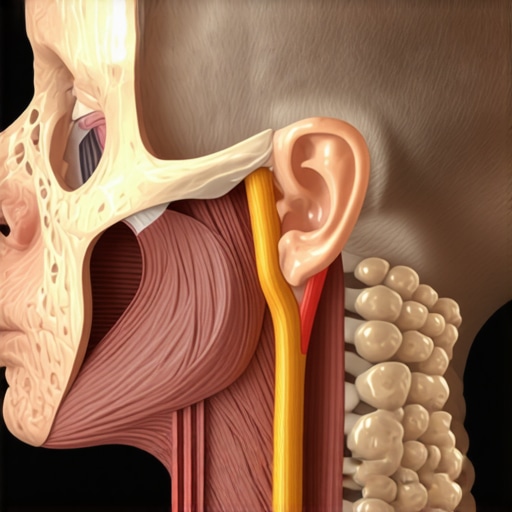
The human head weighs about 10 to 12 pounds. That’s roughly the weight of a professional bowling ball. When we sit with perfect posture, our spine handles that weight effortlessly. But the second we lean forward to look at a phone or a laptop, the physics change dramatically. According to research published by Dr. Kenneth Hansraj in Surgical Technology International, leaning your head forward at a 60-degree angle increases the load on your cervical spine to a staggering 60 pounds. Imagine carrying a small child on your neck all day. No wonder we’re miserable! I spent years looking for expert chiropractic solutions that work because I didn’t understand this simple mechanical failure. I was treating the symptoms, but I was ignoring the leverage. [IMAGE_PLACEHOLDER]
Is this drill actually worth the hype?
You’ve probably seen people doing weird double-chin movements and wondered if they’re actually doing anything besides looking silly. I was a total skeptic. I thought I needed a fancy massage gun or a $200 session to fix the crunching sound when I turned my head. But here’s the truth: the chin tuck is the most foundational movement for restoring your neck’s natural curve. It isn’t just a stretch; it’s a reset button for your nervous system. It engages the deep stabilizers that have gone dormant from years of staring at tablets.
The Mistake That Kept Me in Pain for Months
Early on, I made the classic mistake of trying to ‘stretch’ my way out of the pain by pulling my ear toward my shoulder. I thought if it felt tight, I should pull it harder. I was wrong. By overstretching the already strained muscles in the back of my neck, I was actually making the instability worse. I even fell into the trap of thinking a new gadget would fix me, failing to realize how to adjust my monitor to avoid eye and neck strain was only half the battle. I also realized my pillow was trapping my neck in a bad angle, which compounded the problem overnight. The real breakthrough came when I stopped trying to force my muscles to relax and started teaching them how to hold my head up properly again. Today, we’re going to master the Chin Tuck Drill together—a move that doesn’t require a gym, a foam roller, or any expensive gear. Just you, a wall, and about thirty seconds of your time.
Put Your Spine Back in Alignment
To start, you need a flat surface—a wall is the gold standard because it doesn’t lie to you. Stand with your heels, glutes, and shoulder blades touching the wall. Think of your spine as a vertical rail. Most people make the mistake of tilting their chin up or down, but we want a horizontal slide.
Find Your Level at the Wall
Look straight ahead at a point on the wall opposite you. Imagine a string is pulling the crown of your head toward the ceiling. This is where you learn how to strengthen your deep neck flexors without involving the big, beefy muscles on the side of your neck that are already overworked. 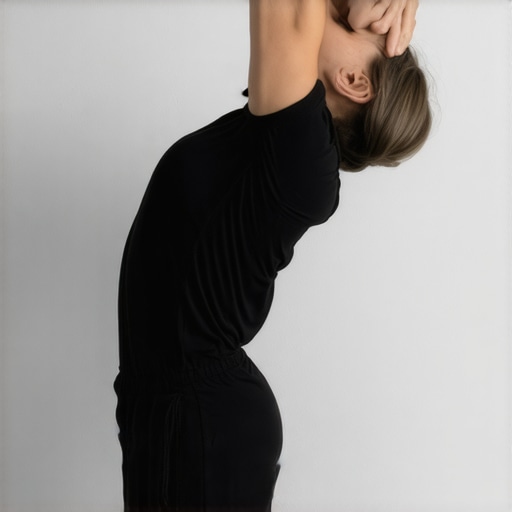
Retract Without Tilting
Gently draw your chin straight back, as if you’re making a double chin to mock a funny photo. You should feel a light stretch at the base of your skull and the front of your neck working. I call this the ‘drawer slide’—you aren’t nodding; you’re sliding the drawer back into the cabinet. If you feel a sharp zing, stop immediately. This move can be the 30-second fix for a pinched nerve in the neck, but only if you don’t force it.
Why Tension Often Masquerades as Strength
I remember the first time I tried this during a particularly brutal week of deadlines. I was parked at a red light, and my neck felt like it was encased in concrete. I pressed my head back into the car’s headrest, focusing on that ‘long’ neck feeling rather than a ‘hard’ squeeze. For the first time in days, the burning between my shoulder blades dimmed. It was a revelation: I didn’t need more power; I needed more precision. This is one of those chiropractic secrets to boost neck comfort and function that works because it offloads the joints.
Keep the Shoulders Out of the Equation
A common pitfall is ‘shrugging’ the movement. If your shoulders crawl up toward your ears, you’re just reinforcing the stress pattern. This is often why your neck muscles tighten during stress—they are trying to do the job of your core and upper back. Keep your collarbones wide and your breath low in your belly. When you master this, you restore your range and see how chiropractic care enhances movement by creating a stable base for your head to pivot on. Don’t worry about doing fifty reps. Five perfect, slow retractions held for three seconds each will do more for your mobility than a hundred sloppy ones.Most people think that if a muscle feels tight, it simply needs to be elongated. I spent months doing exactly that, only to find my range of motion getting worse. Here is the contrarian truth: your brain often makes a muscle ‘tight’ because it is trying to stabilize a joint that it perceives as weak. When you force a stretch on a muscle that is effectively acting as a biological splint, your nervous system panics and clamps down even harder. This is one of the most important chiropractic secrets to regain full mobility after injury—knowing when to strengthen instead of when to pull.
Stop Stretching Your Way Into More Pain
Stretching into sharp pain or forcing a ‘tight’ muscle to yield is a recipe for chronic instability. A study published in the Journal of Physical Therapy Science highlights that individuals with chronic neck pain often have significantly impaired proprioception—the body’s ability to sense its position in space. By over-stretching, you are essentially dulling those sensors further. You need to focus on mobility mastery and expert tips for back pain prevention and recovery that prioritize stability over raw flexibility. [IMAGE_PLACEHOLDER_C]
Why Does Your Jaw Hold the Key to Neck Relief?
Have you ever noticed that you clench your teeth when you are stressed or trying to focus on a difficult task? There is a massive neurological connection between your temporomandibular joint (TMJ) and your upper cervical spine. If you do not address the clenching, even the most perfect chin tuck will not provide long-term relief because the jaw tension keeps the upper neck muscles in a state of high alert. You can try the 10-second fix for jaw tension related to neck pain to see if your ‘neck’ problem is actually a ‘jaw’ problem.
Don’t Let Your Ice Pack Stall Your Recovery
Another common ‘oops’ factor is the ‘ice forever’ mentality. We have been conditioned to reach for the ice pack at the first sign of a stiff neck. While it is helpful for acute, burning inflammation, the reality of why icing isn’t always the best move for a stiff neck comes down to blood flow. To heal damaged tissue, you need circulation. Chronic icing constricts vessels and can actually stall the metabolic processes required for actual repair.
Look Beyond Where It Hurts
The body is an integrated system, not a collection of isolated parts. Sometimes we look at your feet to solve your neck issues because a collapsed arch or a rigid ankle can send a ripple of instability all the way up the spine. If your foundation is tilted, your neck has to work ten times harder to keep your eyes level with the horizon. Have you ever fallen into this trap of treating only the spot where it hurts? Let me know in the comments. By shifting your focus from ‘fixing the pain’ to ‘restoring the system,’ you’ll find that the relief finally starts to stick. Check out these expert methods to relieve neck and back discomfort to begin your comprehensive recovery.Once you stop the immediate fire of neck pain, the real work begins: the maintenance phase. I used to think that once the ‘crunch’ stopped, I was in the clear. But maintenance isn’t a one-and-done deal; it is about the environment you build around your body. For me, that meant finally admitting that my expensive laptop was a postural nightmare without help. I started using a Roost stand—not because it looks cool, but because it is the only way to get the screen to my actual eye level without stacking a bunch of precarious books. If you are a digital nomad or even just a coffee-shop warrior, you have to learn how to set up your laptop at a coffee shop pain-free or you will be right back where you started. I also learned the hard way that even with a stand, why your laptop stand is still causing neck strain often comes down to your keyboard placement. If your elbows are not at a 90-degree angle, your upper traps will eventually rebel. 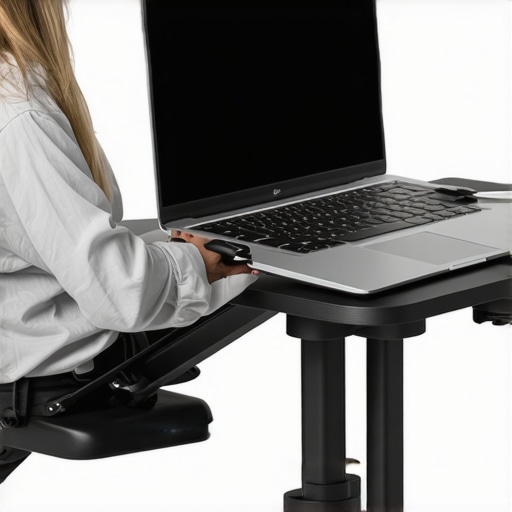
The Gear That Actually Saved My Spine
In my journey, I discovered that the best tools are often the simplest. Beyond the laptop stand, I live by a specific external mechanical keyboard. According to Dr. Alan Hedge, Professor Emeritus at Cornell University and a renowned ergonomics expert, the most ergonomic position for a keyboard is a negative slope, which minimizes the pressure on the carpal tunnel and reduces the need to shrug your shoulders into your ears. This small tweak changed everything for me. Instead of reaching ‘up’ to type, I let my arms hang naturally. I also stopped relying on my chair’s armrests because I realized why your office chairs armrests are hurting your neck—they often force your shoulders into a permanent shrug.
How do I keep my neck feeling this good for the next ten years?
Maintenance is about micro-moments. I follow the 20-20-20 rule for desk workers and neck health religiously now. Every 20 minutes, I look 20 feet away for 20 seconds. This is not just for your eyes; it is a neurological reset for your neck. If you are struggling with a packed schedule, learning how to stay mobile when you have a desk job and no time for the gym becomes your superpower. You do not need a 60-minute yoga session to stay healthy; you need five 1-minute movement snacks.
The Future of Your Spine is Probably Digital
Looking ahead, I predict we will see a massive shift toward AI-driven posture tracking. We are already seeing the emergence of software that uses your webcam to detect when your head is drifting forward and gently blurs your screen as a reminder to sit back. It sounds intrusive, but for those of us who lose ourselves in our work, it is a game-changer. This kind of ‘biofeedback’ is the next frontier in unlocking neck pain relief expert tips for lasting comfort. We are moving away from passive treatments and toward real-time environmental awareness. If you want to start today without fancy software, try the Brueggers relief move to reverse hours of hunched sitting. It is the single most effective way to open your chest and reset your cervical spine in under thirty seconds. Give it a shot right now—stand up, tuck your chin, and rotate your palms outward while squeezing your shoulder blades together. Do you feel that space opening up in your chest? That is what mobility feels like.
Lessons I Learned the Hard Way About Spinal Health
After years of trial and error, I realized that the path to a pain-free life isn’t paved with magic bullets. It’s built on hard-won truths: consistency always beats intensity. Doing a thirty-second chin tuck five times a day is infinitely more effective than a grueling two-hour stretching session once a week. Also, remember that your body uses pain as a dashboard light. You need to focus on chiropractic secrets to regain full mobility after injury rather than just silencing the alarm. Finally, your environment is your greatest ally or your worst enemy—if you don’t change how you sit, no exercise can save your cervical spine.
My Personal Desk Survival Kit
I’ve tested dozens of gadgets, but these are the few that actually earned a permanent spot on my desk. First, a high-quality external mechanical keyboard is non-negotiable to keep your wrists and shoulders neutral. Second, I highly recommend the book Becoming a Supple Leopard—it’s essentially the bible of human movement. Third, I keep two tennis balls taped together to use as a ‘peanut’ for mid-back mobility. These simple tools, combined with unlocking neck pain relief expert tips for lasting comfort, have kept me out of the chronic pain cycle for years. [IMAGE_PLACEHOLDER_E]
The Freedom of Pain-Free Movement Awaits
You don’t have to accept a stiff, crunchy neck as part of your aging process or your job description. By taking these small, intentional steps today—adjusting your monitor, mastering the chin tuck, and listening to your body’s signals—you are investing in a version of yourself that can move freely ten or twenty years from now. It’s about more than just comfort; it’s about having the range of motion that chiropractic care enhances so you can live life on your terms. Start small, be patient, and remember that you can find expert chiropractic solutions that work for your unique situation.
Which part of your workstation setup do you suspect is causing the most trouble for your neck? Let me know in the comments below!