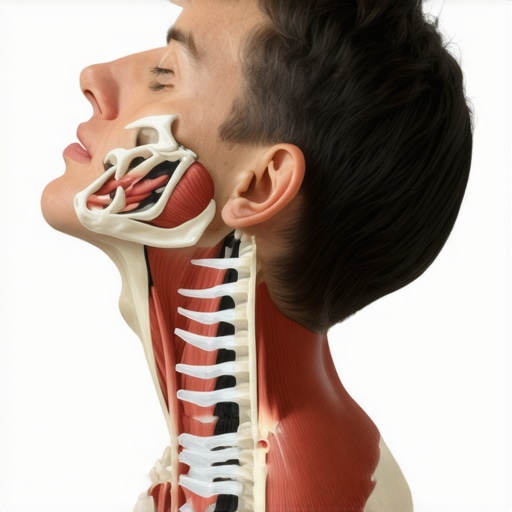
Why icing isn’t always the best move for a stiff neck
I remember waking up three Tuesdays ago with a neck so stiff I had to turn my entire torso just to look at my alarm clock. My first instinct? Grab the blue gel pack from the freezer and numb the pain away. I thought I was being smart, ‘killing the inflammation’ before my day even started. But twenty minutes later, I could barely move. My neck felt like a frozen block of wood, and the pain had moved from a dull ache to a sharp, stabbing protest every time I tried to blink. I could practically hear the grit in my joints, that tiny ‘sandpaper’ sound that makes you wince. It turns out, that little blue pack was my biggest mistake. I was treating my neck like a bruised shin when it was actually a structural hardware problem. [image]
Stop Reaching for the Ice Tray Right Away
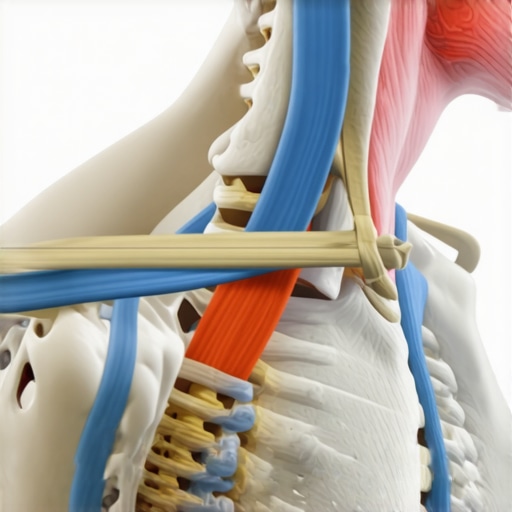
Most of us grew up with the R.I.C.E. method drilled into our heads, but for a chronic ‘kink’ or a stiff neck, that old-school advice can often backfire. When you have a stiff neck, your muscles are often in a protective spasm—they are tight because they are trying to protect the area from further movement. Cold causes blood vessels to constrict and tissues to contract, which—you guessed it—makes that tight muscle even tighter. I spent years making this error, thinking the truth about using heat versus ice for back injuries was as simple as ‘cold is good.’ It’s really not that black and white. Today, we are going to look at why that ice pack might be the enemy of your mobility and how you can actually start effective neck pain management without freezing your joints into place. We’re going to swap that ‘freeze and forget’ habit for strategies that actually invite blood flow back into the area.
Is icing actually worth the hype for a stiff neck?
You might be skeptical. After all, doesn’t every coach and first-aid kit scream for ice? While cold therapy is great for a freshly sprained ankle where there’s massive swelling, a stiff neck is usually a different beast entirely. Many times, what feels like ‘inflammation’ is actually a lack of blood flow or a joint that’s restricted and needs movement. In fact, a study published in the Journal of Strength and Conditioning Research suggested that topical cooling can actually delay recovery because it prevents the necessary inflammatory cells from reaching the tissue to begin the repair process. I used to think stretching a tight muscle isn’t always the answer, and I’ve since realized the same applies to the freezer aisle. Have you ever iced a ‘kink’ only to feel like your neck turned into a concrete pillar an hour later? If so, you aren’t alone, and it’s a clear sign your body is crying out for a different approach to unlocking neck pain relief. Let’s look at why we need to rethink the cold and what we should do instead.
Ditch the Ice and Bring on the Heat
When your neck is stuck, it’s like a rusty gate hinge. Pouring ice on it just makes the rust colder and more brittle. What you really need is the biological equivalent of WD-40: blood flow. Heat is your best friend here because it signals your blood vessels to open up and feed those starving, spasming muscles. I used to think I could just blast a heating pad on high for an hour, but the correct way to use a heating pad for muscle spasms is to use moderate heat for 15-20 minutes. If you overdo it, your body might actually increase inflammation as a defense mechanism. Think of it as a gentle thaw rather than a deep fry.

Micro-Movements Beat Big Stretches Every Time
Most people try to yank their neck back into place. That’s a recipe for a multi-day disaster. Instead, try a controlled micro-rotation. I remember sitting in a high-stakes meeting last year, feeling my neck seize up. I couldn’t exactly start doing yoga in my chair. I simply focused on tiny, almost invisible rotations—moving my chin just a few millimeters to each side while breathing deeply. By the time the meeting ended, my range of motion had improved significantly without me ever breaking a sweat. This kind of the 30-second reset for tech-neck fatigue works because it gently tells your nervous system that it is safe to move again, rather than triggering a protective reflex.
Adjust Your Environment Before Your Body Quits
Your neck doesn’t just decide to hurt for no reason; it is usually responding to a constant, low-grade stressor in your daily setup. One of the biggest culprits is where your eyes are looking. If your monitor is too low, your head—which weighs about as much as a bowling ball—tilts forward, putting massive strain on the upper cervical spine. It’s no wonder why your screen height is the real cause of your headaches. Raising your monitor so your eyes hit the top third of the screen can instantly take the load off those overtaxed muscles and allow the spine to stack naturally.
Why Your Hips Might Be the Real Problem
It sounds counterintuitive, but sometimes the reason your neck is screaming is that your foundation is off. Your spine is a kinetic chain; if the bottom is crooked, the top has to lean to stay balanced. This is a primary reason why we look at your pelvis when your neck hurts. If your hips are tilted from sitting on a wallet or crossing your legs all day, your neck muscles have to work overtime just to keep your head level. This reveals the hidden link between neck pain and spinal health that most people ignore until the pain becomes chronic.
Stop trying to sit like a statue
For decades, we have been told that ‘good posture’ means shoulders back, chest out, and a spine as straight as a ruler. I used to obsess over this, forcing myself into a rigid, military-style uprightness every time I sat down. But here is the contrarian truth: that forced rigidity is often why your neck and back stay in a state of high alert. In my clinical experience, the best posture is your next posture. When you hold yourself in a fixed position, even a ‘perfect’ one, you are essentially starving your discs of the movement-based nutrition they need. This is why sit up straight is actually bad advice for some because it creates a constant, low-level muscle contraction that never lets the nervous system relax. You aren’t a statue; you’re a dynamic organism that thrives on micro-shifts and variety.
Your core might be too stiff for its own good
One of the most common ‘advanced’ mistakes I see is the ‘bracing’ trap. We are taught that a strong core is the ultimate shield for the spine, leading many to walk around with their abs constantly flexed. However, there is a point where why your strong core might actually be too rigid becomes a liability. If your abdominal wall is always ‘on,’ it prevents your diaphragm from dropping fully, leading to shallow chest breathing. This sends a signal of ‘threat’ to your brain and forces your neck muscles to help you breathe, which—you guessed it—leads right back to that stiff neck. We often find that why we look at your ribcage movement for better mobility is because a flexible ribcage is far more protective for your lower back than a rock-hard set of six-pack abs that doesn’t move.
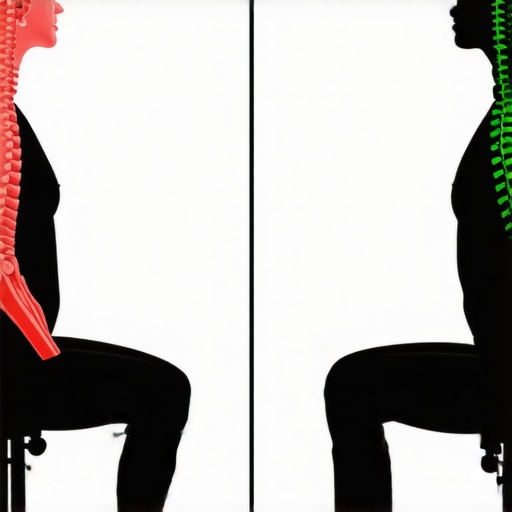
Why does your neck still hurt if the MRI looks perfect?
This is the question that haunts people who have been through the medical ringer. They have the scans, the doctor says the discs look fine, yet they can barely turn their head. The nuance lies in the fact that pain is often functional, not structural. A landmark study published in The Lancet (2018) highlighted that spinal ‘abnormalities’ like bulging discs are incredibly common in people with no pain at all. This means your pain might be coming from how your joints move—or don’t move—rather than a permanent structural ‘break.’ Understanding the difference between muscle soreness and spinal pain is key to getting the right help. When the hardware looks okay but the ‘software’ (your nervous system) is glitching, you need to enhance mobility naturally with chiropractic care to reset those signals. Have you ever fallen into the ‘perfect posture’ trap or been told your core is too weak when it actually feels like a brick? Let me know in the comments.
My minimalist toolkit for a pain-free life
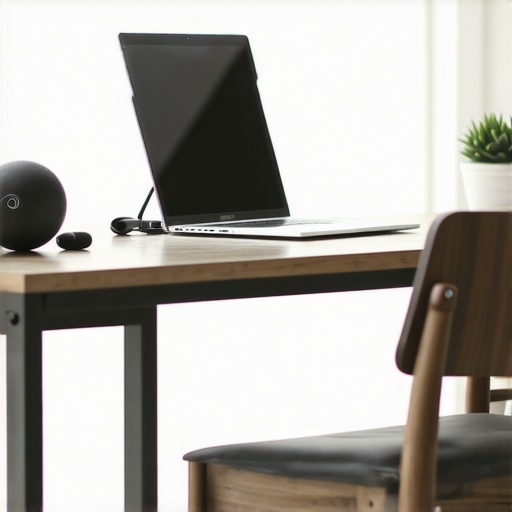
Once you stop the immediate fire of a stiff neck or a back spasm, the real work begins: building a system so it never happens again. I don’t believe in buying every gadget on Instagram, but there are a few non-negotiables in my kit. First, I keep a high-density lacrosse ball—not a tennis ball, which is too squishy—right next to my keyboard. When I feel that familiar burn between my shoulder blades, I use it against a wall. Learning how to use a tennis ball to fix that spot under your shoulder blade (or a lacrosse ball for deeper work) is the single best ‘self-reset’ button I’ve found. It’s about precision, not power; you are looking for that ‘hurts so good’ release of the fascia.
The second tool is a simple lumbar roll. Most office chairs are designed for aesthetics, not anatomy. By adding a roll, you maintain the natural curve of your lower back, which prevents the neck from jutting forward. I’ve found that the correct way to use a lumbar roll in your office chair is lower than you think—right at the beltline—to truly support the pelvic tilt. It’s a small change that makes a six-hour deep-work session feel like twenty minutes on the spine.
How do I keep my spine feeling young for the long haul?
Maintenance isn’t about one big workout; it’s about the ‘daily vitamins’ of movement. I start every single morning with the spider-man stretch that clears up morning stiffness. It opens the hips, rotates the mid-back, and wakes up the nervous system without the jarring impact of a run. As Dr. Stuart McGill, a world-renowned biomechanist at the University of Waterloo, argues in his foundational research, spinal hygiene is about ‘sparing’ the joints by using the big muscles for the heavy lifting. This is why I focus on the bird dog variation that fixes wobbly core muscles rather than traditional sit-ups. It builds that ‘stiff’ core we talked about earlier but in a way that actually protects the discs.
Even how you sleep dictates how you’ll feel at 2:00 PM the next day. I spent years waking up with a ‘crick’ until I mastered the side sleepers guide to pillow placement. It’s not just about the neck; it’s about putting a pillow between your knees to keep your hips from rotating and pulling on your lower back. This holistic view is the core of mobility mastery expert tips for back pain prevention and recovery.
The future of spinal health looks a lot like a video game
I predict we are moving away from passive treatments toward ‘active biofeedback.’ We are already seeing wearable sensors that vibrate when your head tilts past a certain degree—essentially a digital nagging mother for your posture. But the real shift will be in personalized movement ‘prescriptions’ based on your specific gait and limb length. We’re moving toward a world where your chair might actually shift its shape every twenty minutes to force those micro-movements we discussed. Until then, your best defense is an active offense. Try this tonight: spend just 60 seconds doing a slow Bird-dog before bed. It resets your spinal stabilizers after a long day of sitting and prepares your body for a restorative sleep. It’s a small investment with a massive long-term yield.
Spinal Truths That Shifted My Entire Perspective
After years of battling recurring kinks, I finally realized that my body wasn’t ‘broken’; it was just loud. The biggest lightbulb moment for me was learning that pain is often a protective signal from the nervous system rather than a sign of actual tissue damage. I spent so long trying to ‘fix’ a muscle when I really needed to calm a reflex. I also learned that why stretching a tight muscle isn’t always the answer; if that muscle is tight because it is trying to stabilize a weak joint, stretching it only makes the joint more vulnerable. Finally, I stopped looking at my neck in isolation. Realizing the difference between muscle soreness and spinal pain allowed me to stop treating every ache with a massage and start looking at my foundation.
The Minimalist Tools I Actually Swear By
I’ve cleared out the drawer full of vibrating gadgets and focused on three things that actually move the needle. First is the high-density ball. Knowing how to use a tennis ball to fix that spot under your shoulder blade is a game-changer for those of us who live at a computer. Second, I never sit for long periods without a physical reminder to stay upright; the correct way to use a lumbar roll in your office chair ensures my neck doesn’t have to carry the weight of my poor posture. Lastly, I swear by the spider-man stretch that clears up morning stiffness. It’s the only movement that hits my hips and mid-back simultaneously, providing a total system reset before my first cup of coffee.
#IMAGE_PLACEHOLDER_E#
Get Your Freedom of Movement Back
Healing a stiff neck isn’t about a single ‘magic’ adjustment or a miracle ice pack. It’s about a lifestyle of movement and learning to listen to the subtle whispers of your spine before they turn into screams. When you prioritize effective neck pain management and choose to enhance mobility naturally with chiropractic care, you aren’t just chasing away a headache; you are investing in your long-term independence. Your body is designed to move, rotate, and thrive. Stop freezing it into place and start giving it the blood flow and alignment it craves. Have you ever tried icing a stiff neck only to find it felt significantly tighter an hour later? Let me know your experience in the comments below!