Why Your Neck Muscles Tighten During Stress
I was sitting in my car three years ago, gripped by a deadline that felt like a life-or-death sentence, when I realized I couldn’t actually turn my head to check for traffic. It wasn’t a sudden injury or a gym mishap; it was just a Tuesday. My shoulders were practically touching my earlobes, and my neck felt like it had been replaced by two rusted iron rods. That was the moment I realized my body was reacting to a mental problem with a very physical, very painful defense mechanism. If you have ever felt that creeping heat at the base of your skull during a tough week, you aren’t imagining things, and you aren’t alone. Today, we are going to dive into why your brain triggers this ‘guarding’ response and, more importantly, how you can actually stop the cycle before your neck locks up for good.
Your Brain Thinks Your Inbox is a Saber-Toothed Tiger
The human body is incredible, but it’s also a bit outdated when it comes to modern life. When you are stressed about a presentation or a bill, your amygdala—the brain’s fire alarm—doesn’t know the difference between a work email and a predator. It triggers the sympathetic nervous system, which floods your body with cortisol and adrenaline. One of the primary results is something called ‘muscle guarding.’ According to the American Psychological Association, chronic stress causes the muscles in the body to stay in a constant state of guardedness, which is exactly why your neck hurts more when you are stressed. I made the massive mistake early on of trying to ‘power through’ this stiffness with aggressive, jerky stretching. I thought if I just pulled hard enough, the muscles would give up and relax. Instead, I just made the inflammation worse because I was fighting a neurological reflex with brute force. You have to treat these muscles like a frightened animal, not a stubborn door hinge. It’s about calming the nervous system down so the physical tension has permission to let go.
Do these tiny muscles really have that much power over my mood?
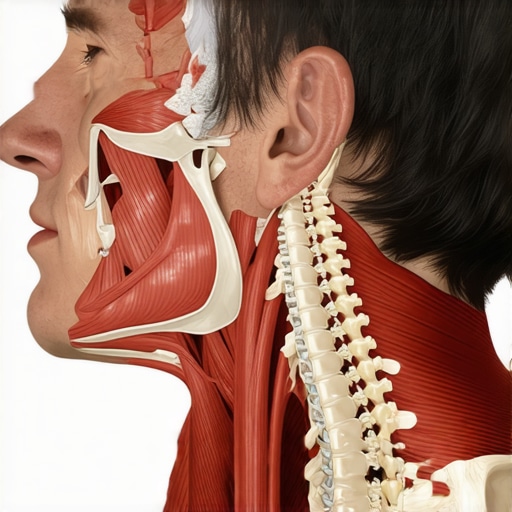
It’s a fair question to ask if a bit of neck tension can actually dictate your entire day. The truth is, the relationship is a two-way street. When those muscles at the top of your spine tighten, they can actually compress the small nerves that lead back into your head, often leading to cervicogenic headaches. I’ve seen so many people try to medicate the headache without ever addressing the fact that their shoulders are hiked up to their chin. There is even a profound connection between your jaw tension and your top neck bone that can keep you in a state of high alert. When you are physically locked up, your brain receives a constant signal that you are still in ‘danger,’ which keeps your anxiety levels spiked. It’s a vicious loop that I struggled with for months before I finally learned to integrate better habits, like the 20-20-20 rule for desk workers. Have you ever noticed that your neck pain peaks right when your schedule gets the craziest? I’d love to hear if you’ve found a specific ‘trigger’ that sets off your stiffness. Understanding that this isn’t just ‘in your head’—but rather a physical response to what’s in your head—is the first step toward finding lasting neck pain relief.
Stop Breathing Into Your Shoulders
Most of us become ‘chest breathers’ the second a deadline looms. Your neck houses small accessory muscles meant for emergency gasping, not for 25,000 breaths a day. When you use them as your primary breathing engine, they tighten in protest. I remember lying on my office floor in 2021, staring at the ceiling tiles while my colleagues probably thought I was having a crisis. I had a heavy anatomy textbook balanced on my stomach. I wasn’t reading; I was training myself to make the book move up and down without my shoulders shrugging. It took ten minutes for my nervous system to settle, but once it did, the ‘heat’ at the base of my skull vanished. By learning how to breathe into your lower back to reduce muscle spasms, you finally give those neck muscles a day off. This simple reset addresses the connection between shallow breathing and back pain that keeps most of us in a state of high alert. 
Put Your Scapulae to Work
When your shoulders roll forward, your neck is forced to act like a crane holding a heavy wrecking ball. I used to think ‘fixing’ this meant pinning my shoulders back like a soldier, but that just traded a sore neck for a mid-back cramp. The goal is to let your shoulder blades ‘float’ into place. I started practicing the scapular squeeze that relieves mid-back tension twice an hour, and the results were immediate. It shifts the burden of stabilization away from the delicate neck joints. If you don’t make this adjustment, you’ll constantly wonder why your shoulder feels heavy after typing. It is not just the weight of the work; it is the lack of structural support.
The Five-Second Monitor Test
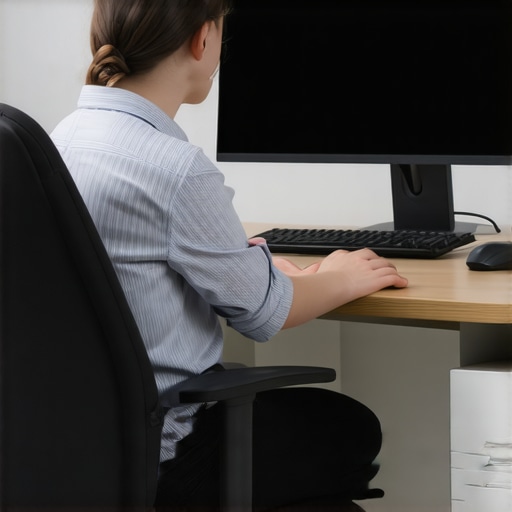
You cannot out-stretch a bad desk setup. I spent a small fortune on massage therapy before realizing my monitor was two inches too low, forcing my neck into a permanent ‘cradling’ position. You should perform the 5-second check to see if your monitor is too low right now. Your eye level should naturally hit the top third of your screen. This ergonomic discipline extends to your phone as well; you have to stop tilting your head and find the right way to use your phone to avoid the tech-neck trap.
Break the Loop with Targeted Movement
Sometimes, the muscle guarding becomes a neurological loop that you cannot break on your own. When a spinal segment isn’t moving correctly, it sends a constant stream of ‘danger’ signals to your brain, which responds by tightening the muscles even more. This is where a chiropractic adjustment acts as a circuit breaker. It clears the interference and allows the brain to see that the emergency is over. There is a specific reason why you feel taller after a chiropractic adjustment—your body is finally allowed to expand because the guarding reflex has been switched off. Combining these office resets with expert methods to relieve neck and back discomfort builds a much more resilient spine. Use these expert tips for mastering pain relief to keep the momentum going whenever life starts to feel heavy again.We have all heard the advice to ‘sit up straight,’ but here is a truth that might surprise you: chasing a rigid, ‘perfect’ posture is often what keeps you locked in a cycle of pain. In my experience, the stiffest and most symptomatic patients are often the ones trying the hardest to look like a mannequin. This is because the human body is designed for variability, not static symmetry. When you force yourself into a ‘soldier stance,’ you are essentially engaging a different kind of muscle guarding, trading one form of tension for another. You might think you are helping your spine, but why your perfect posture is actually making you stiff comes down to the lack of blood flow and the constant isometric strain on your paraspinal muscles.
Ditch the Military Stance
The ‘Oops’ factor in modern ergonomics is the belief that there is a single ‘right’ way to sit. I see it every day: people buy the most expensive chairs and then sit in them like they are afraid to move. This leads to ‘static loading,’ where the same tissues take the brunt of your body weight for hours on end. In reality, why sit up straight is actually bad advice for some is that it discourages the natural micro-movements your spinal discs need to stay hydrated. Think of your spine like a sponge; it needs movement to ‘pump’ nutrients in and waste out. If you stay frozen in a ‘correct’ position, that sponge eventually dries out. This is a foundational concept in understanding back pain and improving your mobility.
Why does my neck still hurt despite my ‘perfect’ ergonomics?
It is incredibly frustrating to invest in high-end equipment only to remain in pain. The nuance most people miss is that the brain cares more about safety than ‘correct’ angles. Research published in the British Journal of Sports Medicine notes that there is no single ‘correct’ posture that universally prevents pain. Instead, the study emphasizes that the ‘best’ posture is simply your next posture. If your nervous system still perceives a threat—perhaps from that ‘saber-toothed tiger’ inbox we discussed earlier—it will keep your muscles tight regardless of how your monitor is tilted. This is why we focus on how chiropractic care enhances movement rather than just ‘fixing’ a crooked bone. We need to teach your nervous system that it is safe to move again. 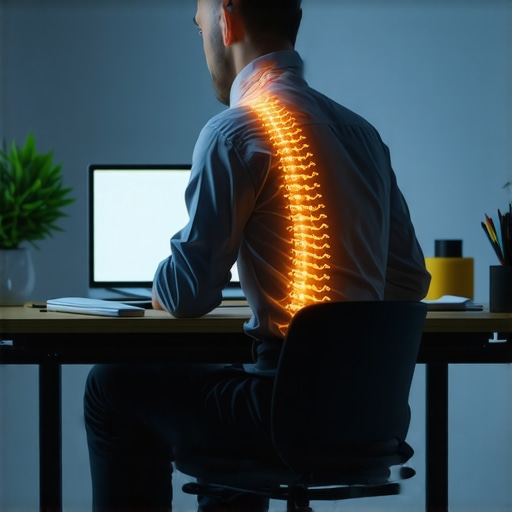
Stop Treating Your Core Like a Suit of Armor
Another common mistake is the obsession with ‘bracing’ the core. I’ve met many fitness enthusiasts who have developed chronic back tension because they never turn their ‘abs’ off. While stability is vital, why your strong core might actually be too rigid is a nuance that even seasoned athletes miss. A core that cannot relax is just as dysfunctional as a core that cannot engage. This rigidity limits your ribcage movement, which brings us back to that shallow breathing issue we touched on. To truly find proven chiropractic strategies for back mobility, you have to learn to oscillate between tension and relaxation. Have you ever fallen into this trap of trying to ‘hold’ yourself in a perfect position all day? Let me know in the comments. By shifting your focus toward mobility mastery and back pain prevention, you move away from the fragility mindset and toward a body that can handle the stresses of life without locking up.Once you stop treating your body like it’s made of glass, you need a toolkit that keeps things moving when life gets in the way. I don’t believe in expensive gadgets that gather dust; I believe in low-tech solutions that have a high impact on your neurology. For me, the most important tool is actually a standard tennis ball. It sounds basic, but how to use a tennis ball to fix that spot under your shoulder blade is the single most effective way to interrupt a muscle spasm while you are still at your desk. I keep one in my bag because it allows me to perform a targeted release on the rhomboids—those muscles that scream at you after four hours of emails. It isn’t just about the pressure; it’s about providing the brain with a fresh sensory input that overrides the pain signal. Research from the Journal of Bodywork and Movement Therapies suggests that self-myofascial release tools can significantly increase joint range of motion without decreasing muscle performance, which is a win-win for anyone with a busy schedule.
Put a Tennis Ball in Your Laptop Bag
I personally use this method because it’s portable and immediate. When you lean against a wall with that ball, you are specifically targeting the trigger points that lead to those cervicogenic headaches we mentioned earlier. Another non-negotiable for my car and office chair is a lumbar roll. If you aren’t using one, you’re likely fighting a losing battle against gravity. Understanding the correct way to use a lumbar roll in your office chair can be the difference between a productive afternoon and a week-long flare-up. These tools aren’t just accessories; they are biological hacks that keep your spine in a neutral, happy place while you focus on your work. This is a core component of back pain recovery and how chiropractic care transforms lives by giving you the power to manage your own health between visits.
How do I keep my spine resilient for the long haul?
Maintenance is less about a two-hour gym session and more about the three-minute check-ins you do throughout the day. I recommend setting a silent alarm for every 90 minutes to perform a quick postural audit. Are your shoulders at your ears? Is your chin jutting toward the screen? By learning how to adjust your monitor to avoid eye and neck strain, you remove the environmental trigger that causes your body to guard in the first place. This consistency is what leads to mobility mastery and back pain prevention. It is about building a lifestyle where movement is the default, not the exception. When you restore your range through chiropractic care, you have to protect that new movement with these daily habits.
Your Next Chair Might Talk Back to You
The trend in spinal health is moving rapidly toward biofeedback. I predict that in the next five years, we will see a massive shift from ergonomic furniture to ‘active’ wearables that vibrate when your deep neck flexors go dormant. We are already seeing the early stages of this with haptic feedback devices. However, technology can only tell you that a problem exists; it can’t fix the underlying structural movement pattern. That is why combining these high-tech insights with proven chiropractic techniques will be the gold standard for longevity. I want you to try one thing tomorrow: take a tennis ball to work and use it against the wall for 60 seconds during your lunch break. You’ll be surprised at how quickly your brain decides to let your shoulders drop.Over the years, I’ve found that the most resilient patients aren’t the ones with the strongest cores, but the ones who know how to listen to their nervous system. The hardest lesson I learned is that pain is often a request for change, not a sign of permanent damage. If you keep pushing through the ‘heat’ at the base of your skull, you are just reinforcing the guarding reflex. Instead, I started applying insights from top chiropractors that focus on safety and mobility rather than brute force. It’s also vital to realize that your body isn’t a machine; it’s an ecosystem that responds to your environment. If you want to boost your neck comfort and function, you have to look at the 23 hours a day you spend outside the clinic.
What Stays in My Desk Drawer for Daily Support
To keep my spine from relocking during long workdays, I rely on a few non-negotiable tools. First is the standard tennis ball for that specific ‘trigger spot’ under the shoulder blade. Second is a simple lumbar roll to stop the low-back ‘slump’ that inevitably triggers a neck guarding response. I also highly recommend the book ‘Becoming a Supple Leopard’ by Dr. Kelly Starrett, which completely changed how I view human movement. These resources, combined with expert tips for lasting comfort, ensure that I am never a victim of my own desk setup again. #IMAGE_PLACEHOLDER_E#
Your Body is Ready to Let Go
You don’t have to live in a state of constant physical defense. By integrating chiropractic care to enhance mobility naturally, you are giving your nervous system the green light to relax. It’s about taking those small, consistent steps to revitalize your mobility and find relief. You have the tools, the knowledge, and the power to break the cycle of stress-induced tension once and for all. Have you found a specific desk habit that always seems to trigger your neck pain? Let me know in the comments below.