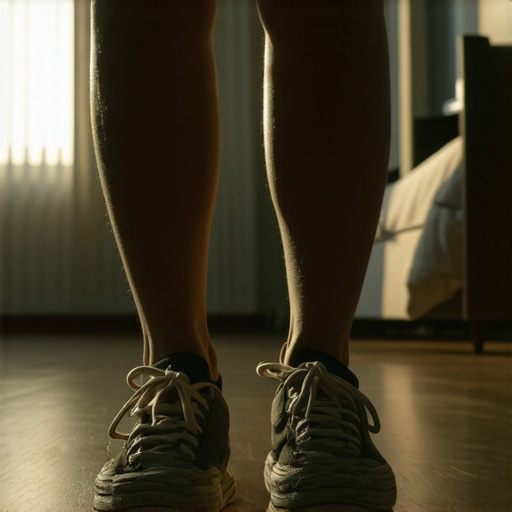
How Your Sleep Position Affects Your Sciatica Symptoms
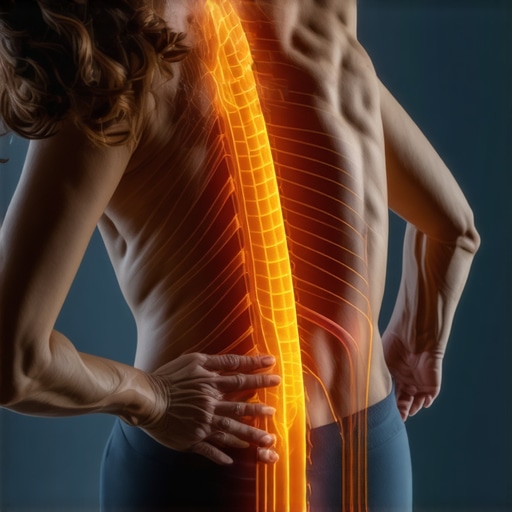
I remember staring at the ceiling at 3:17 AM, gripped by a searing heat that started in my lower back and shot down my left leg like a live wire. I tried to roll over, but my body just said ‘no.’ It was a terrifying, visceral feeling of being trapped in my own bed. For years, I was convinced I just needed a more expensive mattress or more Ibuprofen. I was a committed stomach sleeper, blissfully unaware that I was essentially strangling my sciatic nerve for eight hours every single night. It wasn’t until a particularly brutal morning where I had to crawl to the bathroom that I realized my nighttime habits were the culprit. Today, I am going to share exactly how I revamped my rest and why your current favorite position might be the reason you are struggling to find back pain recovery that actually lasts.
The Night My Bed Turned Into a Torture Device
I used to think that as long as I was horizontal, I was recovering. I was dead wrong. I spent years curled in a tight fetal position because it felt ‘safe,’ but I was actually putting my lumbar spine under a massive amount of tension. One of my biggest early mistakes was assuming that a softer bed would cushion the blow. In reality, your SI joint hates your soft mattress because it allows your pelvis to sink into an awkward tilt, pulling on the sciatic nerve. Have you ever felt that terrifying ‘stuck’ feeling when trying to get out of bed in the morning? It is usually a sign that your posture during the night has left your muscles in a state of high alert.
Is a simple pillow shift actually worth the hype?
You might be skeptical that something as basic as a pillow could fix a problem that feels like a medical emergency. I was too. I thought ‘real’ solutions involved surgery or heavy-duty machinery. But think about it: you spend a third of your life in bed. If your spine is twisted for that long, no amount of daytime stretching can fully undo the damage. According to Harvard Health Publishing, sleeping on your stomach is often the worst offender because it forces your neck and spine into an unnatural arch, which can exacerbate nerve compression. I had to learn how to sleep on your back without waking up stiff by using specific bracing techniques that felt weird at first but saved my mobility in the long run.
Stop Fighting Your Anatomy While You Sleep
When you have sciatica, your nerve is already inflamed and sensitive. Any position that narrows the space where the nerve exits the spine—the intervertebral foramen—is going to cause a flare-up. For me, the ‘lightbulb moment’ came when I realized that the best way to sleep after a chiropractic adjustment was to mimic the alignment the doctor had just created. If you are a side sleeper like I was, your top leg often slides forward, rotating your lower back and yanking on the nerve. Just by placing a firm pillow between my knees, I neutralized my pelvis. It sounds too simple to work, but it was the first time in months I didn’t wake up reaching for the heating pad. You also need to know how to tell if you need a new mattress, because even the best position can’t save you from a bed that has lost its structural integrity. We are about to dive into the specific ‘hacks’ for every type of sleeper, from the back-dwellers to the side-tuckers, so you can finally stop dreading bedtime.To fix your sleep, you have to stop thinking of your bed as a soft cloud and start seeing it as a structural support system. If you are a side sleeper, your top hip acts as a heavy weight that naturally wants to pull your spine into a twist. Imagine your spine is a wet towel being wrung out; that is exactly what happens when your top knee drops down to touch the mattress. You need to relieve neck and back discomfort using these expert methods by placing a firm, king-sized pillow between your knees and all the way down to your ankles. This acts like a structural spacer, keeping your hips stacked and your nerve path open.  I remember one night at a friend’s cabin where I forgot my extra pillow. I tried to use a bundle of dirty laundry to prop up my leg. It was lumpy, shifted constantly, and I woke up with a literal lightning bolt of pain in my glute because my pelvis had rotated for six hours straight. Never skip the proper tools.
Build a Pillow Bridge for Side Sleeping
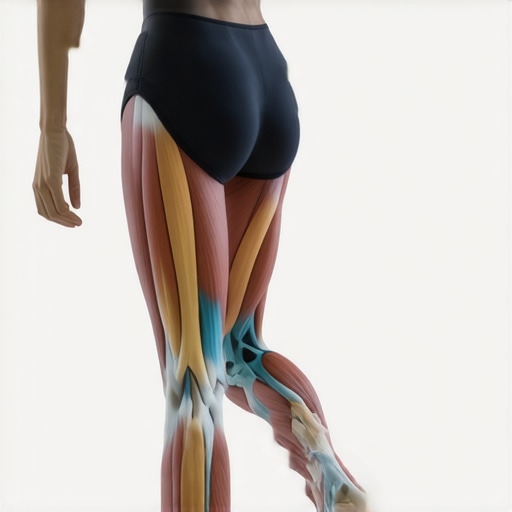
When you stack your legs correctly, you are essentially creating a neutral ‘chassis’ for your nervous system. If your knees are together but your ankles are touching, your hip is still angled. You want the pillow to create a parallel line from your hip joint to your feet. This prevents the piriformis muscle from stretching and compressing the sciatic nerve. You can also boost your back health with simple yet effective chiropractic hacks by hugging a second pillow to your chest. This prevents your top shoulder from collapsing forward, which otherwise pulls on your mid-back and creates a chain reaction of tension that travels straight down to your lumbar spine.
Flatten Your Spine if You Sleep on Your Back
If you prefer your back, your primary enemy is the ‘lumbar arch.’ A large gap between your low back and the bed creates a suspension bridge effect that leaves your muscles on high alert. You can fix this by sliding a bolster or two plump pillows under your knees. This slight elevation causes a posterior pelvic tilt, which flattens the lumbar spine against the mattress and takes the ‘tug’ off the sciatic nerve. You also have to consider the head. If your pillow is too high or too flat, you are kinking the hose of your spinal cord. That is why your pillows should be replaced every eighteen months to maintain the specific loft required to keep your neck in line with your tailbone.
Master the Log Roll Movement
The most dangerous moment for your spine isn’t always while you sleep; it is how you transition from sleep to standing. Stop ‘sit-upping’ out of bed. This explosive movement is a disc’s worst nightmare because it combines compression with a forward bend. Instead, use the best way to get out of bed for disc health: the log roll. Keep your torso and hips as one solid unit, roll to your side like a falling log, and use your arms to push your body up while your legs swing to the floor in one fluid motion. When I finally committed to this technique, that terrifying morning ‘stiff-back’ feeling vanished within a week. Once you are upright, immediately start the 3-step morning routine for hip mobility to wake up the joints before you even pour your first cup of coffee.
Ditch the Soldier Stance
I see it all the time: patients walk into my clinic with chest puffed out and shoulders pinned back, trying desperately to maintain ‘perfect’ posture. But here is the secret: static posture is a myth. Forcing your body into a rigid, upright position creates isometric fatigue in your paraspinal muscles. You are essentially asking your back to run a marathon while standing still. Research published in the British Journal of Sports Medicine suggests that postural variability—the frequency of movement—is far more predictive of comfort than maintaining one specific ‘ideal’ shape. This is why mobility mastery is about flow, not just holding a pose.
Stop Stretching Your Way Into More Nerve Damage
One of the most common ‘oops’ factors I encounter is the obsession with stretching the hamstrings when you have sciatica. If you feel a sharp, zapping pain behind your knee when you bend forward, that isn’t a tight muscle—it is a tethered nerve. When you pull on that leg, you are stretching the sciatic nerve like a rubber band that is already frayed. Instead of aggressive stretching, you should focus on proven chiropractic strategies that create space in the spine rather than tension in the leg. Even popular moves like the ‘bird-dog’ can backfire; I have seen many people make the bird dog mistake that puts stress on your spine by over-arching their low back, which pinches the very joints they are trying to stabilize. 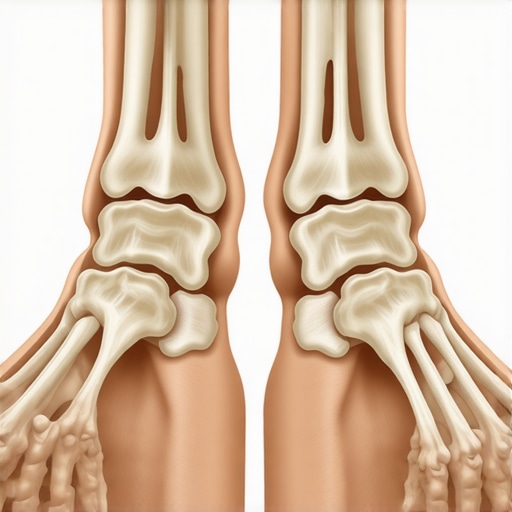
Can your feet really be the reason your neck feels like a brick?
It sounds like a stretch, but your body is a kinetic chain. If your arches collapse, your knees rotate inward, your pelvis tilts, and your neck has to crane forward to keep your eyes level. This is exactly why we look at your feet to solve your neck issues. You cannot fix the top of the tower if the foundation is leaning. This leads us to the ‘trap’ of the modern office. Many of my patients swear they are doing everything right by standing, yet why standing desks cause hip pain often comes down to ‘hanging’ on one hip or locking your knees. We also need to talk about the ‘ice it’ reflex. While cold can numb pain, why icing isnt always the best move for a stiff neck is a nuanced conversation; sometimes heat is better for increasing blood flow to chronic, ischemic muscles that are ‘starving’ for oxygen. To truly revitalize your mobility, you have to stop chasing the symptom and start addressing the structural biomechanics. Have you ever fallen into this trap? Let me know in the comments.Once you have sorted out your sleeping environment, the real work begins in the margins of your day. Maintenance is not just about avoiding bad habits; it is about actively curating your environment with tools that support your anatomy. For instance, I am a huge advocate for localized recovery, but I see people misuse technology all the time. If you own a percussion massager, you must learn how to use a massage gun on your lower back safely. I personally never use it directly on the vertebrae; instead, I focus on the fleshy meat of the gluteus medius and the quadratus lumborum (QL). This releases the tension that pulls on your lumbar spine without risking a percussive strike to a sensitive facet joint. 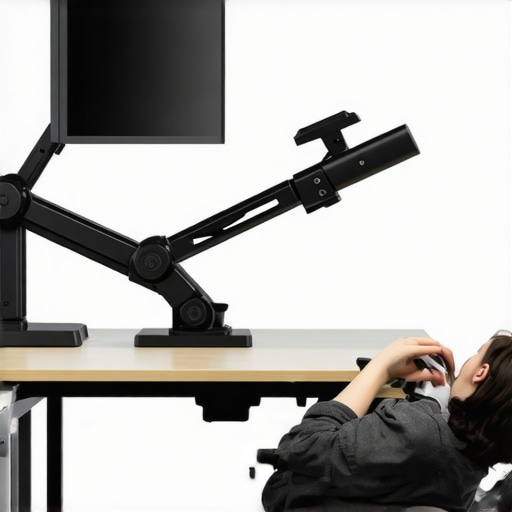
How do I keep my spine resilient for the next decade?
Long-term results come from moving beyond reactive care and into proactive stability. In the future, I believe we will see a massive shift toward wearable biomechanical sensors that alert us to pelvic tilts before the pain even starts. Until that tech is mainstream, you have to be your own sensor. This involves scaling your efforts by integrating mobility mastery into your work hours. If you are struggling with recurring issues, you might need to dive into effective neck pain management that addresses your visual environment. I found that even with a perfect chair, why your laptop stand is still causing neck strain often comes down to the focal distance of your eyes—if you are squinting, your chin naturally drifts forward into a ‘vulture’ posture.
Upgrade Your Workspace to Save Your Cervical Curve
You can have the most expensive ergonomics in the world, but if your monitor height is off by even two inches, you are toast. I recommend a mechanical monitor arm over a static stand every single time. It allows you to how to adjust your monitor to avoid eye and neck strain by moving the screen to meet your eyes as your posture shifts throughout the day. Dr. Stuart McGill, a world-renowned spine biomechanics expert at the University of Waterloo, emphasizes that ‘the best posture is the next posture.’ This means your tools should facilitate movement, not just static support. To revitalize your mobility, you should also implement the scapular squeeze that relieves mid-back tension every time you finish a phone call. This simple reset prevents the ‘frozen’ feeling in your upper back that often leads to lower back compensation. Start by integrating the chin tuck drill to combat tech neck instantly during your next coffee break—it is the single most effective way to re-educate the deep neck flexors that have gone dormant from years of screen time. Try this right now: sit up tall, draw your chin straight back like you’re making a double chin, and hold for five seconds. Feel that stretch at the base of your skull? That is the beginning of your long-term recovery.
The Hardest Lesson I Learned About Chronic Nerve Pain
Reflecting on my journey, the most profound realization was that pain isn’t an enemy to be silenced, but a messenger to be heard. For years, I treated my sciatica like a temporary glitch instead of a systemic signal. Here is what I wish I had embraced sooner:
- Movement is more than just exercise: It is about how you move from the couch to the kitchen. Once I mastered the secret to walking without lower back fatigue, my recovery accelerated because I was not constantly micro-stressing my joints.
- Stop the ‘Stretch-Till-It-Hurts’ Cycle: If a stretch causes a sharp zing or a zap, stop immediately. You are likely tugging on an inflamed nerve. Real back pain recovery comes from stability and decompression, not just chasing flexibility.
- Your environment is your best therapist: If you spend eight hours in a chair that fights your spine, you will spend the other sixteen hours trying to recover from it.
My Go-To Kit for Spine Resilience
I do not believe in buying every gadget on the market, but there are a few non-negotiables that made a massive difference in my spinal health. First, never underestimate the power of a fresh support system; knowing why your pillows should be replaced every eighteen months changed the quality of my sleep instantly by maintaining my neck’s natural curve. I also swear by the 30-second pec stretch to fix slumping shoulders every time I step away from my laptop. It is a simple reset that prevents the upper-back tension that eventually pulls on my lumbar region. Finally, I highly recommend keeping a firm bolster nearby—not just for sleep, but for propping up your legs while reading to maintain that neutral pelvic tilt we discussed earlier.
A Future Without the Fear of Movement
Healing is rarely a straight line, but it is always possible. You do not have to live in fear of that 3:17 AM lightning bolt forever. By making these small adjustments to how you sleep, sit, and move, you are giving your nervous system the breathing room it desperately needs. When you enhance mobility naturally with chiropractic care and pair it with these daily habits, you create a foundation for a life that is not defined by what you cannot do. You deserve to wake up feeling refreshed and ready for the day. Have you tried changing your pillow setup or using the log-roll technique yet? Let me know in the comments how it felt for your back!