The correct way to use a heating pad for muscle spasms
I will never forget the Tuesday my lower back decided to stage a full-scale rebellion. I wasn’t even doing anything heroic; I was simply reaching for a bag of flour in the pantry when snap. Suddenly, I was frozen in a crooked C-shape, clutching the shelving for dear life. My first instinct? I grabbed my old electric heating pad, cranked it to the ‘High’ setting, and fell asleep with it pressed against my spine for three hours. I woke up with skin that looked like a grilled cheese sandwich and a back that felt twice as stiff as before. That was my ‘lightbulb moment’—or rather, my ‘burn-mark moment.’ I realized that while heat is a miracle worker for a seizing lower back, most of us are doing it all wrong and actually prolonging our own misery.
Get Real Relief Without Toasting Your Skin
We reach for the heating pad because it feels like a warm hug for our angry muscles, and frankly, it’s comforting. But there is a massive difference between therapeutic warmth and sheer heat. When your muscles spasm, they are essentially in a state of emergency lockdown. My big mistake early on was thinking that more heat equaled faster healing. It doesn’t. In fact, if you’ve been wondering about the truth about using heat versus ice for back injuries, you might be surprised to learn that excessive heat can actually increase local inflammation if the timing is off. We want to coax the muscle to relax, not boil it into submission. Today, I’m going to show you the exact timing and temperature settings that actually work to melt away those spasms without causing a secondary inflammatory flare-up. Have you ever ended up feeling stiffer the morning after using a heating pad? You aren’t alone, and it’s usually because of one specific timing error.
Is cranking the temperature actually worth the risk?
There is a persistent myth that if the pad isn’t almost burning you, it isn’t ‘reaching the deep tissue.’ That’s just not how biology works. According to clinical insights from Johns Hopkins Medicine, heat therapy works by dilating the blood vessels and increasing oxygen flow to the area, but this process happens at much lower temperatures than most people realize. If you go too hot, your body actually triggers a protective reflex that can make the spasm worse. This is why knowing the difference between muscle soreness and spinal pain is vital before you even plug that cord in. If you’re dealing with a true spinal issue, a heating pad might just be a temporary mask for a deeper problem that needs a different approach. I learned the hard way that a heating pad is a tool, not a cure-all, and using it correctly is the difference between a productive afternoon and a week spent on the floor.
[image_placeholder]
Before we dive into the step-by-step ‘Neighborly Method’ for heat application, we need to talk about why your body responds to warmth in the first place. It’s all about blood flow. By the end of this, you’ll know exactly how to use that pad to regain your mobility without the risk of ‘toasted skin syndrome’ or increased swelling.
The 20-Minute Protocol That Stops Muscle Rebellion
The first rule of the ‘Neighborly Method’ is simple: we are simmering, not searing. Think of your back muscles like a cold stick of butter. If you blast a stick of butter with a blowtorch, the outside burns while the middle stays a brick. However, if you leave it in a warm room, it softens all the way through. This is how your fascia and deep muscle fibers respond to warmth. When I finally learned to turn the dial down to ‘Medium,’ I felt a deep, melting sensation that ‘High’ never gave me. This is the foundation of restore your back mobility: proven chiropractic strategies because it prepares the tissue for movement rather than just shocking the nerves.
Stop Aiming for the Sun: The Case for Medium Heat
If your skin is turning bright red or splotchy, you’ve gone too far. High heat actually causes the superficial capillaries to dilate so much that they ‘steal’ blood flow from the deeper muscles you’re trying to reach. Keep the setting on low or medium. I remember a particularly nasty flare-up after a weekend of yard work where I resisted the urge to crank the heat. Instead, I kept it at a steady, gentle warmth for 15 minutes. By the end, my back felt fluid rather than fried. This subtle approach is why the truth about using heat versus ice for back injuries is so often misunderstood; people use heat as a blunt instrument when it should be a surgical tool.
Why 20 Minutes is the Sweet Spot for Spine Recovery
Timing is where most people fail. You want to apply heat for 15 to 20 minutes, then remove it for at least forty. This ‘on-off’ cycle prevents the body from over-inflaming the area. If you leave it on for an hour, you’re basically slow-cooking your connective tissue. Once, while recovering from a lifting injury, I set a timer and actually got up to move after the 20 minutes was up. That small window of warmth gave me just enough slack in the muscles to perform a the 3-minute morning routine to lubricate your joints without that sharp, stabbing resistance. If you stay under the heat for too long, you risk a rebound effect where the muscle tightens even harder once the source is removed.

Ditch the Dry Pad for Steamy Relief
Most electric pads provide ‘dry heat,’ which can actually draw moisture out of the skin and leave the muscles feeling brittle. The secret is moist heat. If your pad doesn’t have a moisture insert, simply dampen a thin washcloth with warm water, wring it out well, and place it between the pad and your skin. This allows the heat to penetrate deeper and much faster. I tried this for the first time after a long flight where my sciatica was screaming. The difference was night and day. Dry heat felt like a surface burn; the moist heat felt like it reached right into the joint. This is especially helpful when you realize that why stretching a tight muscle isnt always the answer—sometimes the muscle isn’t short, it’s just dehydrated and starved of blood flow.
Positioning Yourself for Maximum Penetration
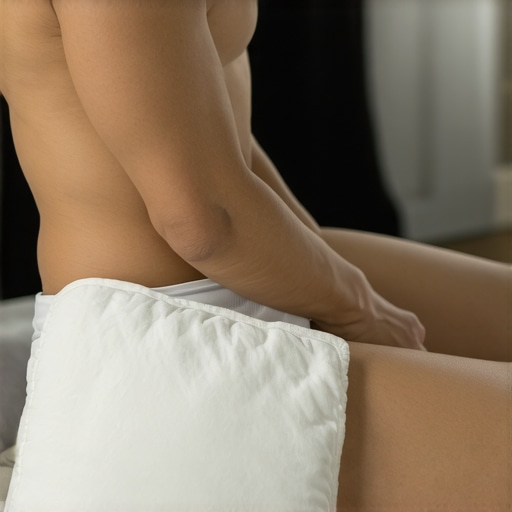
Don’t just lay flat on the pad. If you are lying on your back, the weight of your body can compress the heating elements, creating ‘hot spots’ that cause burns. Instead, lie on your side with a pillow between your knees and lean back into the pad. This preserves the natural curve of your spine and ensures you aren’t fighting the proper way to get out of bed to protect your discs later because you spent 20 minutes in a strained position. This lateral positioning allows the heat to wrap around the side of the lumbar spine where the stabilizers live, providing a more comprehensive release than a flat-back approach ever could.
Now, here is the nuance that most ‘weekend warriors’ miss: sometimes the tightness you feel isn’t because a muscle is short, but because your nervous system is using it as a biological brake. I see this all the time with people who try to fix their issues by obsessing over ‘perfect’ alignment. We have been told for decades that we must ‘sit up straight’ like we have a rod through our spine, but that advice is actually one of the main reasons people stay locked in a cycle of discomfort. In fact, why your perfect posture is actually making you stiff is a topic I find myself explaining at least five times a day in the clinic. When you force a ‘military’ posture, you are engaging stabilizer muscles that aren’t meant for long-term endurance, leading to that deep, gnawing fatigue that a heating pad can only temporarily mask.
The Dangerous Trap of Over-Bracing Your Abs
The ‘Oops’ factor that I see even in advanced athletes is what I call ‘core-rigidity syndrome.’ Everyone tells you that you need a strong core to protect your back, so you walk around with your abs perpetually braced as if someone is about to punch you. This is a massive mistake. A truly functional core should be like a suspension system, not a concrete block. If your core is too rigid, your spine cannot move fluidly, and the pressure is transferred directly into your discs. This is why why your strong-core might actually be too rigid and how it ironically leads to more frequent spasms. According to a study published in the Journal of Physical Therapy Science, postural variability—the ability to move through different positions—is far more important for spinal health than maintaining one ‘correct’ static position. When you over-brace, you stop that micro-movement that keeps your joints lubricated.
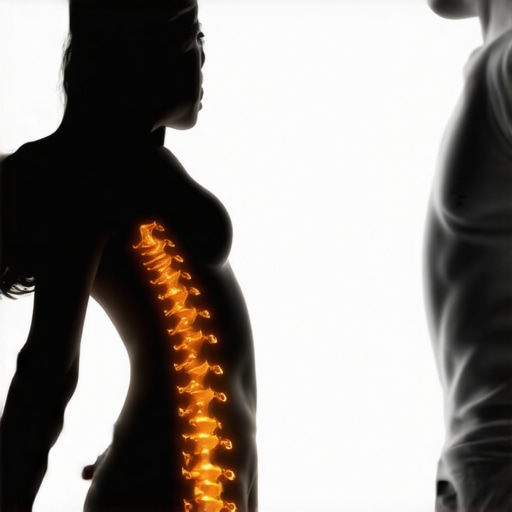
Is Your Core Strength Actually Working Against You?
If you’ve been doing 100 crunches a day but your back still goes out when you tie your shoes, the answer is likely ‘yes.’ The goal is mobility mastery: expert tips for back pain prevention and recovery, which focuses on teaching your muscles how to fire and relax at the right moments. I used to think I was ‘protecting’ myself by keeping my back stiff, but I was really just creating a house of cards. Once I learned that why stretching a tight muscle isnt always the answer, I stopped fighting my body and started working with its natural mechanics. You have to understand that understanding back pain: a guide to better posture and mobility requires looking at how you breathe and move, not just how much weight you can lift. Have you ever fallen into this trap of trying to ‘force’ your back into a specific shape? Let me know in the comments below, because I’d bet my bottom dollar you’ve felt that secondary stiffness that comes from trying too hard to be ‘straight.’
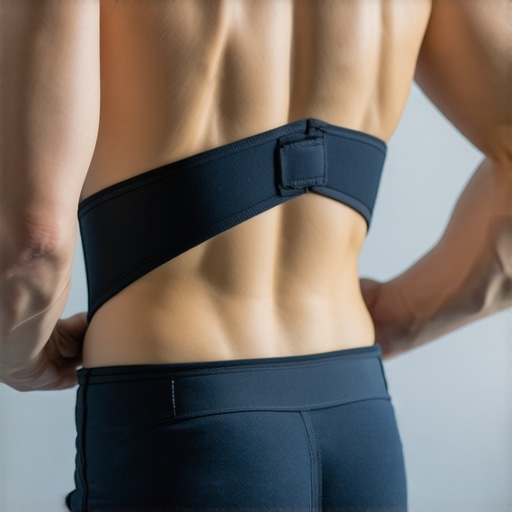
So, how do we move from ’emergency’ heating pads to ‘everyday’ resilience? I’ve spent thousands on gadgets—inversion tables, massage guns, and high-end chairs—but the tools that actually saved my life are surprisingly low-tech. For example, the correct way to use a lumbar roll in your office chair isn’t about pushing your back forward; it’s about supporting the natural ‘lordosis’ or curve while you breathe. If you don’t have a fancy roll, a rolled-up bath towel works just as well, and frankly, I prefer it because I can adjust the thickness to my specific needs that day. I use it every time I’m at my desk for more than thirty minutes because it provides a passive reminder to relax, rather than an active demand to sit up straight.
How do I keep my back feeling fluid every day?
Maintenance isn’t a grueling 60-minute gym session. It’s the the 5-minute routine to decompress your spine after work. I personally use a firm foam roller, but I avoid the common trap of rolling the lower back. Instead, focusing on the proper way to use a foam roller on your upper back creates a pivot point that opens the chest and takes the tension off the neck. It’s a chain reaction. I’ve noticed that when my upper back moves, I have less neck pain no more: expert chiropractic solutions that work. This is backed by the work of Dr. Stuart McGill, a world-renowned spine biomechanics expert, who emphasizes that spinal stability comes from ‘stiffening’ the core globally during movement while maintaining ‘mobility’ in the hips and thoracic spine during rest.
#IMAGE_PLACE_HOLDER_D#
Why a $20 lumbar roll beats a $1,000 ergonomic chair
We often think we can buy our way out of pain with expensive furniture. But even the best chair can’t fix a body that refuses to move. In fact, understanding back pain: a guide to better posture and mobility teaches us that the best posture is your ‘next’ posture. This is why I advocate for simple tools that encourage variety. I’ve recently been obsessed with how the connection between your jaw tension and neck mobility can sabotage your back progress. If you’re clenching your teeth while sitting, your whole spine stays on high alert. No chair in the world can fix that biological stress signal.
The move away from static standing desks
Looking ahead to 2025 and beyond, I predict we’ll see a massive shift away from the ‘standing desk’ craze and toward ‘movement workstations.’ We are realizing that standing still is just as taxing as sitting still. back pain recovery: how chiropractic care transforms lives because it focuses on restoring the function that allows you to transition between these states effortlessly. If you want to start today, perform the 10-second posture check you can do anywhere. It’s not about being perfect; it’s about checking in with your nervous system. My challenge for you tonight? Ditch the high-end ergonomic settings for just one hour and try the rolled-up towel trick in your favorite chair. See if that gentle support allows your muscles to finally let go of the ‘bracing’ we talked about earlier.
The Hard Truths My Body Taught Me the Long Way
After years of trial and error, I realized that my back wasn’t a problem to be solved with a hammer, but a delicate system to be tuned. One of the biggest shifts for me was realizing that the danger of sitting with a wallet in your back pocket was doing more damage than any heating pad could fix. I also learned that tension isn’t always physical; sometimes how your eyes are secretly dictating your posture can keep your spine in a state of high alert. The lesson? Look beyond the spot that hurts.
[IMAGE_PLACEHOLDER_E]
The Low-Tech Staples I Use Every Day
You don’t need a medical-grade infrared chamber to get relief. My toolkit is surprisingly basic. First, a high-quality moist heating pad is non-negotiable. Second, I rely on how to use a lumbar roll without making your back stiffer to maintain my natural spinal curve during long work sessions. Finally, I’ve found that the proper way to use a foam roller on your upper back is the secret to keeping the lower spine happy. These simple habits are at the heart of boost mobility: ease pain chiropractic techniques unveiled.
It’s Time to Stop Bracing and Start Moving
If there is one thing I want you to take away, it is that your body is capable of incredible recovery if you stop fighting it. Using heat correctly is just the first step in a larger journey of mobility mastery. Remember, back pain recovery isn’t about finding one magical cure; it’s about a series of small, smart choices that respect your biology. Tonight, try that 20-minute moist heat protocol and let your nervous system finally take its foot off the brake. Have you found that heat works better for you than ice, or do you struggle with the timing? Let me know your experience in the comments below!