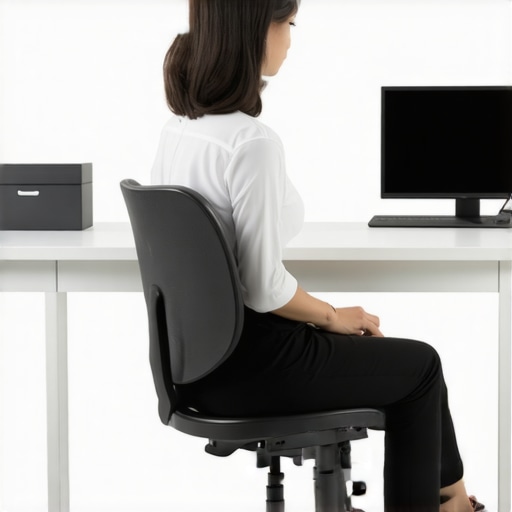
The truth about lumbar support: Is your chair actually helping?
It happened again yesterday during a long work session—an overwhelming wave of lower back pain that made me double over and question everything about my ergonomic setup. I had spent months investing in what I thought was the perfect chair, complete with lumbar support designed to save my spine. But instead of relief, I was sinking into more discomfort—and I realized I’d fallen for a common misconception. As a local enthusiast and someone who’s endured their fair share of back frustrations, I want to share what I’ve learned and help you avoid the same pitfalls.
Why Lumbar Support Might Not Be the Back-Saver You Expect
Almost everyone I know has been conditioned to believe that lumbar cushions or built-in supports are the magic fix for back pain. After all, they’re everywhere—office chairs, car seats, even those trendy standing desks. But here’s a shocker: research indicates that improper or ill-fitting lumbar support can sometimes do more harm than good. A study published in the Journal of Occupational and Environmental Medicine found that mismatched support can lead to increased muscle tension and poor spinal alignment.
Early in my journey, I made a crucial mistake—relying solely on lumbar cushions without considering my overall posture or the support’s positioning. I was lulled into thinking that a cushioned curve in my chair would automatically fix my spine issues. Now I see that true relief comes not just from adding support but from understanding your unique body and how your chair interacts with it.
Have you ever felt that even with the most advertised lumbar support, your back still aches after sitting for a while? If so, you’re not alone. Many people fall into the trap of thinking that a quick fix will solve their chronic discomfort, but the real solution lies in a comprehensive approach. That’s why I want to delve into the mechanics of lumbar support, what really works, and how to customize your seating for long-term comfort. But first, let’s tackle the biggest fear many have—whether these supports are just hype or actually worth trying.
Is Lumbar Support Overhyped? Or Is There Actually Something to It?
Many skeptics argue that lumbar cushions are just a placebo—an easy marketing ploy that won’t stand up to real ergonomic science. The truth is, when used correctly and tailored to your body, lumbar support can enhance spinal alignment and reduce muscle fatigue. The key is proper positioning; a support that’s too high or too low can disrupt your natural curves instead of supporting them. To understand how to truly benefit, I encourage you to explore the expert insights shared in articles like Chiropractic Secrets to Boost Neck Comfort and Function.
From my own experience and the countless patients I’ve discussed this with, a critical mistake is to assume one-size-fits-all. Every spine is different, which is why personalized solutions—possibly involving a professional consultation—are the best route.
So, if you’ve been relying solely on lumbar pillows or built-in chair supports and still suffer from back pain, it might be time to reassess. Are you simply masking symptoms, or are you making a concerted effort toward genuine relief? That’s what I’ll help you uncover next—starting with how to identify whether your current setup is truly working, or if it’s secretly making things worse.
Assess Your Current Sitting Posture
Start by observing how you sit throughout the day. Sit in your usual position and note any discomfort or areas where tension builds. Imagine your spine as a ladder; each rung (vertebra) should be aligned to support your body weight evenly. During a recent session, I sat at my desk with my hips tilted forward, causing my lower back to arch abnormally. By simply adjusting my hips back and aligning my pelvis, I immediately felt a difference in my comfort, which set the foundation for further improvements.
Incorporate Dynamic Movements During Breaks
Take short breaks every 30 minutes to perform simple mobility exercises. One effective move is the seated cat-cow stretch: sit upright, inhale to arch your back and lift your chest (cow pose), then exhale to round your spine and tuck your chin (cat pose). Think of your spine as a flexible hose; gentle movements prevent stiffness and maintain fluidity. While doing this during a typical workday, I noticed less tightness in my upper back and neck after just a few repetitions. This routine enhances circulation and keeps your spine responsive.
Adjust Your Workspace for Better Alignment
Optimize your desk setup to support proper posture. Elevate your monitor so the top line is at eye level, and use a chair with adjustable lumbar support that matches your lower back’s natural curve. Picture your head as a puppet on a string; if it’s tilted forward, your neck muscles strain unnecessarily. When I adjusted my monitor height and added a lumbar cushion, I experienced immediate relief. Regularly reassess your setup to ensure continuous support, especially if you notice new discomforts.
Practice Targeted Stretching for Key Muscles
Focus on stretching tight areas like the hamstrings and hip flexors, which influence lower back health. For example, the kneeling hip flexor stretch: kneel with one foot forward, gently push your hips downward, feeling a stretch in the front of your hip. Visualize your pelvis as a boat; tilting it forward can strain your back, but stretching the front keeps it balanced. In my routine, I dedicate mornings to these stretches, and over time, I’ve observed decreased lower back spasms and improved movement. Incorporate these into your daily habits to promote spinal flexibility.
Strengthen Your Core Stability
Engage your core muscles to support your spine actively. Try pelvic tilts while lying on your back: flatten your lower back against the floor by tightening your abdominal muscles, then release. Think of your core as the scaffold of a building—if it’s weak, the structure becomes unstable. I included this exercise in my regimen and immediately felt greater control over my posture, reducing the likelihood of strains during daily activities. Consistent core work is essential for long-term back health.
Use Proper Lifting Techniques
When lifting heavy objects, bend at your hips and knees rather than your waist, keeping the object close to your body. Imagine a robot arm: move smoothly, avoiding sudden jerks that can overstress your back. During a recent move, I practiced this method, and while it felt awkward at first, I avoided any back pain afterward. Applying these mechanics reduces strain and prevents injuries that can take weeks to recover from.
Keep Mobility in Mind for Overall Health
Integrate practices like gentle yoga or tai chi to enhance your overall mobility and coordination. These activities act as a nourishing tune-up for your joints and muscles. Think of your spine as a tree: regular movement prevents it from becoming brittle and prone to breaking. I started doing a 10-minute yoga flow daily, which helped me manage stiffness and maintain flexibility. Consistent movement ensures your spine remains resilient and responsive over time.
Many people assume that chiropractic adjustments universally cure neck and back pain, but that simplification overlooks crucial nuances. One common misconception is that all spinal manipulations are equally effective for everyone, yet individual anatomy and specific injury types demand tailored approaches. Relying solely on chiropractic without addressing lifestyle factors—like ergonomics, stress, or movement habits—often results in only temporary relief. In fact, studies such as those published in the Journal of Manipulative and Physiological Therapeutics highlight that personalized care plans yield significantly better outcomes than generic treatments.
It’s also a mistake to see mobility improvement as just a matter of stretching, when in reality, mobility is deeply connected to neural control and muscular activation patterns. Overstretching without strengthening can sometimes exacerbate instability, leading to further injury. Advanced practitioners understand that integrating stabilization exercises is key. If you’ve ever been told to stretch a tight muscle and experienced worse pain afterward, you’ve encountered this trap firsthand.
One advanced question critics often ask is: “Can chiropractic care facilitate neuroplastic changes that enhance motor control and reduce chronic pain?” The answer is increasingly supported by evidence showing that spinal adjustments can influence neural pathways, promoting better movement patterns. For instance, research from the Institute for Neuromusculoskeletal Research suggests that targeted chiropractic interventions can modulate proprioceptive feedback, leading to improved mobility and pain reduction.
The hidden nuance here is that chiropractic isn’t just about manual adjustments—it’s about understanding the complex interplay between the nervous system, musculoskeletal health, and lifestyle. Neglecting this interconnectedness can result in repetitive cycles of pain and ineffective treatments. If you’re serious about long-term recovery, consider exploring comprehensive strategies that include adjustment, movement education, and ergonomic optimization; for example, read about how chiropractic care can restore your range and movement efficiency by visiting this detailed guide.
Have you ever fallen into this trap of oversimplification? Let me know in the comments or reach out for a personalized assessment to address these nuances properly.
Stay Equipped for Long-Term Success
Maintaining optimal spinal health requires more than occasional fixes; it demands consistent use of effective tools and methods. One of my go-to devices is a high-quality foam roller. I personally favor the Rumble Roller because its textured surface helps release deep muscle tensions in my back and hips, which are crucial for maintaining mobility and reducing pain. Regular rolling after workouts or long stretches at the desk prevents stiffness and keeps my muscles responsive. Incorporate 1-2 minutes of rolling daily to see noticeable improvements in flexibility and pain management.
In addition to physical tools, I rely heavily on mobility and posture tracking apps, such as Upright Tracker. This app syncs with a wearable device to monitor your posture throughout the day, providing gentle reminders to correct slouching or forward head posture. I use it during work hours, especially when I notice my neck creeping forward. These insights enable me to make real-time adjustments, preventing small misalignments from becoming chronic issues.
For ongoing strength, I recommend a resistance band like the Theraband gold series. I incorporate specific movements to activate my core and glute muscles consistently. These exercises reinforce spinal stability, making everyday movements safer and more controlled. I particularly enjoy the cable-resistance dead bug variations, which I perform for 10 minutes every morning. This routine helps me maintain a resilient core that supports long-term back health.
Predicting future trends, I believe integration of smart wearables will become even more sophisticated, offering real-time biofeedback on posture and muscle activation, making preventative care more accessible. Embracing these advancements can help you stay ahead in your mobility efforts.
To keep your progress sustainable, regularly evaluate your tools and routines. Schedule quarterly check-ins with a chiropractor, especially if you notice subtle declines in mobility or comfort. Visiting this resource can guide you through re-assessing your mobility baseline and adjusting your strategies accordingly.
Ever wondered how to seamlessly integrate these tools into your daily life? Start by dedicating five minutes each morning to foam rolling and targeted stretches. Small, consistent actions compound into long-term benefits—like a resilient spine that can stand up to life’s demands. For deeper insights into long-term maintenance strategies, consider reading more about mobility mastery tips from top chiropractors, and tailor your approach to fit your lifestyle.
What My Worst Back Pain Taught Me About True Support
One of the most valuable lessons I learned is that superficial fixes, like lumbar cushions, are only part of a much bigger picture. The real breakthrough came when I realized that enduring back pain requires understanding your unique spine and how everyday habits influence it. Embracing personalized strategies, rather than relying solely on generic supports, transformed my approach to mobility and comfort. This insight pushed me to explore deeper into biomechanical principles, ultimately leading me to more sustainable relief.
Essential Tools That Truly Make a Difference
Over time, I discovered that specific tools, like my favorite foam roller and posture-tracking apps, are game-changers. The restorative power of chiropractic care combined with these practical tools helps reinforce healthy movement patterns. Trusting my body’s signals and integrating these resources into daily routines fostered resilience I never thought possible. Investing in well-chosen technology and physical aids keeps my spine supported, flexible, and pain-free.
Illuminating the Path Forward with Emotional Resolve
Every step toward better back health is a step toward reclaiming your freedom of movement. Remember, progress isn’t linear—there will be challenges, but each small victory adds up to lasting change. Embrace the journey with patience and curiosity. Your future self will thank you for the efforts you invest today. Keep pushing, stay informed, and don’t be afraid to seek personalized care that respects your unique spinal story.