Why you feel taller after a chiropractic adjustment
I stepped out of the clinic, took a deep breath, and realized something felt incredibly weird. I wasn’t just lighter; I felt distinctly taller. When I got into my car, I actually had to tilt my rearview mirror upward because my eye level had shifted. For years, I had accepted my shrinking as a natural part of aging or a byproduct of my desk job. I was wrong. I spent so many hours hunched over that my spine was practically folding in on itself, a common issue where why your phone is making your upper back round becomes a daily reality. I made the mistake of thinking I could just force good posture to fix it, but I eventually learned why sit up straight is actually bad advice for some. Today, I want to walk you through why that post-adjustment growth spurt happens and how you can stop the slouch-and-shrink cycle for good.
That Strange Moment My Rearview Mirror Stopped Working
The sensation of being taller after an adjustment isn’t an illusion. It is the physical result of decompression. When your vertebrae are misaligned, the surrounding muscles tighten up in a protective guarding response. This pulls you downward. It turns out that back pain recovery how chiropractic care transforms lives often starts with simply letting the spine breathe again. I spent way too long ignoring the signs, thinking a better chair was the only answer, but often the hidden reason your desk chair feels uncomfortable is actually your own spinal compression. Have you ever stood up from your desk and felt like you needed to unfold yourself just to walk?
Is that extra inch of height actually real?
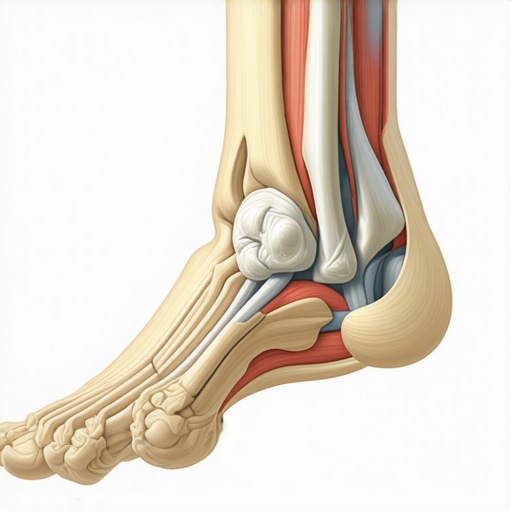
It is the number one question people ask when they feel that post-click lift. You aren’t actually growing new bone, of course. Instead, you are restoring the vertical space between your vertebrae. According to the American Chiropractic Association, many adults lose vertical height due to poor spinal health and disc compression. Research suggests that spinal adjustments can help restore proper joint mechanics, which allows the discs to hydrate and expand to their natural thickness. Think of it like a compressed spring finally being allowed to return to its original length. When you are aligned, you aren’t fighting gravity; you’re working with it. I found that incorporating the 10 second posture check you can do anywhere helped me keep that tall feeling long after I left the office. We’re going to dig into the mechanics of this height hack and why your body craves that verticality.The adjustment is the catalyst, but staying “tall” requires an understanding of your body’s kinetic chain. Think of your spine like a mast on a ship. If the base—your pelvis and feet—is tilted, the mast won’t stand straight no matter how much you pull the ropes. This is why why we look at your feet when your neck hurts is a core philosophy in real alignment work. I remember standing in line for a wedding photo years ago, trying desperately to “stand up straight.” I felt like I was fighting a losing battle against my own bones. My suit jacket kept bunching on one side and I felt physically exhausted just trying to remain upright. It wasn’t until later I realized my foundation was skewed.
Stop looking at your back to fix your height
Your spine doesn’t just sag; it compensates. If your pelvis is rotated, your brain forces your upper back to curve to keep your eyes level. You lose an inch right there. To reverse this, we have to address the “hidden” anchors that pull you out of whack. 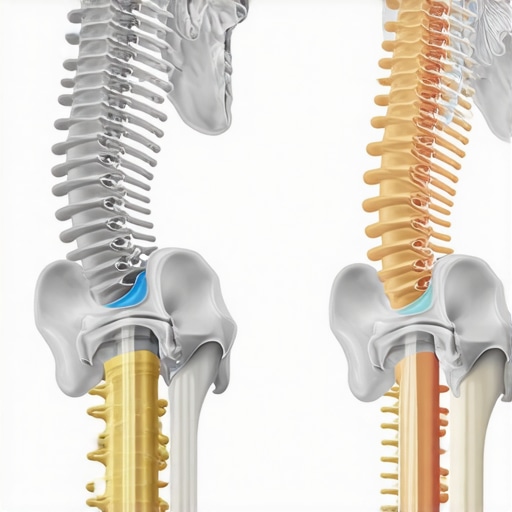
The truth about your leg length
Most people aren’t born with one leg shorter than the other. Usually, it’s a “functional” difference caused by a tilted pelvis or a misaligned hip. During an exam, why we check your leg length during every visit tells us exactly which way your hips are shifting. When we level the pelvis, your spine can finally stack vertically instead of zigzagging to compensate for the tilt.
Fix your gait to stop the sag
How you walk dictates how you stand. If you collapse your arches or strike the ground too hard, you’re sending a shockwave up your spine that causes those muscles to “guard” or tighten. Learning how to fix your gait for better spinal alignment ensures that every step you take isn’t actively undoing the work done on the table.
Practical ways to keep your discs hydrated
Decompression isn’t just a one-time event; it’s a lifestyle. Your spinal discs are like sponges. When you sit all day, you squeeze the water out of them, causing you to literally shrink. When you move correctly, you allow them to soak up nutrients and fluid.
The three-minute joint lubricant
You don’t need a gym to maintain your height. You need consistent, gentle motion. Starting your day with the 3 minute morning routine to lubricate your joints acts like oiling a rusty hinge. It prevents that “stuck” feeling that leads to slouching by midday.
Open up your chest to let your spine breathe
We live in a “forward-facing” world—phones, keyboards, and steering wheels. This tightens the pectoral muscles and pulls the shoulders forward, creating a hump in the mid-back. Using the 5 minute doorway stretch for rounded shoulders is a non-negotiable tool. By opening the front of your body, you remove the tension that wants to drag your spine back into a compressed C-shape.
Why the pelvis holds the key to neck relief
It sounds counterintuitive, but why we adjust the pelvis to fix neck tension is about global balance. If your lower back is arched too much because of tight hip flexors, your neck has to crane forward to compensate. You can’t fix “Tech Neck” without addressing the “Pelvic Lean.”Most people assume that if a muscle feels tight, it needs to be pulled and lengthened. This is where the biggest mobility mistakes happen. If your brain perceives a lack of stability in the spine, it will “lock down” the surrounding muscles to prevent injury. Stretching that “tight” muscle is like trying to cut the seatbelt that’s keeping you safe in a car crash. In many cases, why stretching a tight muscle isnt always the answer because the tightness is a symptom of instability elsewhere. For example, your hamstrings might feel like steel cables because your pelvis is tilted, not because the hamstrings themselves are short. Citing research from the Journal of Manipulative and Physiological Therapeutics, we know that spinal adjustments do more than move bone; they provide a high-velocity, low-amplitude stimulus that “resets” the nervous system’s tone. This is why a simple adjustment can provide more length than an hour of aggressive yoga.
Stop stretching your way into more pain
If you’ve been religiously touching your toes every morning and your back still hurts, you’re likely ignoring the motor control aspect of your spine. We often see patients who have incredible flexibility but zero stability. This is exactly why your strong core might actually be too rigid or, conversely, why it’s not firing when you actually need it. True mobility mastery expert tips for back pain prevention and recovery focus on teaching the body which muscles should be “on” and which should be “off.” When you force a stretch on a joint that the brain is trying to protect, you actually trigger more guarding. 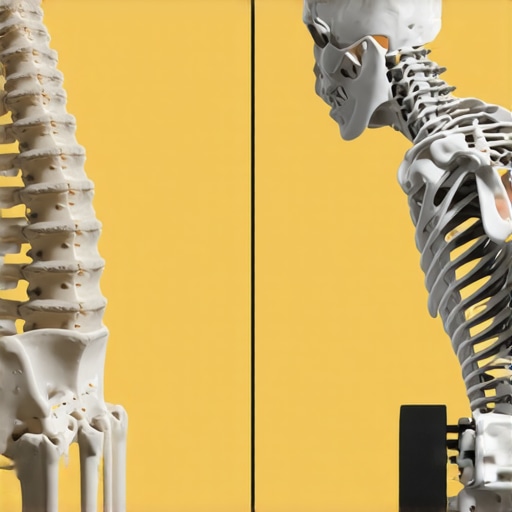
The foam roller mistake that ruins your lower back
Here is a major “oops” factor I see weekly: people taking a hard foam roller and going to town on their lumbar spine. Unlike your upper back, which is supported by a ribcage and has a natural outward curve (kyphosis), your lower back has an inward curve (lordosis) and is relatively unsupported. When you jam a roller into that curve, you can actually cause the vertebrae to shift in ways they weren’t designed to move under that kind of pressure. Instead of relief, you’re creating micro-trauma and potentially aggravating the discs. You must stop rolling your lower back on a hard foam roller and focus that energy on your glutes, hips, and thoracic spine instead.
Why does your neck feel worse when you aren’t actually doing anything?
It’s the classic advanced question: “I was just sitting there, not even moving, and my neck started throbbing.” This is due to static postural load. When you move, your muscles act as pumps for blood and lymph, flushing out metabolic waste. When you remain still in a “perfect” but static position, the “guarding” response becomes a constant, low-level contraction that starves the muscle of oxygen. This is the hidden link between neck pain and spinal health; it’s not always the big movements that break us, but the lack of movement altogether. Additionally, why your neck hurts more when you are stressed is often tied to the accessory breathing muscles in your neck working overtime because your diaphragm is pinned down by poor sitting habits. Deepening your understanding back pain a guide to better posture and mobility requires looking past the site of the pain and investigating the “why” behind the tension. Have you ever fallen into the trap of stretching a muscle for weeks only to have it feel tighter the next day? Let me know in the comments.
I’ve become that guy who travels with a specific foam cylinder in my carry-on. It isn’t about being high-maintenance; it is about pure mechanics. After years of testing every gadget on the market, I realized that the best tools are the ones that respect your spine’s natural curves. For me, the game-changer was learning the correct way to use a lumbar roll in your office chair. Most people shove it too low or buy one that is too thick, which actually pushes the pelvis forward into a weird tilt. I personally use a firm, 4-inch diameter roll placed exactly at the small of my back. It acts as a physical reminder for my muscles to stay engaged rather than collapsing into a C-shape. If you don’t have one, you can actually learn how to use a lumbar roll without making your back stiffer by starting with a rolled-up towel to find your perfect thickness.
Ditch the expensive chair for a $20 roll
People often ask me if they should spend $1,500 on a high-end ergonomic chair. My answer is usually no. Even the best chair can’t save you if you sit still for eight hours. I’ve found that restore your back mobility proven chiropractic strategies often involve dynamic sitting—changing your position every 20 minutes. I use a simple standing desk converter, but I had to learn how to use a standing desk without hurting your hips because standing perfectly still is just as bad as sitting perfectly still. I keep a lacrosse ball under my desk to roll out my feet while I work, which keeps the fascia on the bottom of my feet loose and prevents that tension from traveling up to my lower back.

How do I keep my spine feeling this good for the long haul?
Maintenance is where most people fail. They wait until they can’t turn their head to book an appointment. I treat my spinal check-ups like an oil change. By choosing to enhance mobility naturally with chiropractic care, I’m catching those tiny micro-misalignments before they turn into a full-blown spasm. This proactive approach is backed by experts like Dr. Stuart McGill, a leading spine biomechanics researcher, who emphasizes “spinal hygiene”—the idea that daily, small movements and proper lifting mechanics are more important than any single workout. I’ve integrated back pain recovery how chiropractic care transforms lives into my weekly routine, focusing on core stability rather than just flexibility. If I feel a twinge, I don’t panic; I just go back to the basics and check the truth about using heat versus ice for back injuries to manage inflammation immediately.
The future of spinal health is in your pocket
I predict that in the next five years, we are going to see a massive shift toward wearable biofeedback. We already have watches that track our steps, but soon we’ll have shirts with integrated sensors that vibrate the second your shoulders round forward or your pelvis tilts. This real-time data will make understanding back pain a guide to better posture and mobility much easier for the average person. We won’t have to guess if we’re slouching; our clothes will tell us. Until then, my best advanced tip for you is this: tonight, try the “towel roll” trick behind your neck while you watch TV for 10 minutes. It gently resets the cervical curve and counteracts a whole day of looking at your phone. Give it a shot and see if you don’t feel a little lighter tomorrow.
The Three Biggest Alignment Lies I Finally Stopped Believing
I used to think that a ‘crack’ meant the problem was solved. In reality, that sound is just gas releasing from the joint capsule; the real magic happens when your nervous system stops panicking and allows the muscles to let go. I learned that expert chiropractic solutions that work aren’t about a one-time fix but about recalibrating how your brain perceives tension. Another shift was realizing that pain is a late-stage messenger. By the time my back actually hurt, the imbalance had likely been there for months, slowly compressing my discs. This is why I now focus on chiropractic secrets to regain full mobility after injury well before the next crisis hits. Finally, I stopped believing that ‘good posture’ was something you could just force with willpower. If your skeleton is misaligned, willpower is just a recipe for exhaustion.
My Daily Arsenal for a Resilient Spine
I don’t leave my health to chance anymore. I swear by Dr. Stuart McGill’s work on ‘spinal hygiene’—it completely changed how I view every movement, from how I brush my teeth to how I lift a suitcase. I also keep a firm lacrosse ball in my desk drawer to address fascia tension immediately, using proven strategies for back pain relief that I can do during a five-minute break. For anyone looking to deepen their practice, I highly suggest exploring how chiropractic care enhances movement through functional patterns rather than just static stretches. These tools, combined with a consistent lumbar roll, have made that ‘post-adjustment height’ my new normal rather than a fleeting sensation.
Take Up the Space You Deserve
Living life hunched over isn’t just a physical burden; it’s a mental one that weighs on your energy levels and confidence. When you stand tall, you breathe more deeply, you project authority, and you engage with the world more fully. Effective neck pain management a step-by-step guide is your first step toward that freedom. Don’t let gravity win the battle for your height or your health. By committing to chiropractic techniques unveiled by modern science, you’re not just fixing a back—you’re reclaiming your vitality. Have you noticed yourself ‘shrinking’ as the workday goes on, or did a specific adjustment ever make you feel like you’d grown an inch? Let me know in the comments below!