The truth about inversion tables for disc relief
Three years ago, I was literally crawling across my living room floor just to reach the TV remote. My lower back wasn’t just sore; it felt like a hot spike was driven into my L4-L5 disc every time I breathed. I was desperate, frustrated, and tired of being told to just ‘rest it.’ That is when I first looked at an inversion table. It looked like a medieval torture device, but the promise of gravity doing the hard work of decompressing my spine was too tempting to ignore. If you have ever felt that sharp, shooting pain down your leg, you know you would try almost anything for five minutes of peace. Today, I want to share what I have learned through trial, error, and a lot of blood rushing to my head, so you do not have to make the same mistakes I did.
My first time hanging upside down was a total disaster
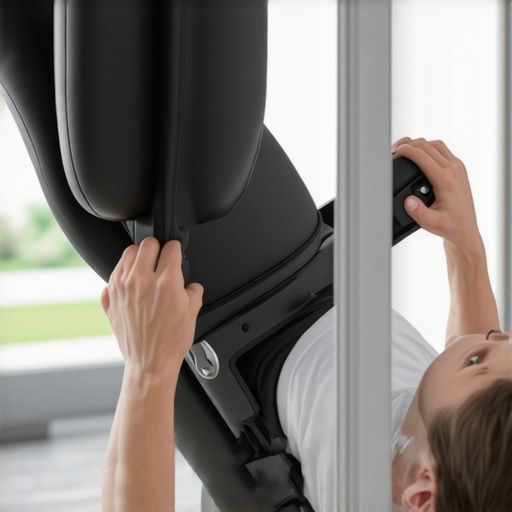
I made the most common mistake right out of the gate: I thought more was better. I strapped my ankles in and flipped the table to a full 90-degree vertical hang immediately. Within sixty seconds, my head felt like it was going to explode, and my back muscles actually seized up in a defensive spasm. I learned the hard way that the truth about inversion tables is that they require patience, not just gravity. You cannot force your spine into submission. I spent the next two days wondering if I had permanently ruined my progress, but it taught me that back pain recovery is about incremental wins, not dramatic gestures. If you are struggling with a similar ‘locked up’ feeling, have you ever felt like your body was actually fighting against the very things meant to help it?
Is hanging like a bat actually worth the hype?
You might be skeptical—I certainly was. It sounds a bit like snake oil, right? But there is real science behind the concept of spinal decompression. According to researchers at Harvard Health, while traction or inversion can provide temporary relief by increasing the space between your vertebrae, it is not a ‘one-and-done’ miracle cure. It works best as a supplemental tool. For me, it became a way to manage the pressure that builds up after a long day, much like how chiropractic secrets focus on restoring proper alignment and function over time. I realized that if I did not also address how my sleeping position was wrecking my spine every night, no amount of hanging upside down would save me. We are going to dive into the specific ‘neighborly advice’ I wish I had before I spent a dime on equipment.
Start with a Shallow Tilt to Wake Up Your Spine
You do not need to go full Batman on day one. In fact, you should not. Think of your spinal discs like a sponge that has been dried out and compressed all day. If you suddenly yank on it, the surrounding muscles will freak out and go into a defensive spasm. I recommend starting at a 20-degree angle. This is enough to let gravity start the work without triggering a ‘red alert’ in your nervous system. This gentle approach is a cornerstone of how you restore your back mobility, as it coaxes the tissue rather than forcing it. I remember my third week in; I was hovering at a very modest angle when I felt a subtle ‘thump’ in my lumbar region. It was not painful—it was the sensation of a joint finally getting some breathing room for the first time in years.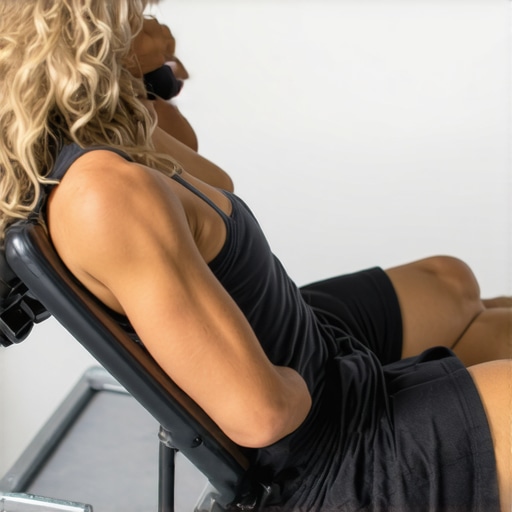
Don’t Ignore Your Ankles and Footwear
I once made the mistake of trying to use the table in just my socks. Huge mistake. The pressure on the bridge of my feet was so distracting that I could not relax my lower back. Wear sturdy, lace-up sneakers. They provide a solid ‘shelf’ for the ankle clamps to grip. If your feet are slipping or hurting, your brain will keep your core muscles fired up to protect you, which completely defeats the purpose of the hang. This is why the 5-minute routine to decompress your spine after work works best when you are physically comfortable enough to actually let go.
Focus on Diaphragmatic Breathing to Release Tension
Your breath is the remote control for your nervous system. If you are shallow breathing into your chest while inverted, your body thinks it is in a fight-or-flight scenario. I had to consciously learn how to breathe through your diaphragm to reduce lower back pressure. Try to inhale for four seconds, hold for two, and exhale for six. This sends a signal to those deep paraspinal muscles that they can finally stand down.
Pair Inversion with Stability Training
Hanging upside down is only half the battle. If you decompress and then immediately go back to sitting with a rounded spine, you are just hitting the ‘undo’ button on your progress. You need to ‘lock in’ that new space by strengthening your midsection. I found that incorporating the dead bug exercise into my daily routine gave my spine the support it needed to stay elongated. Also, be mindful of temperature. If you feel a bit of ‘rebound’ stiffness after a session, remember the truth about using heat versus ice for back injuries—a little warmth can help keep those newly stretched muscles from tightening back up as they cool down.Most of us were raised on the idea that if a muscle feels tight, you need to pull on it. But here is the hard truth: sometimes your back is tight for a reason. It is called ‘protective guarding.’ If your spine feels unstable, your brain sends a signal to the surrounding muscles to lock down like a fortress. When you hop on an inversion table and force those muscles to release, you might actually be stripping away your body’s only defense mechanism. This is why stretching a tight muscle isnt always the answer. I have seen people—myself included—stretch their way into a worse injury because they ignored the underlying instability. If you feel ‘loose’ but fragile after a session, you are likely prolonging your back pain rather than fixing it. Have you ever fallen into this trap where stretching made the pain worse? Let me know in the comments. 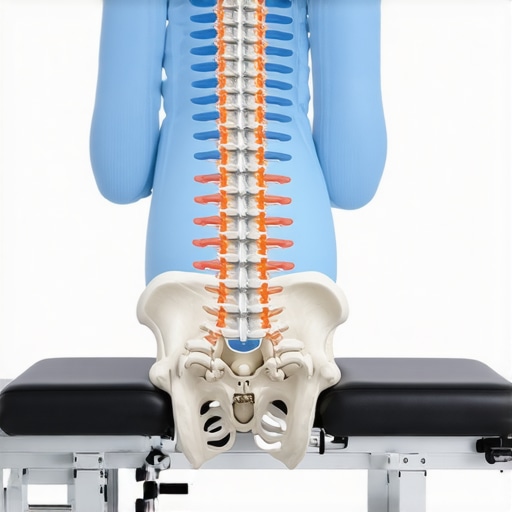
Does Spending More Time Upside Down Help or Hurt?
The biggest mistake intermediate users make is staying inverted for twenty or thirty minutes. There is a concept in physical therapy called ‘ligamentous creep,’ which occurs when your ligaments are stretched for so long that they lose their ability to snap back to their original shape immediately. A study published in the Archives of Physical Medicine and Rehabilitation notes that mechanical traction is most effective when applied in shorter, controlled bursts rather than long, static durations. If you overdo it, you are leaving your spine vulnerable for the hour after you stand up. This is where boost mobility ease pain chiropractic techniques unveiled their true value; a professional knows how to balance that release with structural integrity.
The Hidden Reason Your Neck Aches While You Fix Your Back
It is tempting to focus entirely on the lower back, but the spine is a closed system. I discovered that if I did not keep my head neutral while inverted, I was trading lumbar relief for a massive headache. There is a hidden link between neck pain and spinal health that most home users ignore. If your chin is tucked or your head is dangling at an odd angle, you are putting unnecessary shear force on your cervical spine. To truly relieve neck back discomfort using these expert methods, you must visualize your spine as a single string. Pulling on one end affects the other. Another nuance I learned late in the game is the importance of ‘re-loading’ the spine. After you spend five minutes decompressing, your discs are literally engorged with fluid. If you immediately go lift a heavy laundry basket, you are asking for a herniation. You need to give your body ten minutes to ‘reset’ in a neutral, horizontal position. This is a common part of mobility mastery expert tips for back pain prevention and recovery. It is not just about the hang; it is about the transition back to gravity.Transitioning from acute pain management to long-term maintenance was the hardest part of my journey. I realized that the inversion table was just a reset button, not the entire console. To truly keep the progress I made, I had to start looking at the small, repetitive stressors that happen when I am not hanging upside down. This is where mobility mastery expert tips for back pain prevention and recovery became my daily manual. I stopped looking for ‘cures’ and started looking for ‘systems’ that would protect my spine while I worked, slept, and walked.
The simple tools that live in my daily gym bag
I do not go anywhere without a standard lacrosse ball. While some people swear by high-end percussion massagers, I find that a dense rubber ball allows for much more specific pressure on my glutes and piriformis. If those muscles are tight, they pull on the pelvis and negate all the decompression work I do. I often use it as a ‘spot treatment’ to use a tennis ball to release upper back tension whenever I feel that familiar mid-day burn starting between my shoulder blades. Another non-negotiable for me is a high-quality lumbar roll for my office chair. I learned quickly that how to use a lumbar roll without making your back stiffer involves placing it much lower than most people think—right at the top of the beltline to support the natural curve of the lower back.
How do I maintain my spinal health over time?
The secret is what I call ‘micro-adjustments.’ Every morning, I perform the 3-minute morning routine to lubricate your joints before I even have my first cup of coffee. This isn’t about a heavy workout; it is about telling the nervous system that it is safe to move. Maintenance is less about the big sessions and more about the 10-second posture check you can do anywhere. I have set a timer on my phone to remind me to stand up every 45 minutes. This simple habit prevents the ‘creep’ of gravity from compressing those discs back down into the painful state they were in three years ago.
Your feet are the foundation of your spine
One of the most profound realizations I had came from a study in the Journal of Foot and Ankle Research, which highlights how excessive foot pronation can lead to increased internal rotation of the femur and subsequent pelvic tilt. This technical way of saying ‘flat feet cause back pain’ changed how I viewed my footwear. I stopped wearing flimsy slippers around the house because your slippers might be causing your lower back stiffness. Instead, I focused on what your gait analysis reveals about your lumbar health and invested in shoes that actually supported my arches. When your foundation is solid, the rest of the tower stays upright much easier. Looking ahead, I suspect we will see a massive shift toward AI-integrated wearables that provide real-time haptic feedback on gait and posture, essentially acting as a digital chiropractor in your pocket. I encourage you to try the ‘tennis ball’ trick on your glutes tonight for just two minutes; you will be amazed at how much ‘false’ back pain is actually just referred tension from your hips.
The Hardest Lesson My L5-S1 Ever Taught Me
The most profound shift didn’t happen while I was upside down; it happened when I realized that chronic stiffness isn’t a life sentence. One major lightbulb moment was that less is often more. I used to think I had to ‘beat’ the pain into submission with intense hangs, but using revitalize your mobility proven strategies for back pain relief taught me that frequent, gentle decompression is far more effective than a massive weekly stretch. I also learned that if you aren’t integrating chiropractic secrets to regain full mobility after injury, you’re missing the structural stability needed to keep those discs from collapsing back into their old patterns the moment you stand up.
The Toolkit That Actually Keeps Me Out of Pain
If you’re serious about long-term relief, you need a system that works even when you’re not on the inversion table. These are the sources and tools that stayed in my arsenal: First, a dense lacrosse ball for targeted glute release—this is non-negotiable for anyone with lumbar issues. Second, a high-quality lumbar roll for every chair in my house; understanding back pain a guide to better posture and mobility begins with supporting your natural curves during the workday. Lastly, I always recommend keeping a journal of your ‘pain triggers’ so you can spot patterns before a full flare-up occurs.
Your Future Without the Constant Ache
Recovery is rarely a straight line, but every small adjustment counts toward a future where you aren’t afraid of a simple sneeze or a long car ride. By combining tools like inversion with effective neck pain management a step-by-step guide, you’re treating your body as a connected system rather than a collection of separate problems. Don’t be discouraged if your progress feels slow; just focus on the next small win and keep your foundation solid. Have you ever tried an inversion table for your back, or are you still a bit nervous about the ‘hanging upside down’ part? Let me know your thoughts in the comments!