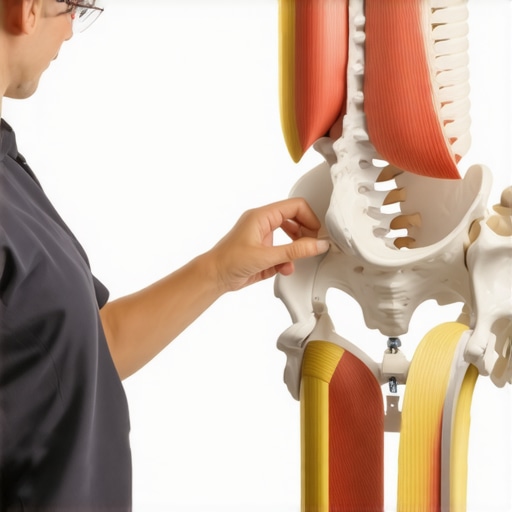
Why we look at your ribcage movement for better mobility
I’ll never forget the morning I couldn’t reach the top shelf for my coffee mug without a sharp, nagging pinch radiating through my shoulder blade. I thought it was a gym injury. I assumed I’d just slept wrong. For weeks, I beat up my neck with a lacrosse ball and spent way too much time stretching my hamstrings, hoping the relief would travel upward. It never did. It wasn’t until I realized my ribs were practically glued together that the lights finally came on. Most of us treat our midsection like a solid block of bone, but when those joints stop sliding, your entire body pays the price. Today, I want to show you exactly how to break that cycle of stiffness and why your ribs are the secret to finally feeling loose again.
Your Ribs Are the Control Center for Every Move You Make
We often treat the body like a collection of separate parts, but your ribcage is the engine room for your entire upper half. Think about it: your ribs attach directly to your thoracic spine. If those twenty-four little joints aren’t sliding and gliding, your neck and lower back are forced to do double duty. I made the classic mistake early on of focusing only on the ‘screamers’—the painful areas—instead of the ‘silent’ rib joints that were actually causing the chaos. This is exactly how chiropractic care enhances movement by addressing the mechanical root rather than just chasing symptoms. If your ribs are stuck, your breathing suffers, your shoulders round, and your neck takes the brunt of the tension.
Does rib movement really matter as much as they say?
You might be skeptical. After all, we usually think of the ribs as a protective cage designed only to shield our lungs. But that cage needs to be flexible to let you breathe and rotate. According to a study published in the Journal of Physical Therapy Science, restricted rib cage expansion is significantly correlated with reduced lung capacity and altered spinal mechanics. When you can’t expand your ribs properly, you often start breathing through your neck muscles, which is a fast track to chronic headaches. Have you ever felt like your mid-back was a solid wall that just wouldn’t budge no matter how much you twisted? We are going to dive into how you can restore your back mobility by focusing on the breath and the bones that house it.
How to Unstick Your Ribcage from the Inside Out
I remember a phase where I was convinced that hanging from a pull-up bar for three minutes a day would decompress my spine. I’d drop down, feeling like a stretched-out rubber band, only to have my mid-back seize up the moment I walked to the kitchen. It was messy, frustrating, and ultimately useless because I was trying to solve a mechanical joint problem with simple gravity. The real breakthrough came when I stopped pulling and started pumping from the inside. Your ribs need internal pressure to move properly, and without that, all the stretching in the world is just temporary relief.
Ditch the Belly Breathing for a 360-Degree Expansion
Most people think deep breathing means pushing your belly out as far as possible. If you only breathe into your stomach, you’re missing the chance to mobilize the joints where your ribs meet your spine. Instead, think of your ribcage as a bucket handle. When you inhale, those handles should lift out to the sides and back. This internal pressure acts like a hydraulic jack, gently nudging the joints into motion. This is the foundation of how to breathe through your diaphragm to reduce lower back pressure. If you skip this, you’re stuck in a cycle where the connection between shallow breathing and back pain becomes your daily reality.
The Wall Drill That Clears Up Mid-Back Tension
Once you’ve mastered the breath, you need to teach your spine that it’s safe to rotate again. I use a simple wall drill: stand with your side to a wall, knees slightly bent, and try to rotate your chest away from the wall without moving your hips. It’s harder than it looks. If your ribs are glued, your lower back will try to cheat by twisting. You have to pin your pelvis in place to force the movement into the thoracic spine. This is a variation of the simple wall drill to reverse forward head posture because when the mid-back moves, the neck finally gets a break from holding all that tension.
Stop Chasing the Pop and Start Moving
We’ve all been there—twisting in an office chair just to hear that satisfying crack. While it feels good for a second, that constant urge is a massive red flag. It’s usually a sign that one segment is moving too much because the ones above and below are frozen solid. This explains why your mid-back feels like it needs to pop all the time. Instead of self-adjusting, use a foam roller specifically on the upper back to create fulcrum points for extension. Learning the proper way to use a foam roller on your upper back ensures you aren’t just jamming your joints further.
Why Your Neck Is Counting on Your Ribs
If your ribs don’t move, your shoulder blades can’t sit flat. When your shoulder blades wing or tilt forward, the muscles that connect to your neck have to pull twice as hard just to keep your head upright. I’ve seen countless cases where why your shoulder pain is actually coming from your neck is triggered by a stiff ribcage that won’t let the shoulder blade glide. You can use the 10 second reset for when your shoulder blades start burning to find temporary relief, but long-term comfort requires your ribs to move with every single breath you take.
The ‘Steel Tube’ Myth and Your Thoracic Health
I see it all the time: people at the gym bracing their abs so hard they turn purple, thinking they’re protecting their spine. While stability is vital, we’ve collectively fallen into the trap of thinking a ‘strong core’ is a rigid one. If your midsection is always locked down like a steel tube, your ribs lose the ability to expand and rotate. In my early days, I was obsessed with a ‘flat’ stomach and a rigid trunk, only to find that why your strong core might actually be too rigid was the reason my mid-back felt like it was encased in concrete. True stability isn’t a lack of movement; it’s the ability to control movement through a full range. This is the cornerstone of restoring your back mobility.
Ditch the military-straight posture for better mobility
We were always told to ‘sit up straight’ or ‘shoulders back and down.’ But for many, this leads to a forced, artificial posture that actually creates more tension. This is one of those cases where why your perfect posture is actually making you stiff. When you force your spine into a perfectly vertical line, you flatten the natural curves of your thoracic and lumbar regions. These curves act as shock absorbers. Without them, every step you take sends a jarring force directly into your joints. Instead of ‘pulling’ your shoulders back, focus on letting your ribcage ‘float’ over your pelvis. It’s a subtle shift that boosts mobility and eases pain through chiropractic techniques that prioritize natural alignment over forced positions.
Can excessive core bracing actually increase back pain?
It sounds counterintuitive, but the answer is a resounding yes. A study published in the Journal of Biomechanics highlights that excessive, continuous abdominal bracing can increase the compressive load on the lumbar discs, potentially leading to faster wear and tear. If you are always ‘on,’ you never allow your tissues to recover. This is the ‘Oops’ factor many high-level athletes run into: they have the strength, but they’ve lost the nuance of relaxation. This is why why stretching a tight muscle isn’t always the answer; if the tightness is a protective response to your own over-bracing, you need to learn to let go before you can move. Have you ever fallen into this trap, thinking more tension meant more safety? Let me know in the comments.It took me years to realize that I didn’t need a gym full of equipment to keep my ribs and spine happy. In fact, most of the industrial-strength tools were too aggressive for the delicate joints of the mid-back. I now swear by a simple peanut—two lacrosse balls taped together. Unlike a flat foam roller, the gap in the middle protects your spinous processes while the balls apply pressure exactly where the ribs meet the vertebrae. This is a game-changer for anyone who has struggled with the proper way to use a foam roller on your upper back because it isolates the restriction without bruising the bone. If you’re at a desk, I also recommend a high-quality lumbar roll. I’ve found that the correct way to use a lumbar roll in your office chair isn’t about pushing your low back forward, but providing a tactile cue to prevent the ribcage from collapsing downward and crushing your mobility.
How do I maintain my rib and spine mobility over time?
The secret isn’t a grueling hour-long mobility session once a week; it’s the micro-dose approach. I’ve integrated what I call movement snacks into my workday. Every time I finish a meeting or send a batch of emails, I do the 30 second move to stop mid-day shoulder burn. This consistency prevents the tissues from setting like wet concrete. According to a study in the Journal of Bodywork and Movement Therapies, the mechanoreceptors in our spinal ligaments respond far better to frequent, low-load stimulation than infrequent high-intensity stretching. This is why mobility mastery is built through small habits rather than heroic efforts. Looking ahead, I suspect we are going to see a massive shift toward wearable bio-feedback technology. We are already seeing prototypes for shirts with integrated sensors that vibrate when your thoracic spine loses its neutral curve. This active coaching will eventually replace the passive supports we rely on now, helping you boost mobility and ease pain by training your nervous system in real-time. For now, focus on the basics and listen to your body’s signals before they become screams. I challenge you to try the peanut technique tonight for just two minutes before bed. It’s the fastest way I know to revitalize your mobility and finally feel that deep, satisfying breath you’ve been missing. This small investment in your daily routine pays massive dividends in how you move and feel for the rest of your life.
The Hardest Lesson I Learned About Mid-Back Stiffness
For years, I believed that if a joint felt stuck, I just needed to push it harder. I was wrong. The biggest lightbulb moment for me was discovering that less is often more when it comes to the ribcage. When you force a stretch, your nervous system perceives it as a threat and actually tightens the muscles further to protect you. I had to learn to move at just 30% of my maximum effort to coax my ribs into opening. This gentle approach is a core part of understanding back pain and better mobility. I also realized that my obsession with ‘perfect’ posture was creating a rigid shell that blocked my breath. It wasn’t until I allowed myself to soften that my neck pain finally started to dissipate.
My Non-Negotiable Tools for Spinal Freedom
You don’t need a basement full of gadgets to keep your spine young. I’ve narrowed my daily toolkit down to three specific items that provide the highest return on investment. First is the homemade peanut—it provides a targeted release that a standard roller simply cannot reach. Second, I never sit for more than an hour without a lumbar roll to maintain my curves; you can see the correct way to use a lumbar roll to avoid making yourself stiffer. Finally, I start every morning with the spider-man stretch to clear morning stiffness. These tools work because they address the mechanical and neurological aspects of movement simultaneously.
#IMAGE_PLACEHOLDER_E#
Take Control of Your Movement Future
Your journey to a pain-free life doesn’t require a total lifestyle overhaul. It requires the willingness to listen to the subtle cues your body sends before they escalate into a crisis. By focusing on rib mobility and diaphragmatic breathing, you are addressing the foundational mechanics of the human frame. As you revitalize your mobility, you’ll find that activities which used to feel like a chore—reaching for a shelf, checking your blind spot, or even just sitting at your desk—become effortless again. Don’t wait for the ‘perfect’ time to start; the best time is your next breath. Have you ever tried the peanut technique for your mid-back, or are you still relying on a traditional foam roller? Let me know your results below.