Why your neck hurts more when you are stressed
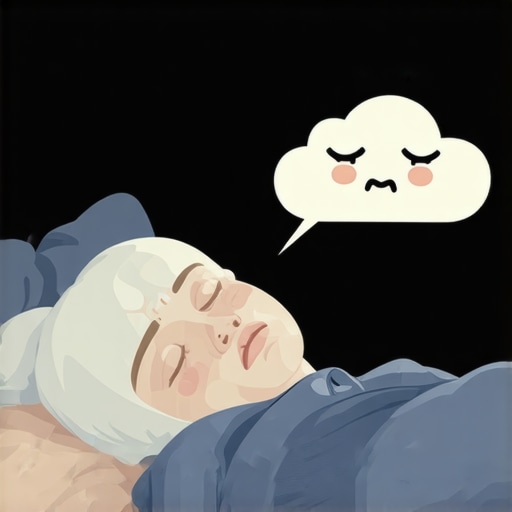
I remember sitting at my desk, deadlines looming like heavy clouds, when I realized I couldn’t actually turn my head to see who had just walked into my office. My neck wasn’t just stiff; it felt like it had been replaced by a rusted iron bar. Every time my inbox pinged, that familiar, searing heat crawled from the base of my skull down into my shoulder blades. I used to think I was just getting old or that my chair was the enemy. But then I noticed a pattern: the more my boss emailed me, the more I needed a bottle of ibuprofen just to make it to 5 PM. It was a lightbulb moment. My stress wasn’t just a feeling—it was physically manifesting in my cervical spine. Today, we are going to look at why this happens and how you can stop your neck from becoming a storage unit for your daily worries.
Your Brain Is Sending a Panic Signal to Your Shoulders
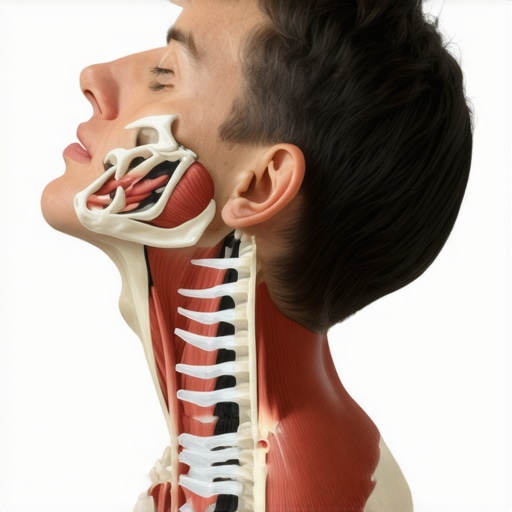
When we get stressed, our bodies go into a primal fight-or-flight mode. Your brain doesn’t know the difference between a charging saber-toothed tiger and a tax audit. It tells your muscles to gear up for a fight. Most of that tension ends up in your upper trapezius and levator scapulae—the shrug muscles. According to a study published by the Journal of Physical Therapy Science, psychological stress is significantly associated with increased upper trapezius muscle activity, essentially keeping your neck in a permanent shrug. If you’ve ever felt that the fast fix for sharp pain when turning your head isn’t enough, it might be because your nervous system is stuck on high alert. We’re going to break down how to quiet that noise and finally get your mobility back. Have you ever noticed that your neck pain peaks right when your to-do list hits its limit? Drop a comment below; I’d love to hear if you’ve felt that same iron bar sensation.
Is my stress actually the root cause or just a coincidence?
I’ll be honest with you: I made a massive mistake early on. I spent years trying to stretch my way out of the problem. I would pull my head to the side for minutes on end, only to find that why stretching a tight muscle isn’t always the answer was exactly what I needed to hear. I was irritating the nerves that were already screaming for help. Sometimes, why your shoulder pain is actually coming from your neck is because your body is trying to stabilize itself against the emotional turbulence you’re facing. Today, we’re looking at effective neck pain management that actually accounts for your busy life. We’ll also dive into the connection between shallow breathing and back pain, because how you breathe when you’re worried changes everything about your spinal health. By understanding the link between your mind and your vertebrae, you can start moving freely again, even when the pressure is on.
Stop Breathing with Your Shoulders
The first thing you have to realize is that your neck is a victim, not the villain. When stress hits, your diaphragm—the big muscle under your ribs—tends to freeze up. Instead of your belly expanding, your chest heaves upward to compensate. This forces the tiny muscles in your neck to do the heavy lifting of every single breath you take. Imagine trying to lift a heavy suitcase using only your pinky finger; eventually, that finger is going to scream in protest. If you want to drop those shoulders from your ears, you have to master the simple breath move that relaxes a seizing lower back and neck. Place your hands on your lower ribs. If they do not move outward when you inhale, your neck is doing way too much work and is likely on the verge of a spasm. 
Your Desk Setup is Lying to You
Most people think ‘sitting up straight’ is the ultimate answer, but why your perfect posture is actually making you stiff is a very real phenomenon. You end up creating a rigid, brittle spine that snaps under the pressure of a long workday because you are using muscle force to fight gravity. I spent three weeks trying to sit like a marble statue, only to end up with a migraine that felt like a localized earthquake. The secret isn’t rigidity; it is support and micro-movement. Using the correct way to use a lumbar roll in your office chair allows your spine to maintain its natural curve without your neck muscles having to ‘hold’ your head in place.
The 10-Second Reset for Instant Space
When I was stuck in a high-stakes meeting last year, I felt my chin drifting toward the table like it was magnetized to my laptop screen. My upper back started to burn with a familiar intensity. I couldn’t exactly stand up and start doing yoga in front of the board, so I used the 10-second reset for when your shoulder blades start burning. It is a subtle tuck of the chin and a light activation of the mid-back that tells your nervous system, ‘We are safe; we can let go.’ It is about creating literal space between your vertebrae when the world is trying to compress them.
The Wall Drill for Better Range
If you find yourself stuck in that ‘forward head’ or ‘tech neck’ position, you need a physical recalibration that goes beyond a simple stretch. I started using the simple wall drill to reverse forward head posture every time I went to the kitchen to get a cup of coffee. It acts as a literal ‘reset’ button for your spinal alignment. By pressing the back of your head against a flat surface and engaging the deep neck flexors, you remind your brain where ‘center’ actually is. Pair this with the 5-minute desk reset for busy professionals, and you will find that the iron bar sensation in your neck starts to feel more like a flexible, resilient spring. You aren’t just stretching a tight muscle; you are retraining your entire nervous system to handle the weight of your day without buckling.I remember sitting at my desk, deadlines looming like heavy clouds, when I realized I couldn’t actually turn my head to see who had just walked into my office. My neck wasn’t just stiff; it felt like it had been replaced by a rusted iron bar. Every time my inbox pinged, that familiar, searing heat crawled from the base of my skull down into my shoulder blades. I used to think I was just getting old or that my chair was the enemy. But then I noticed a pattern: the more my boss emailed me, the more I needed a bottle of ibuprofen just to make it to 5 PM. It was a lightbulb moment. My stress wasn’t just a feeling—it was physically manifesting in my cervical spine. Today, we are going to look at why this happens and how you can stop your neck from becoming a storage unit for your daily worries.
Your Brain Is Sending a Panic Signal to Your Shoulders
When we get stressed, our bodies go into a primal fight-or-flight mode. Your brain doesn’t know the difference between a charging saber-toothed tiger and a tax audit. It tells your muscles to gear up for a fight. Most of that tension ends up in your upper trapezius and levator scapulae—the shrug muscles. According to a study published by the Journal of Physical Therapy Science, psychological stress is significantly associated with increased upper trapezius muscle activity, essentially keeping your neck in a permanent shrug. If you’ve ever felt that the fast fix for sharp pain when turning your head isn’t enough, it might be because your nervous system is stuck on high alert. We’re going to break down how to quiet that noise and finally get your mobility back. Have you ever noticed that your neck pain peaks right when your to-do list hits its limit? Drop a comment below; I’d love to hear if you’ve felt that same iron bar sensation.
Is my stress actually the root cause or just a coincidence?
I’ll be honest with you: I made a massive mistake early on. I spent years trying to stretch my way out of the problem. I would pull my head to the side for minutes on end, only to find that why stretching a tight muscle isn’t always the answer was exactly what I needed to hear. I was irritating the nerves that were already screaming for help. Sometimes, why your shoulder pain is actually coming from your neck is because your body is trying to stabilize itself against the emotional turbulence you’re facing. Today, we’re looking at effective neck pain management that actually accounts for your busy life. We’ll also dive into the connection between shallow breathing and back pain, because how you breathe when you’re worried changes everything about your spinal health. By understanding the link between your mind and your vertebrae, you can start moving freely again, even when the pressure is on.
Stop Breathing with Your Shoulders
The first thing you have to realize is that your neck is a victim, not the villain. When stress hits, your diaphragm—the big muscle under your ribs—tends to freeze up. Instead of your belly expanding, your chest heaves upward to compensate. This forces the tiny muscles in your neck to do the heavy lifting of every single breath you take. Imagine trying to lift a heavy suitcase using only your pinky finger; eventually, that finger is going to scream in protest. If you want to drop those shoulders from your ears, you have to master the simple breath move that relaxes a seizing lower back and neck. Place your hands on your lower ribs. If they do not move outward when you inhale, your neck is doing way too much work and is likely on the verge of a spasm.
Your Desk Setup is Lying to You
Most people think ‘sitting up straight’ is the ultimate answer, but why your perfect posture is actually making you stiff is a very real phenomenon. You end up creating a rigid, brittle spine that snaps under the pressure of a long workday because you are using muscle force to fight gravity. I spent three weeks trying to sit like a marble statue, only to end up with a migraine that felt like a localized earthquake. The secret isn’t rigidity; it is support and micro-movement. Using the correct way to use a lumbar roll in your office chair allows your spine to maintain its natural curve without your neck muscles having to ‘hold’ your head in place.
The 10-Second Reset for Instant Space
When I was stuck in a high-stakes meeting last year, I felt my chin drifting toward the table like it was magnetized to my laptop screen. My upper back started to burn with a familiar intensity. I couldn’t exactly stand up and start doing yoga in front of the board, so I used the 10-second reset for when your shoulder blades start burning. It is a subtle tuck of the chin and a light activation of the mid-back that tells your nervous system, ‘We are safe; we can let go.’ It is about creating literal space between your vertebrae when the world is trying to compress them.
The Wall Drill for Better Range
If you find yourself stuck in that ‘forward head’ or ‘tech neck’ position, you need a physical recalibration that goes beyond a simple stretch. I started using the simple wall drill to reverse forward head posture every time I went to the kitchen to get a cup of coffee. It acts as a literal ‘reset’ button for your spinal alignment. By pressing the back of your head against a flat surface and engaging the deep neck flexors, you remind your brain where ‘center’ actually is. Pair this with the 5-minute desk reset for busy professionals, and you will find that the iron bar sensation in your neck starts to feel more like a flexible, resilient spring. You aren’t just stretching a tight muscle; you are retraining your entire nervous system to handle the weight of your day without buckling.
The Core Strength Trap That Locks Your Spine
Let’s dig deeper into a nuance that even the most dedicated gym-goers miss: the obsession with bracing. We’ve been told for decades that a rock-hard core is the ultimate insurance policy for our spine. But here is the contrarian truth: in my experience, a core that is always on is a core that is effectively dead to movement. If you are constantly sucking in your stomach or bracing for a punch while just sitting at your desk, you are creating a rigid, brittle system. According to a study in the Journal of Electromyography and Kinesiology, excessive co-activation of the trunk muscles actually increases spinal compression and can lead to early disc degeneration. You aren’t protecting your back; you’re crushing it from the inside out. This is exactly why your strong core might actually be too rigid for your own good. Real stability is like a high-end suspension system on a mountain bike—it should be reactive and fluid, not a solid block of concrete. If you want true relief, you have to focus on the hidden muscle that stabilizes your lower spine, the multifidus, which is often dormant in people with chronic pain despite their visible six-pack.
Can a rock-hard core actually be the reason for your chronic stiffness?
The short answer is yes. When you over-rely on your outer mirror muscles like the rectus abdominis, your deep stabilizers stop firing. This creates a compensation pattern where your mid-back has to stiffen up to provide the stability your deep core is failing to provide. I see patients all the time who think why stretching your hamstrings wont fix your back pain is a radical idea, but the truth is that your tight hamstrings are often just a protective brake your brain is pulling because your spine feels unstable. If you keep stretching them without fixing the spinal stability, you’re just fighting your own nervous system.
Stop Smashing Your Lumbar Spine with a Foam Roller
Here is the oops factor I see way too often: the indiscriminate use of foam rollers on the lower back. Unlike your upper back, which has the support of the rib cage, your lumbar spine is relatively exposed. When you stop rolling your lower back on a hard foam roller, you prevent unnecessary shearing forces on your vertebrae that can actually trigger more muscle guarding. Instead, we need to look further down the chain. It sounds counterintuitive, but why we look at your feet when your neck hurts is because a collapsed arch or a stiff ankle changes how your pelvis rotates during every step. In fact, how a single tight ankle can cause chronic back pain is one of the most overlooked mechanical links in modern wellness. By using restore your back mobility proven chiropractic strategies, we address these global connections rather than just chasing the symptom. Have you ever fallen into this trap of over-stretching or over-bracing? Let me know in the comments, and let’s start looking at your body as a connected system rather than a collection of parts.
Why Your Fancy Office Chair is Still Giving You Grief
I’ve spent thousands on ‘ergonomic’ setups only to realize that the flashier the chair, the more it encourages your muscles to go on vacation. The problem is that most built-in supports are designed for an ‘average’ person who doesn’t exist. This is exactly why the truth about built-in lumbar support in modern chairs is often a story of disappointment. I personally prefer a minimalist chair paired with a manual tool. I never travel or work without a specific lumbar roll. Learning how to use a lumbar roll without making your back stiffer changed the game for me because it allows for dynamic support that moves with my spine’s natural curve, rather than forcing it into a plastic mold. Dr. Stuart McGill, a world-renowned spine biomechanist, often emphasizes ‘Spinal Hygiene’ in his work, Back Mechanic, noting that the way we move throughout the day matters more than a single hour of exercise. If you aren’t managing the micro-trauma of sitting, no amount of gym time will save your discs.
Can I really maintain my spinal health without a gym membership?
The short answer is yes, but it requires a shift in how you view ‘maintenance.’ It’s not about a grueling 60-minute workout; it’s about the the 3-minute morning routine to lubricate your joints that ensures your vertebrae aren’t grinding together like dry gears. I predict that in the next five years, we will see a massive shift away from ‘heavy lifting’ for back health and a move toward biofeedback wearables that vibrate when your deep stabilizers go dormant. Until those tools are perfected, you have to be your own sensor. I use the hinge move that protects your spine while gardening even when I’m just picking up a pen from the floor. It’s about scaling these habits into every movement.
The Tools I Actually Pack in My Suitcase
Beyond the lumbar roll, I’m a huge advocate for lacrosse balls—not for rolling, but for pin-and-stretch techniques. If you want to restore your back mobility proven chiropractic strategies from home, placing a firm ball under a specific trigger point in the glutes while slowly moving your leg through its range of motion is far more effective than general stretching. It’s about specificity. For my neck, I’ve moved away from soft pillows toward contoured memory foam that maintains the cervical shelf. If you’re serious about long-term results, stop looking for a ‘soft’ feel and start looking for structural support. I challenge you to try the ‘Hinge Move’ for the next 24 hours every time you reach for something below waist height; your lower back will thank you by the end of the day.
The Three Brutal Truths About My Rusted Iron Neck
Looking back at my journey through chronic stiffness, I realized that I was my own worst enemy. First, pain is a conversation, not an attack. When my neck felt like a rusted iron bar, it was actually my body’s way of saying it didn’t feel safe in the environment I had created. Second, you cannot out-stretch a lifestyle of high-tension breathing; if you don’t fix the ribcage movement, the neck will never let go. Finally, the most important lesson I learned is that neck pain no more expert chiropractic solutions that work often start with the small, boring habits rather than one massive adjustment. I spent years looking for a ‘crack’ that would solve everything, but the real magic happened when I combined clinical care with the daily mobility shifts we’ve discussed. Integrating mobility mastery expert tips for back pain prevention and recovery changed my perspective from ‘fixing a problem’ to ‘nurturing a system.’
What I Actually Keep in My Desk Drawer for Relief
If you looked in my bag today, you wouldn’t find a mountain of painkillers. Instead, I carry a few specific tools that prioritize structural support over temporary numbing. I swear by a firm lumbar roll; it is the only thing that keeps my pelvis from tucking under and pulling on my neck during long writing sessions. I also keep two lacrosse balls taped together to work on my mid-back mobility during lunch breaks. For those who want to dive deeper into these transformations, I highly recommend reading up on back pain recovery how chiropractic care transforms lives to see how professional guidance can accelerate this process. These tools work because they address the mechanical root, not just the emotional symptom. #IMAGE_PLACEHOLDER_E#
You Deserve to Move Without That Constant Burn
My final wish for you is to realize that your body isn’t ‘broken’—it’s just highly adaptive. It adapted to the stress, and it can just as easily adapt to the new, healthy inputs you provide starting today. You don’t have to live with a ‘storage unit’ of worries in your shoulders. By using effective neck pain management and staying consistent with your micro-resets, you can reclaim the fluidity you had years ago. It’s about taking that first step toward relieve neck back discomfort using these expert methods and trusting the process of gradual change. Your spine is the pillar of your health; treat it with the respect it deserves. Have you ever felt like your neck is holding onto a specific stress from your job? Let me know in the comments below!