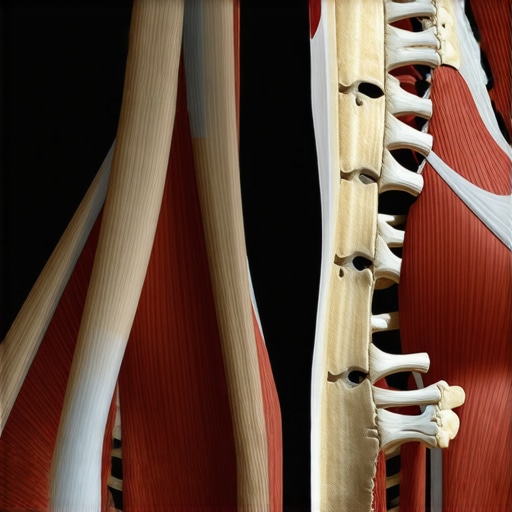
Why your neck clicks when you turn your head to the left
Last Tuesday, I was backing my car out of the driveway, squinting against the morning sun and trying to avoid the neighbor’s cat, when I turned my head to the left to check the blind spot. Click. Pop. Grate. It sounded like someone was crushing a bag of potato chips right next to my ear. It didn’t necessarily hurt, but it sure was unsettling. Have you ever had that happen? Where you feel like your neck is a rusty gate hinge that hasn’t seen oil since the 1990s? I spent years ignoring these sounds, or worse, I’d try to self-adjust by yanking my head around—a huge mistake that only made things stiffer and more irritated. Today, I want to help you understand exactly why that left-side click is happening and, more importantly, how we can quiet the noise and restore your range of motion. [image]
Stop Panic-Searching Every Snap and Pop
We’ve all been there. You’re sitting at your desk, you turn to look at a coworker, and your neck decides to give a standing ovation of clicks. My biggest mistake early on was thinking I could just stretch my way out of it. I would pull my head toward my shoulder with all my might, hoping for a satisfying pop that never came. In reality, I was just further aggravating the hidden link between neck pain and spinal health. That clicking, technically known as crepitus, is often just gas bubbles escaping the synovial fluid in your joints, but when it only happens on one side—like when you turn left—it usually points to a specific mechanical imbalance or a tight muscle pulling the vertebrae out of their ideal path. Maybe your screen height is the real cause or perhaps you’ve developed a habit of leaning on one elbow while scrolling. According to the Journal of Manual & Manipulative Therapy, nearly 30% of the population experiences some form of joint crepitus, and while it is often benign, it can be a precursor to localized wear if the joint isn’t moving quite right. If you’re feeling a sharp pain when turning your head, that’s a different story. But for most of us, it’s a simple matter of alignment and mechanical feedback.
Is that clicking sound actually dangerous?
It’s the question that keeps us up at night—well, that and a bad pillow. You worry that your bones are grinding away like sandpaper and that you’ll wake up unable to move. In most cases, if there’s no accompanying pain, it’s just physics. However, I’ve found that even issues like jaw clicking can often be tied back to these same cervical imbalances. Have you ever noticed if the clicking gets louder when you’re stressed or after a long day of staring at your phone? Often, it is a sign that your perfect posture is actually making you stiff. We need to look at the why behind the noise. Usually, it is your body’s way of saying something is slightly off-track. We’re going to dive into the specific mechanics of the cervical spine and how small shifts in your daily habits can make that left turn feel like silk again.
Watch Your Reflection to Find the Glitch
To fix the click, you first have to see the cheat. Most of us think we are turning our heads in a perfect horizontal plane, but our bodies are masters of compensation. Stand in front of a mirror and perform the 10-second posture check you can do anywhere. As you rotate your head slowly to the left, watch your shoulders. Does the right shoulder tip upward? Does your chin tuck down toward your collarbone instead of staying level? Think of your neck like a revolving door; if the floor is slightly tilted, the door is going to scrape the frame every time it passes a certain point. That scraping is the click you hear. By identifying if your shoulders are hiking, you can consciously depress them, which often creates the necessary clearance for the vertebrae to rotate without that annoying friction.
Your Eyes Are Steering Your Cervical Spine
It sounds wild, but your eye muscles and your top neck muscles are hardwired together. It’s called the oculocervical reflex. If your eyes are strained or locked in a fixed position for hours, the muscles at the base of your skull—the suboccipitals—will lock up in sympathy. I’ve seen cases where simply shifting the way someone looks at their monitor solves a clicking issue that’s persisted for months. You can actually test this: keep your head still and move your eyes rapidly left and right. Do you feel a tiny flicker of tension at the top of your neck? That is how your eyes are secretly dictating your posture. If you find yourself constantly squinting or leaning in, you’re essentially pre-loading the tension on that left side before you even start to turn.
Realign Your System with the Wall Drill
When my own neck started sounding like a bowl of Rice Krispies every time I checked my blind spot, I realized my upper back had become a rigid block. I started using the simple wall drill to reverse forward head posture twice a day. Stand with your heels, glutes, and shoulder blades against a flat wall. Gently tuck your chin—make a double chin, don’t be shy—and try to touch the back of your head to the wall without looking up. From this braced position, try that left turn again. You’ll likely find the click is muffled or gone entirely because you’ve forced the joints into their intended alignment. This isn’t just about stretching; it’s about recalibrating the internal GPS of your spine. 
Small Desk Tweaks That Stop the Grind
I remember the month I finally figured out why my left-side click wouldn’t quit. I had my primary monitor straight ahead, but my laptop sat to my left. I was spending 40% of my day with my neck pre-rotated about 20 degrees. When I finally tried to turn ‘fully’ left, I was hitting the end of my joint’s natural range without realizing it. I was literally trying to turn past the physical stop-point of the bone. If you don’t address the environment, you’re fighting a losing battle. You might even find that how to tell if your headache is starting in your neck becomes your next big concern if that rotation stays restricted. Use the 30-second reset for tech neck fatigue every hour to break the cycle of static loading. Simply centering your equipment so your ‘neutral’ is actually neutral can be more effective than a thousand stretches. Adjusting why your screen height is the real cause of your mechanical issues is often the missing piece of the puzzle.The most common advice you’ll hear for a clicky neck is to simply stretch it out. I’m going to be the bearer of bad news: that might be the worst thing you can do for long-term health. We often mistake tension for shortness, but when a muscle feels tight, it is frequently because it is being pulled taut like a rubber band—meaning it is already at its limit. Adding more stretch to an over-lengthened muscle just triggers the body’s protective stretch reflex, making it even tighter fifteen minutes later. This is exactly why stretching a tight muscle isn’t always the answer. In many cases, those muscles on the left side of your neck are screaming for stability and strength, not more flexibility.
Don’t Become a Habitual Self-Cracker
There is a specific trap I see daily in the clinic: the habitual self-cracker. You know who you are. You feel a bit of pressure, you yank your chin to the side, and you get that satisfying pop. The relief lasts for five minutes, and then the pressure returns. The danger here is that you aren’t actually moving the joint that is stuck. Your body is incredibly efficient and will always move the easiest, most mobile joint first. When you self-adjust, you are usually just forcing more movement into a segment that is already hypermobile, while the vertebrae that actually needs to move stays locked tight. Over time, this creates a cycle of instability where your ligaments become like overstretched socks. To break this, you need to focus on mastering back neck pain relief tips from the pros that target the dormant segments rather than the noisy ones.
Does the sound of bone on bone mean I have permanent damage?
It is a terrifying thought, but the nuance is that crepitus without pain is rarely a sign of structural failure. According to a study published in the Journal of Manipulative and Physiological Therapeutics, joint popping sounds are often caused by rapid pressure changes in the joint capsule, known as cavitation, and do not necessarily correlate with the severity of arthritis. The danger isn’t the sound itself; it is the mechanical imbalance that the sound signals. If you are constantly hearing that grate on one side, your body is sending a check-engine light. Instead of masking the noise, we use expert methods to relieve neck discomfort by addressing the pelvic or thoracic issues that might be forcing your neck to overwork. Believe it or not, I have seen cases where neck clicking vanished once we addressed a patient’s stride; why we look at your feet when your neck hurts is a core philosophy for professional alignment. #IMAGE_PLACE_HOLDER_C#
Stop Chasing the Noise and Start Training Stability
If you want to unlock neck pain relief, you have to stop focusing on the click and start focusing on deep motor control. Your deep neck flexors—the tiny muscles right in front of your spine—are usually asleep at the wheel. When they don’t fire, the big shrug muscles take over, which is usually when that left-side click becomes a constant companion. Think of it as a tug-of-war where one side has simply given up. Have you ever fallen into the trap of thinking a loud pop meant you were finally fixed? Let me know in the comments below. We need to stop equating noise with progress and start measuring success by how smoothly the cervical spine rotates without needing to force it.To move from temporary relief to permanent silence in your joints, you need to look at the tools you use every single day. I’m a huge advocate for the ‘low-tech’ approach first. Before buying a $1,000 ergonomic chair, I tell my patients to learn how to use a rolled-up towel to fix your cars lumbar support. Why the car? Because most of us spend 30 to 60 minutes in a slightly slouched, vibrating environment right before we start our work day. That towel tucked just above your belt line forces your pelvis into a neutral tilt, which takes the ‘shear’ force off your neck before you even turn the key. 
Invest in your setup before your spine pays the price
At home, I personally use a gas-spring monitor arm. It isn’t just about height; it’s about depth. Most people have their screens too close, which causes their eyes to converge and those suboccipital muscles to tighten. If you are looking for how to set up your home office on a budget, the best investment you can make is a separate keyboard and mouse so your screen can actually be at eye level. Dr. Kelly Starrett, author of Becoming a Supple Leopard and a pioneer in movement mechanics, often notes that ‘position precedes power.’ If your neck isn’t in a stable position, you lose the ‘power’ of smooth, silent rotation.
How can I keep my neck noise-free for the next decade?
Maintenance isn’t a weekend project; it’s a lifestyle of micro-adjustments. I’ve found that the secret to restore your back mobility with proven chiropractic strategies is the 3-to-1 rule: for every hour of sitting, you need three minutes of ‘anti-sitting’ movement. This isn’t just stretching. It’s about using the best exercises to keep your spine young, like the ‘Bruegger’s relief position’ where you open your palms and pull your shoulder blades back and down. Consistency is what prevents the synovial fluid from becoming stagnant and the joints from grinding.
Neuro-centric drills are the next frontier for mobility
I predict that in the next few years, we will see a massive shift toward ‘neuro-centric’ mobility—tools and methods that don’t just stretch muscles but actually ‘reset’ the brain’s internal map of the joint. We’re already seeing this with localized vibration therapy and visual tracking drills that alleviate cervical tension. If you want to get ahead of the curve and stop that left-side click for good, try the wall drill I mentioned earlier, but do it while holding a light five-pound weight in each hand to ‘prime’ your stabilizers. This advanced tweak tells your nervous system that it’s safe to move into that rotation without the protective clicking, providing a deeper mechanical reset than any static stretch ever could.
Hard Truths I Discovered While Quietening My Neck
Stop chasing the ‘perfect’ pop. Real expert chiropractic solutions that work focus on the segments that aren’t moving, not the ones making all the noise. I spent years thinking a louder crack meant better results, but the truth is that the loudest joints are often the ones already overworking. Real progress is silent. [image]
Hydration isn’t just for your muscles; your spinal discs and joint capsules need water to stay plump and quiet. If you’re chronically dehydrated, your neck will sound like a dry forest floor every time you turn your head. This is one of those ‘boring’ secrets that professionals rarely emphasize enough.
The Gear and Wisdom That Actually Changed My Alignment
Dr. Kelly Starrett’s work in ‘Becoming a Supple Leopard’ was a turning point for me. It shifted my perspective from ‘fixing a click’ to ‘organizing my spine.’ If your neck isn’t organized, it will find a way to move that creates friction. This book is the best resource for learning how to stand and move without destroying your cartilage.
I also swear by the 3-minute morning routine to lubricate your joints. It’s the single best way to tell your nervous system that it’s safe to move before the day’s stress begins. Combine this with the physical support of how to use a rolled-up towel to fix your cars lumbar support, and you eliminate the two biggest sources of static strain that build up before you even arrive at work.
Your Path to a Quiet Spine Starts Now
You don’t have to accept a noisy neck as an inevitable part of getting older or working a desk job. By combining ergonomic discipline with the right expert methods to relieve neck discomfort, you can reclaim a smooth, silent range of motion. It takes consistency, but the first time you check your blind spot without a single ‘pop,’ you’ll know you’ve finally addressed the root cause of your neck pain relief. Have you ever found that a specific movement, like the wall drill, completely changed how your neck feels? Let me know in the comments below.