The specific reason your lower back hurts after washing dishes
I was three plates into a mountain of Sunday dinner dishes when it hit me—that familiar, nagging pull right at the base of my spine. I thought I was just being a helpful neighbor by helping clean up, but by the time I reached the silverware, I was gripping the counter for dear life. For years, I made the mistake of thinking my back was just weak, but the truth is way more mechanical and, honestly, much easier to fix than I ever imagined. We’re going to look at why that simple chore feels like a CrossFit workout gone wrong and how you can reclaim your kitchen time without the subsequent heating pad sessions.
The Hidden Physics of Your Kitchen Sink
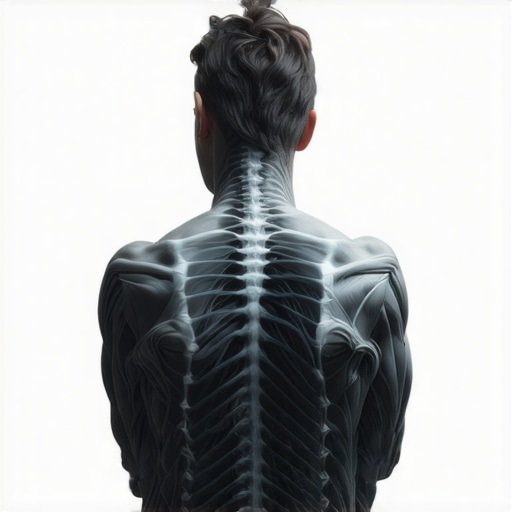
Every time you lean over that basin, you aren’t just washing; you’re putting your spine through a grueling endurance test. I used to spend hundreds on fancy kitchen mats, thinking the floor was the enemy. But I soon realized that why your slippers might be causing your lower back stiffness was only half the battle. The real culprit is static loading. When you lean forward just a few inches to reach the bottom of the sink, your core muscles often check out, leaving your ligaments to do the heavy lifting. This is a classic case of understanding back pain through the lens of daily habits. I personally spent months trying to stretch my way out of this before realizing my stance was the problem.
Is this really just about getting older?
It’s easy to blame the calendar, but that’s a cop-out I used for way too long. According to research highlighted by Harvard Health Publishing, leaning forward at a slight angle can significantly increase the pressure on your spinal discs compared to standing perfectly upright. It’s not your age; it’s the leverage. Have you ever felt like you had to pop your back just to walk away from the sink? You’re not alone, and it’s usually because your pelvis is locked in a tilted position while you scrub. Integrating simple chiropractic hacks into your routine can stop this cycle. Learning the hip hinge trick isn’t just for the backyard—it’s the secret sauce for the kitchen too. We’re going to dive into how a simple cabinet-door adjustment can change your life, but first, I have to ask: do you find yourself leaning your stomach against the sink just to take the weight off your feet?That stomach-against-the-porcelain lean is actually your body’s desperate cry for a ‘kickstand.’ When you lean forward, your center of gravity shifts past your toes, forcing your lower back muscles to act like frantic bungee cords holding up a falling building.
Open the Cabinet Door for an Instant Kickstand
The most transformative thing I ever did for my kitchen routine didn’t cost a dime. Open the cabinet doors under your sink. Now, take one foot and place it inside on the bottom shelf. This simple shift does something magical: it rotates your pelvis and takes the ‘pull’ off your psoas. I remember a particularly grueling Tuesday night after a neighborhood potluck—there were dozens of greasy casserole dishes, and usually, my back would have been screaming by the third one. By resting my left foot on that bottom shelf, I felt the tension in my lumbar spine vanish. It’s a literal game-changer for mobility mastery. #IMAGE_PLACE_HOLDER_B#
Stop Bending and Start Folding at the Hips
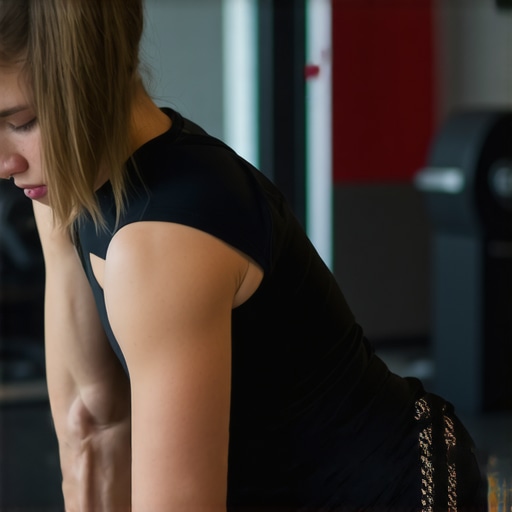
We’ve been taught to ‘bend over’ to reach the bottom of the sink, but that’s a recipe for disaster. Think of your spine like a delicate stack of plates and your hips like a heavy-duty hinge on a gate. Instead of rounding your back, you need to push your butt backward toward the opposite wall. This is the essence of the hip hinge trick, and it works just as well for scrubbing pans as it does for pulling weeds. When you hinge, you’re loading your glutes—the strongest muscles in your body—rather than your fragile spinal ligaments. If you find this difficult, it’s often because why tight hip flexors are the real cause of your lower back arch, making it nearly impossible to keep your spine neutral.
Why Your Core Needs to Act Like a Support Beam
Most people think ‘core’ means six-pack abs, but in the kitchen, your core is a stabilizing sleeve. If you let it go soft, your vertebrae take the brunt of every scrub. I used to make the mistake of ‘sucking it in,’ but that actually makes you more rigid and brittle. Instead, imagine someone is about to poke you in the stomach and you brace for it—that’s the engagement you need. This is a form of the isometric hold that builds a bulletproof core. I once tried to clean a massive Thanksgiving roaster while completely relaxed; I felt a sharp ‘zip’ in my mid-back that laid me out for two days. Now, I brace before I even touch the faucet.
The Problem with Static Stretching During Chores
You might feel the urge to stop and reach for your toes when your back gets tight, but why stretching your hamstrings wont fix your back pain is because the issue is often structural, not just muscular. If you’re already in a flare-up, try the 5-minute reset for a stiff lumbar spine after the dishes are done, rather than twisting frantically in the middle of the chore. Moving with intention—shifting your weight from foot to foot every sixty seconds—prevents the blood from pooling and the muscles from locking up in that ‘static load’ position.While the ‘kickstand’ trick is a lifesaver, there is a nuance most people miss: posture is a dance, not a photograph. Many of us fall into the trap of ‘military posture’—pulling the shoulders back and tucking the chin until we are as rigid as a board. But this is exactly why your perfect posture is actually making you stiff. When you are too rigid, your muscles never get a chance to ‘breathe’ through movement. I’ve seen clients who were so focused on having a ‘perfectly straight’ back that they ended up with more pain than when they were slouching. This is because why your strong core might actually be too rigid is a very real phenomenon where over-bracing prevents the natural micro-movements your spine needs to stay lubricated.
The Myth of the ‘Straight’ Spine at the Sink
Most people believe that ‘straight’ equals ‘healthy,’ but your spine is naturally curved for a reason. Research from the Journal of Physical Therapy Science indicates that maintaining a static, forced ‘ideal’ posture can actually increase spinal load and muscle fatigue faster than a more relaxed, dynamic stance. If you are standing at the sink like a statue, you are asking for a flare-up. Instead of trying to be perfectly upright, think about ‘active standing’—shifting your weight every 30 seconds and letting your spine find its natural neutral. This is a core component of back pain recovery that transforms lives.
Does your neck throb even when you think your back is straight?
It’s a common frustration: you fix your feet, you hinge your hips, but your neck still screams by the time you’re scrubbing the frying pan. This happens because your body is a kinetic chain. If your pelvis isn’t aligned, your neck has to compensate just so your eyes can stay level with the soapy water. This is why we look at your pelvis when your neck hurts; the tension travels upward. You might think you’re helping your neck by tucking your chin, but if the foundation is off, you’re just adding more strain to the cervical spine.
The Trap of Post-Chore Foam Rolling
After a long session of cleaning, the first thing many people do is grab a foam roller and go to town on their lower back. This is a massive ‘oops’ factor. You should stop rolling your lower back on a hard foam roller immediately. Your lumbar spine doesn’t have the protection of a ribcage like your upper back does, and rolling it can actually cause the muscles to seize up further or irritate your discs. #IMAGE_PLACE_HOLDER_C# Instead of attacking the spot that hurts, try proven chiropractic strategies that focus on mobilizing the hips and the thoracic spine. When your mid-back and hips move better, your lower back doesn’t have to work as hard at the sink. Have you ever fallen into this trap of over-correcting your posture or rolling out the wrong spot? Let me know in the comments.Once you’ve mastered the kitchen-cabinet kickstand, the next step is looking at the environment you’re working in. I realized that my beautiful tile floor was basically a slab of stone designed to punish my joints. If you’re standing on hard surfaces for more than ten minutes, you’re experiencing why why walking on concrete is harder on your spine than you think. I personally invested in a 3/4-inch gel-infused anti-fatigue mat. It doesn’t just feel soft; it forces the tiny stabilizer muscles in your ankles and calves to engage, which keeps the blood flowing and prevents the static load from settling into your lower back. I also stopped wearing flat-soled slippers in the house because why your slippers might be causing your lower back stiffness is usually due to a lack of arch support that cascades up to your pelvis.
How can I keep my spine healthy for the long haul?
Maintenance isn’t just about doing a stretch when you hurt; it’s about spinal hygiene. Think of it like brushing your teeth. According to a study published in the Journal of Manipulative and Physiological Therapeutics, patients who engaged in regular chiropractic maintenance care experienced significantly fewer days with bothersome back pain compared to those who only sought help during a crisis. This proactive approach is a cornerstone of back pain recovery. I make it a point to perform the best exercises to keep your spine young every morning before I even pour my first cup of coffee. By mobilizing the joints early, I ensure that how a single tight ankle can cause chronic back pain doesn’t become my reality during a busy day of chores. #IMAGE_PLACE_HOLDER_D#
The Future of Pain-Free Living in the Home
I predict that within the next decade, we’re going to see a massive shift in residential ergonomics. We are already seeing adjustable-height desks in every home office, and I believe adjustable-height kitchen counters and sinks are next. Imagine being able to raise the basin three inches when it’s your turn for the dishes, instantly eliminating the need to hinge at all. Until then, we have to be our own ergonomic advocates. If you’re serious about staying mobile, you need to integrate proven chiropractic strategies into your weekly routine. Don’t wait for the ‘zip’ in your back to tell you something is wrong. My challenge to you today: open that cabinet door tonight while you do the dishes and use the ‘kickstand’ for just five minutes. Your spine will thank you before you even dry the first plate. If you find yourself still struggling with stiffness, it might be time to look deeper into your alignment.I was three plates into a mountain of Sunday dinner dishes when it hit me—that familiar, nagging pull right at the base of my spine. I thought I was just being a helpful neighbor by helping clean up, but by the time I reached the silverware, I was gripping the counter for dear life. For years, I made the mistake of thinking my back was just weak, but the truth is way more mechanical and, honestly, much easier to fix than I ever imagined. We’re going to look at why that simple chore feels like a CrossFit workout gone wrong and how you can reclaim your kitchen time without the subsequent heating pad sessions.
The Hidden Physics of Your Kitchen Sink
Every time you lean over that basin, you aren’t just washing; you’re putting your spine through a grueling endurance test. I used to spend hundreds on fancy kitchen mats, thinking the floor was the enemy. But I soon realized that why your slippers might be causing your lower back stiffness was only half the battle. The real culprit is static loading. When you lean forward just a few inches to reach the bottom of the sink, your core muscles often check out, leaving your ligaments to do the heavy lifting. This is a classic case of understanding back pain through the lens of daily habits. I personally spent months trying to stretch my way out of this before realizing my stance was the problem.
Is this really just about getting older?
It’s easy to blame the calendar, but that’s a cop-out I used for way too long. According to research highlighted by Harvard Health Publishing, leaning forward at a slight angle can significantly increase the pressure on your spinal discs compared to standing perfectly upright. It’s not your age; it’s the leverage. Have you ever felt like you had to pop your back just to walk away from the sink? You’re not alone, and it’s usually because your pelvis is locked in a tilted position while you scrub. Integrating simple chiropractic hacks into your routine can stop this cycle. Learning the hip hinge trick isn’t just for the backyard—it’s the secret sauce for the kitchen too. We’re going to dive into how a simple cabinet-door adjustment can change your life, but first, I have to ask: do you find yourself leaning your stomach against the sink just to take the weight off your feet?That stomach-against-the-porcelain lean is actually your body’s desperate cry for a ‘kickstand.’ When you lean forward, your center of gravity shifts past your toes, forcing your lower back muscles to act like frantic bungee cords holding up a falling building.
Open the Cabinet Door for an Instant Kickstand
The most transformative thing I ever did for my kitchen routine didn’t cost a dime. Open the cabinet doors under your sink. Now, take one foot and place it inside on the bottom shelf. This simple shift does something magical: it rotates your pelvis and takes the ‘pull’ off your psoas. I remember a particularly grueling Tuesday night after a neighborhood potluck—there were dozens of greasy casserole dishes, and usually, my back would have been screaming by the third one. By resting my left foot on that bottom shelf, I felt the tension in my lumbar spine vanish. It’s a literal game-changer for mobility mastery. #IMAGE_PLACE_HOLDER_B#
Stop Bending and Start Folding at the Hips
We’ve been taught to ‘bend over’ to reach the bottom of the sink, but that’s a recipe for disaster. Think of your spine like a delicate stack of plates and your hips like a heavy-duty hinge on a gate. Instead of rounding your back, you need to push your butt backward toward the opposite wall. This is the essence of the hip hinge trick, and it works just as well for scrubbing pans as it does for pulling weeds. When you hinge, you’re loading your glutes—the strongest muscles in your body—rather than your fragile spinal ligaments. If you find this difficult, it’s often because why tight hip flexors are the real cause of your lower back arch, making it nearly impossible to keep your spine neutral.
Why Your Core Needs to Act Like a Support Beam
Most people think ‘core’ means six-pack abs, but in the kitchen, your core is a stabilizing sleeve. If you let it go soft, your vertebrae take the brunt of every scrub. I used to make the mistake of ‘sucking it in,’ but that actually makes you more rigid and brittle. Instead, imagine someone is about to poke you in the stomach and you brace for it—that’s the engagement you need. This is a form of the isometric hold that builds a bulletproof core. I once tried to clean a massive Thanksgiving roaster while completely relaxed; I felt a sharp ‘zip’ in my mid-back that laid me out for two days. Now, I brace before I even touch the faucet.
The Problem with Static Stretching During Chores
You might feel the urge to stop and reach for your toes when your back gets tight, but why stretching your hamstrings wont fix your back pain is because the issue is often structural, not just muscular. If you’re already in a flare-up, try the 5-minute reset for a stiff lumbar spine after the dishes are done, rather than twisting frantically in the middle of the chore. Moving with intention—shifting your weight from foot to foot every sixty seconds—prevents the blood from pooling and the muscles from locking up in that ‘static load’ position.While the ‘kickstand’ trick is a lifesaver, there is a nuance most people miss: posture is a dance, not a photograph. Many of us fall into the trap of ‘military posture’—pulling the shoulders back and tucking the chin until we are as rigid as a board. But this is exactly why your perfect posture is actually making you stiff. When you are too rigid, your muscles never get a chance to ‘breathe’ through movement. I’ve seen clients who were so focused on having a ‘perfectly straight’ back that they ended up with more pain than when they were slouching. This is because why your strong core might actually be too rigid is a very real phenomenon where over-bracing prevents the natural micro-movements your spine needs to stay lubricated.
The Myth of the ‘Straight’ Spine at the Sink
Most people believe that ‘straight’ equals ‘healthy,’ but your spine is naturally curved for a reason. Research from the Journal of Physical Therapy Science indicates that maintaining a static, forced ‘ideal’ posture can actually increase spinal load and muscle fatigue faster than a more relaxed, dynamic stance. If you are standing at the sink like a statue, you are asking for a flare-up. Instead of trying to be perfectly upright, think about ‘active standing’—shifting your weight every 30 seconds and letting your spine find its natural neutral. This is a core component of back pain recovery that transforms lives.
Does your neck throb even when you think your back is straight?
It’s a common frustration: you fix your feet, you hinge your hips, but your neck still screams by the time you’re scrubbing the frying pan. This happens because your body is a kinetic chain. If your pelvis isn’t aligned, your neck has to compensate just so your eyes can stay level with the soapy water. This is why we look at your pelvis when your neck hurts; the tension travels upward. You might think you’re helping your neck by tucking your chin, but if the foundation is off, you’re just adding more strain to the cervical spine.
The Trap of Post-Chore Foam Rolling
After a long session of cleaning, the first thing many people do is grab a foam roller and go to town on their lower back. This is a massive ‘oops’ factor. You should stop rolling your lower back on a hard foam roller immediately. Your lumbar spine doesn’t have the protection of a ribcage like your upper back does, and rolling it can actually cause the muscles to seize up further or irritate your discs. #IMAGE_PLACE_HOLDER_C# Instead of attacking the spot that hurts, try proven chiropractic strategies that focus on mobilizing the hips and the thoracic spine. When your mid-back and hips move better, your lower back doesn’t have to work as hard at the sink. Have you ever fallen into this trap of over-correcting your posture or rolling out the wrong spot? Let me know in the comments.Once you’ve mastered the kitchen-cabinet kickstand, the next step is looking at the environment you’re working in. I realized that my beautiful tile floor was basically a slab of stone designed to punish my joints. If you’re standing on hard surfaces for more than ten minutes, you’re experiencing why why walking on concrete is harder on your spine than you think. I personally invested in a 3/4-inch gel-infused anti-fatigue mat. It doesn’t just feel soft; it forces the tiny stabilizer muscles in your ankles and calves to engage, which keeps the blood flowing and prevents the static load from settling into your lower back. I also stopped wearing flat-soled slippers in the house because why your slippers might be causing your lower back stiffness is usually due to a lack of arch support that cascades up to your pelvis.
How can I keep my spine healthy for the long haul?
Maintenance isn’t just about doing a stretch when you hurt; it’s about spinal hygiene. Think of it like brushing your teeth. According to a study published in the Journal of Manipulative and Physiological Therapeutics, patients who engaged in regular chiropractic maintenance care experienced significantly fewer days with bothersome back pain compared to those who only sought help during a crisis. This proactive approach is a cornerstone of back pain recovery. I make it a point to perform the best exercises to keep your spine young every morning before I even pour my first cup of coffee. By mobilizing the joints early, I ensure that how a single tight ankle can cause chronic back pain doesn’t become my reality during a busy day of chores. #IMAGE_PLACE_HOLDER_D#
The Future of Pain-Free Living in the Home
I predict that within the next decade, we’re going to see a massive shift in residential ergonomics. We are already seeing adjustable-height desks in every home office, and I believe adjustable-height kitchen counters and sinks are next. Imagine being able to raise the basin three inches when it’s your turn for the dishes, instantly eliminating the need to hinge at all. Until then, we have to be our own ergonomic advocates. If you’re serious about staying mobile, you need to integrate proven chiropractic strategies into your weekly routine. Don’t wait for the ‘zip’ in your back to tell you something is wrong. My challenge to you today: open that cabinet door tonight while you do the dishes and use the ‘kickstand’ for just five minutes. Your spine will thank you before you even dry the first plate. If you find yourself still struggling with stiffness, it might be time to look deeper into your alignment.
The Hardest Lessons I Learned at the Kitchen Sink
I spent years thinking I just needed to be stronger, but strength without mechanics is just a faster way to get injured. Here are the most important lightbulb moments I had: First, gravity is a relentless roommate—even a slight lean doubles the pressure on your discs. Second, your core is a stabilizer, not a statue; it needs to move and breathe to protect you. Finally, awareness is 90% of the battle. Once I started noticing the ‘zip’ in my back before it became a full-blown throb, I could finally break the cycle of exhaustion and pain.
My Personal Toolkit for a Bulletproof Back
If you want to move beyond the kickstand, these are the resources I trust in my own home. I swear by high-quality anti-fatigue mats, but only when paired with footwear that prevents lower back stiffness. Understanding thermal therapy is also vital; knowing the truth about using heat versus ice can save you days of unnecessary soreness. Lastly, I recommend a quick 10-second posture check every time you switch from scrubbing to rinsing to keep your alignment in check.
Take Back Your Kitchen Today
Your back should not be the price you pay for a clean home. Reclaiming your mobility starts with the smallest shifts—literally. You don’t need a complete lifestyle overhaul; you just need to open a cabinet door, place your foot, and breathe. This journey toward long-term back pain recovery is built on these tiny, consistent victories. Have you ever tried the kickstand trick before, or do you have your own secret for surviving a mountain of dishes? Let me know in the comments below!