Why tight hip flexors are the real cause of your lower back arch
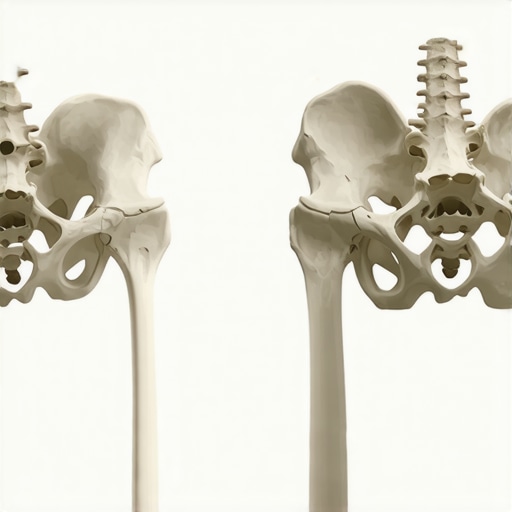
I remember standing in the checkout line at the grocery store three years ago, shifting my weight from one foot to the other like I was walking on hot coals. My lower back felt like it was being squeezed in a literal vice, and no matter how much I tried to stand up straight, I felt like my butt was sticking out like I was posing for a fitness magazine I never applied for. I spent hundreds on fancy office chairs and even tried those weird kneeling ones, thinking my spine was just broken. It wasn’t. It took a frustrated afternoon at a specialist’s office to realize that my back wasn’t the problem at all; it was just the victim. My hips were the real bullies. If you feel like your belt line is always tilted forward and your lower back is perpetually tight, you’re likely dealing with what we call anterior pelvic tilt, and today, I want to show you exactly why focusing on your back is the one mistake that kept me in pain for years.
Your Lower Back Pain is a Liar
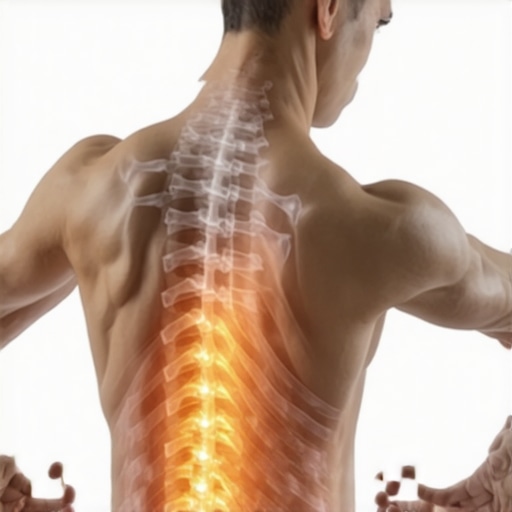
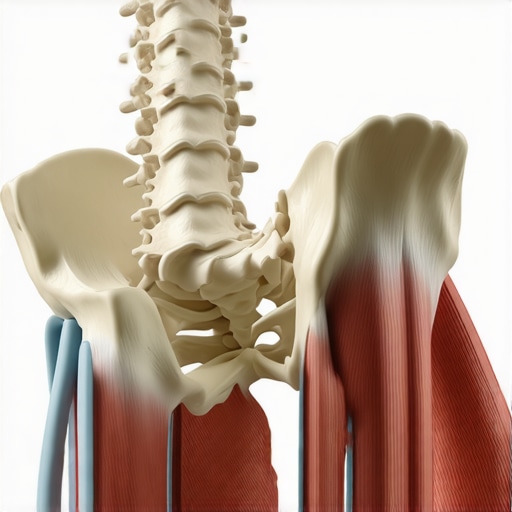
Listen, I know it feels like the problem is in those muscles right above your waistband. That’s where the ache is, right? But more often than not, that sharp arch in your spine is the result of your hip flexors—specifically the psoas—acting like a tightened bowstring. When you sit all day, these muscles shorten. Then, when you stand up, they don’t magically lengthen back out; instead, they tug on your spine and tip your pelvis forward. I used to think understanding back pain was about fixing the bones, but it’s really about managing the tension that pulls them out of place. This constant tug-of-war is why why your core isn’t engaging during your workouts, no matter how many sit-ups you do. You can’t fire your abs if your pelvis is already locked in a tilted position. Have you ever felt like your lower back was doing all the work while your stomach just hung out for the ride?
Can a couple of tight muscles really change my whole spine shape
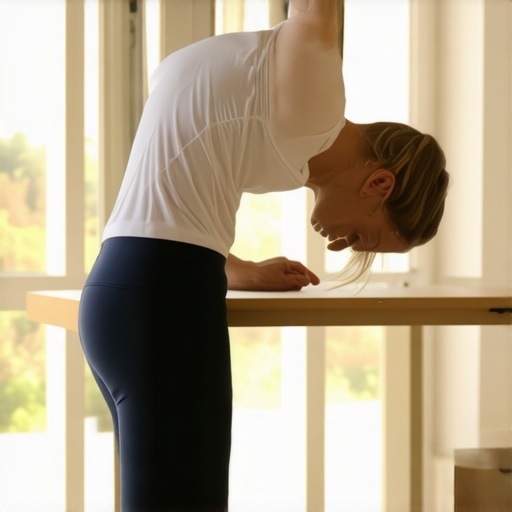
It sounds almost too simple to be true. How can muscles in the front of my leg make my back hurt that much? Well, the psoas is the only muscle in the human body that connects your upper body to your lower body, attaching directly to your lumbar vertebrae. According to the Cleveland Clinic, a chronically shortened psoas can exert significant compressive force on the spinal discs, leading to that deep, nagging ache that never seems to go away with rest. Early in my journey, I made the massive mistake of trying to stretch my lower back to fix this. I would touch my toes for minutes at a time, not realizing that I was just overstretching already strained muscles while ignoring the tight hip flexors that were causing the strain in the first place. This is a classic case where why stretching a tight muscle isn’t always the answer, especially if you’re stretching the wrong side of the joint. If you’re a commuter, you might need something like the 2-minute hip opener for people who commute over an hour to finally give your spine some breathing room. [image_placeholder]
Stop Letting Your Pelvis Spill Forward Like a Bowl of Cereal
Imagine your pelvis is a bowl of water. When you have anterior pelvic tilt, that bowl is tipping forward, and the water is spilling out over your toes. To fix this, we have to level the bowl. The first time I tried to correct this, I just jammed my back into the chair, which did nothing but make me sweat. The real trick is a psoas release that doesn’t involve touching your toes. You need to drop into a half-kneeling position—one knee down, one foot forward. But here is the secret: before you lean an inch forward, you must tuck your tailbone under you like a scared dog. This ‘posterior tuck’ is what finally unhooks that psoas tension. I remember the first time I got this right; it felt like a rubber band in my hip finally stopped trying to snap. If you skip the tuck, you’re just arching your lower back more, which is exactly why stretching a tight muscle isn’t always the answer. Once you’re in that position, hold it for 30 seconds while breathing deep into your belly. 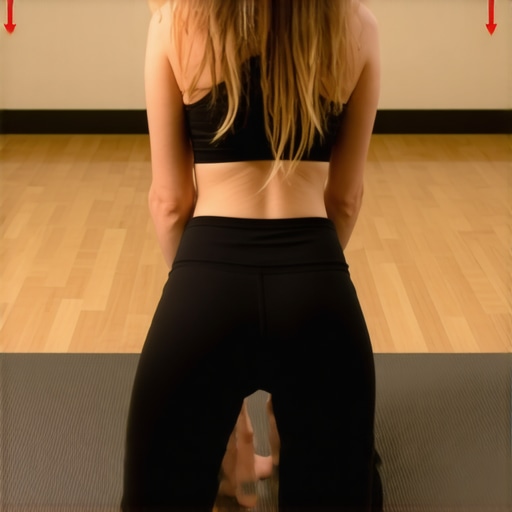
The Dead Bug Method for a Bulletproof Spine
Once the front is loose, you have to wake up the back and the core. This isn’t about six-pack abs; it’s about stability. I used to do dozens of crunches, wondering why my back still felt fragile. Then a chiropractor showed me that the dead bug exercise is the king of core stability because it forces your spine to stay neutral while your limbs move. Lie on your back, legs in the air at 90 degrees, arms reaching for the ceiling. Press your lower back into the floor so hard that a piece of paper couldn’t slide under it. Slowly lower the opposite arm and leg. If your back pops up even a millimeter, you’ve lost the battle. This move teaches your brain how to restore your back mobility by using the core as an anchor rather than a passenger.
Your Shoes are Secretly Shifting Your Alignment
We often look at the hips, but the floor is where the chain reaction starts. I spent years in flat, unsupportive sneakers, thinking I was being ‘natural.’ In reality, why walking in flat shoes might be worsening your alignment is because without a proper arch, your feet collapse inward, rotating your femurs and tipping that pelvic bowl even further forward. You have to learn how to fix your gait for better spinal alignment by focusing on pushing off your big toe and keeping your weight centered. When I finally switched to footwear that supported my actual foot structure, the constant ‘pull’ on my hamstrings—which were actually just overstretched and tired—finally vanished. It’s all connected, and ignoring your foundation is like trying to fix a leaning house by repainting the roof.I spent years trying to sit like a statue because I thought ‘good posture’ was a rigid, 90-degree ordeal. But here’s the contrarian truth that most specialists won’t tell you: why your perfect posture is actually making you stiff. Your spine isn’t a steel beam; it’s a dynamic stack of joints designed for constant, subtle movement. When you force yourself into a ‘perfect’ upright position for eight hours, you’re essentially creating a static load that exhausts your paraspinal muscles. This leads to a phenomenon where your muscles ‘lock’ to protect the spine, creating the very tension you were trying to avoid. In my clinic, I’ve found that a ‘fidgety’ sitter is often much healthier than a ‘perfect’ one. 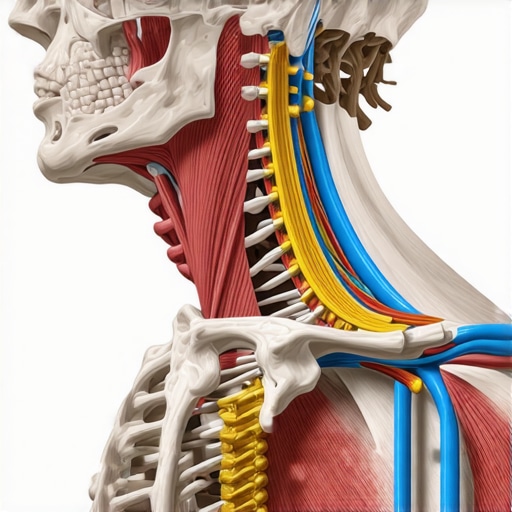
Does my jaw really have anything to do with my lower back?
It sounds like a stretch, but the body is one continuous sheet of connective tissue. I see so many patients who treat their back pain in isolation, but the connection between your jaw tension and neck mobility is undeniable. If you’re a night-grinder or a jaw-clencher, your nervous system is kept in a state of high alert. This chronic stress signal keeps the muscles at the top of your neck—and eventually your lumbar—locked in a defensive ‘brace.’ A study published in the Journal of Manipulative and Physiological Therapeutics suggests that temporomandibular joint (TMJ) dysfunction can significantly alter gait and spinal postural control. This is the hidden nuance: you can’t fix a tilted pelvis if your brain is getting ‘danger’ signals from a clenched jaw. I often find that when we adjust the pelvis to fix neck tension, the jaw finally releases, and the back pain follows suit.
Stop reaching for the ice pack for old stiffness
One of the biggest ‘oops’ factors I see is the obsession with icing. We’ve been told to ‘ice it’ since we were kids, but why icing a stiff neck might be making it harder to move is because ice constricts blood flow and can actually increase muscle guarding in chronic cases. Unless you have an acute, swollen injury that happened in the last 24 hours, why heat is usually better than ice for old injuries is because heat promotes the blood flow necessary for actual tissue repair and muscle relaxation. Another common trap is ignoring slight differences in anatomy; why we check your leg length during every visit is because a mere 5mm discrepancy can be the root cause of why your anterior pelvic tilt keeps returning. If you don’t address the foundation, you’re just temporary-fixing the symptoms. Have you ever fallen into the trap of thinking ‘perfect’ posture was the only way to heal? Let me know in the comments.
Put Down the Giant Foam Roller and Grab a Lacrosse Ball
To maintain a neutral spine, you have to get specific with the tools you use. For years, I tried to roll out my lower back with a traditional foam roller, but I eventually learned that you should stop rolling your lower back on a hard foam roller because it can actually cause the muscles to spasm defensively. Instead, I switched to a simple lacrosse ball. Why? Because it’s small enough to pinpoint the insertion point of the psoas without putting pressure on the lumbar vertebrae themselves. If you want to restore your back mobility, you need a tool that can sink into the soft tissue of the hip, not a blunt instrument that just smashes your spine. I also recommend looking into specialized psoas release tools like the Pso-Rite, which mimics the pressure of a therapist’s thumb. It’s aggressive, yes, but it’s the only thing that consistently keeps my pelvic bowl from tipping when I’ve been stuck at a desk for six hours.
How do I maintain my spinal alignment for the long haul?
Maintenance isn’t about one-hour gym sessions; it’s about the ‘micro-breaks’ you take throughout the day. I swear by the the 5-minute desk reset for busy professionals because it breaks the static loading pattern before your nervous system decides to lock your hips in place. Dr. Stuart McGill, a leading expert in spine biomechanics at the University of Waterloo, emphasizes that the ‘stiffness’ we feel is often a lack of muscular endurance in the core, not just a lack of flexibility. This is why you should prioritize the isometric hold that builds a bulletproof core over traditional stretching. I’ve found that holding a side plank for 30 seconds does more for my pelvic stability than twenty minutes of hamstring stretches ever did. If you can commit to just one thing, make it the 3-minute morning routine to lubricate your joints. It’s the difference between starting your day with a ‘rusted’ spine and one that’s ready to move. 
The Future of Posture is Wearable and Smart
I predict that within the next five years, we won’t be guessing about our pelvic tilt anymore. We are already seeing the rise of ‘smart insoles’ and haptic feedback wearables that buzz when your pelvis tips past a certain degree. This real-time data will change how we fix your gait for better spinal alignment by catching the habit before it becomes a chronic pain pattern. Until that technology is in every pair of shoes, you have to be your own sensor. Use the ‘wall test’—stand with your heels, glutes, and head against a wall and see if you can fit more than a hand’s thickness behind your lower back. If you can, your psoas is still winning the tug-of-war. To combat this, I suggest you master back and neck pain relief tips from the pros to keep your foundation solid. Start today by trying the ‘Dead Bug’ exercise for just two minutes before bed; it’s the single most effective way to ‘reset’ your nervous system and tell your brain that your lower back is safe and supported.
The Lessons My Hips Taught Me After 1,000 Days of Pain
Looking back on my recovery, I realized that I spent the first year fighting my own body instead of listening to it. One major ‘lightbulb moment’ was discovering that why static stretching might be prolonging your back pain. If a muscle is being pulled taut like a cable because of your pelvic tilt, stretching it further only makes the nervous system panic and tighten up more. I also had to accept that boosting your back health isn’t about one big session; it’s about the hundred tiny choices you make between 9 AM and 5 PM. Most importantly, I learned that pain is a messenger, not an enemy. It’s your body’s way of saying the foundation is shifting, and it’s time to level the bowl.
The Gear That Actually Saved My Back
You don’t need a thousand-dollar setup to fix your alignment, but a few specific tools make a world of difference. First, a standard lacrosse ball is far superior to a foam roller for pinpointing the psoas and gluteus medius. Second, I highly recommend Dr. Stuart McGill’s book, ‘Back Mechanic,’ which is the gold standard for understanding back pain from a biomechanical perspective. Third, if you spend any amount of time in the kitchen, use the simple trick to keep your spine neutral while washing dishes—it’s a free ‘tool’ that prevents hours of cumulative strain. These resources shifted my focus from temporary relief to permanent structural change.
[image_placeholder]
Start Leveling Your Pelvic Bowl Today
Recovery doesn’t happen in a straight line, but it does start with a single conscious breath and a slight tuck of the tailbone. You don’t have to live with a ‘vice’ around your waist forever. By focusing on your hip mobility and core stability, you are giving your spine the support it has been begging for. Remember, your body is incredibly resilient; it just needs the right environment to heal. Whether you’re trying the dead bug exercise for the first time or finally swapping your flat shoes for something supportive, every move counts toward your goal of ending back pain. Have you ever tried the Dead Bug exercise and felt your back pop up off the floor? Let me know in the comments below, and let’s figure out why!