The truth about weightlifting belts and spinal stability
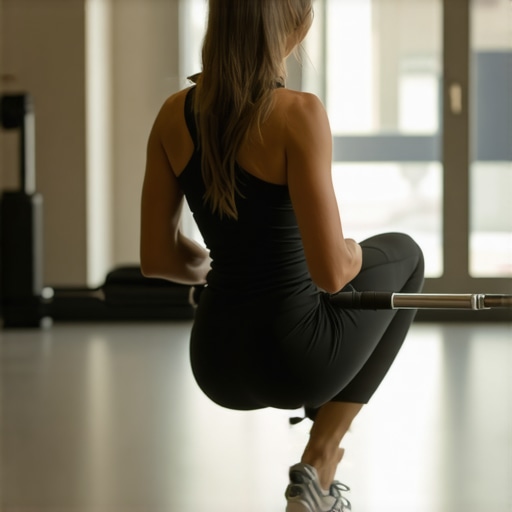
I felt the lightning bolt before I heard the sound. I was in my garage, mid-squat, with 315 pounds across my shoulders and a brand-new, four-inch-thick leather belt cinched so tight I could barely think. I assumed that because I was ‘armored up,’ my spine was invincible. I was wrong. That sharp, searing pain in my lower back wasn’t supposed to happen while I was wearing a ‘safety’ device, right? It was a humbling, painful realization that I’d been using my gear as a crutch rather than a tool. I’d fallen into the trap of thinking leather could replace legitimate spinal stability. Today, I want to pull back the curtain on what these belts actually do—and what they definitely don’t do—so you don’t end up face-down on your gym floor like I did. We are going to fix your bracing, save your discs, and finally understand how to use support without becoming dependent on it.
Stop Treating Your Lifting Belt Like a Back Brace
For the longest time, I believed the belt acted like a corset that physically held my vertebrae in place. I see people in the gym wearing them while doing bicep curls or even just walking between sets, and I want to give them a neighborly nudge. A belt is not a shield. Its primary job is to provide a hard wall for your abs to push against. If you haven’t mastered how to breathe into your lower back to reduce muscle spasms, then a belt is just a decorative accessory that’s giving you a false sense of security. I made the mistake of tightening mine to the last notch, thinking more pressure meant more safety. In reality, I was just cutting off my circulation and neglecting the deep stabilizing muscles that actually keep the spine neutral.
Is a weightlifting belt actually worth the hype?
You might be skeptical, especially if you’ve been told that belts lead to ‘core weakness.’ It’s a common fear. But the truth is more nuanced. When used correctly, a belt can actually help you recruit more muscle fiber because it gives your nervous system something to tension against. However, if you use it to mask existing pain, you’re playing a dangerous game. Have you ever felt like you couldn’t lift even half your max without your belt on? If so, we need to talk about that. A surprising fact found in the Journal of Strength and Conditioning Research indicates that while belts increase intra-abdominal pressure by up to 40%, they don’t necessarily reduce the compressive load on your spinal discs. They just change how you handle that load.
The Moment I Realized My Technique Was Totally Flawed
My ‘lightbulb moment’ happened during a session with a physical therapist who watched me breathe. Or rather, watched me not breathe. I was so focused on the belt that I’d forgotten how to use my own internal canister. I’ve found that why your strong core might actually be too rigid is often because we rely on external pressure instead of internal coordination. I had to go back to basics, focusing on strengthening your glutes to take the pressure off your spine before I ever put that leather strap back on. We need to stop looking at the belt as a substitute for a functional body. It’s an amplifier, not a savior. Have you ever experienced a back tweak even though you were wearing your belt? I’d love to hear your story in the comments so we can troubleshoot this together.
Build an Internal Pressure Vessel Before You Buckle Up
To understand bracing, think of your torso as a soda can. When the can is sealed and under pressure, you can stand on it without it collapsing. But if you put even a tiny dent in the side—or if it’s empty—it crumbles instantly. Most people wear a belt like they’re trying to squeeze the can in the middle, which actually makes it weaker. You need to create internal pressure first. I spent months struggling with understanding back pain before I realized that my strong core was just tight, not pressurized. To fix this, imagine your diaphragm dropping down like a piston into your pelvis. You aren’t just sucking it in; you are filling the canister from the bottom up. This pressure is what actually supports your lumbar discs, not the leather strap around your waist.
Place Your Belt for Feedback Rather Than Brute Force
Positioning is where most lifters fail. If you tuck the belt too low, it digs into your hips and kills your leverage. Too high, and it interferes with your ribs. I’ve found that placing the belt just above the iliac crest—the top of your hip bones—provides the best tactile feedback. It shouldn’t be so tight that you can’t take a breath. Last winter, I tried to ego-cinch my belt for a heavy deadlift session, and I ended up with a massive rib cramp that put me out for a week. Now, I leave enough room for one finger to slide between my stomach and the leather. This gap is crucial because it gives your muscles a target to hit when you expand. Because the spine is a connected chain, this stability in the lower back is often the secret to overcoming chronic neck discomfort since it prevents the upper body from overcompensating for a floppy midsection.
Master the 360-Degree Expansion
Once the belt is on, don’t just push your belly forward into the buckle. This is a common mistake that actually creates a shear force on your spine. You need to expand sideways into the belt’s edges and backward into your own spine. We often forget that the back half of our core needs to be active too. 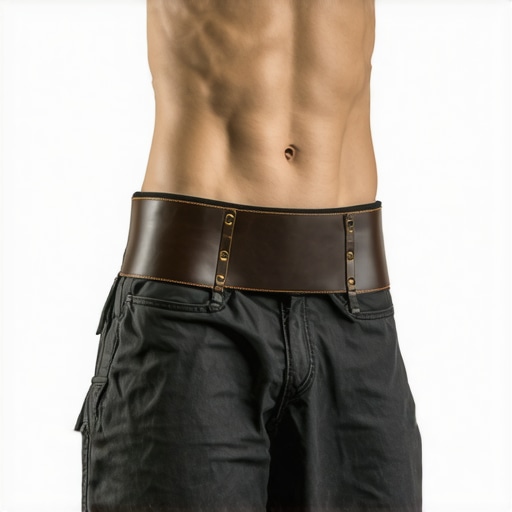 This is why why we look at your ribcage movement for better mobility; if your ribs are flared up, you can’t create that 360-degree seal. When I finally mastered the side-expansion during a heavy squat set, the weight felt forty pounds lighter. It wasn’t that I got stronger in five minutes; I just stopped leaking energy through a soft core.
The Short-Breath Technique for Heavy Loads
When the bar is on your back, you don’t have time for a slow, meditative inhale. You need a sip of air—fast and aggressive. Think of it like a tire pump. You take a sharp inhale through the mouth, pack that air down into your gut, and then bear down like you’re about to take a punch. This is the Valsalva maneuver. I remember a specific session where I was rushing my sets and forgot to pack the air. I felt my lower back round slightly at the bottom of a squat, and that familiar zip of pain returned. It was a stark reminder that even the best equipment won’t save you from a lazy setup. If you find your shoulders rising when you breathe, stop. You’re breathing into your chest, which does nothing for your spine. You have to drive that air down. This vertical pressure is essential for back pain prevention and recovery, ensuring the weight is distributed across your muscular structure rather than your sensitive joints.
The Dangerous Trap of Over-Bracing Your Core
Most lifters believe that if some tension is good, maximum tension is better. This is where I see the biggest “oops” in the weight room. By cinching that belt to the point of breathlessness, you risk creating a torso that is too stiff to adapt. I’ve seen athletes with incredible “six-pack” strength who still throw their backs out picking up a pencil. Why? Because why your strong core might actually be too rigid is a real phenomenon where the muscles are “on” all the time, losing the ability to react to sudden loads. Dr. Stuart McGill, a leading expert in spine biomechanics, emphasizes that “stiffness” should be proportional to the load. If you use a 400lb-squat level of bracing to pick up your gym bag, you’re actually inviting injury by compressing your discs unnecessarily.
Is your chronic neck tension actually a pelvic problem in disguise?
It sounds counterintuitive, but the body is a closed loop. I spent years trying every stretch in the book for my stiff neck, only to realize my pelvis was tilted forward, forcing my upper spine to compensate. This is exactly why we look at your feet to solve your neck issues and why focusing only on the spot that hurts is a beginner’s mistake. If your foundation is off—whether it’s flat feet or a shifted hip—your neck becomes the “whiplash” end of the tail. Research in the Journal of Electromyography and Kinesiology suggests that postural sway and spinal stability are inextricably linked to lower extremity alignment. 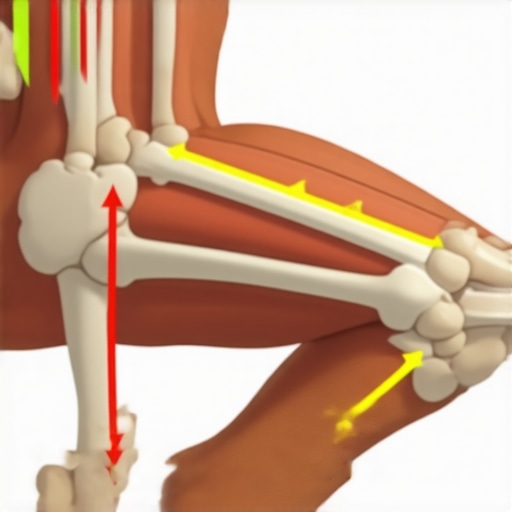 When you only treat the neck, you’re just mopping the floor while the sink is still overflowing.
Ditch the Idea That Stretching Always Equals Relief
Here is my most controversial take: stop stretching your hamstrings to fix your lower back. Everyone tells you that “tight hamstrings pull on your back,” but in many cases, those hamstrings are tight because they are trying to protect a vulnerable spine. If you have a disc bulge, stretching can actually increase the neural tension and make the inflammation worse. I learned this the hard way after a month of aggressive yoga only made my sciatica flare up like a wildfire. Instead of mindless stretching, you should focus on why stretching your hamstrings won’t fix your back pain and look toward stability and proper movement patterns. Similarly, why your perfect posture is actually making you stiff is because “military posture” ignores the natural curves of your spine. Have you ever fallen into the trap of thinking more stretching was the cure, only to feel worse the next day? Let me know in the comments so we can look at what’s really going on with your mobility.
If mindless stretching is a dead end, we have to look at what actually works for long-term maintenance. I used to think that buying every gadget on Instagram would fix my spine, but most of it is just expensive plastic. Now, my ‘recovery kit’ is stripped down to the essentials. I’ve realized that how to stay mobile when you have a desk job and no time for the gym isn’t about hour-long routines; it’s about having the right high-leverage tools at your disposal for targeted strikes against tension.
The Only Two Tools That Actually Earned a Spot in My Gym Bag
The first is a high-density trigger point ball. Forget those soft, squishy foam rollers; they don’t get deep enough into the hip flexors or the paraspinal muscles. I use a stiff lacrosse ball or a dedicated psoas release tool. Why? Because the psoas is the only muscle that attaches directly to your lumbar discs. If that muscle is tight, your belt won’t save you. I spend three minutes every morning pinning down my hip flexors, which provides the slack my lower back needs to move freely. This is a foundational part of how I restore your range how chiropractic care enhances movement without needing an appointment every single week.

The second tool is a simple wooden dowel or a PVC pipe. I use it for ‘shoulder pass-throughs’ to ensure my thoracic spine isn’t locking up. If your mid-back is stiff, your lower back has to move more to compensate, which is a recipe for a herniation. I also swear by the 5-minute reset for a stiff lumbar spine using nothing but a flat floor and a chair. It’s called ‘Static Back’—lying on the floor with your legs at a 90-degree angle on the chair. This allows gravity to neutralize the pelvis without any active effort from you. Dr. Stuart McGill, a world-renowned expert in spine biomechanics from the University of Waterloo, notes that this ‘spinal hygiene’ is more effective for long-term health than almost any aggressive stretching protocol.
How do I maintain my spinal mobility for the next thirty years?
Consistency beats intensity every time. You don’t need a ‘mobility day’ if you have ‘mobility moments.’ I predict that in the very near future, we will see the rise of haptic feedback clothing—shirts and belts that vibrate the moment your posture collapses or your bracing fails. Until then, you have to be your own sensor. I check my ‘hinge’ every time I pick up something from the floor. I check my breath every time I sit down at my desk. This constant, small-scale awareness is the secret to scaling your health as you age. If you can’t move well without weight, adding a belt and 300 pounds is just accelerating your path to the operating table. Use your tools to build a body that doesn’t need them for basic survival.
Your immediate challenge is to stop overcomplicating things. Grab a simple tool and try to how to use a tennis ball to fix that spot under your shoulder blade tonight. If you can release that one trigger point, you’ll feel your entire neck and jaw loosen up instantly. It’s about small wins that stack up over months and years.
The Hard Truth About My Years Chasing Spinal Perfection
Looking back at that day in the garage, I realize my injury wasn’t a failure of my belt—it was a failure of my philosophy. Here are the lightbulb moments that finally clicked after years of trial and error. First, the belt is a teacher, not a bodyguard. If you can’t generate internal pressure without it, you have no business using it to lift heavy. Second, I learned that ‘bracing’ isn’t just about tension; it’s about coordination. When I stopped chasing quick fixes and focused on understanding back pain as a system failure rather than a single muscle problem, my recovery accelerated. Finally, I realized that I was using gear to hide my fear of movement. True confidence comes from knowing your spine is resilient, not from how thick your leather strap is. This realization led me to prioritize mobility mastery expert tips for back pain prevention and recovery over simply adding more weight to the bar every single day.
My Must-Have Tools for Long-Term Spinal Health
I’ve trimmed my gym bag down to the essentials that actually move the needle. My top recommendation is always a stiff lacrosse ball for pinpoint tissue work—it’s the most cost-effective way to hit the psoas and glutes. I also never travel without a simple lumbar roll to keep my spine neutral in car seats or planes. For those who want to dive deeper into the science of the spine, I can’t recommend the works of Dr. Stuart McGill enough; his ‘Big Three’ exercises saved my career. Lastly, I keep a PVC pipe handy for daily thoracic mobility drills. I’ve found that using these simple tools at home is the best way to restore your range how chiropractic care enhances movement without becoming dependent on outside help. These aren’t just ‘fitness gadgets’; they are the maintenance crew for your body’s most important structure.
#IMAGE_PLACEHOLDER_E#
Why Today is the Day You Commit to Better Movement
It’s easy to get overwhelmed by all the technical advice on breathing, bracing, and biomechanics. But the most important thing you can do is start paying attention to how your body feels before you add the external support. Your spine is incredibly adaptable, but it requires you to be an active participant in its health. Whether you are dealing with a recent tweak or trying to prevent the next one, focusing on your internal canister will always pay dividends. By integrating back pain prevention and recovery habits into your daily life, you aren’t just protecting your discs—you are investing in your future independence. Don’t wait for a lightning bolt moment like mine to change your approach. Start building that internal pressure today and feel the difference that true stability makes. Have you ever felt like you were becoming ‘reliant’ on your lifting belt or other supports just to get through a workout? Let me know in the comments below!