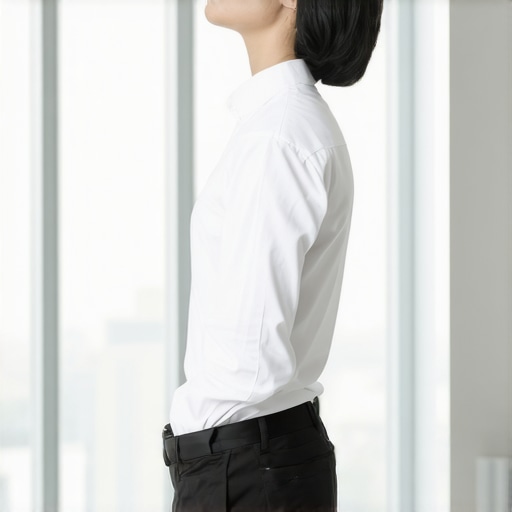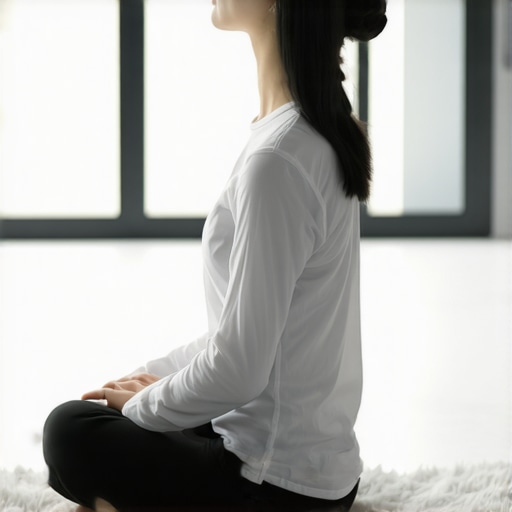
The best way to sit on the floor without rounded shoulders
I remember the night clearly. I was trying to enjoy a board game with my niece on the living room rug, and within ten minutes, my mid-back felt like it was on fire. I caught my reflection in the patio door and didn’t even recognize myself; I looked like a literal question mark. My shoulders weren’t just rounded; they were practically migrating toward my ears. It’s a classic trap we all fall into when we try to ditch the chair but bring our bad office habits down to the carpet. If you have ever felt that nagging burn between your shoulder blades after just five minutes of sitting cross-legged, you know exactly what I am talking about. Today, I am going to show you how to reclaim that floor space without wrecking your alignment, drawing from the hard lessons I learned while trying to fix my own hunched posture.
Stop Treating Your Back Like a Question Mark
For the longest time, I thought the only way to sit on the floor was to suffer through the stiffness. I made the massive mistake of trying to ‘muscle’ my way into a straight spine, squeezing my shoulder blades together until my muscles cramped. I quickly realized that forcing a rigid posture is a recipe for disaster. The reality is that your couch is often the culprit for why your body has forgotten how to support itself on a flat surface. When we sit on the floor, we are fighting against years of ‘chair-shaped’ adaptations. To fix this, we have to address the root cause: a pelvis that is tilted the wrong way and a ribcage that is effectively collapsed. Have you noticed that your shoulders seem to roll forward the second you lose focus? You aren’t alone, and it’s likely because your phone habits are sabotaging your upper back even when you aren’t using them.
Can sitting on the floor really fix your posture?
It sounds almost too simple to be true, doesn’t it? Skeptics often argue that we evolved to use chairs, but the data suggests otherwise. In fact, a study published in the European Journal of Preventive Cardiology suggests that the ability to sit and rise from the floor is a significant predictor of musculoskeletal health and longevity. The secret isn’t just in the sitting itself, but in how you support your base. Early in my journey, I didn’t understand how spinal mobility works, and I ended up making my stiffness worse by sitting on hard surfaces without any cushioning for my hips. If you want to avoid the ‘hunch,’ you need to stop thinking about your shoulders and start thinking about your sit-bones. We’re about to dive into the specific props and shifts that changed everything for me, but first, tell me: what is the longest you can currently sit on the floor before you feel the urge to slump?
Stop the Slump with a Propped-Up Pelvis
The first rule of floor sitting is that your hips are the boss of your spine. Think of your pelvis as a shallow bowl of water. When you sit directly on a flat floor without support, most of us lack the flexibility to keep that bowl level. Instead, the bowl tips backward, spilling water toward your tailbone. This forced tilt pulls your lower back into a rounded shape, which cascades up your spine until your head is jutting forward like a turtle. To fix this, you need elevation. I learned this the hard way during a rainy weekend spent assembling a massive LEGO set. I spent three hours hunched over, and by the end, I could barely stand up straight. The next day, I grabbed a firm yoga block and sat on the very edge of it. Instantly, the ‘water’ in my pelvic bowl leveled out, and my spine stacked itself without me having to fight for it.
#IMAGE_PLACE_HOLDER_B#
Find Your Sit-Bones First
Before you even worry about your shoulders, you have to find your foundation. Reach down and feel those two bony points at the bottom of your glutes—your sit-bones. If you are sitting correctly, you should feel the weight pressing directly through them, not back on your fleshy tailbone. If you feel like you are rolling backward, it’s a sign that why tight hip flexors are the real cause of your lower back arch and overall stiffness. Use a folded blanket or a firm cushion to get your hips at least two to four inches off the ground. This small height advantage allows your knees to drop below your hip line, which is the secret sauce to maintaining a neutral spine. You can restore your back mobility much faster when you stop forcing the joints into angles they aren’t ready for yet.
Breathe Into Your Lower Back for Stability
Most people think a ‘straight back’ means sucking in the stomach and holding their breath. In reality, why your strong core might actually be too rigid can be just as damaging as slouching. Instead of bracing, focus on 360-degree breathing. Imagine your lower torso is a balloon. When you inhale, that balloon should expand toward your thighs, your sides, and especially into your lower back. This creates internal pressure that supports your spine from the inside out. There is a the connection between shallow breathing and back pain that many people overlook when they are trying to maintain a ‘perfect’ posture on the floor. If you find yourself holding your breath, you are likely using your neck muscles to stay upright, which leads to that familiar tension headache.
Stack Your Ribs Over Your Hips
Once your base is set, the final piece of the puzzle is alignment. Many of us try to fix a slouch by puffing out the chest, but this just creates a different kind of stress in the mid-back. Instead, imagine a golden thread pulling the very crown of your head toward the ceiling, while your ribs stay tucked directly over your pelvis. You aren’t reaching with your chin; you are lengthening your neck. If you start to feel that localized burn, use the 10-second reset to drop your shoulders and re-center. Understanding the hidden muscle that stabilizes your lower spine will help you realize that stability comes from subtle, deep engagement, not from military-style rigidity. When you get this right, you’ll find you can actually enjoy that floor-time again without the immediate urge to crawl back to the sofa.
I see it in my practice every single week: the overachiever who has mastered the ‘perfect’ floor sitting setup but still walks into the office with a locked-up lumbar spine. They have the meditation cushions, they have the sit-bones aligned, and they are following every rule in the book. Yet, they are miserable. The nuance that most people miss is that the spine is a living, breathing organ of movement, not a architectural pillar that needs to be frozen in place. If you are trying to be a statue, you are doing it wrong.
Why Your Perfect Posture is Actually Making You Stiff
The biggest myth in the wellness world is that there is one ‘ideal’ posture you should hold forever. In reality, why your perfect posture is actually making you stiff often comes down to a lack of movement variability. Research published in the Journal of Electromyography and Kinesiology demonstrates that static postures, even those considered ‘ergonomically correct,’ lead to significantly faster muscle fatigue and increased spinal load compared to dynamic sitting. If you aren’t shifting your weight every few minutes, you are essentially starving your spinal discs of the nutrients they get through movement. I’ve learned that why sit-up-straight is actually bad advice for some is because it creates a rigid ‘bracing’ effect that shuts down your natural shock absorbers.
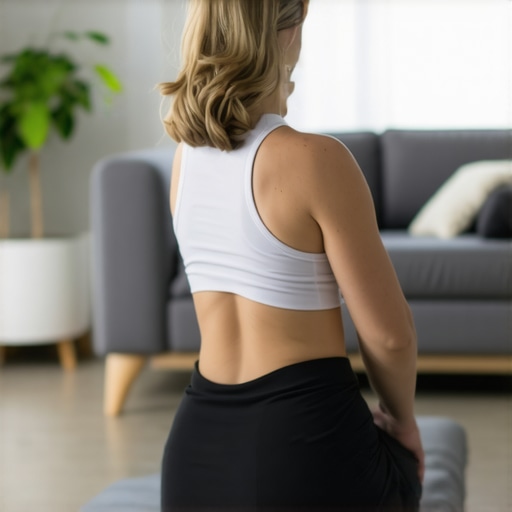
Could your neck be the secret reason your hips feel tight?
This is where things get truly interesting for the advanced student of mobility. We often think of the body as a series of isolated parts, but your nervous system treats it as one continuous loop. Many people sit on the floor and immediately look down at their phone or a book, creating a ‘top-down’ collapse. Because of the way your fascia is connected, tension in your upper cervical spine can actually manifest as tightness in your pelvic floor and hips. It is a massive ‘oops’ factor to focus on your hips while ignoring the fact that you are straining your neck. This is precisely why we look at your pelvis when your neck hurts, and vice versa. To avoid this trap, make sure you know how to read on a tablet without straining your neck, keeping your gaze level even when you are low to the ground.
The Stretching Trap That Ruins Your Progress
If your first instinct when your back hurts is to touch your toes, stop. One of the most common mistakes I see is people aggressively stretching their hamstrings to solve floor-sitting discomfort. However, why stretching your hamstrings won’t fix your back pain is that the tightness you feel is often a ‘guarding’ response from your nervous system. Your brain is making those muscles tight to protect a vulnerable or unstable spine. When you force a stretch on a muscle that is trying to protect you, the brain just sends a stronger signal to tighten up elsewhere. This is the core reason why stretching a tight muscle isn’t always the answer. Instead of pulling on the muscle, you need to provide the spine with the stability it craves through that 360-degree breathing we discussed earlier. Have you ever fallen into this trap of over-stretching only to feel tighter the next day? Let me know in the comments.
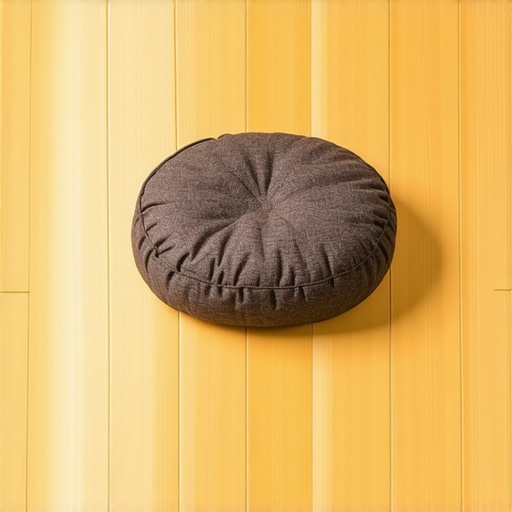
I’ve spent hundreds of hours experimenting with different floor-sitting setups, and I’ve learned that raw willpower is no match for a well-designed support system. If you are serious about reclaiming your movement, you need more than a random throw pillow from your sofa. I personally swear by a traditional buckwheat Zafu cushion paired with a flat Zabuton mat. The buckwheat allows for micro-adjustments that synthetic foam simply cannot match, ensuring your pelvis stays neutral without constant conscious effort. When you get the height right, you achieve a level of mobility mastery that makes traditional chair-sitting feel suffocating by comparison. If you find a specific knot developing under your blade during long sessions, do not just ignore it; I use a specific protocol on how to use a tennis ball to fix that spot under your shoulder blade to release the rhomboids without needing a massage therapist on speed dial.
Upgrade Your Setup with Tools That Actually Support You
The quality of your props dictates the quality of your posture. Dr. Galen Cranz, a professor at UC Berkeley and author of The Chair: Rethinking Culture, Body, and Design, argues that the 90-degree sitting angle is an anatomical nightmare for the human spine. She suggests that ‘perch’ or floor-based postures are much more aligned with our evolutionary biology. This reinforces why we look at your ribcage movement for better mobility when patients complain of fatigue. It is not just about the back; it is about the lungs and the diaphragm having room to operate. When I switched to a higher-density floor cushion, my breath deepened immediately, which in turn kept my lower back muscles from spasming.
How can I maintain my spinal health without burning out?
The secret to long-term success is the five-minute micro-break. I use a simple interval timer on my phone set for every twenty-five minutes to trigger the 5-minute reset for a stiff lumbar spine. During these breaks, I am not just standing up; I am actively changing my joint angles and recalibrating my nervous system. We are seeing a massive shift toward furniture-free living in the wellness space, where the home environment is designed to encourage movement. In the next decade, I predict we will see more homes ditching deep, soft sofas for varied-height surfaces that naturally boost mobility and force us to engage our stabilizer muscles. If you want to start today, try my ‘perch-and-switch’ method tonight: spend ten minutes cross-legged, then transition to a kneeling position using your cushion between your calves. This constant shifting is the real key to preventing structural stiffness. Try this method during your favorite show and see how much lighter your lower back feels by the credits.
The Subtle Shifts I Wish Someone Had Told Me Earlier
Moving from a chair to the floor isn’t just a change in furniture; it’s a total recalibration of how your brain perceives stability. Looking back on my transition, I realized that why you feel taller after a chiropractic adjustment is often because your nervous system has finally stopped ‘guarding’ against gravity. On the floor, that guarding is your biggest enemy. I spent months fighting my own anatomy before I realized that why your mid-back feels like it needs to pop is usually a cry for a position change, not a signal to stretch harder. I learned to treat my floor time as a ‘movement snack’ rather than a static endurance test. The moment I stopped trying to be a statue and started embracing micro-shifts, my chronic stiffness evaporated. Remember: your best posture is always your next posture.
The Non-Negotiables in My Mobility Toolkit
If you are serious about making the floor your new favorite workspace or relaxation zone, you need a few allies. I’ve tested dozens of setups, and these are the ones that actually move the needle for long-term comfort:
- The Buckwheat Zafu: Unlike foam, buckwheat hulls shift with your sit-bones, providing a custom-molded base that keeps your pelvis from tilting backward. This is the foundation of mobility mastery.
- A Dedicated Mobility Ball: Keep a tennis ball or lacrosse ball nearby. Learning how to use a tennis ball to fix that spot under your shoulder blade allows you to address tension the second it arises, rather than letting it ruin your night.
- The 20-Minute Timer: I use a simple analog kitchen timer. It’s a physical reminder that no matter how good your setup is, you need to trigger the 5-minute reset for a stiff lumbar spine to keep blood flowing to your discs.
Take Your Spine Back to Its Roots
Ditching the chair for the floor is one of the most rebellious and rewarding things you can do for your long-term health. It forces your body to wake up muscles that have been dormant since grade school and challenges your joints to find their full range of motion again. As you continue restoring your back mobility, be patient with the process. You are undoing years of chair-bound habits, and that won’t happen overnight. But stay consistent, keep your props handy, and listen to the subtle signals your body is sending. You weren’t designed to be folded into a 90-degree angle for eight hours a day; you were designed to move, squat, and sit with ease. Which floor-sitting position usually makes you tap out first—cross-legged, kneeling, or the dreaded ‘slump’? Let me know below.