How to Strengthen Your Deep Neck Flexors
I was sitting at my kitchen table last Tuesday, staring at a half-finished email, when I realized I couldn’t remember the last time my head didn’t feel like a lead weight. I tried the usual—that frantic, side-to-side cracking that sounds like a bowl of Rice Krispies—but the relief lasted exactly four seconds. My biggest mistake early on was thinking that “tight” always meant “needs stretching.” I spent years tugging on my upper traps, only to realize I was actually making the problem worse by weakening the very muscles that were already overstretched. The real game-changer was discovering the deep neck flexors. These tiny stabilizers are the “core” of your neck, and if they aren’t working, your posture doesn’t stand a chance. Today, I’m going to help you wake them up so you can finally ditch that persistent ache.
Your Head is Heavier Than You Think
When you slump forward to look at your phone, the effective weight of your head on your spine jumps from about 12 pounds to nearly 60. That is a massive burden for your vertebrae to carry. I used to wonder why my neck felt so fatigued after just an hour of work, and it turns out my deep stabilizers had simply clocked out. Even if you have the fanciest office setup, a laptop stand won’t fix a weak neck. A study published in the Journal of Orthopaedic & Sports Physical Therapy found that people with chronic neck pain almost always have significantly weaker deep neck flexors compared to those who are pain-free. We’re going to fix that by moving away from big, clunky movements and focusing on the subtle ones that actually matter.
Will these movements make my neck look bulky?
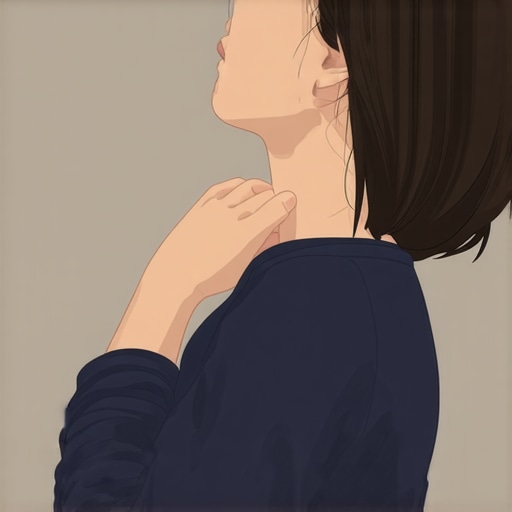
It’s a fair question! Nobody wants to end up with a neck wider than their head. But here’s the secret: these muscles—the longus colli and longus capitis—are tucked deep inside the front of your neck, right against the spine. You can’t see them, but you can definitely feel when they aren’t doing their job. Strengthening them won’t give you “bodybuilder” traps; it will just give you the ability to sit through a movie or a meeting without feeling like you need a neck brace. Have you ever felt that weird, shaky “shiver” in your muscles when you try to sit up straight? That’s your deep flexors begging for a workout. [image_placeholder_1]
Master the Subtle Art of the Proper Chin Tuck
Most people perform their first chin tuck like they’re trying to hide a secret in their neck, jamming their head back until it hurts. I did the same thing for months and wondered why I wasn’t getting anywhere. Real long-term comfort comes from a gentle, nodding motion that feels more like a lengthening than a compression. It’s about quality, not force. If you’ve been struggling with a “heavy head” feeling lately, have you tried any specific exercises yet, or are you just starting your journey to a stronger neck?
Stop Pulling and Start Nodding
To get this right, imagine a thin rod passing through your ears. Instead of pulling your head back with force, you want to rotate your skull forward around that rod. It’s a tiny, microscopic movement. If you feel the big muscles in the front of your neck—the ones that look like thick ropes when you strain—pop out, you’re trying too hard. You are looking for a deep, subtle activation. This is the foundation of chiropractic secrets to boost neck comfort and function. I remember the first time I got it right; I felt a deep, warm sensation right where the skull meets the top of the spine. It wasn’t a stretch, but a feeling of being ‘awake’ for the first time in years. This subtle engagement is what keeps your head from drifting into that 60-pound weight category.
Lying Down Is the Best Way to Reset
For a more direct ‘wake-up’ call for these muscles, try the supine head lift. Lie flat on your back on a firm surface without a pillow. Perform that same subtle chin tuck, then lift your head just one-half inch off the floor. I once tried this at a busy gym, thinking I’d hold it for a few minutes to show off. I lasted exactly eight seconds before my neck started vibrating like a leaf in a storm. A trainer actually came over to ask if I was having a seizure. I had to explain that while I could squat heavy weight, my deep stabilizers were so weak they couldn’t even hold my own head up. This is a humbling but necessary part of effective neck pain management. If you can’t hold this for at least 20 seconds without the ‘rope’ muscles taking over, your posture is built on a shaky foundation.
Avoid the ‘Double Chin’ Trap
One of the biggest mistakes I see—and one I made for far too long—is the ‘Double Chin Trap.’ You aren’t trying to create as many neck folds as possible by jamming your jaw into your throat. You are trying to lengthen the back of your neck. Think about a string pulling the crown of your head away from your shoulders. This lengthening is vital when you are learning how to read on a tablet without straining your neck. If you just jam your chin down, you’re actually compressing the very joints you’re trying to decompress.  If you’ve ever wondered why your neck feels stiff after using the treadmill, it’s likely because you’re subconsciously jutting your chin forward to look at the console as you get tired. Using the the 30-second reset for tech neck fatigue throughout the day ensures that these deep flexors stay ‘online’ even when the rest of your body is exhausted.
I used to be a ‘posture perfectionist.’ I’d sit at my desk, shoulders pinned back, chin tucked so hard I could barely swallow, convinced I was doing everything right. But here is the contrarian truth: that ‘perfect’ posture was actually my biggest mistake. The reality is that why your perfect posture is actually making you stiff is often due to muscle guarding. When you try to hold your body like a statue, you’re depriving your joints of the micro-movements they need to stay lubricated. Your spine isn’t a pillar; it’s a series of dynamic hinges. By forcing it into a rigid position, you’re just trading one type of strain for another. Real chiropractic secrets to regain full mobility after injury involve learning to move through ranges of motion, not freezing yourself in a ‘correct’ one.

Your Spine Isn’t Bubble Wrap
The most common ‘oops’ factor I see in my clinic is the obsession with the ‘pop.’ We’ve all seen the viral videos, and many patients think that if they don’t hear a loud crack, the adjustment didn’t work. This is a massive trap. Chasing that sound often leads people to self-adjust their necks dozens of times a day, which actually causes hypermobility in the upper segments while the stiff lower segments—the ones that actually need help—remain stuck. Understanding the hidden link between neck pain and spinal health means recognizing that the ‘pop’ is just gas releasing from a joint, not a measure of success. If you are constantly cracking your own neck for relief, you aren’t fixing the problem; you’re just scratching an itch that’s going to keep coming back.
Why does my neck hurt more when I am stressed?
It’s not just in your head. There is a physiological bridge between your emotional state and your physical alignment. A study published in the journal Pain indicates that psychological distress can significantly lower your pain threshold and increase muscle spindle sensitivity. Essentially, when you’re stressed, your brain ‘turns up the volume’ on the signals coming from your neck. This is why your neck hurts more when you are stressed; your upper traps and levator scapulae go into a defensive ‘shrug’ that you might not even notice until the end of the day. Dealing with this requires more than just a physical stretch; it requires a nervous system reset. I’ve found that the truth about inversion tables for disc relief is often disappointing for these patients because they don’t address this autonomic tension.
The Pelvis and Neck Connection
The biggest nuance most beginners miss is that the neck is often the victim, not the culprit. I’ve had patients come in with ‘tech neck’ that wouldn’t resolve until we fixed their seated pelvic tilt. Think of your spine like a mast on a ship; if the base is tilted, the top has to lean to compensate. This is exactly why we look at your pelvis when your neck hurts. If your lower back is slumping into your chair, no amount of chin tucks will fix the resulting neck strain. You have to address the foundation to save the attic. Effective effective neck pain management must be a whole-body endeavor. Have you ever fallen into the ‘perfect posture’ trap or found yourself obsessively cracking your own neck? Let me know in the comments below.
Once you’ve escaped the trap of rigid, ‘perfect’ posture and stopped the frantic self-cracking, the next phase is about building a sustainable environment. I spent a year doing daily exercises only to realize my workspace was a literal trap for my cervical spine. You don’t need a high-tech carbon fiber chair to save your back. In fact, knowing how to set up your home office on a budget is often more effective because it forces you to understand the geometry of your own body rather than relying on a generic ‘ergonomic’ curve that doesn’t match your torso height. I personally swear by a simple, firm lumbar roll. If you’ve never used one, you’re likely missing the lower-back support that directly affects your head position. Understanding the correct way to use a lumbar roll in your office chair can be the difference between a productive afternoon and a week-long flare-up.
Stop Relying on Expensive Chairs for Support
The Cornell University Ergonomics Web (CUErgo) notes that the ‘neutral zone’ for the cervical spine is surprisingly narrow, yet vital for minimizing disc pressure. Most people try to find this zone by buying gear, but it’s really about placement. I use a specific monitor arm that allows me to shift my screen height as my fatigue levels change throughout the day. If your monitor is too low, you’re fighting a losing battle against gravity that no amount of stretching will win. I recommend checking the 5-second check to see if your monitor is too low right now. If your eye line hits the bottom half of the screen, your neck is already in a state of chronic strain.
Your Eyes Are Forcing Your Neck to Slouch
Learning how to adjust your monitor to avoid eye and neck strain is the single most important ‘gear’ upgrade you can make. When your eyes get tired, your chin naturally drifts forward to compensate, which puts those 60 pounds of pressure back on your spine. I’ve experimented with vertical mice and split keyboards, but nothing beats a simple monitor arm for neck health. It’s the ultimate scaling tool; as your body changes or as you switch from standing to sitting, the monitor must move with you. In the near future, I predict we will see AI-driven webcam software that tracks our shoulder height and gives us a subtle haptic nudge when we begin to slump. Until then, we have to rely on conscious resets. I follow the 20-20-20 rule for desk workers and neck health, but with a physical addition: every 20 minutes, I perform one five-second hold of those deep neck flexors we discussed earlier.
How do I keep my spine functioning for the long haul?
Maintenance isn’t about a massive overhaul; it’s about micro-habits and professional oversight. As we explore neck pain no more expert chiropractic solutions that work, the data shows that the most successful individuals treat their spine like a high-performance vehicle—regular check-ups combined with mindful daily ‘driving.’ 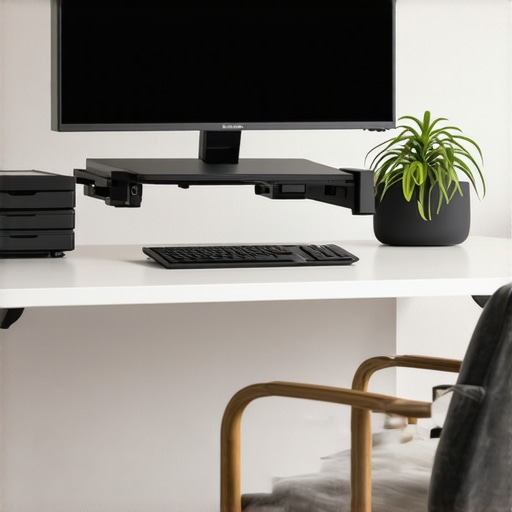 I want you to try one specific thing right now: lower your chair just one inch. If you are sitting too high, your feet won’t ground you, and your shoulders will instinctively shrug toward your ears to reach the keyboard. This tiny adjustment is one of the most effective relieve neck back discomfort using these expert methods that my patients consistently find helpful for long-term comfort.
I’ve spent years navigating the ups and downs of spinal health, and if there’s one thing I’ve learned, it’s that the body is remarkably forgiving once you start speaking its language. We’ve covered a lot today, from the micro-activations of the deep flexors to the way your monitor height dictates your pain levels. But the real work begins when you step away from this screen and start applying these resets to your actual life.
The Hard Truths My Body Taught Me About Neck Stability
- The ‘Pop’ is just noise. For a long time, I thought a loud adjustment meant I was ‘fixed.’ In reality, true progress is quiet. It’s the absence of that heavy-headed feeling at 3:00 PM, not the sound of gas escaping a joint. Real change comes from the hidden link between neck pain and spinal health, which is rooted in stability, not just mobility.
- Your neck is a victim of your hips. I wasted months stretching my upper traps before realizing my tilted pelvis was forcing my head forward. This is why we look at your pelvis when your neck hurts; the spine is a closed system, and you cannot fix the top without leveling the base.
- Consistency beats intensity every time. One hour of physical therapy a week won’t undo 40 hours of slouching. It’s the 10-second resets performed ten times a day that actually rewire your nervous system.
Simple Tools That Actually Deserve Space on Your Desk
You don’t need to spend thousands of dollars to create a workspace that supports your spine. My personal ‘essential toolkit’ is surprisingly low-tech. First, a firm lumbar roll is non-negotiable. Learning the correct way to use a lumbar roll in your office chair provides the proprioceptive feedback your brain needs to keep your head stacked over your shoulders. Second, a simple monitor arm is the most underrated piece of equipment you can buy. When you know how to set up your home office on a budget, you realize that moving your screen to eye level is more valuable than any fancy ‘ergonomic’ chair. Finally, I always keep a tennis ball nearby for quick suboccipital releases—it’s the ultimate low-cost tool for melting away a tension headache before it takes hold.
#IMAGE_PLACEHOLDER_E#
Reclaiming the Way You Move Every Single Day
Living without constant stiffness isn’t a pipe dream; it’s a byproduct of making better choices for your anatomy. As you move forward, remember that your body wants to be in balance. By waking up those deep flexors and respecting the natural curves of your spine, you’re not just managing symptoms—you’re building a more resilient version of yourself. There are plenty of neck pain no more expert chiropractic solutions that work, but the most effective one is the one you practice daily. Don’t wait for the next flare-up to start these habits. Your neck supports your entire view of the world; it’s time you gave it the support it deserves. What is the one thing in your daily routine that you suspect is the biggest contributor to your neck stiffness? Let me know in the comments below!