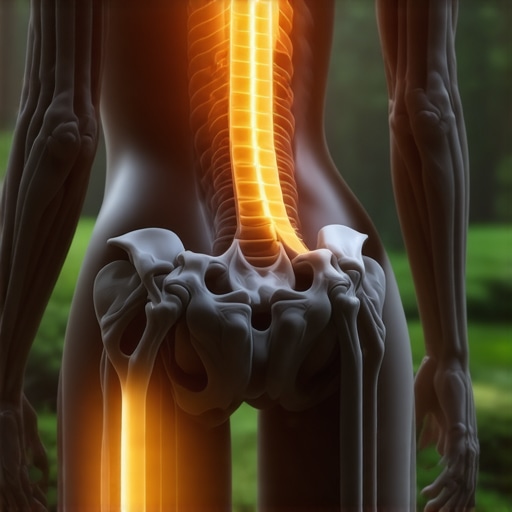
Why Your Ribs Flare When You Reach Overhead
I remember standing in the middle of a crowded gym, trying to impress a friend with my overhead press. I shoved the weight up, thinking I looked like an athlete, but then I caught a glimpse of myself in the mirror. My lower back was arched like a suspension bridge, and my ribcage was jutting out so far it looked like it was trying to escape my shirt. It wasn’t strength; it was a total collapse of my core stability. I felt a familiar, nagging pinch in my mid-back that I’d been ignoring for months. It turns out, my body was faking mobility by ‘leaking’ energy through my ribs because my upper back was essentially a brick wall. Today, we are going to stop that cycle of compensation and finally get your arms overhead without sacrificing your spine.
Your Ribs Aren’t the Enemy but They Are Sending a Message
If you have ever reached for a high shelf and felt that weird sensation of your chest ‘opening’ while your lower back tweaks, you are experiencing a classic rib flare. For the longest time, I made the mistake of thinking a big, puffed-out chest was a sign of good posture. I couldn’t have been more wrong. In reality, why we look at your ribcage movement for better mobility is because those ribs act as the gateway between your neck and your hips. When your ribs flare, you lose the ‘canister’ effect of your core, which puts massive pressure on your lumbar discs. I used to spend hours stretching my chest muscles without realizing that my real issue was a lack of control further down. Have you ever noticed your ribs poking through your shirt during a simple shoulder stretch?
Is my anatomy just stuck this way forever?
It is easy to think you are just ‘built’ with a flared ribcage, but it is almost always a functional issue rather than a structural one. Your diaphragm and your pelvic floor need to work like a synchronized piston. When they don’t, your body finds the path of least resistance, which is usually shoving the ribs forward. Surprisingly, research published in the Journal of Physical Therapy Science suggests that ribcage position significantly impacts the recruitment of the serratus anterior, a muscle crucial for shoulder health. This is exactly why the 10-second breath fix for rib pain is so effective—it forces your brain to reconnect with those deep stabilizing muscles. Sometimes, the problem starts even higher up, and you might find that your shoulder pain is actually coming from your neck, causing a chain reaction that ends at your ribs. We need to address the root cause, which often involves proven chiropractic strategies to unlock the mid-back stiffness that forces the ribs to flare in the first place. Ready to learn the movements that actually keep those ribs tucked?To get those ribs to sit flush against your torso, you have to stop thinking about posture as a static pose and start thinking about it as a pressurized system. Think of your torso as a soda can. If the top of the can (your diaphragm) and the bottom (your pelvic floor) aren’t parallel, the walls of the can will buckle and flare. This is exactly what happens when your ribs pop out.
Turn your core into a functional canister
The first step in reclaiming your rib position isn’t to just ‘suck it in.’ In fact, why your strong core might actually be too rigid is a common trap where you create so much tension in the front that your back muscles have to overwork just to keep you upright. Instead, you need to learn how to breathe into your lower back to reduce muscle spasms and create internal pressure that pushes the ribs down from the inside out. I remember once in a high-intensity yoga class, I was trying so hard to keep my ‘abs engaged’ that I ended up holding my breath for nearly forty seconds during a balancing pose. My ribs were sticking out like wings, and I felt a sharp, electric pop in my mid-back. I wasn’t stable; I was just stiff. The moment I finally let out a full, long exhale, my ribs dropped, and the tension vanished. 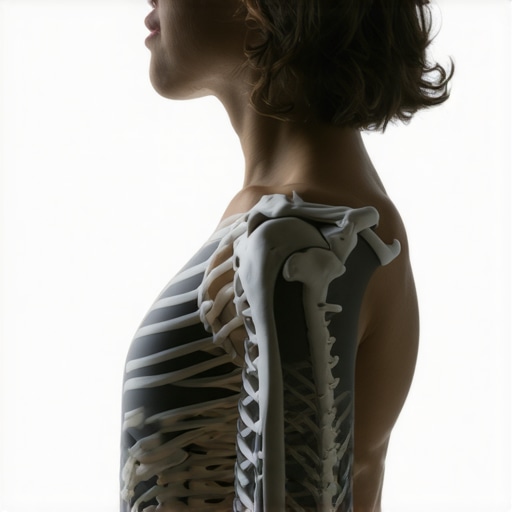
The 360-degree exhale that resets your spine
To replicate this, you must master the ‘long exhale.’ Most of us only breathe into the top third of our lungs, which keeps the ribcage in a perpetually lifted, stressed state. Sit in a chair and place your hands on the very bottom of your ribs. Inhale through your nose, trying to push your hands out sideways. Then, exhale through pursed lips as if you are blowing through a tiny straw. Keep exhaling until you feel your side-abs (your obliques) kick in. That ‘shrink-wrap’ feeling is your ribs finally returning to their home base. If you struggle with this, you might need proven chiropractic strategies to loosen the joints that connect your ribs to your spine.
Stop your hip flexors from sabotaging your ribs
You cannot fix your ribs if your pelvis is tilted forward like a spilled bucket of water. This is why tight hip flexors are the real cause of your lower back arch and the resulting rib flare. When those muscles on the front of your thighs are short and tight, they pull your pelvis down, which forces your spine to arch and your ribs to jut out to maintain balance. You have to address the tension from below. I found that incorporating the lateral move that opens up a tight rib cage helped bridge the gap between my hip mobility and my rib control. By lengthening the sides of the body, you give the ribcage the room it needs to rotate and descend without being tugged on by a tight lower half. When your hips and ribs finally start talking to each other again, that ‘pinched’ feeling in your back during overhead movements starts to fade away.I used to think that ‘good posture’ was a destination—a specific set of coordinates for your joints to live in. But here is the nuance: your spine is designed for movement, not for being a museum exhibit. One of the biggest mistakes I see in my clinic is the ‘over-correction’ trap. People try so hard to avoid slouching that they end up in a state of constant muscular guarding, creating a tension-headache factory in their upper traps. In fact, why sit up straight is actually bad advice for some becomes clear when you realize that rigid uprightness can actually increase intradiscal pressure and lead to premature muscle fatigue. Research published in the Journal of Biomechanics suggests that the healthiest spines aren’t the ones that stay perfectly straight, but the ones that exhibit high ‘postural variability’—moving frequently through a variety of safe positions rather than holding one ‘perfect’ pose. Have you ever fallen into this trap of trying to be too stiff? Let me know in the comments.
Why does your neck keep throbbing despite your ‘perfect’ ergonomic setup?
You can have the most expensive chair in the world and a monitor at the perfect height, but if your foundation is off, your neck will pay the price every single time. We often focus on where the pain is—the ‘victim’—but we need to look at the hidden link between neck pain and spinal health elsewhere in the chain. Your body has a ‘righting reflex’—a deep neurological drive to keep your eyes level with the horizon. If your pelvis is tilted because of those tight hip flexors we discussed earlier, your entire spine has to snake back and forth in a series of compensations just to keep your head straight. This is exactly why we look at your pelvis when your neck hurts. If we only treat the neck, we are just chasing the smoke while the fire is actually burning in your lower back or hips. 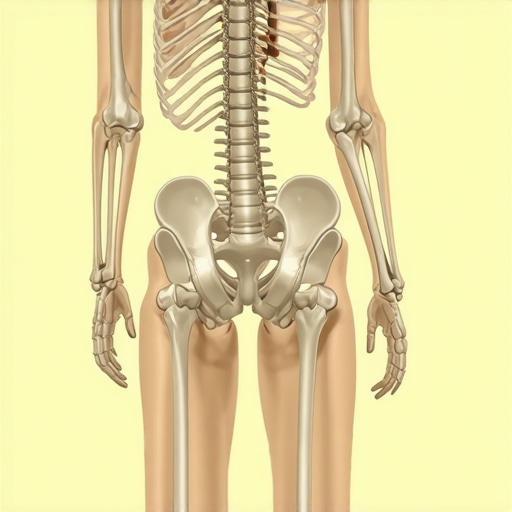 Another common ‘oops’ factor is the obsession with self-adjusting. I know how satisfying it feels to get that ‘crack’ during a long day at the desk, but why your mid-back feels like it needs to pop is often a sign of functional instability. Those joints are likely ‘hyper-mobile,’ meaning they are over-moving to compensate for a truly stuck, ‘hypo-mobile’ segment nearby. When you ‘crack’ your own back, you are almost always hitting the same loose segments, which leads to long-term ligament laxity and more chronic tension as the muscles try to stabilize the joint you just loosened. Real proven chiropractic strategies focus on identifying and moving the specific, stubborn joints that are actually frozen, which naturally stops the neighboring segments from screaming for attention. By following essential chiropractic tips for 2025 and learning how to relieve neck and back discomfort using these expert methods, you move past the temporary ‘fix’ and start building a spine that can handle the physical stressors of modern life without folding under the pressure.Now that we have addressed the mechanics of the rib cage and the neck, let’s talk about the gear that actually keeps you in alignment when life gets busy. I don’t believe in buying every gadget on the market, but a few specific tools have changed my life. First, I never sit for longer than thirty minutes without a lumbar roll. Most chairs, even high-end ergonomic ones, have a curve that is either too high or too low for your specific spine. Learning the correct way to use a lumbar roll in your office chair is the difference between ending the day with a stiff back or feeling fresh. It provides that essential tactile cue to keep your pelvis from tucking under and causing your ribs to flare.
Stop the slow creep of stiffness with targeted pressure
Next, let’s talk about that stubborn ‘knot’ that lives under your shoulder blade. Instead of a foam roller, which I often find too aggressive for the sensitive tissues of the mid-back, I use a standard tennis ball. It is smaller, firmer, and can get into the nooks and crannies of the rhomboid muscles. I have written specifically about how to use a tennis ball to fix that spot under your shoulder blade because it is a total game-changer for desk workers. This targeted pressure helps release the tension that pulls your neck out of alignment.
How do I maintain these spinal gains over the long haul?
The secret to longevity isn’t more stretching; it’s smarter bracing. Dr. Stuart McGill, professor emeritus at the University of Waterloo and author of Back Mechanic, suggests that building ‘muscular endurance’ in the core is far more protective than just building raw strength. This is where mobility mastery expert tips for back pain prevention and recovery become essential. You need a routine that isn’t twenty minutes long—it needs to be two minutes long and performed consistently throughout the day. I predict that in the next few years, we will see a massive shift toward wearable biofeedback sensors. Imagine a small device on your shirt that vibrates gently the moment your ribs start to flare or your head drifts forward. This real-time data will help us restore your range how chiropractic care enhances movement by bridging the gap between clinical visits and daily habits. To see a real transformation, commit to back pain recovery how chiropractic care transforms lives by pairing your professional adjustments with these home maintenance tools. My challenge for you today is simple: grab a tennis ball, find that specific spot by your shoulder blade, and breathe through sixty seconds of pressure. You will be surprised at how much your neck relaxes once that trigger point finally lets go.
The One Truth About Core Strength I Had to Learn the Hard Way
For years, I thought the secret to a flat stomach and a healthy back was keeping my abs constantly braced. I was wrong. I eventually realized that stiffness is not stability. If your core is always ‘on,’ your muscles never get to rest, leading to the exact muscular fatigue that causes your ribs to pop. Real mobility is about the ability to move between tension and relaxation effortlessly. I have seen so many patients realize that why your perfect posture is actually making you stiff is because they have forgotten how to simply exist without constant guarding. Your ribcage is meant to expand like an accordion, not stay locked like a steel cage. Once I allowed my breath to move naturally, my chronic mid-back pinch vanished almost overnight.
My Go-To Kit for a Resilient Spine
If you want to move from ‘surviving’ the workday to ‘thriving’ in your active life, you need a few non-negotiables in your corner. I personally swear by Dr. Stuart McGill’s Back Mechanic because it demystifies spinal hygiene in a way that anyone can understand. I also keep a high-density tennis ball in my car for those long commutes to hit the trigger points that lead to rib flare before they become a problem. Combining these daily self-care habits with proven chiropractic strategies is how you build a physical foundation that lasts decades. For a deeper dive into the relationship between your alignment and your comfort, check out this guide to better posture and mobility which simplifies the complex science of the spine into actionable daily steps.
Your Best Years of Movement Are Still Ahead
It is never too late to reset your internal canister and stop the cycle of rib flare. Whether you are dealing with a nagging pinch between your shoulder blades or you just want to feel more athletic, the journey starts with that first conscious, deep exhale. By applying these expert tips for back pain prevention and recovery, you are giving your nervous system the permission it needs to let go of old compensations. We can achieve neck pain no more results when we stop treating individual symptoms and start honoring the way our ribs, hips, and spine are designed to function as a single, fluid unit. Have you ever felt that sharp ‘pinch’ in your mid-back during a workout and just tried to push through it? Let me know in the comments below!