Why Your Ankle Mobility Is Secretly Destroying Your Squat Form
I remember staring at the mirror in a dimly lit garage gym, wondering why my 225-pound squat looked like a folding lawn chair. My lower back was screaming, my knees were diving inward, and I felt like I was about to tip over forward. I spent months obsessing over my core strength and spinal alignment, convinced I had a bad back. I even read up on the truth about weightlifting belts and bought the thickest one I could find. But the real culprit wasn’t my spine at all. It was tucked away in my stinky gym shoes. My ankles were as stiff as frozen two-by-fours, and that restriction was sending a shockwave of dysfunction all the way up to my neck. Today, I’m going to show you how to stop the compensation cycle and finally hit depth without that nagging pain.
Stop blaming your lower back for a foot problem
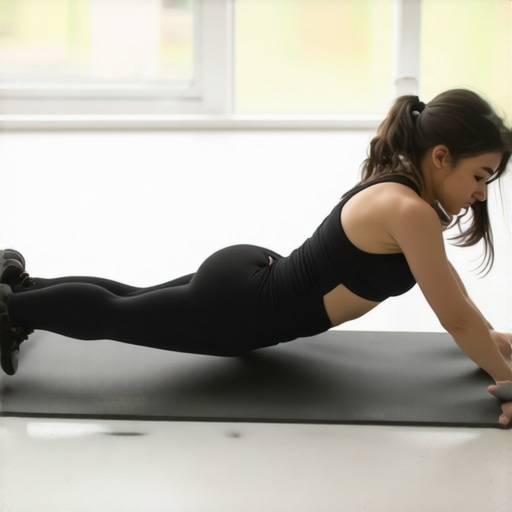
When your ankles can’t move, your body finds that missing range of motion somewhere else. Usually, that “somewhere” is your lumbar spine or your knees. If your shins can’t tilt forward because your ankle joint is locked, your butt has to shoot backward to keep you balanced. This forces your chest to drop, turning a squat into a glorified good morning. I made the classic mistake of just trying to “squat harder” while ignoring that tight calves cause lower back tension more often than we realize. I was treating the symptom while the fire was still burning in my basement. Research published in the Journal of Strength and Conditioning Research indicates that limited dorsiflexion—that’s the ability to pull your toes toward your shin—is a primary predictor of poor squat mechanics and increased injury risk. By addressing this, you aren’t just lifting more weight; you are learning how chiropractic care and mobility work enhance movement across your entire life. Have you ever felt like you’re hitting an invisible wall halfway down your squat, no matter how much you warm up?
Can such a small joint really wreck your heavy sets?
It seems crazy that a few degrees of movement in your foot could be the reason you can’t walk the day after leg day. But the body is a kinetic chain. When I finally started focusing on my ankles, my back felt better because I kept moving the right way. I stopped trying to force my spine into positions it wasn’t meant to hold under load. If you’ve been struggling with “butt wink” or feeling like your heels are lifting off the floor, you aren’t weak—you’re just stuck. Before you load up the bar again, you need to understand what your chiropractor wishes you knew about heavy lifting and how it all starts from the ground up.The core of the issue is often a “closed” joint. If your talus bone—the bone that connects your foot to your leg—doesn’t slide backward properly, your tibia (shin) can’t travel forward. This is where the physics of the squat breaks down. Imagine a door with a pebble wedged in the hinge; no matter how hard you push, that door isn’t opening until the pebble is gone. Your ankle restriction is that pebble. To clear it, we start with a diagnostic baseline.
Check your range before you wreck your back
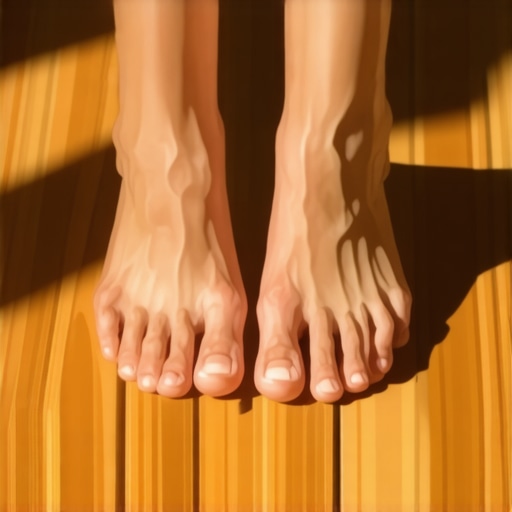
To see if your ankles are actually the problem, you need to perform the “Knee-to-Wall” test. Stand barefoot facing a wall. Place your big toe about four inches away. Keep your heel glued to the floor and try to touch your knee to the wall. If your heel pops up or your knee stops short, you’ve found your bottleneck. I remember doing this for the first time and failing at just two inches. It was embarrassing, especially since I was bragging about my deadlift max the day before. I realized why we look at your feet to solve your neck issues; that lack of movement was causing me to tilt my head up and strain my cervical spine just to stay upright. 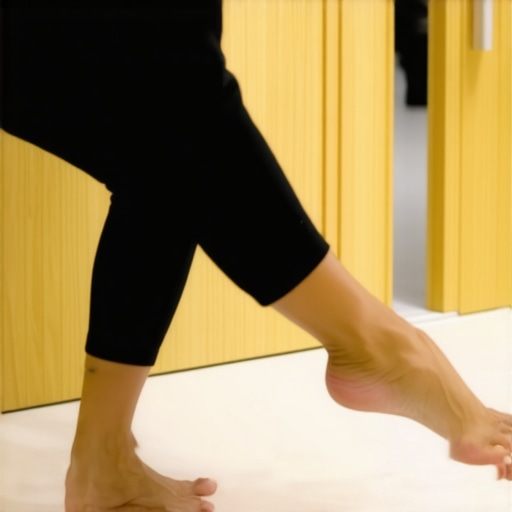
The five-inch test that humbled me
Once you identify the restriction, don’t just shove your knee forward harder. You have to address the soft tissue first. Why tight calves cause lower back tension is simple: the fascia on the back of your leg is connected to your hamstrings and glutes. If the calf is a tight knot, the whole chain pulls tight. Spend two minutes with a lacrosse ball or foam roller on the “meaty” part of your calf. You’re looking for those spots that make you want to swear. Breathe through it. This isn’t just about comfort; it’s about understanding back pain: a guide to better posture and mobility by cleaning up the foundation.
Unstick the joint with a heavy resistance band
Sometimes the muscle isn’t the problem; it’s the joint capsule itself. This is where “banded distractions” come in. Loop a heavy resistance band around a sturdy post and place the other end around your ankle, specifically right on the talus (below the knobby ankle bones). Walk out until the band is pulling your ankle backward toward the post. Now, perform your knee-to-wall stretches. The band “distracts” the joint, giving the bones room to glide. When I first tried this, I felt an immediate “click” and suddenly had an extra inch of range. Using these boost mobility ease pain chiropractic techniques unveiled, you can manually reset how your joint sits.
Why your big toe is the anchor of your squat
You might think your toes don’t matter, but the secret to better balance starts with your big toe. If you can’t splay your toes, your foot collapses inward, which collapses the ankle and sends your knee into a dangerous cave. While working on ankle flexion, practice “short foot” drills—pulling the ball of your foot toward your heel without curling your toes. This builds the arch and creates a stable tripod. This stability prevents the compensations that lead to why we adjust your mid-back to help your lower back recover after a heavy lifting session. By stabilizing the base, you’re essentially bulletproofing your spine from the ground up. This is how you restore your range and see how chiropractic care enhances movement in every lift you perform.Most trainers will tell you to stretch your calves until the cows come home, but here is the contrarian truth: your ‘tightness’ is often a lying messenger. In my years of clinical observation, I’ve seen that if your brain doesn’t trust your hip stability, it will ‘lock’ your ankles as a protective neural brake. You can stretch for hours, but if the nervous system feels unsafe, it will reset that tension the moment you step under a barbell. This is why back pain recovery how chiropractic care transforms lives isn’t just about the spine; it’s about convincing the brain that it’s safe to move again. According to a study in the Journal of Bodywork and Movement Therapies, myofascial chains mean a restriction in the plantar fascia or ankle can directly alter pelvic tilt during dynamic loading. If you are just chasing a ‘stretch’ sensation, you are missing the underlying neurological conversation.
Stop stretching your calves until you check your neural brakes
When you force a joint to move through a range it isn’t stable in, you’re asking for trouble. I used to fall into the trap of thinking more mobility was always better. But if you have ‘gumby’ ankles and ‘wet noodle’ hips, your lower back will become the anchor point of least resistance. This is where why your glute medius is more important than your abs for back health becomes a game changer. You need the lateral stability in your hips to allow the ankles to do their job without the pelvis collapsing. If you don’t address that hip-to-ankle connection, you are just moving the stress from one joint to another.
What happens when you have the range but still feel the pinch?
This is the advanced nuance: the difference between passive and active range. If I can push your foot into dorsiflexion while you’re lying on a table, but you can’t get there yourself during a squat, you don’t have a mobility problem—you have a motor control problem. You might think you need the truth about inversion tables for sciatica to fix the resulting nerve pinch, but the reality is you need to teach your muscles how to own the space you’ve created. This often requires integrating the dead bug variation that actually fixes lower back instability into your warm-up to bridge the gap between your core and your extremities.
The dangerous trap of chasing depth at all costs
The ‘Oops’ factor here is something I see every week: athletes using weightlifting shoes or heel wedges to bypass their ankle issues without fixing the root cause. While these tools are great for performance, using them as a crutch to ignore a ‘closed’ joint capsule eventually leads to a sheer force in the lumbar spine that no belt can protect. You might hit a PR today, but you’re mortgaging your spinal health for tomorrow. By focusing on restore your back mobility proven chiropractic strategies, you can ensure your joints are actually gliding rather than just being forced into position. 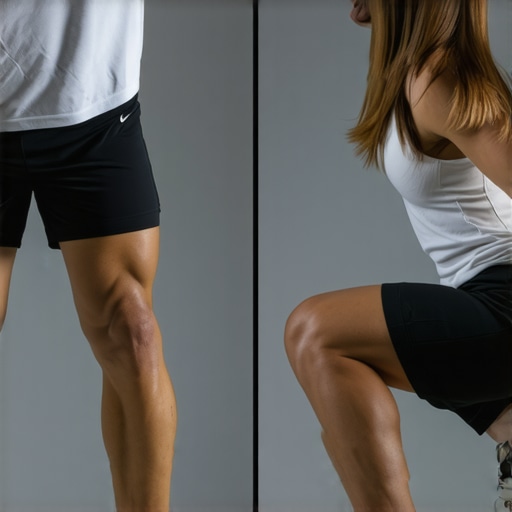 Have you ever felt like you’ve hit a plateau where no amount of stretching seems to help? Have you ever fallen into the trap of using gear to hide a movement flaw? Let me know in the comments below, and let’s figure out where your specific bottleneck is hiding.Once you’ve cleared the big hurdles of ankle and hip mobility, you need a way to keep the engine running without it becoming a full-time job. I’ve wasted thousands on gimmicks over the years, but a few specific tools actually made the cut in my daily routine. For me, the game-changer was a heavy-duty compression band—often called a Voodoo Floss band. I wrap my ankle tight and perform several sets of air squats; the compression creates a ‘shearing’ effect on the fascia that a foam roller just can’t touch. This is the level of detail you need for mobility mastery: expert tips for back pain prevention and recovery. If you’re using tech to recover, you must learn how to use a massage gun on your lower back safely by avoiding the bony parts of the spine and focusing on the thick muscle bellies of the erectors. I personally use my percussion massager every night for exactly four minutes to signal my nervous system that it’s time to relax.
Stop relying on the foam roller alone
While the roller feels great in the moment, it’s a blunt instrument. If you really want to unstick those stubborn joints, you need to implement Joint Mobilization with Movement (MWM). This is a concept championed by physical therapy legend Brian Mulligan and supported by research in the Journal of Orthopaedic & Sports Physical Therapy, which shows that combining a manual glide with an active movement can produce immediate increases in pain-free range of motion. I use a simple heavy-duty nylon strap to mimic this glide at home. This isn’t just about ‘stretching’ a muscle; it’s about using revitalize your mobility: proven strategies for back pain relief that actually change how the joint sits. 
How can I keep these mobility gains long-term?
The secret isn’t more intensity; it’s more frequency. I tell my clients that five minutes of movement every day beats a sixty-minute session once a week every single time. I integrate ‘micromovements’ into my workday to stay loose. While my coffee is brewing, I always perform the scapular squeeze that relieves mid-back tension. When I’m waiting for a Zoom call to start, I do a few seated ankle circles to keep the joint capsule hydrated. These small hits of input keep the ‘rust’ from settling in. Looking ahead, I predict that by 2025 we’ll see a massive shift toward bio-feedback wearables that alert you when your joint shear is too high before you even feel a twinge. We are moving toward a world where your watch will tell you to get up and move because your L5-S1 disc is under too much static pressure.
Why your smartphone will soon be your best rehab partner
I predict that the ‘squat selfie’ will go from a vanity project to a essential diagnostic tool. Computer vision is already getting so advanced that apps can now track your knee-over-toe ratio and hip hinge angle in real-time. This is going to revolutionize how we approach back pain recovery: how chiropractic care transforms lives, as we’ll be able to see exactly when your form breaks down under fatigue before an injury happens. For now, don’t wait for the app. Take a video of your next heavy set and look for that ‘butt wink’ we talked about earlier. If you see it, it’s time to contact us to get a professional assessment. Try this right now: record one set of bodyweight squats from the side and look specifically at your heels. If they lift even a millimeter, you need to go back to the banded ankle distractions today.
Three Myths That Kept My Squat Stiff for Years
The biggest lie I ever believed was that my tight ankles were just a permanent part of my genetics. It turns out, most of us aren’t born with ‘short tendons’; we simply lose the range we don’t use. I spent years foam rolling my lower back thinking it was the problem, but I was just chasing the smoke while the fire was in my feet. I eventually realized that chiropractic secrets to regain full mobility after injury often involve looking at the joints furthest from the pain. Another hard lesson was that ‘more stretching’ isn’t always the answer. If you have the range but no stability, your brain will lock that joint right back up to protect you. You have to earn your mobility through active movement and strength in those new end-ranges. Finally, I learned that how to balance on one leg to check your spine is one of the most underrated diagnostic tools for lifters; if you can’t stabilize your foot, your lower back will always be under fire.
The Small Toolkit That Saved My Lower Back
I don’t believe in buying every gadget on the market, but three specific tools changed the game for my ankle health. First, a heavy-duty resistance band for ‘banded distractions’ is non-negotiable; it helps create the joint space that simple stretching cannot. Second, I swear by a slant board or even just a pair of 5lb plates to use as wedges during warm-ups to gradually expose the joint to deeper angles. Third, I highly recommend transitioning to minimalist footwear for your non-lifting hours to wake up the small muscles in your feet. These simple additions helped me enhance mobility naturally with chiropractic care principles without needing a full-scale gym renovation. I trust these tools because they focus on mechanics rather than just temporary relief.
Your Path to Resilient Movement Starts Below the Knee
Stopping the cycle of compensation isn’t about one ‘magic’ stretch; it’s about a consistent commitment to your foundation. When you fix the ankle, you stop the ‘butt wink,’ you keep your chest up, and you finally allow your spine to do its job as a stabilizer rather than a prime mover. This shift is how back pain recovery how chiropractic care transforms lives for athletes who thought their heavy lifting days were over. You have the power to change how you move, one degree of dorsiflexion at a time. Don’t wait for a major injury to start listening to what your feet are trying to tell your back. Have you ever tried the knee-to-wall test and been shocked by how stiff you actually were? Let me know your results in the comments below!