Why Tight Calves Cause Lower Back Tension
I remember the morning I couldn’t reach my socks without a wince that sounded like a rusty hinge. I was in my thirties, reasonably active, and yet my lower back felt like it had been fused into a single, angry brick overnight. I spent years doing what I thought were “the right things”—buying expensive ergonomic chairs, trying to fix my gait, and doing enough core planks to power a small city. Nothing stuck. My biggest mistake early on was hyper-focusing on the spot that hurt. I was convinced my spine was the villain, so I spent hours on the floor thinking that stretching my hamstrings was the holy grail of relief. It wasn’t. It wasn’t until a chiropractor pointed toward my ankles that the lightbulb finally flickered on. The truth is, your body is a series of pulleys and levers, and if the cables at the bottom are too short, the structure at the top is going to tilt. Today, I’m going to show you why those stubborn knots in your legs are actually the architects of your lumbar misery and how you can finally break the cycle of tension. Have you ever felt like your lower back was made of concrete even after a professional massage?
The Kinetic Chain Is Not Just Gym Talk
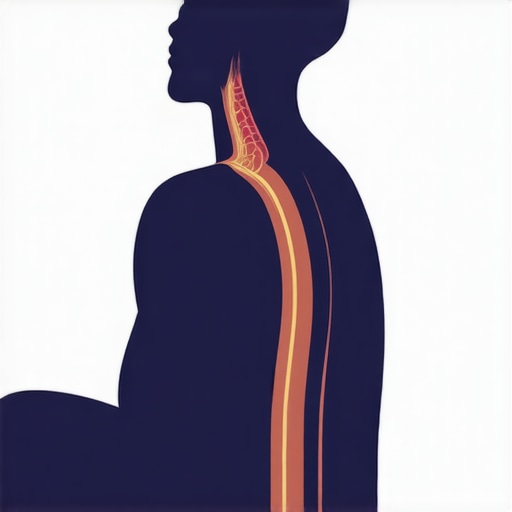
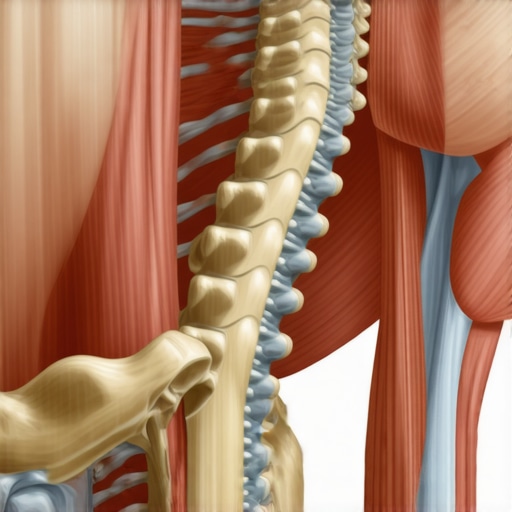
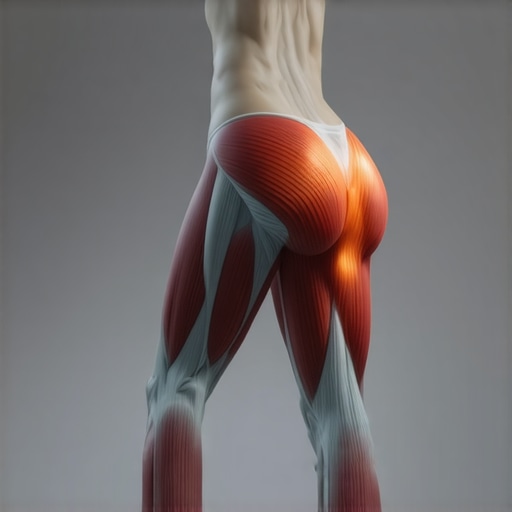
To understand why your back is screaming, you have to look at the “Superficial Back Line.” Research published in the Journal of Bodywork and Movement Therapies highlights that this continuous sheet of fascia connects the soles of your feet all the way up to your brow. When your calves are chronically tight, they act like a heavy-duty winch, pulling down on the back of your legs and tilting your pelvis forward. This often leads to a situation where tight hip flexors and shortened calves team up to force your lower spine into a painful arch. When you enhance mobility naturally by targeting the lower leg, you aren’t just stretching a muscle; you’re releasing the tension on the entire posterior line. It’s like loosening the bottom laces on a boot—suddenly, the pressure at the ankle and the shin disappears, and the whole fit feels better. There is a profound link between ankle mobility and lower back stability that most people completely ignore while they chase symptoms elsewhere.
Can your ankles really dictate how your spine feels?
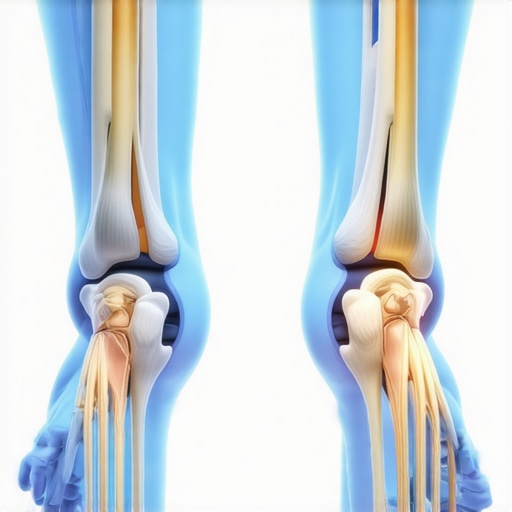
I know it sounds a bit like a reach, but think about it: every step you take requires your ankle to flex. If that joint is restricted because your calf muscles are as stiff as a board, your body has to find that movement somewhere else. Usually, it steals it from your lower back. Over thousands of steps a day, that “stolen” movement adds up to a massive amount of wear and tear. I used to be the biggest skeptic until I realized that my back pain flared up every time I wore flat, unsupportive shoes that forced my calves to work overtime. By learning to address the tension at the source, you stop playing a game of whack-a-mole with your symptoms and start building a foundation that actually supports your spine.
To stop the cycle of pain, you have to stop treating your lower back like a standalone island. It’s more like the middle of a suspension bridge; if the anchors on either side are shifting, the middle is going to sag and snap. Most people spend their time reinforcing the middle when they should be tightening the anchors. Here is how you actually execute the shift from symptom-chasing to structural correction.
Test Your Ankles Before You Blame Your Spine
You can’t fix what you haven’t measured. I use a simple “Knee-to-Wall” test to see if someone’s back pain is actually an ankle problem in disguise. Stand facing a wall with your toes about four inches away. Keep your heel glued to the floor and try to touch your knee to the wall. If your heel lifts or your knee caves inward, your ankles are locked down. When I first tried this, I couldn’t even get within two inches of the wall without my calf feeling like it was made of guitar strings. That restriction was forcing my pelvis to tilt every time I walked, which is why my 5-minute reset for a stiff lumbar spine only worked for an hour at a time—the root cause was still lurking in my shoes.
The Right Way to Release Your Calves
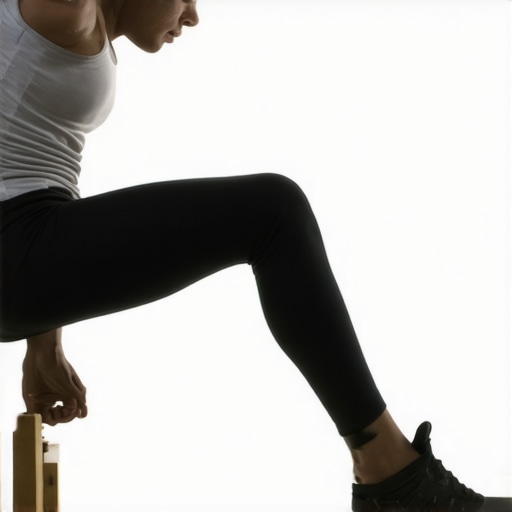
If you fail the wall test, your first instinct might be to jump on a foam roller. Be careful. I’ve seen people spend twenty minutes bruising their lats and lower back, unaware that why your foam roller might be hurting your lower back is often due to poor technique or rolling the wrong areas entirely. Instead of rolling your spine, focus exclusively on the meaty part of your calf. Pin a tender spot with the roller, and then—this is the key—rotate your ankle in slow circles. You are using the bone as a lever to break up the fascia from the inside out. When I started doing this consistently before my morning walk, the
…the relief was almost instantaneous. But if we really want to reach a state of lasting comfort, we have to look past the calves and address the mobility traps that even the most dedicated ‘stretching junkies’ fall into. In my years of rehabilitating my own spine, I discovered that the most common advice is often the most damaging when applied without nuance.
Why Your ‘Strong’ Core Might Be a Cage
The most pervasive myth in the fitness world is that a ‘rock hard’ core is the ultimate protector of the spine. Everyone tells you to brace like you’re about to take a punch, but in my experience, a core that cannot relax is just as dangerous as a weak one. When you over-train for rigidity, you create a ‘stone core’ that refuses to let the spine micro-adjust during movement. This is precisely why your strong core might actually be too rigid, leading to a situation where your vertebrae are compressed rather than supported. Research published in the journal Spine suggests that excessive trunk stiffness can actually increase spinal loading and accelerate disc degeneration. You don’t need a shield; you need a shock absorber. If you can’t maintain stability while taking a deep, diaphragmatic breath, you aren’t strong—you’re just stuck. Have you ever fallen into this trap of constant bracing? Let me know in the comments.
The Fallacy of Sitting Up Straight
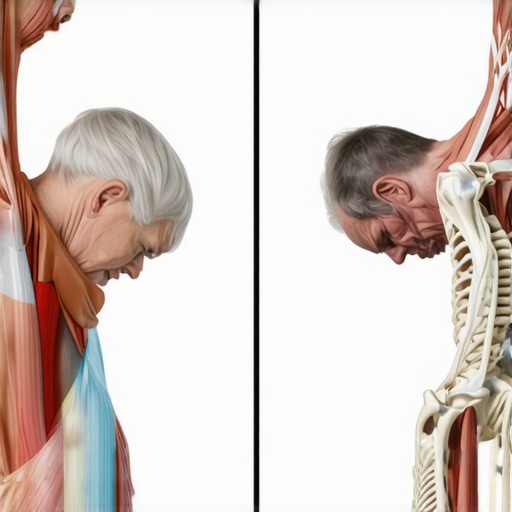
We’ve all heard it since grade school: ‘Sit up straight!’ But this often leads to a forced, military-style posture that creates massive tension in the mid-back and neck. I used to force my shoulder blades together for eight hours a day, wondering why I felt like I’d been in a car wreck by 5 PM. The truth is that why sit up straight is actually bad advice for some comes down to the loss of the spine’s natural curves. When you over-correct, you often end up with a ‘flat back’ or a ‘hyperextended’ neck. This is a classic ‘oops’ factor: trying so hard to look like a statue that you lose the ability to move like a human. This rigid positioning is a major reason why your perfect posture is actually making you stiff and contributes to those nagging knots that no massage can seem to touch.
Why does my neck hurt if the problem started in my pelvis?
This is where things get interesting for the advanced reader. The body uses ‘regional interdependence,’ a concept where a restriction in one area causes a compensation in a completely different zip code. I’ve seen countless cases where a patient’s chronic headaches were actually caused by a pelvic tilt that forced the upper cervical spine to work double-time just to keep the eyes level with the horizon. It’s exactly why we look at your feet to solve your neck issues and why we often find ourselves adjusting the foundation to fix the roof. When you restore your range in the hips and ankles, the neck often relaxes on its own because it no longer has to compensate for a tilted base. If you truly want to enhance mobility naturally, you must stop looking at the spot that hurts and start looking at the segments that aren’t moving at all. By shifting your focus from ‘fixing a spot’ to ‘reintegrating a system,’ you move from temporary relief to a body that actually works the way it was designed to.
Maintenance isn’t about doing a grueling 90-minute yoga session every day; it’s about the small, strategic interventions that prevent the ‘rust’ from settling back into your joints. I’ve transitioned from being a ‘crisis patient’—only visiting my chiropractor when I couldn’t walk—to someone who uses mobility mastery expert tips for back pain prevention and recovery to stay ahead of the curve. One of the most effective tools in my arsenal isn’t a high-tech gadget, but a simple lacrosse ball. I use it for ‘trigger point mapping.’ Every evening, I spend two minutes on each glute and one minute on the soles of my feet. It’s a diagnostic tool; if a spot feels like a hot needle, I know I’ve been walking on concrete too much or my gait is slightly off.
How do I maintain my spinal mobility for the long haul?
The key is building a ‘movement snack’ habit. Instead of one big workout, I sprinkle the 3-step morning routine for hip mobility into my day. Consistency beats intensity every single time. As Dr. Stuart McGill, a world-renowned spine biomechanics expert, notes in his ‘Back Mechanic’ literature, the ‘spine hygiene’ you practice while brushing your teeth or getting out of bed determines your disc health more than your deadlift PR. I personally follow the ‘neutral spine’ rule even when picking up a laundry basket safely. 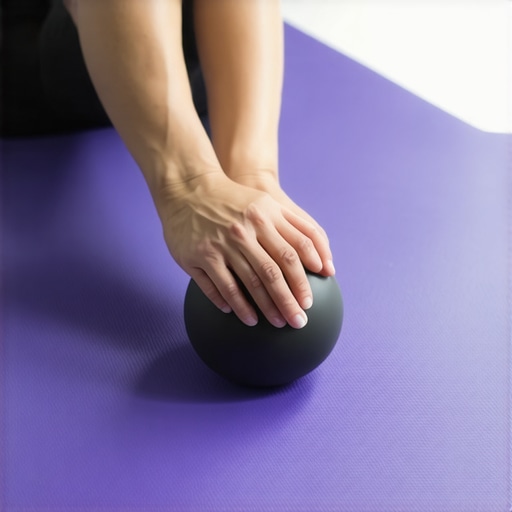 I predict that in the next five years, we’ll see a massive shift toward wearable biofeedback. We already have watches that track heart rate, but soon we’ll have shirts with embedded sensors that vibrate when you start slumping over your laptop. Until then, we have to be our own sensors.
Why your office chair needs a cheap upgrade
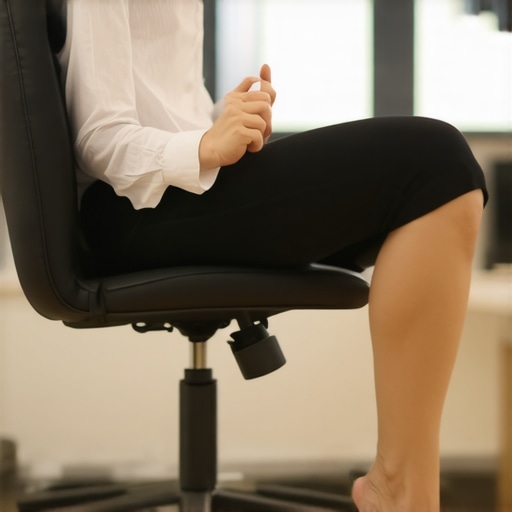
If you work from home, stop looking for a $1,000 chair and start using a lumbar roll. I spent a fortune on ergonomics before realizing that the correct way to use a lumbar roll was the missing link for my stiff lumbar spine. It maintains the lordotic curve without forcing you into that ‘military’ posture I warned you about earlier. If you really want to feel the difference tomorrow morning, I challenge you to try the 10-second breath fix for rib pain before you even put your feet on the floor. It’s the fastest way to signal to your nervous system that it’s safe to move.
The Hardest Lesson I Learned About Chronic Tension
One thing that finally clicked for me is that pain is a signal, not necessarily a sign of permanent damage. I used to panic every time my back twinged, which only made me tighter. I had to learn that understanding back pain is about recognizing these signals as requests for movement, not mandates for bed rest. Another ‘lightbulb’ moment was realizing that stretching a muscle that is already overextended—like your hamstrings when your pelvis is tilted—is like pulling on a knotted rope. You have to untie the knot at the foundation before the rest of the system can relax. Finally, I realized that my body wasn’t ‘broken,’ it was just compensating for years of ignored stiffness elsewhere.
My Go-To Kit for Keeping the Rust Off
If you’re serious about staying mobile, you don’t need a gym full of expensive equipment. My personal toolkit is surprisingly simple. First, a standard lacrosse ball is essential for those hard-to-reach trigger points in the glutes and shoulders. Second, I recommend the ‘Back Mechanic’ by Stuart McGill to anyone who wants to understand the science of spinal loading. Finally, finding a practitioner who understands the kinetic chain is vital. When you restore your range through professional care, you’re giving your nervous system a clean slate to build better movement patterns upon. I trust these tools because they focus on long-term structural integrity rather than quick fixes.
#IMAGE_PLACE_HOLDER_E#
Your Body is a Project, Not a Problem
It’s easy to feel betrayed by your own spine when it keeps you from the things you love. But remember, your body is incredibly resilient and is always trying to protect you—even if its protective mechanisms, like muscle guarding, feel like the enemy. By focusing on mobility mastery expert tips and being patient with your progress, you can shift from a state of constant flare-ups to a life of fluid movement. Whether you are dealing with a stiff lumbar or overcoming chronic neck discomfort, the journey starts with one mindful step. Your spine isn’t a fragile glass rod; it’s a dynamic, living system waiting for the right input. Have you noticed that your back pain feels worse on days when your ankles or hips are feeling particularly stiff? Let me know in the comments below!