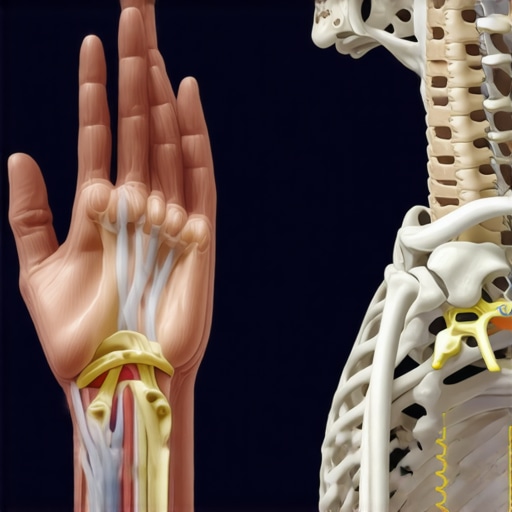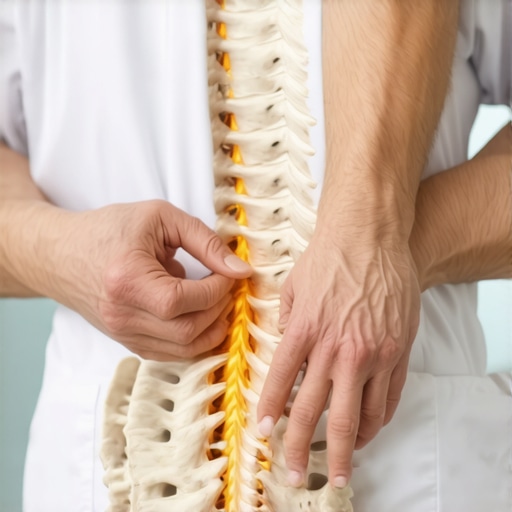
Why we adjust your mid-back to help your lower back recover
I vividly remember a rainy Tuesday three years ago when I couldn’t even reach down to tie my own sneakers. Every time I bent over, it felt like a hot poker was being jammed into my lumbar spine. It was humiliating. I spent months obsessing over my lower back, icing it, and even thinking that stretching my hamstrings would be the magic bullet for my agony. It wasn’t. My biggest mistake early on was focusing solely on the site of the pain rather than the source. I treated my lower back like a solo performer, failing to realize it is actually the most overworked member of a very large, very connected orchestra. Today, I am going to show you why the relief you have been chasing is likely sitting about twelve inches higher than you think.
How my frozen mid-back ruined my morning coffee
It sounds completely counterintuitive. You hurt at the base of your spine, so why would anyone bother looking at the middle? But here is the reality: your spine functions as a integrated unit. When your mid-back—the thoracic spine—becomes as rigid as a rusted gate, your lower back is forced to overcompensate for that lack of motion. I used to ignore the fact that my mid-back felt like it needed to pop every time I reached for a coffee mug. I thought it was just a quirk of getting older. It wasn’t. It was a warning sign. When we adjust the mid-back, we aren’t just ignoring your lower back; we are giving it a much-needed vacation. By restoring motion to the thoracic area, we can finally jumpstart a real back pain recovery that doesn’t disappear the moment you sit back down at your desk.
Is my mid-back really to blame for my lower back issues?
It is natural to be skeptical when a professional starts working on your ribcage to fix a problem near your belt line. I was a non-believer too, until I realized that the body operates on a principle of regional interdependence. Clinical research, such as studies found in the Journal of Manual & Manipulative Therapy, has shown that thoracic spine manipulation can lead to immediate and significant reductions in low back pain. Basically, if the middle of your back won’t rotate or bend, the bottom has to “cheat” to get the job done, leading to those nasty spasms. Have you ever felt like you were constantly stretching your lower back only for it to seize up again an hour later? That is the classic hallmark of a compensation pattern. We need to revitalize your mobility by freeing up the thoracic cage, allowing the lumbar spine to go back to its primary job of providing stability. I learned the hard way that chasing the pain is a losing game; we have to chase the function instead. Let’s look at how this shift in perspective changes everything about how you move.I started by looking at my breathing. Think of your ribcage like an accordion. If the middle folds are stuck together with rust, you have to pull much harder at the top and bottom just to get a little bit of air. I realized that my shallow breathing was actually fueling my back pain. Every time I took a breath, my lower back muscles had to fire just to stabilize my stuck mid-section. This mechanical bottleneck created a cycle of tension that no amount of lumbar stretching could break.
Wake up your ribcage before you lift a finger
The first thing I do with patients—and what I had to do for myself—is address the “stuck” ribs. We often assume that the spine is just a stack of blocks, but it is more like a complex mechanical system where each rib acts as a lever. If those levers do not move, your lumbar spine takes the brunt of every twist and turn. This is why we look at your ribcage movement so closely during an assessment. I remember one specific Saturday morning I tried to “power through” a garage cleanup. I felt that familiar, sharp twinge in my belt line. Instead of reaching for the Ibuprofen, I lay on the floor and performed a specific lateral mobilization. I felt three distinct pops in my mid-back, and suddenly, the crushing weight on my lower back just evaporated. It was like releasing a pressure valve. You can try this lateral move to open your tight rib cage and feel that same immediate decompression.
Stop rolling your lower back into oblivion
One of the most common mistakes I see is someone taking a foam roller and grinding it directly into their lower back pain. Please, stop doing that. Your lumbar spine is designed for stability; it does not want to be mashed into a piece of hard plastic, which can actually trigger more spasms. Instead, focus that energy on the area between your shoulder blades. You need to learn the proper way to use a foam roller on your upper back to create a bridge of mobility.  When you roll the thoracic spine, you are essentially telling the nervous system that it is safe to let go of the “guarding” reflex in the lower back. I once spent forty minutes rolling my lower back until I was bruised, only to find I could not even stand up straight to brush my teeth. When I shifted that focus to my upper back the next day, the relief was almost instantaneous. It is a hard lesson to learn, but your foam roller might be hurting your lower back if you are using it in the wrong zip code.
The rotation test you can do at your desk
Sit tall in your chair, cross your arms over your chest, and try to turn your shoulders to the left and right without moving your hips. Do you feel a “wall”? That wall is where your lower back pain begins. If you cannot rotate from the middle, your body will force the rotation into the lumbar discs, which are not built for that kind of torque. We have to realize that stretching a tight muscle isnt always the answer; sometimes we need to restore the joint mechanics that allow the muscle to relax in the first place. This is where precision adjustments come in, targeting those specific “stuck” segments to restore your back mobility and give your lower spine the break it deserves.I used to think that ‘core stability’ meant having a midsection as hard as a granite slab. I’d walk around with my abs perpetually braced, convinced I was protecting my spine. But here is the nuance most people miss: **stiffness is not the same thing as stability.** When you over-brace your abdominals, you aren’t just protecting your back; you are effectively ‘welding’ your spine into a rigid pillar. This creates a massive amount of internal pressure. In my experience, patients who focus solely on ‘tightening’ often end up with more disc pressure, not less. We see this frequently when people try to boost mobility through force rather than flow. Research published in the Journal of Biomechanics suggests that excessive co-contraction of the trunk muscles actually increases the compressive load on the lumbar discs, which is the exact opposite of what we want.
Why does my back still hurt if my core is strong?
It is the million-dollar question for many athletes and gym-goers. The problem usually lies in the lack of ‘segmental’ control. Your big, superficial muscles (like the rectus abdominis) are great for moving heavy loads, but they are terrible at the fine-tuned, micro-adjustments needed for a healthy spine. To fix this, you have to find the hidden muscle that stabilizes your lower spine—the multifidus. These tiny muscles act like the ‘guidewires’ of your vertebrae. If they are shut down because your ‘six-pack’ is doing all the work, you are a recipe for a flare-up. This is where chiropractic care restores your range by ensuring those tiny segments can actually communicate with your nervous system again. 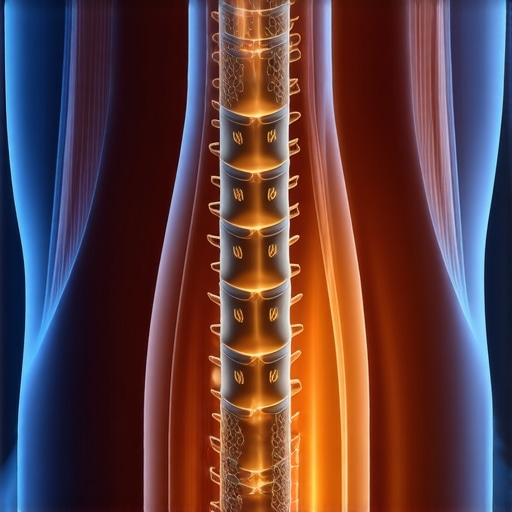
The danger of the bracing trap
I fell into this trap for years. I would brace my core just to pick up a laundry basket, thinking I was being ‘safe.’ But by doing that, I was teaching my body that movement was dangerous. This ‘fear-avoidance’ behavior actually creates more pain because your brain stays in a state of high alert. This is why your strong core might actually be too rigid for its own good. You need to learn how to move with ‘relaxed tension.’ If you are always rigid, you lose the ability to absorb shock. It is like driving a car with no suspension; every little bump in the road goes straight to the frame. We use proven chiropractic strategies to restore back mobility by teaching the body that it is okay to let go.
Your diaphragm is the actual stabilizer
Most people treat their core like a belt, but it is actually a pressurized canister. If you hold your breath while moving, you are spiking that pressure to dangerous levels. I spent months doing planks while holding my breath, not realizing that shallow breathing was fueling my back pain. Your diaphragm should drop down to create stability from the inside out. When you bypass this with ‘bracing,’ your lower back muscles have to work double-time to make up for the lack of internal pressure. Have you ever fallen into the trap of over-tightening your core, only to have your back seize up anyway? Let me know in the comments. We need to move away from the idea that we are fragile and toward the reality that we are designed for dynamic, fluid motion. When you finally stop fighting your own muscles, a true back pain recovery becomes possible because you aren’t just treating a symptom—you are rewriting your body’s movement software.
The three tools that saved my sanity
I do not just preach this stuff; I live it. My desk has three different ‘torture devices’ on it at any given time because I know how quickly a busy week can undo months of progress. First, throw away those fancy, vibrating massage guns for a moment and go buy a standard lacrosse ball. It is the most ruthless, effective tool for pinpointing the multifidus muscles we talked about earlier. You need to learn how to use a tennis ball to fix that spot under your shoulder blade because that specific trigger point is often the gateway to a full-blown lower back spasm. By pinning the ball between your back and a wall, you can manually desensitize the nervous system in a way that generalized stretching just cannot touch. This targeted pressure tells the brain to ‘let go’ of the guarding reflex that keeps your mid-back locked. 
How can I keep my spine mobile without living at the clinic?
Consistency is not about doing a two-hour yoga session every Sunday; it is about micro-interventions throughout the day. I have found that while chiropractic care restores your range of motion, you are the one who has to defend it. I recommend patients use a ‘movement snack’ approach. Every 45 minutes, perform the ‘Bruegger’s Relief Position.’ You sit at the edge of your chair, turn your palms out, tuck your chin slightly, and take three deep diaphragmatic breaths. This simple act counteracts the ‘computer hunch’ and ensures you boost your back health without needing extra equipment. Think of it as brushing your teeth for your spine—short, frequent, and non-negotiable.
Why your screen setup is more important than your gym routine
You can squat 400 pounds, but if you spend eight hours a day looking down at a laptop, your neck is going to fail you eventually. It is a simple lever problem: for every inch your head moves forward, it gains ten pounds of effective weight on your cervical spine. This is why your screen height is the real cause of your headaches. I personally use a dedicated monitor riser to ensure the top third of my screen is at eye level, which drastically reduced my own mid-day fatigue. As noted by Dr. Stuart McGill, a world-renowned expert in spine biomechanics at the University of Waterloo, ‘the best posture is your next posture.’ This means movement is the ultimate antidote to the stagnation of desk work. Looking ahead, I predict the next frontier in spinal health will be AI-integrated haptic wearables that provide real-time vibration alerts when your thoracic spine reaches a specific degree of flexion, turning ‘posture correction’ into an automated habit. To start today, I challenge you to try the 5-minute desk reset for busy professionals. Do not wait for the pain to return to take action; give your spine the maintenance it deserves right now.
What I Wish I Knew Before I Spent a Fortune on Lumbar Braces
The most expensive lesson I ever learned was that my lower back was rarely the culprit; it was usually the victim. After years of trial and error, I realized that pain is simply a signal that some other part of the system has failed. First, I had to accept that chasing the site of the pain is a distraction. When I shifted my focus to understanding back pain as a full-body mechanical issue, the constant spasms finally stopped. Second, I learned that movement is not just a physical act but a neurological one. You have to convince your brain that it is safe to move again, which is why chiropractic secrets to regain full mobility after injury are so powerful—they reset the communication between your spine and your mind. Finally, I realized that ‘core strength’ is useless without ‘segmental control.’ If your vertebrae cannot move individually, your six-pack is just a rigid armor plate that causes more friction than freedom.
My Personal Toolkit for a Bulletproof Spine
I do not travel or work without a few non-negotiable items that keep my mechanics in check. My first recommendation is a standard lacrosse ball. It is small, cheap, and much more effective than a foam roller for reaching the deep multifidus muscles. #IMAGE_PLACEHOLDER_E# I also rely heavily on the principles found in ‘Back Mechanic’ by Dr. Stuart McGill; his approach to spinal hygiene changed how I brush my teeth, tie my shoes, and even sit at my desk. To maintain the gains made in the clinic, I emphasize mobility mastery through daily micro-movements rather than infrequent, heavy gym sessions. I also highly recommend using a simple interval timer to remind you how to stay mobile when you have a desk job. These small tools create a cumulative effect that prevents the ‘rust’ from setting in between your shoulder blades.
Your Body is More Resilient Than You Think
It is easy to feel fragile when every movement comes with a wince, but your spine is a masterpiece of engineering designed for incredible loads and dynamic motion. You are not ‘broken,’ you are likely just ‘stuck’ in a compensation loop. By freeing up your ribcage and learning to breathe with your diaphragm, you are giving your lumbar spine the permission it needs to stop guarding. I have seen countless patients go from fearing a flight of stairs to living completely unrestricted lives because they stopped treating their back like a problem and started treating it like a partner. This journey toward a sustainable back pain recovery is not a sprint, but it is the most rewarding investment you will ever make. Have you ever found that a simple change in your desk setup or a breathing exercise helped your back pain? Let me know below.