
How to stretch your forearms to prevent elbow and neck strain
I was sitting at my desk, deadlines looming, when I realized I couldn’t ignore the dull ache in my elbow anymore. I’d spend hours every week trying to fix my posture, but no matter how many times I adjusted my monitor, that nagging pulling sensation in my neck wouldn’t budge. I made the classic mistake of treating my neck like a standalone island, completely ignoring the fact that my hands were glued to a keyboard for eight hours a day. It turns out, my forearms were the real villains in this story. [image placeholder]
Stop Blaming Your Pillow for Your Stiff Neck
For a long time, I thought lasting comfort was just about buying the right chair. I was wrong. The tension you feel in your neck and the burning in your elbow are often two ends of the same rope. When our forearm muscles—the ones we use to type, scroll, and grip—get chronically tight, they pull on the fascia and nerves that run all the way up through the shoulder and into the cervical spine. This is why the 10-second stretch for people who type all day is such a game-changer; it addresses the source rather than just the symptom. Early in my journey, I wasted months focusing only on where it hurt. I’d stretch my traps until they were sore, yet the tension returned by lunch. It wasn’t until I started incorporating specific forearm releases that my neck finally started to relax. It’s a common trap: we assume the site of the pain is the site of the problem. If you’ve been chasing relief from neck discomfort without looking at your wrists, you’re only fighting half the battle.
Is daily stretching actually worth your time?
You might be thinking this is just another chore to add to your busy schedule. I used to be a skeptic too. However, research from the Mayo Clinic highlights that repetitive strain injuries are a primary driver of upper body dysfunction, often manifesting as localized pain that radiates through the kinetic chain. If we don’t manage this tension, it can lead to more serious issues like shoulder pain originating from the neck. Have you ever felt that weird, electric zing in your wrist after a long day of work? Drop a comment and let me know if that sounds familiar, because identifying that feeling is the first step to fixing it. I’m going to show you exactly how to break this cycle today. We aren’t just going to wiggle our fingers; we are going to dive into the mechanics of why these stretches matter and how to do them without making things worse. If you’ve ever wondered why stretching doesn’t always work, it usually comes down to technique and timing.
Release the grip that is pulling on your neck
Think of your arm as a complex system of pulleys. When you spend your day gripping a mouse or phone, those pulleys—your forearm extensors—are constantly under tension. This tension doesn’t just stay in your wrist; it travels up through the elbow, into the shoulder, and eventually anchors itself in the base of your skull. To break this chain, you need to address the soft tissue first. I remember one Tuesday, I was mid-way through a massive report and my neck felt like it was in a literal vice. I kept tilting my head, trying to get that ‘pop’ for relief, but it never came. In a moment of frustration, I pinned my forearm against the edge of my desk and rolled it back and forth. As soon as I hit that sweet spot near the elbow, I felt a warm sensation travel straight up to my ear. The vice around my neck loosened immediately. It was a messy, slightly painful realization that why stretching a tight muscle isn’t always the answer when the problem is mechanical tension from a distant source. 
The desk-edge trick for instant forearm relief
You don’t need fancy equipment to start this. Stand up and place the meaty part of your forearm—the side that faces up when you type—onto the edge of your desk. Lean your body weight into it and slowly move your arm back and forth. You are looking for ‘hot spots’ or areas that feel particularly tender. When you find one, stay there and flex your wrist up and down. This ‘pin and stretch’ technique manually breaks up the fascial adhesions that contribute to shoulder pain originating from the neck. It is like untying a knot in a shoelace; once the tension in the forearm is gone, the slack returns to the neck.
The wrist extension that resets your cervical spine
After you’ve released the tissue, you need to retrain the range of motion. Extend your arm out in front of you, palm facing away like you’re telling someone to stop. Use your other hand to gently pull your fingers back toward your body. Keep your elbow straight. You should feel this pull all the way from your palm to your inner elbow. This move is a core component of chiropractic secrets to boost neck comfort and function because it offloads the nerves that are often compressed by tech neck. If you feel a zing, back off slightly. We want a deep stretch, not a nerve strike.
Why your eyes might be the hidden culprit
It sounds crazy, but your vision affects how hard your forearms work. When we strain to see a screen that is too far away or too low, we naturally lean forward and tighten our grip on the mouse. Learning how your eyes are secretly dictating your posture can help you realize that forearm tension is often a secondary symptom of a poor workstation setup. If you are constantly fighting to see your work, your hands will stay in a ‘fight or flight’ grip, which sends a constant signal of stress to your upper traps and jaw. This is also why the connection between your jaw tension and neck mobility is so vital; everything is connected through the deep frontal line of the body.We often fall into the trap of thinking that more flexibility always equals less pain. Everyone tells you to just stretch more, but in my experience, over-stretching a muscle that is already overextended can actually increase your risk of injury. This is a massive ‘oops’ factor. When your neck feels tight, it might be because the muscles are guarding—they are contracting to protect a segment of your spine that feels unstable. If you keep pulling on them, you are just annoying the guards. This is why stretching a tight muscle isn’t always the answer.
Why your constant neck stretching is backfiring
If you find yourself constantly tilting your head and pulling on your traps every twenty minutes, you are likely stuck in a stretch-weakness cycle. According to a study published in the Journal of Manipulative and Physiological Therapeutics, chronic neck pain is often linked to a lack of deep cervical flexor strength rather than just tight superficial muscles. By only stretching the superficial tissue, you are ignoring the underlying instability. I used to be the person who would pull my head to the side until it hurt, thinking I was helping. I wasn’t; I was just making my neck more hypermobile and unstable. Have you ever fallen into this trap of stretching for hours only to feel tighter the next day? Let me know in the comments—I would love to hear how you handled it.
Should you really be ‘cracking’ your own neck?
One of the biggest mistakes I see is the self-manipulation habit. We’ve all been there—that heavy, full feeling in the base of the skull that only a loud pop seems to fix. The problem is that when you crack your own neck, you are usually moving the segments that are already too loose. The stuck segments—the ones a professional targets when overcoming chronic neck discomfort—remain jammed. This creates a cycle where you feel a temporary endorphin rush, but the mechanical problem remains. It’s like shaking a door that is stuck on its hinges; eventually, you are just going to break the wood around the hinge rather than fixing the hinge itself. 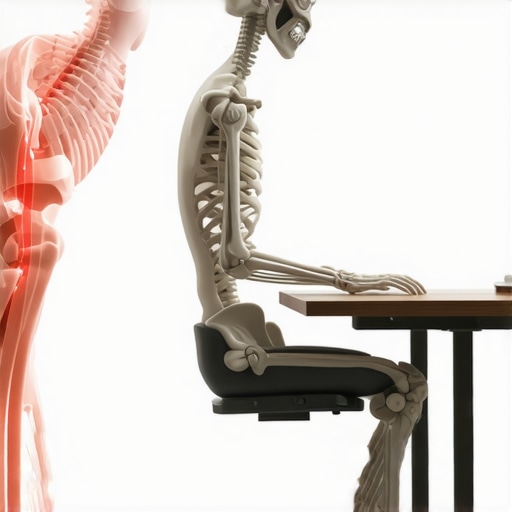
The surprising link between your pelvis and your pillow
It sounds counterintuitive, but your neck pain might be a basement problem, not an attic problem. I’ve seen countless cases where a patient’s neck tension wouldn’t clear up until we addressed a pelvic tilt. This is why we look at your pelvis when your neck hurts. If your foundation is crooked, your head—which is essentially a 10-pound bowling ball—has to shift off-center to keep your vision level. This creates a constant, low-grade strain on the suboccipital muscles. You can buy the most expensive ergonomic chair in the world, but if your hips are locked, your neck will pay the price. Incorporating a 5-minute desk reset for busy professionals that includes a hip hinge can often do more for your neck than a direct massage ever could. We need to stop looking at the body as a collection of parts and start seeing it as a single, continuous system of tension.Once you realize that your neck pain is a systemic issue, the next step isn’t just to ‘fix’ it once, but to build a lifestyle that prevents the tension from returning. I’ve spent way too much money on vibrating massagers and high-end gadgets that eventually just gathered dust. Now, I stick to a few high-impact tools that actually change the tissue. My absolute favorite is a simple lacrosse ball. Unlike a tennis ball, which is too squishy, a lacrosse ball has the density needed to get into the levator scapulae—that stubborn muscle that hitches up when you’re stressed. I place it between my shoulder blade and the wall, leaning in to find the trigger points that radiate up to the skull. This is a key part of how I continue overcoming chronic neck discomfort without needing a professional massage every three days.
How do I maintain spinal health over time?
Consistency will always beat intensity. You can’t undo eight hours of slouching with a twenty-minute gym session once a week. I’ve found that the best way to stay ahead of the ache is by integrating the 3-minute morning routine to lubricate your joints. This isn’t about getting a workout; it’s about signaling to your nervous system that it’s safe to move through a full range of motion. If you want to keep your progress, you have to look at your environment. I finally stopped resisting and learned how to set up your home office on a budget, which meant raising my monitor so the top third is at eye level. This simple shift is one of the most effective chiropractic secrets to boost neck comfort and function because it aligns with what NASA calls ‘Neutral Body Posture’ (NBP). According to NASA’s Man-Systems Integration Standards, NBP is the posture the body naturally assumes in microgravity—where the musculoskeletal system is at its least stressed. By mimicking this at your desk, you stop fighting gravity. 
Why your phone’s camera is the next big thing in posture
Looking forward, I predict we are going to see a massive shift toward real-time biofeedback. We are already seeing apps that use your webcam to track your head tilt and ping you when you start to slump. This kind of tech-assisted mindfulness will make the best exercises to keep your spine young even more effective because you’ll be catching the bad habits in the moment, rather than feeling the pain four hours later. It’s about moving from reactive care to proactive maintenance. If you really want to level up your recovery, I challenge you to try a ‘mobility snack’ today. Don’t wait for your lunch break; set a timer for 50 minutes, and when it goes off, spend just 60 seconds doing a doorway stretch or a wrist release. These micro-adjustments are what truly revitalize your mobility over the long haul. Grab that lacrosse ball or even a rolled-up sock right now and find one tender spot in your upper back—hold it for 30 seconds and feel the weight lift off your neck.
The expensive mistakes I made while trying to fix my own neck
The biggest realization I had was that the site of the pain is almost never the site of the problem. I spent years stretching my traps, only to find that the tension was actually being pulled tight by my forearms and a locked ribcage. I learned the hard way that nerves do not like to be stretched like muscles. If you feel an electric or burning sensation, you are likely irritating a nerve rather than releasing a muscle. Shifting my focus to nerve gliding and diaphragmatic breathing did more for my posture than any expensive gadget. I also learned that the proper way to use a foam roller on your upper back involves moving gently around the joints rather than forcing a painful pop.
Tools that actually earned a permanent spot on my desk
I have tried every ergonomic gadget on the market, but only a few truly make the cut for daily use. A high-density lacrosse ball is my preferred tool for breaking up deep adhesions between the shoulder blades that lead to that mid-day burn. For seated support, learning how to use a lumbar roll without making your back stiffer is essential for maintaining the natural curve of the spine, which prevents the head from jutting forward. At night, following the side sleeper’s guide to pillow placement ensures that I am not undoing all my progress while I sleep. Finally, a simple 5-minute reset for a stiff lumbar spine at the end of a shift helps the body transition from a fixed position to fluid movement.
Take the first step toward lasting comfort right now
Achieving lasting neck pain relief is not about a single miracle stretch, but about the small, consistent adjustments you make to your environment and habits. You don’t have to overhaul your entire life in one day. Start by raising your screen or releasing your forearms for just sixty seconds. These micro-wins build the foundation for a resilient, pain-free body that can handle the demands of modern work. Have you noticed that your neck tension usually spikes after a specific task like using your phone or a laptop? Let me know in the comments below so we can find a better way to move together.
[image placeholder]