Why Standing Desks Cause Hip Pain and How to Fix It
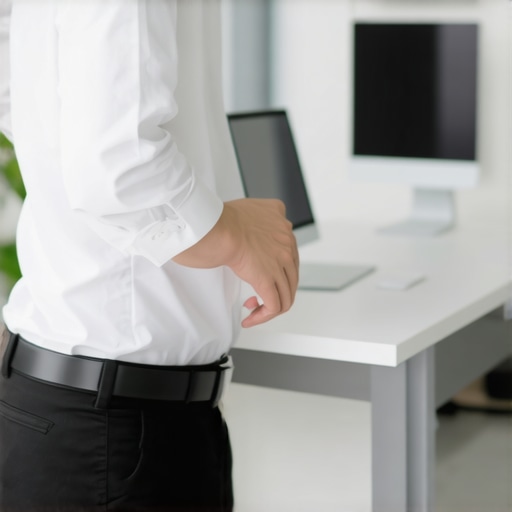
I vividly remember the afternoon I almost collapsed back into my old, dusty office chair. I had spent nearly five hundred dollars on a top-of-the-line standing desk, convinced it would be the cure for my mid-day slumps. Instead, I felt a sharp, nagging ache deep in my right hip every time I tried to shift my weight. I thought I was doing everything right. I had the anti-fatigue mat. I had the fancy shoes. But by 3:00 PM, I was hobbling around like I’d just finished a marathon I never signed up for. It’s a common story, and if you’re reading this, you’re likely stuck in that same painful loop. We are going to fix that today by looking at why your body is rebelling and how to reclaim your mobility without throwing your desk out the window.
The standing desk lie nobody told you about
When I first started standing, I made a classic mistake: I locked my knees and let my pelvis spill forward. I was essentially hanging on my hip ligaments rather than using my muscles to support me. It felt “easy” in the moment, but it was wrecking my alignment. Most of us think that simply being upright solves the problems of a sedentary life, but understanding back pain means realizing that standing is actually an active exercise. If your glutes aren’t firing, your hips take the brunt of the load. According to researchers at the Mayo Clinic, prolonged standing without proper movement can lead to increased pressure on the veins and significant muscle fatigue. It’s not just about the desk; it’s about how you’re inhabiting the space above it.
Is a standing desk actually worth the hype if it hurts this much?
You might be wondering if you should just go back to sitting full-time. I get it. The frustration is real. But the issue isn’t the desk itself; it’s the “statue pose” we adopt once we get there. I used to think I had to stay perfectly still to be productive. My early failure was neglecting why your glute medius is more important than your abs for stabilizing those hip joints. When those muscles shut off, your hip flexors tighten up in a panic. Have you ever felt that weird “locking” sensation in your groin after an hour of standing? Let me know if you’ve faced this specific problem before—it’s the first sign that your mechanics are off.
Your hips are screaming for a movement break
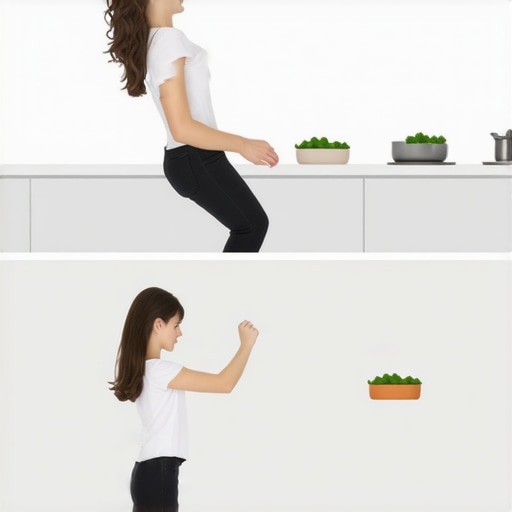
The anatomy of the problem is actually pretty straightforward once you see it. When we stand still, gravity constantly pushes down, and if we aren’t engaging the pelvic floor for spinal stability, our hips become the “default” shock absorbers. They aren’t designed for that kind of static endurance. I found that my hip pain was actually a symptom of my body trying to find a path of least resistance. I needed a better strategy, like incorporating a 3-step morning routine for hip mobility to prime my joints before the workday even started. We need to move from being a “stander” to being a “mover.”The first thing I had to change wasn’t the desk height, but my mental model of standing. I used to stand like a soldier on guard duty—stiff, rigid, and ultimately fragile. Instead, think of your legs like the suspension on a mountain bike. They need to be ready to absorb movement, not act like concrete pillars. I started implementing what I call ‘the micro-shift.’ Every five minutes, I would subtly move my center of gravity from my heels to the balls of my feet. It is the secret to walking without lower back fatigue, and it applies just as much to standing. When I first tried this during a long video call, I realized my calves were actually vibrating because they had not been used to supporting me properly. It felt messy at first, but for the once, my hip did not throb when the call ended.
Stop treating your legs like concrete pillars
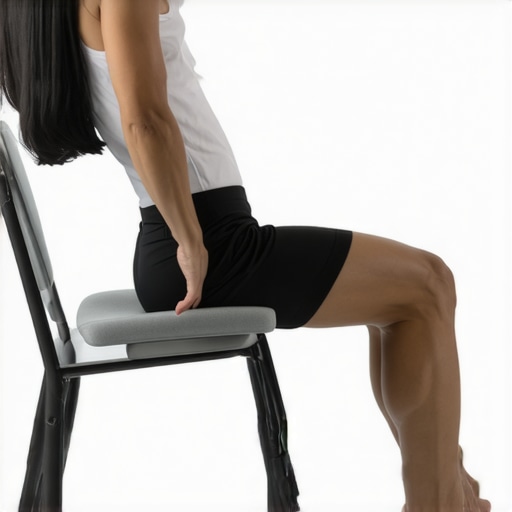
The secret to pain-free standing is a concept called active standing. If you lock your knees, you are transferring all your body weight directly onto the joint surfaces and ligaments. Think of your pelvis like a bowl of water. If you tilt it too far forward, the water spills out the front, and your lower back arches painfully. To fix this, you need to master the pelvic tilt trick for instant lumbar relief. It is a subtle tuck of the tailbone that engages your lower abdominals and takes the pressure off those sensitive hip flexors. I remember a specific Tuesday when I was filming a presentation; I was so focused on my speech that I forgot my posture. Within ten minutes, that familiar burn returned. I did a quick pelvic reset, and the relief was almost immediate.
Why your monitor height is a hip problem too
It sounds counterintuitive, but where your eyes go, your pelvis follows. If you are looking down at a screen, your head drifts forward, your shoulders round, and your pelvis tilts to compensate for the shift in your center of gravity. This is why your laptop stand is still causing neck strain even if it is raised; if it is not at eye level, the chain reaction reaches all the way down to your heels. You must learn how to adjust your monitor to avoid eye and neck strain to keep your entire spine in a neutral stack. When your head is balanced perfectly over your shoulders, your hips do not have to work overtime to keep you from falling forward.
Wake up your glutes without leaving the meeting
Most hip pain at a standing desk comes from gluteal amnesia. Your brain has literally forgotten how to use your butt muscles because of years of sitting. When these muscles go offline, your hip joints lose their primary stabilizers. You can revitalize your mobility by performing glute squeezes while you type. It is a simple isometric contraction—squeeze your glutes for five seconds, then release. If you find this difficult, it is a major red flag that explains why your glutes won’t fire and how to fix it becomes your top priority. I used to set a silent timer on my phone every thirty minutes just to remind myself to turn the lights on in my glutes. It felt ridiculous at first, but it was the bridge between chronic pain and a productive afternoon.One of the most pervasive myths in the ergonomic world is that ‘tight’ muscles always need more stretching. I spent years aggressively stretching my hip flexors every time they felt ‘locked,’ only to find the tension returned within twenty minutes. In my experience, and as many high-level practitioners will tell you, a muscle often feels tight because it is actually weak or over-lengthened, not because it is short. If your hip flexors are screaming, they might be frantically trying to provide the stability your core is failing to give. When you stretch a muscle that is already in a state of ‘protective tension,’ you are essentially stripping away your body’s last line of defense. This is a crucial nuance in understanding back pain at a deeper level. Instead of reaching for your toes, you might actually need to strengthen the area to signal to your nervous system that it is safe to let go. Have you ever fallen into this trap of stretching a muscle for weeks only for it to get tighter? Let me know in the comments.
The Foot-to-Neck Connection You Are Probably Ignoring
We often treat the body like a series of isolated parts, but it functions as a continuous kinetic chain. I’ve seen countless people struggle with persistent cervical tension despite having a perfect ergonomic setup. The ‘Oops’ factor here is ignoring the foundation. If you are standing with your weight collapsed into your arches, your pelvis tilts, your mid-back rounds, and your neck protrudes to keep your eyes level. This is why we look at your feet to solve your neck issues during a comprehensive evaluation. A study published in the Journal of Bodywork and Movement Therapies supports this, suggesting that myofascial chains mean a restriction in the lower extremities can manifest as compensatory tension in the cervical spine. If your foundation is crumbling, no amount of expensive monitor arms will fix the lean in the tower.
Does your rib cage hold the secret to your lower back recovery?
Many advanced patients ask why their lower back remains sensitive even after they’ve built ‘core strength.’ The hidden nuance is often found higher up in the thoracic spine. If your rib cage is rigid and cannot rotate, your lower back—which is designed for stability, not rotation—is forced to move in ways it shouldn’t. You can spend a lifetime on glute bridges, but if you don’t reclaim your upper body’s ability to turn, the lumbar spine will always be the victim. Incorporating the single best exercise for thoracic mobility can offload that pressure almost instantly.
Why ‘Perfect’ Posture is Actually a Trap
Another common mistake is the obsession with ‘perfect’ static posture. We’ve been told to sit or stand like we have a string pulling the top of our head toward the ceiling. But ‘static’ is the enemy of physiology. Even the most ideal posture becomes toxic if held for too long because it restricts blood flow and creates ischemic pain. Real mobility mastery isn’t about finding one perfect spot; it’s about the ability to move in and out of many positions fluently. I often tell my clients that their best posture is their next posture. This is a core tenet of chiropractic secrets to regain full mobility after injury; we aren’t just ‘clicking’ bones into place, we are restoring the neurological communication that allows for fluid, varied movement. Also, be wary of common home remedies; for instance, why icing isnt always the best move for a stiff neck is a conversation every desk worker should have, as it can sometimes delay the very inflammatory healing process the body needs. Focus on micro-movements, foundation-first alignment, and respect the protective signals your body is sending you.I eventually realized that even the most expensive standing desk in the world is useless if you do not have the tools to facilitate natural movement. I personally swapped out my thick, squishy anti-fatigue mat for a simple wooden balance board. While the mat felt good at first, it encouraged me to remain static. The board, however, forces those tiny stabilizer muscles in my ankles and hips to stay engaged without me even thinking about it. You will find that the secret to better balance starts with your big toe, and once you learn to anchor your feet properly, the rest of your posture follows a more natural line. This is a level of mobility mastery that goes far beyond just trying to stand up straight.
Keep Your Progress Without Living in the Gym
Dr. Stuart McGill, a world-renowned expert in spine biomechanics and author of Back Mechanic, often emphasizes the concept of ‘spinal hygiene.’ This is the idea that our daily habits—how we brush our teeth, how we tie our shoes, and how we stand at our desks—dictate our long-term health more than a 30-minute workout ever could. I apply this by using a simple interval timer on my computer. Every 25 minutes, I don’t just stop working; I perform one specific ‘spinal reset’ move. It is the easiest way to how to stay mobile when you have a desk job especially when you feel like you are constantly drowning in deadlines. By treating these micro-breaks as non-negotiable appointments, I have managed to keep my mid-back from tightening up even during twelve-hour workdays.
How do I keep my spine resilient as I age?
Maintaining your results is about consistency over intensity. You do not need a two-hour yoga session every morning; you need two minutes of boost mobility ease pain chiropractic techniques integrated into your morning coffee routine. I have seen clients who have completely reversed years of sedentary damage simply by committing to regular maintenance. The goal is to catch the ‘stiffness’ before it becomes a full-blown ‘spasm.’ If you wait until you can’t walk across the room to address your hip alignment, you are playing a defensive game you will eventually lose. This is why back pain recovery how chiropractic care transforms lives is often more about the small, daily adjustments than the big, dramatic ones.
The Future of Your Home Office is Smarter Than You Think
Looking forward, I predict we are moving toward biofeedback-integrated workspaces. We are already seeing the emergence of ‘smart chairs’ and desks with built-in pressure sensors that vibrate when they detect a pelvic tilt that has been held for too long. These high-tech tools will offer unlock neck pain relief essential chiropractic tips for 2025 by providing real-time data on our actual spinal load. Until those tools are affordable for everyone, we have to be our own sensors. I want you to try this right now: stand up, squeeze your glutes as hard as you can for five seconds, and take a deep breath into your lower ribs. That simple five-second reset is the first step toward mastering back neck pain relief for the long haul.
Hard Lessons from My War with the Standing Desk
Reflecting on my journey from hobbling to thriving, I’ve realized that the desk was never the enemy; my lack of awareness was. First, I learned that ‘resting’ in a standing position is actually exhausting. If you aren’t actively engaging your muscles, you’re just hanging on your joints, which is exactly how chiropractic care enhances movement—by restoring that lost muscle-joint synergy. Second, I discovered that my shoes mattered more than I thought; flat, unsupportive soles were killing my arches and sending shockwaves up my kinetic chain. Finally, I accepted that pain is a conversation, not a failure. It’s your body’s way of asking for a change in position rather than a sign to give up on standing altogether.
The Gear That Actually Works When Your Body Fails You
I’ve tried every gadget under the sun, but only a few made the cut for my daily routine. A simple wooden balance board replaced my squishy mat because it demands subtle, constant movement from my stabilizers. I also highly recommend keeping a copy of Dr. Stuart McGill’s Back Mechanic on your desk; it is the gold standard for anyone looking to enhance mobility naturally with chiropractic care principles. Lastly, never underestimate the power of a dedicated monitor arm. If your eyes aren’t level, your hips will always pay the price. Using these tools correctly is a massive part of back pain recovery how chiropractic care transforms lives and keeps you productive.
#IMAGE_PLACEHOLDER_E#
Take the First Step Toward Real Mobility Today
You do not have to live with that deep, ‘locked’ feeling every afternoon. Start with those micro-shifts, check your monitor height, and remember to wake up your glutes. True mobility mastery is built in the small moments between emails, not just in the gym. Your body was designed to move, even when the workday demands you stay in one spot. Reclaiming your comfort is entirely within your reach if you treat your posture as a practice rather than a chore. Which part of your body feels the most ‘locked’ after a long day at the desk? Let me know in the comments below!