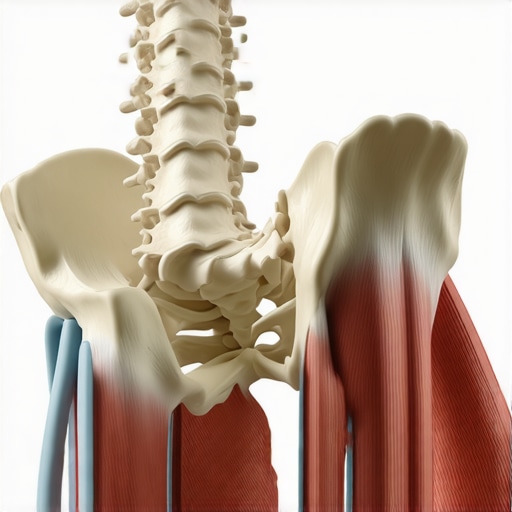
The Secret to Walking Without Lower Back Fatigue
I remember the day I finally had enough. It was a crisp Saturday morning, the kind that practically begs you to stay outside, and I was only three blocks into a stroll with my dog. Suddenly, that familiar, dull throb started creeping across my lumbar spine. By the time I turned the corner, I was shuffling like I was eighty years old, clutching my lower back and wondering where I’d gone wrong. I’d spent a small fortune on sneakers and even tried those high-waisted compression leggings, but nothing changed. I felt betrayed by my own body. If we were designed to move, why did a simple walk feel like a marathon through wet cement?
Stop blaming your age for that nagging post-walk ache
For a long time, I made the classic mistake of thinking my hamstrings were the culprit. I spent twenty minutes every morning touching my toes, convinced that flexibility was the golden ticket. But here’s the truth: stretching your hamstrings won’t fix your back pain if your mechanics are fundamentally broken. I was actually making myself more unstable. Today, I want to pull back the curtain on why walking—something we do without thinking—is often the very thing causing your fatigue, and how you can reclaim your mobility without needing a week of bed rest afterward. We are going to fix your gait, look at your foundation, and finally stop that compressed feeling in your spine.
Is walking just not for me anymore?
You might be thinking that your body has a warranty that just expired. I get it. It’s easy to feel like you are just not built for distance. But more often than not, it’s not you; it’s how your skeleton is communicating with the ground. According to research published by Harvard Health, the impact of walking can be up to 1.5 times your body weight, and if your alignment is off, your lower back takes the brunt of that force instead of your glutes. If you’ve ever felt like walking in flat shoes is making your alignment worse, you’re already touching on a massive part of the puzzle. Have you ever had to cut a vacation or a grocery trip short because your back simply gave out? It is incredibly frustrating. When I finally focused on understanding back pain through the lens of mobility, I realized my ankles were as stiff as boards. That lack of give meant every step sent a shockwave straight to my discs. We often ignore the feet, but the link between ankle mobility and lower back stability is the secret sauce to walking miles without that heavy, exhausted feeling.
To stop the cycle of pain, you have to treat your body like a high-performance vehicle. If the tires are bald or the suspension is shot, it doesn’t matter how expensive the fuel is—you’re going to have a rough ride. The first thing we need to address is your ground contact. Most of us walk by effectively ‘falling’ forward and catching ourselves with our lower back muscles instead of our legs.
Fix your foundation from the ground up
Your big toe is the most underrated tool in your toolkit. Think of it as your body’s kickstand. If you aren’t actively pushing off through that toe, your arch collapses, your knee rotates inward, and your pelvis tilts forward, putting a massive strain on your lumbar spine. When I was struggling with that Saturday morning ache, I realized I was ‘duck-walking’—pointing my toes outward and rolling over the side of my foot. The moment I focused on keeping my feet straight and driving through the big toe, I felt an immediate release in my SI joint. In fact, the secret to better balance starts with your big toe, and once you master that, you’ll find that how to fix your gait for better spinal alignment becomes a lot more intuitive.
Wake up your glutes to save your lumbar spine
If the feet are the tires, the glutes are the engine. When your glutes are ‘asleep,’ your lower back has to do double duty to keep you upright. I remember a specific hike in the Adirondacks where I was miserable by mile two. I started consciously squeezing my glute on the trailing leg every time I pushed off the ground. It felt robotic and messy at first, but within ten minutes, that dull throb in my back disappeared. You need to focus on strengthening your glutes to take the pressure off your spine because they are designed to absorb the 1.5x body weight impact I mentioned earlier. Without them, your discs are essentially acting as the shock absorbers, which they aren’t meant to do for miles on end.
Breathe through your ribs instead of your neck
Many people walk with a ‘braced’ core, thinking that rigidity equals safety. But a rigid core is a brittle core. If you aren’t moving your rib cage as you walk, your spine can’t rotate properly. Imagine a wet towel; to wring it out, the top and bottom need to move in opposite directions. Your walking gait is the same. If your ribs are stuck, that rotation happens in your lower back instead, which leads to inflammation. I used to hold my breath when I walked uphill, which only made my neck and back pain worse. Learning the lateral move that opens up a tight rib cage changed everything. It allowed my torso to move independently of my hips, taking the ‘twist’ out of my vulnerable lumbar vertebrae.
Use the 30-second reset when you feel a twinge
If you’re out and feel that familiar ache starting, don’t just push through it. Stop and do a quick reset. I use a modified version of the spider-man stretch that clears up morning stiffness even when I’m out on a trail. By opening up the hip flexors, you stop the ‘tug-of-war’ that is pulling your pelvis into a painful arch. Combining these revitalize your mobility proven strategies for back pain relief into your daily walk isn’t about doing more work; it’s about doing the work more efficiently so your body can actually enjoy the movement again.
Let’s dig deeper into a nuance that most people—and even some trainers—completely miss. We’ve been told since kindergarten to ‘stand up straight,’ but this pursuit of a vertical line is often what’s locking your spine in a state of constant tension. In my clinical experience, why your perfect posture is actually making you stiff is because you’re replacing natural fluid motion with static muscle gripping. When you try to force a ‘perfect’ posture, you end up over-activating your paraspinal muscles, which leads to that deep, localized ache that won’t go away with a simple rubdown.
Why does your neck scream when your pelvis is the real culprit?
It seems counterintuitive to look at your hips when your head feels like it weighs a hundred pounds, but the spine is a closed kinetic chain. If your pelvis is tilted—perhaps because of those tight hip flexors we discussed earlier—your entire upper body has to compensate to keep your eyes level with the horizon. This is exactly why we look at your pelvis when your neck hurts. If the base of the tower is leaning, the top of the tower has to strain just to stay upright. This tension often travels even higher, which is why the connection between your jaw tension and your top neck bone is a frequent ‘aha!’ moment for my chronic headache sufferers.
Stop stretching muscles that are already overextended
Here is the ‘oops’ factor that sidelines so many well-intentioned people: stretching a muscle just because it feels ‘tight.’ Often, a muscle feels tight not because it’s short, but because it’s being pulled taut like a guitar string. If your pelvis is out of alignment, your hamstrings or neck muscles might be stretched to their absolute limit just to hold you together. If you go in and stretch them further, you’re essentially weakening your body’s last line of defense. This is precisely why stretching a tight muscle isnt always the answer. Instead, you need to find the source of the pull. Research from the Journal of Bodywork and Movement Therapies highlights that ‘sensory-motor amnesia’—where the brain loses the ability to relax certain muscle groups—cannot be fixed by force. It requires neurological retraining. This is where boost mobility ease pain chiropractic techniques unveiled come into play. We aren’t just ‘cracking’ joints; we are sending a signal to the nervous system to let go of that protective guarding. If you’ve been stretching the same spot for months with zero progress, you are likely treating a symptom, not the cause. Have you ever fallen into this trap? Let me know in the comments.
When you finally start feeling that ‘lightness’ in your gait, the biggest mistake you can make is assuming the job is done. I see it all the time: a patient gets their mobility back, stops their routine, and is back in my office three months later with the same dull throb. To stay ahead of the curve, you need a maintenance kit that goes beyond a generic gym mat. Personally, I’ve stopped using foam rollers on my lumbar region entirely because why your foam roller might be hurting your lower back is usually a matter of excessive pressure on unstable vertebrae. Instead, I swear by a simple lacrosse ball for targeted trigger point work. By pinning the ball against a wall and leaning into the space between your spine and your shoulder blade, you can perform how to use a tennis ball to fix that spot under your shoulder blade without the blunt trauma of a large roller. This precision allows you to signal the nervous system to relax without triggering a guarding response.
Stop rolling your lower back and try this instead
If you must roll, keep it to the thoracic spine (the mid-back) where your ribs provide a stable cage. Learning the proper way to use a foam roller on your upper back is a game-changer for people who spend eight hours a day at a desk. But for the lower back, I recommend a lumbar roll for your chair. It’s not just about comfort; it’s about maintaining the natural curve while your muscles are at rest. I’ve found that even the most expensive ‘ergonomic’ chairs fail if you don’t understand the correct way to use a lumbar roll in your office chair to support the weight of your torso.
The future of spinal health is in your pocket
Looking ahead, I predict we are moving toward a ‘Quantified Spine’ era. We already track our steps and heart rate, but wearable sensors that monitor pelvic tilt and rib cage expansion in real-time are just around the corner. Imagine an app that vibrates when your diaphragm stops moving properly—because the connection between shallow breathing and back pain is the hidden driver of most chronic flare-ups. This data-driven approach will make boost mobility ease pain chiropractic techniques unveiled even more effective because we’ll have a 24/7 window into your movement habits.
How do I maintain my mobility results for the long haul?
Consistency is more important than intensity. You don’t need an hour-long yoga session every day; you need five minutes of high-quality movement that reminds your brain where your bones are. This includes checking your environment—especially where you sleep. Many people undo all their progress overnight, which is why your pillow choice matters more as you age. As noted by Dr. Stuart McGill in his seminal work Back Mechanic, ‘spine hygiene’—the way you move during the mundane tasks of daily life—is what determines your long-term success. Whether it’s how you brush your teeth or how you restore your range how chiropractic care enhances movement, every micro-movement counts. My challenge to you: tonight, before bed, spend just two minutes breathing into your lower back. Focus on expanding your lower ribs laterally rather than lifting your shoulders. It’s a simple shift, but it’s the first step in training your body to stay relaxed when the world gets stressful.
Hard Truths About Why Your Progress Stalls
Over the years, I’ve realized that the biggest barrier to healing isn’t a lack of exercise, but a lack of awareness. Here are the lightbulb moments that changed everything for me:
- Tension is not the same as strength. I spent years bracing my core so hard I couldn’t breathe, thinking I was protecting myself. In reality, I was just creating a rigid cage that transferred stress directly to my discs.
- Consistency is a quiet superpower. A five-minute daily reset is worth more than a two-hour gym session once a week. Your nervous system responds to frequency, not intensity.
- Pain is a messenger, not an enemy. When your back twinges, it’s not your body failing; it’s a signal that your mechanics need a quick adjustment.
My Personal Toolkit for Spine Resilience
I don’t believe in cluttering your life with gadgets, but these three resources have been non-negotiable in my own journey. First, I highly recommend reading *Back Mechanic* by Dr. Stuart McGill; it’s the gold standard for mastering back neck pain relief tips from the pros. Second, a simple lacrosse ball is my go-to for breaking up muscle adhesions in the glutes and shoulders. Finally, if you sit for work, learning how to use a lumbar roll without making your back stiffer is the single best investment you can make for your desk setup.
Take Back Your Long Walks and Your Life
You weren’t born to live in a cycle of stiffness and recovery. By focusing on your gait, your breath, and your foundation, you are doing more than just fixing a symptom—you are rewriting how you experience the world. True back pain recovery happens in the small moments when you choose to move with intention rather than force. It’s time to stop fearing the sidewalk and start enjoying the journey again. Your body is remarkably resilient, and with the right tools, you can restore your range how chiropractic care enhances movement in ways you might have thought were gone forever. Which part of your walk feels the most ‘stuck’ right now—your feet, your hips, or your lower back? Let me know in the comments below!