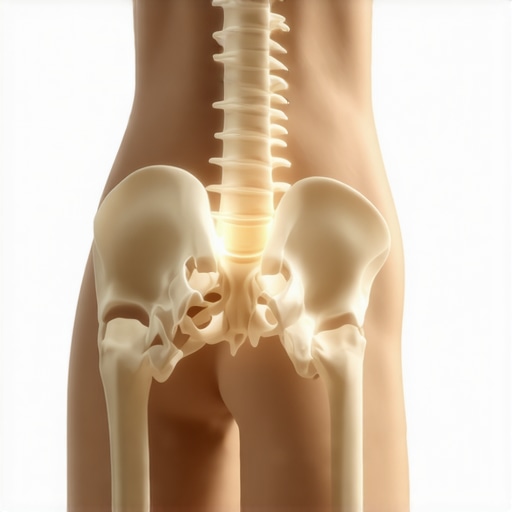
Why Your Glute Medius Is More Important Than Your Abs for Back Health
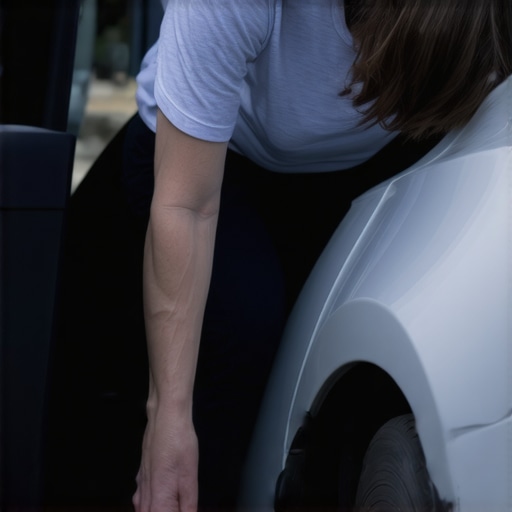
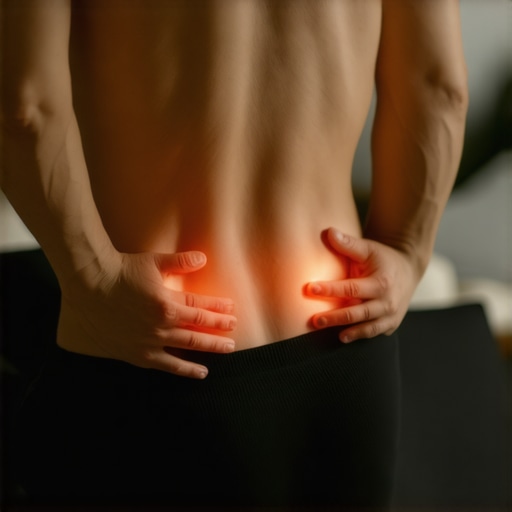
I was flat on my back, staring at a slow-turning ceiling fan, feeling like my spine had been replaced by a red-hot poker. All I did was reach for a dropped sock. It was humiliating. I had spent months doing crunches and planks, convinced that building a rock-solid core was the only shield I needed against my history of aches. I was wrong. I had completely ignored the lateral stabilizers that actually keep the pelvis level and the spine happy. This is exactly why I want to talk to you about the gluteus medius—the unsung hero of your lower back that is far more vital than a six-pack. Today, we are going to stop overworking your abs and start waking up the muscles that actually prevent those morning spasms from ruining your day.
Your Six-Pack is Lying to You
For years, I made the massive mistake of thinking my abdominal muscles were the body’s primary support beam. I would grind through hundreds of sit-ups, only to find that how to pick up your laundry basket safely was still a complete mystery to my nervous system. It turns out, while your rectus abdominis looks great at the beach, it does very little to stop your pelvis from tilting and shearing your spinal discs during everyday movements. In fact, research published in the Journal of Physical Therapy Science (https://www.ncbi.nlm.nih.gov/pmc/articles/PMC4433993/) highlights that patients with chronic low back pain often exhibit significant weakness in their hip abductors, specifically the gluteus medius. Have you ever felt like you are doing all the right exercises but your back still feels fragile or prone to suddenly locking up?
Is focusing on my hips actually worth the effort?
It sounds like a lot of extra work to target a muscle you can hardly see in the mirror. You might be skeptical, thinking that your weekly walk or occasional gym session is enough to keep things moving. But the glute medius is responsible for side-to-side stability; when it is weak, your lower back has to do double the work just to keep you upright while walking. By strengthening your glutes to take the pressure off your spine, you are not just building muscle; you are installing a high-quality shock absorber for your vertebrae. This is the hidden muscle that stabilizes your lower spine that I wish someone had pointed out to me before I threw my back out reaching for that sock. Let us dive into why this matters more than any crunch you have ever done and how boost your back health simple yet effective chiropractic hacks can help bridge the gap between pain and performance.
Fix Your Foundation Instead of Chasing Symptoms
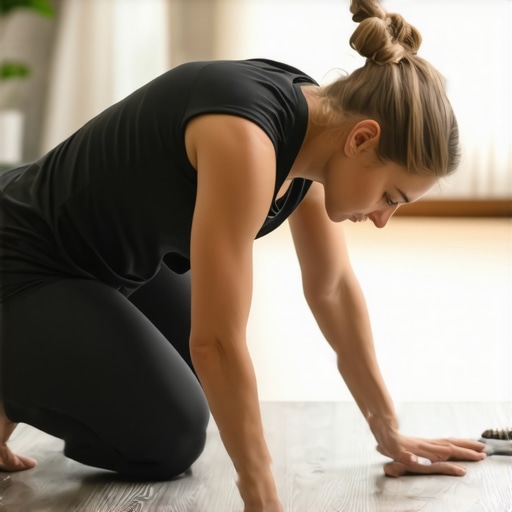
Think of your spine as a tall radio tower. Your abs are like the basic scaffolding, but the gluteus medius acts as the guy-wires—the heavy-duty cables that keep the tower from swaying and collapsing during a windstorm. When these ‘cables’ are slack, the tower (your lower back) takes a beating. I remember my first real attempt at fixing this after a particularly nasty flare-up. I was in my living room, trying a simple side-lying leg lift. I expected it to be easy because I could do fifty sit-ups without blinking. Instead, my hip cramped within three reps, and my leg felt like it weighed five hundred pounds. That humiliating moment was the proof I needed: my glutes had effectively checked out, leaving my lumbar spine to handle every ounce of my body weight alone. This is fundamentally why your glutes won’t fire and how to fix it before your next major movement results in a trip to the floor.
Identify Your Glute Medius Right Now
Before you start any exercise, you have to actually find the muscle. Stand on one leg and place your hand on the fleshy part of your side-hip, just below the pelvic bone. If you feel that area tighten and firm up, that is your glute medius working to keep your pelvis from dropping. If you feel a sharp pinch in your lower back instead, your body is ‘cheating’ by using your back muscles to do a hip muscle’s job. This compensation is a primary reason why people need to learn how to handle a sudden back spasm when you are alone, as these small muscles failing leads to total system shutdowns.
The Clamshell Is Not Just for Jane Fonda
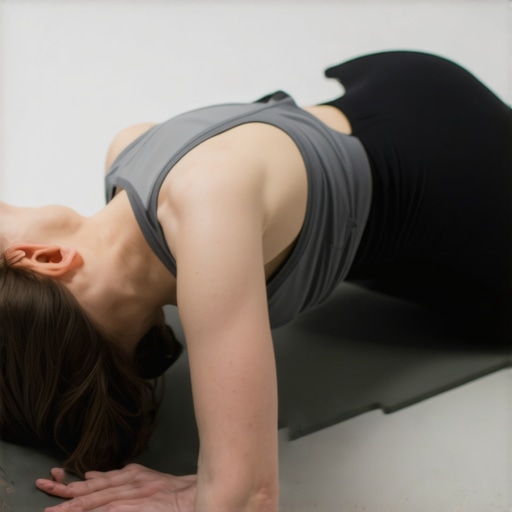
To wake up these stabilizers, we go back to the basics: the clamshell. Lie on your side with your knees bent and feet together. The key here isn’t how high you lift your knee; it is keeping your pelvis perfectly still. Most people roll their entire torso backward, which completely misses the point. When I finally mastered the ‘still-pelvis’ technique, the burn in my side-hip was intense and immediate. By focused strengthening your glutes to take the pressure off your spine, you are retraining your brain to rely on your hips rather than your vertebrae for lateral support. It is a slow process, but it is the difference between a back that ‘goes out’ and a back that stays solid.
Take Your Stability for a Walk
Once you can feel the muscle fire on the floor, you have to translate that to standing. When you walk, focus on keeping your belt line level. If your hip drops every time you take a step, your lower back is being ‘sheared’ with every stride. Mastering the secret to walking without lower back fatigue involves consciously engaging that side-hip muscle the moment your foot hits the pavement. It feels weird at first—almost like you are marching with purpose—but the relief in your lumbar region will be undeniable. Sometimes, a stubborn hip won’t engage because the nerves are being pinched further up the chain, which is why we adjust your mid-back to help your lower back recover and ensure the signal from your brain actually reaches your glutes.
But here is where most people get it wrong: they assume that feeling tight always means a muscle needs to be stretched. This is perhaps the biggest myth in the world of mobility and rehabilitation. In reality, your brain often tightens a muscle as a protective mechanism because the joint it supports is inherently unstable. If you keep pulling on that metaphorical brake, your nervous system will eventually fight back with a painful spasm. This is precisely why your perfect yoga flow might be straining your SI joint instead of helping it. You are effectively loosening the lug nuts on a car that already has a wobbly wheel, which leads to more injury rather than the fluid movement you were hoping for.
The Foam Roller Trap You Must Avoid
Another nuance I see daily in the clinic is the obsession with foam rolling the lower back. It feels like a deep tissue massage, so it must be beneficial, right? Unfortunately, that is a common mistake. Your lumbar spine is designed for stability and protection, not for absorbing massive amounts of direct, localized pressure from a hard plastic cylinder. When you roll directly on those vertebrae, you risk shearing the spinal segments and irritating the very nerves you are trying to soothe. This explains why your foam roller might be hurting your lower back rather than providing lasting relief. It is much more effective to stick to rolling the soft tissue of the glutes and upper back, while leaving the lumbar spine to professional restore your back mobility proven chiropractic strategies.
Does your big toe control your spinal health?
This might sound like a stretch, but the human body is a single, interconnected unit. This concept, known as regional interdependence, was highlighted in a study within the Journal of Bodywork and Movement Therapies, which emphasized that a lack of mobility in one area, such as the ankle or the big toe, forces the spine to compensate for the missing range of motion. If you cannot push off your big toe correctly while walking, your pelvis is forced to rotate excessively, which puts massive stress on your lower back and can even ripple up to cause tension in your neck. This is the secret to better balance starts with your big toe and exactly why we look at your feet to solve your neck issues. True mobility mastery expert tips for back pain prevention and recovery require looking at the whole chain, not just where you feel the pinch.
We see the same mistake repeated with neck pain. When people feel a kink in their neck, they often pull their ear to their shoulder as hard as they can. If the issue is a joint restriction in the upper cervical spine, aggressive stretching just irritates the surrounding ligaments further. Instead of relief, you end up with more inflammation. It is much safer to focus on how to strengthen your deep neck flexors to provide the support your neck is screaming for. By integrating restore your range how chiropractic care enhances movement, you address the mechanical blockage rather than just pulling on the fire alarm. Have you ever fallen into this trap of chasing the pain instead of the source? Let me know in the comments.
How can I stay pain-free without a daily hour of rehab?
Maintenance is where most people fall off the wagon because they think it requires a dedicated hour in the gym. I personally don’t have that kind of time, and I bet you don’t either. The secret I have found is ‘micro-dosing’ your mobility. Instead of one long session, I pepper my day with the 30-second reset for tech neck fatigue and the Brueggers relief move to reverse hours of hunched sitting every time I finish a patient’s notes. This consistency tells your nervous system that it is safe to stay open and relaxed. This approach is backed by research in the Journal of Occupational Health (https://pubmed.ncbi.nlm.nih.gov/24008518/), which suggests that short, frequent active breaks are often more effective at reducing musculoskeletal discomfort than even the most expensive ergonomic furniture.
The Three Tools I Actually Keep in My Bag
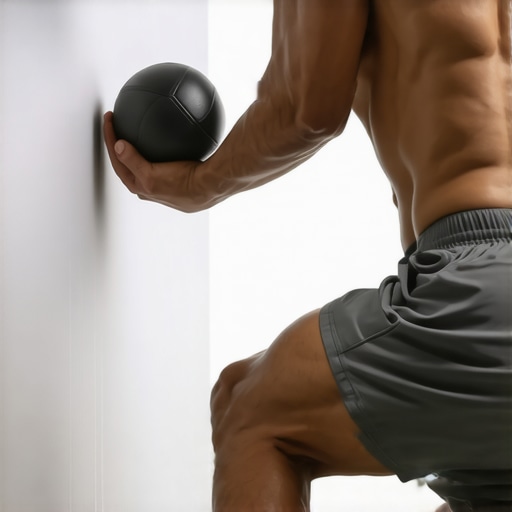
I am a minimalist when it comes to gear, but there are three things I won’t travel without. First is a firm lacrosse ball. I use it to hit the exact spot where the glute medius meets the pelvis—it’s much more precise than a foam roller. Second is a high-quality massage gun. I do not use it for a ‘full body massage’; I use it specifically on my hip flexors and the meaty part of my calves because why tight calves cause lower back tension is a real phenomenon that can tug on your lumbar fascia. However, you have to be careful; I always teach my patients how to use a massage gun on your lower back safely by avoiding the bone entirely and sticking to the muscle belly. Third is a simple rolled-up towel. It is my go-to for how to use a rolled-up towel to fix your cars lumbar support during long drives.
Predicting the Future of Your Back Health
In the next few years, I expect we will see a massive shift toward wearable biofeedback. We are already seeing sensors that vibrate when your shoulders round too far forward or when your pelvic tilt becomes excessive. But technology is only a mirror; it doesn’t do the work. The real ‘scaling’ of your health happens when you stop seeing your chiropractor as a mechanic who fixes a broken car and start seeing the relationship as a partnership to enhance mobility naturally with chiropractic care. We are moving toward a world where mobility mastery expert tips for back pain prevention and recovery are integrated into our digital lives, reminding us to breathe and reset before the pain even starts.
Why a Simple Stool Beats Your Ergonomic Office Chair
I often tell my patients that their expensive chair might be the enemy. These chairs are so comfortable they allow you to ‘switch off’ your core for hours. I switched to a backless stool for my computer work because it forces my lateral stabilizers to stay awake. If you are curious, learning the simple way to sit on a stool without pain can be a game-changer for your endurance. It is about building a body that can support itself rather than relying on a piece of furniture to do it for you. This is a core part of back pain recovery how chiropractic care transforms lives: moving from passive reliance to active strength.
My challenge for you today is simple: Don’t wait for your next ‘tweak’ to think about your glutes. Try the 30-second Bruegger’s reset every time you hang up the phone or finish an email for the next three days. You will be surprised at how much chiropractic secrets to boost neck comfort and function actually boil down to these tiny, consistent wins. If you are feeling stuck, do not hesitate to reach out via our contact-us page to see how we can get your foundation back on track.
The Truth About Why My Back Kept Failing Me
Reflecting on my journey from that humiliating sock-reaching incident to where I am now, a few lightbulb moments stand out that changed everything. First, I had to stop looking for the fire exactly where I felt the heat. My back felt hot and sharp, but the ‘fire’ was actually the inactive glute medius on my side-hip failing to do its job. Second, I realized your body is incredibly smart; if it is tightening up, it is because it feels unsafe. Trying to force a tight muscle to relax through stretching alone is like trying to convince a guard dog to sleep while the front door is wide open. You have to close the door by providing stability before the nervous system will stand down. Finally, I learned that revitalize your mobility proven strategies for back pain relief are less about how much you sweat and more about the precision of how you move every single day.
My Non-Negotiable Tools for Hip and Spine Health
I do not believe in cluttering your home with expensive gadgets, but these three items are essentials for my own maintenance. I keep a high-density lacrosse ball in my gym bag because it reaches the lateral hip attachments that a foam roller simply glides over; it is my go-to for localized pressure. I also swear by a simple loop resistance band; five minutes of side-stepping before a walk completely changes how my pelvis handles the load of my body weight. Lastly, I rely on the expertise of fellow clinicians to stay aligned, as neck back pain solutions insights from wellness experts have taught me that we all have blind spots in our own movement patterns. These tools, combined with mastering back neck pain relief tips from the pros 300, form a safety net that keeps me active and off the floor.
Start Building a Body You Actually Trust
It is easy to feel like your back is a ticking time bomb, especially after a series of frustrating flare-ups. But your body has an incredible capacity to heal when you give it the right stability signals. By shifting your focus from ‘fixing a problem’ to ‘building a foundation,’ you stop being a victim of your anatomy. Incorporating overcoming chronic neck discomfort insights from top chiropractors into your routine ensures that your entire spine is communicating clearly from top to bottom. We want you to reach for that sock, pick up your kids, or finish eighteen holes of golf without that nagging fear in the back of your mind. Start small, stay consistent, and remember that understanding back pain a guide to better posture and mobility is the first real step toward a more active, pain-free life. Have you ever noticed that your back feels worse after a day where you didn’t move your hips much? Let me know in the comments below!