The hidden muscle that stabilizes your lower spine
I remember the morning my back decided to go on strike. It wasn’t after a heavy deadlift session or a weekend of moving furniture. I was literally just reaching for a fallen sock. One second I was a functioning adult, and the next, a lightning-bolt sensation seized my lower spine, leaving me breathless and gripping the dresser for dear life. I’d spent years priding myself on a ‘strong core,’ yet there I was, incapacitated by a three-ounce piece of cotton. It was a humiliating realization that I’d been training for show, not for stability. I eventually discovered that my big, visible muscles were doing all the work while a tiny, deep stabilizer called the multifidus had essentially gone to sleep. Today, I want to show you how to wake that muscle up so you can finally stop fearing the ‘simple’ movements.
Why Your Six-Pack Isn’t Saving Your Spine
For the longest time, I fell into the trap of thinking that a rigid midsection equaled a healthy back. I did endless crunches and held long, agonizing planks. But here is the kicker: why your strong core might actually be too rigid is a real problem that many of us face. When we over-train the superficial muscles, we often neglect the multifidus—a series of small, fleshy bundles that tuck right into the grooves of your vertebrae. These aren’t ‘vanity’ muscles; they are the micro-managers of your spinal alignment. I made the mistake of ignoring them for a decade, and I paid for it with chronic stiffness. Many people struggle with why your core routine is failing your spine because they focus on movement rather than stabilization. According to research published in the Journal of Physical Therapy Science, multifidus atrophy is present in up to 80% of people with chronic low back pain. If those tiny stabilizers aren’t firing, your spine is essentially unprotected during the mundane moments of life, like sneezing or unloading the dishwasher.
Is this just another fitness fad?
I get the skepticism—every year there is a ‘new’ muscle we are told to care about. However, the multifidus is different because it’s the only muscle that provides segmental stability to every single level of your lumbar spine. When mine stopped working, my body compensated by tightening my hip flexors and glutes until I could barely walk. Learning strengthening your glutes to take the pressure off your spine is a great step, but it won’t fix a ‘turned off’ multifidus. You have to learn how to engage it specifically. Have you ever felt like your back was ‘fragile’ even though you feel strong at the gym? That’s the classic sign of a stabilizer that’s gone MIA. I’ve found that specific movements, like the bird dog variation that fixes wobbly core muscles, are far more effective than heavy lifting when it comes to long-term relief. Before we dive into the ‘how-to,’ we need to look at why these muscles shut down in the first place.
Wake Up the Sleepy Muscle Protecting Your Spine
To wake up a dormant multifidus, you can’t just grunt and heave. You have to be a sniper, not a sledgehammer. The multifidus is a postural muscle, meaning it’s designed for endurance and subtle control, not for lifting a car. I spent three weeks doing what I thought were deep core exercises only to realize why your core isn’t engaging during your workouts was because I was bracing my abs like I was about to get punched. That bracing actually shuts down the tiny stabilizers.
Find the Invisible Pulse of Stability
Lie on your stomach and place your thumbs on either side of your spine in the small of your back. Now, without moving your legs or tensing your glutes, try to ‘swell’ the muscle under your thumbs. It shouldn’t be a big movement; it’s more like a subtle tightening of a guitar string. I remember the first time I actually felt it fire. I was lying on my living room rug, frustrated, when suddenly a tiny ‘thrum’ happened right against my thumb. It was the first time in years my spine felt ‘plugged in.’ If you can’t feel it, you might be dealing with how a single tight ankle can cause chronic back pain, as your body compensates for poor mechanics elsewhere. Once you find that internal switch, the isometric hold that builds a bulletproof core becomes your most valuable tool. 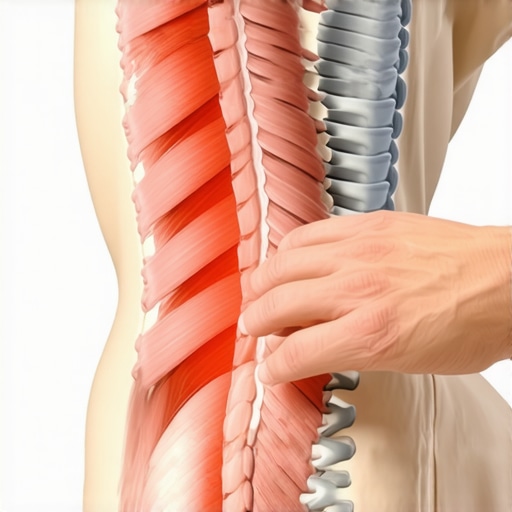
Master the Lift Without the Load
Once you can find the muscle while lying down, you need to challenge it. The classic mistake is moving too fast. I used to rush through my reps, but the multifidus needs time to stay ‘on.’ Use a slow-motion bird dog. As you reach your opposite arm and leg out, focus entirely on that small of your back. Don’t let your hips tilt even a millimeter. If you feel wobbly, it’s a sign that your deep system is handing off the work to the big, clunky muscles. I’ve found that the bird dog variation that fixes wobbly core muscles is the fastest way to bridge the gap between ‘gym strength’ and ‘life strength.’
Hinge Your Way Through the Day
Stability is useless if you leave it on the gym mat. The true test of my recovery was when I started using the simple trick to keep your spine neutral while washing dishes. Instead of rounding my back over the sink, I practiced a micro-hinge, engaging that ‘thumb-muscle’ I’d discovered earlier. It felt awkward and forced for about a week. I looked like a robot trying to scrub a pan. But then, the habit clicked. Now, whether I’m reaching for a sock or using the hip hinge trick for pain-free gardening, my spine stays protected because the multifidus is already awake and on duty before I even move. This transition from conscious effort to automatic protection is the secret to mobility mastery.
Now that we’ve talked about waking up that internal stabilizer, let’s dig deeper into the nuances that most fitness gurus gloss over. I used to think that if something felt tight, the solution was simply to pull on it until it yielded. But I’ve learned that the ‘more is more’ approach to stretching is often a recipe for disaster. In fact, why stretching a tight muscle isn’t always the answer became a cornerstone of my recovery. Sometimes, that tightness is actually your brain’s way of ’emergency braking’ a joint that it perceives as unstable. If you stretch away that protective tension without building the underlying stability we discussed earlier, you’re just removing the only thing keeping your joint in place. This is particularly true for the back; why stretching your hamstrings won’t fix your back pain is often because the hamstrings are pulling tight to compensate for a weak pelvis.
Stop Stretching What Already Feels Tight
Here is a contrarian view that saved my spine: stop chasing the ‘stretch.’ For years, I treated my body like a piece of stiff leather that needed to be worked over. The reality is that your nervous system dictates muscle tone. A study published in the Journal of Orthopaedic & Sports Physical Therapy (JOSPT) found that eccentric strengthening often provides more long-term ‘length’ and comfort than static stretching ever could. When you force a stretch on a sensitized nerve, you aren’t lengthening tissue; you’re irritating the wire. This is why I always tell people to stop rolling your lower back on a hard foam roller. You’re essentially smashing your lumbar nerves against your vertebrae, which causes the surrounding muscles to guard even harder. It’s a vicious cycle of self-inflicted inflammation that looks like ‘self-care’ on social media but acts like an assault on your nervous system.
The Ice Trap That Stops Real Healing
One of the biggest ‘oops’ factors I see is the obsession with icing every minor ache. We’ve been conditioned to grab the frozen peas the moment we feel a twinge. However, why icing a stiff neck might be making it harder to move is a nuance often ignored. Cold constricts blood flow and can actually increase muscle spindle sensitivity, making the muscle feel even tighter once the numbing effect wears off. Unless there is acute, visible swelling from a traumatic injury, movement—not ice—is usually the superior medicine. I found that gentle heat and micro-movements, which restore your range how chiropractic care enhances movement, do far more to signal to the brain that the ‘danger’ has passed. Have you ever fallen into the trap of icing a stiff back for days only to find it feels like a block of wood? Let me know in the comments.
Can your eye movements actually trigger neck pain?
This sounds like science fiction, but it’s pure neurology. Your suboccipital muscles (the tiny ones at the base of your skull) are neurologically wired to your eye movements. This is called the oculo-cephalic reflex. If you’re constantly straining your eyes at a poorly positioned monitor, those muscles are firing non-stop. I’ve seen cases where how your eyes are secretly dictating your posture was the missing link for someone who had tried every massage and adjustment under the sun. 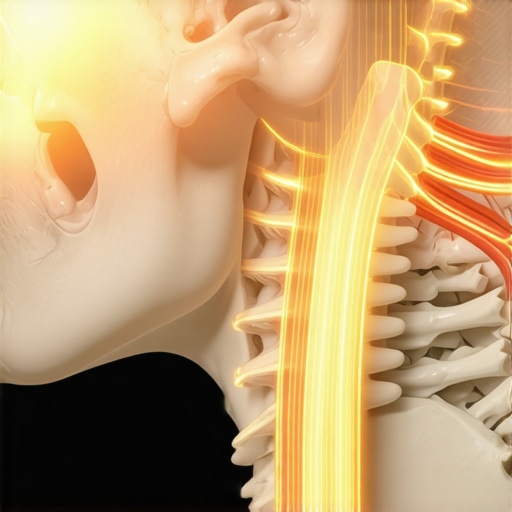 This is the level of mobility mastery we should all strive for—understanding that the body is a single, integrated web where a squint can lead to a spasm.
I spent $1,200 on an ‘ergonomic’ chair only to realize the chair wasn’t the problem. The problem was where my eyes were looking. This is why why your screen height is the real cause of your headaches is the first thing I check when someone complains of a ‘heavy’ head. Because your eyes dictate your posture, looking down forces your suboccipital muscles into a state of constant ’emergency’ contraction to keep your skull from tumbling forward. I personally use a simple stack of old textbooks to lift my monitor until the top third of the screen is at eye level. It’s a low-tech fix, but it’s more effective than any expensive gadget. If you’re working remotely, understanding how to set up your home office on a budget is less about the price of the furniture and more about the geometry of your joints.
The tennis ball trick for stubborn knots
When my mid-back starts to feel like a twisted towel, I don’t reach for a foam roller anymore. I’ve found that how to use a tennis ball to release upper back tension allows for a precision that a broad roller just can’t match. You place the ball between your shoulder blade and your spine, lean against a wall, and breathe. It’s about ‘melting’ into the pressure, not rolling over it like a steamroller. In fact, knowing the proper way to use a foam roller on your upper back is essential because, as we discussed, you must stop rolling your lower back on a hard foam roller to avoid unnecessary nerve irritation and guarding.
How do I keep my spine resilient for the next decade?
Long-term maintenance isn’t about two hours of gym time; it’s about the four hundred tiny choices you make between 9:00 AM and 5:00 PM. I rely on the 10-second posture check you can do anywhere as a mental alarm clock. Every time I get a notification on my phone, I check my pelvic tilt. If I’m sitting, I make sure I’m using a support correctly—specifically how to use a lumbar roll without making your back stiffer. It should feel like a gentle nudge, not a forced arch. This consistent, low-level awareness is what builds truly ‘bulletproof’ health.
Biofeedback is the next frontier of mobility
Looking ahead, I predict we are moving away from ‘passive’ corrections toward active, AI-driven biofeedback. A 2023 study published in the journal Sensors demonstrated that wearable surface electromyography (sEMG) sensors can provide real-time alerts that significantly reduce postural slouching in sedentary workers. Soon, your smartwatch won’t just track your steps; it will tell you when your multifidus has stopped firing. Until that tech is on everyone’s wrist, you have to be your own sensor. Use the 30-second reset for tech neck fatigue every hour to keep the neurological ‘danger’ signals at bay. I want you to try this right now: adjust your screen so you aren’t looking down, and spend tomorrow noticing how much lighter your head feels by 4:00 PM.
I remember the morning my back decided to go on strike. It wasn’t after a heavy deadlift session or a weekend of moving furniture. I was literally just reaching for a fallen sock. One second I was a functioning adult, and the next, a lightning-bolt sensation seized my lower spine, leaving me breathless and gripping the dresser for dear life. I’d spent years priding myself on a ‘strong core,’ yet there I was, incapacitated by a three-ounce piece of cotton. It was a humiliating realization that I’d been training for show, not for stability. I eventually discovered that my big, visible muscles were doing all the work while a tiny, deep stabilizer called the multifidus had essentially gone to sleep. Today, I want to show you how to wake that muscle up so you can finally stop fearing the ‘simple’ movements.
Why Your Six-Pack Isn’t Saving Your Spine
For the longest time, I fell into the trap of thinking that a rigid midsection equaled a healthy back. I did endless crunches and held long, agonizing planks. But here is the kicker: why your strong core might actually be too rigid is a real problem that many of us face. When we over-train the superficial muscles, we often neglect the multifidus—a series of small, fleshy bundles that tuck right into the grooves of your vertebrae. These aren’t ‘vanity’ muscles; they are the micro-managers of your spinal alignment. I made the mistake of ignoring them for a decade, and I paid for it with chronic stiffness. Many people struggle with why your core routine is failing your spine because they focus on movement rather than stabilization. According to research published in the Journal of Physical Therapy Science, multifidus atrophy is present in up to 80% of people with chronic low back pain. If those tiny stabilizers aren’t firing, your spine is essentially unprotected during the mundane moments of life, like sneezing or unloading the dishwasher.
Is this just another fitness fad?
I get the skepticism—every year there is a ‘new’ muscle we are told to care about. However, the multifidus is different because it’s the only muscle that provides segmental stability to every single level of your lumbar spine. When mine stopped working, my body compensated by tightening my hip flexors and glutes until I could barely walk. Learning strengthening your glutes to take the pressure off your spine is a great step, but it won’t fix a ‘turned off’ multifidus. You have to learn how to engage it specifically. Have you ever felt like your back was ‘fragile’ even though you feel strong at the gym? That’s the classic sign of a stabilizer that’s gone MIA. I’ve found that specific movements, like the bird dog variation that fixes wobbly core muscles, are far more effective than heavy lifting when it comes to long-term relief. Before we dive into the ‘how-to,’ we need to look at why these muscles shut down in the first place.
Wake Up the Sleepy Muscle Protecting Your Spine
To wake up a dormant multifidus, you can’t just grunt and heave. You have to be a sniper, not a sledgehammer. The multifidus is a postural muscle, meaning it’s designed for endurance and subtle control, not for lifting a car. I spent three weeks doing what I thought were deep core exercises only to realize why your core isn’t engaging during your workouts was because I was bracing my abs like I was about to get punched. That bracing actually shuts down the tiny stabilizers.
Find the Invisible Pulse of Stability
Lie on your stomach and place your thumbs on either side of your spine in the small of your back. Now, without moving your legs or tensing your glutes, try to ‘swell’ the muscle under your thumbs. It shouldn’t be a big movement; it’s more like a subtle tightening of a guitar string. I remember the first time I actually felt it fire. I was lying on my living room rug, frustrated, when suddenly a tiny ‘thrum’ happened right against my thumb. It was the first time in years my spine felt ‘plugged in.’ If you can’t feel it, you might be dealing with how a single tight ankle can cause chronic back pain, as your body compensates for poor mechanics elsewhere. Once you find that internal switch, the isometric hold that builds a bulletproof core becomes your most valuable tool.
Master the Lift Without the Load
Once you can find the muscle while lying down, you need to challenge it. The classic mistake is moving too fast. I used to rush through my reps, but the multifidus needs time to stay ‘on.’ Use a slow-motion bird dog. As you reach your opposite arm and leg out, focus entirely on that small of your back. Don’t let your hips tilt even a millimeter. If you feel wobbly, it’s a sign that your deep system is handing off the work to the big, clunky muscles. I’ve found that the bird dog variation that fixes wobbly core muscles is the fastest way to bridge the gap between ‘gym strength’ and ‘life strength.’
Hinge Your Way Through the Day
Stability is useless if you leave it on the gym mat. The true test of my recovery was when I started using the simple trick to keep your spine neutral while washing dishes. Instead of rounding my back over the sink, I practiced a micro-hinge, engaging that ‘thumb-muscle’ I’d discovered earlier. It felt awkward and forced for about a week. I looked like a robot trying to scrub a pan. But then, the habit clicked. Now, whether I’m reaching for a sock or using the hip hinge trick for pain-free gardening, my spine stays protected because the multifidus is already awake and on duty before I even move. This transition from conscious effort to automatic protection is the secret to mobility mastery.
Now that we’ve talked about waking up that internal stabilizer, let’s dig deeper into the nuances that most fitness gurus gloss over. I used to think that if something felt tight, the solution was simply to pull on it until it yielded. But I’ve learned that the ‘more is more’ approach to stretching is often a recipe for disaster. In fact, why stretching a tight muscle isn’t always the answer became a cornerstone of my recovery. Sometimes, that tightness is actually your brain’s way of ’emergency braking’ a joint that it perceives as unstable. If you stretch away that protective tension without building the underlying stability we discussed earlier, you’re just removing the only thing keeping your joint in place. This is particularly true for the back; why stretching your hamstrings won’t fix your back pain is often because the hamstrings are pulling tight to compensate for a weak pelvis.
Stop Stretching What Already Feels Tight
Here is a contrarian view that saved my spine: stop chasing the ‘stretch.’ For years, I treated my body like a piece of stiff leather that needed to be worked over. The reality is that your nervous system dictates muscle tone. A study published in the Journal of Orthopaedic & Sports Physical Therapy (JOSPT) found that eccentric strengthening often provides more long-term ‘length’ and comfort than static stretching ever could. When you force a stretch on a sensitized nerve, you aren’t lengthening tissue; you’re irritating the wire. This is why I always tell people to stop rolling your lower back on a hard foam roller. You’re essentially smashing your lumbar nerves against your vertebrae, which causes the surrounding muscles to guard even harder. It’s a vicious cycle of self-inflicted inflammation that looks like ‘self-care’ on social media but acts like an assault on your nervous system.
The Ice Trap That Stops Real Healing
One of the biggest ‘oops’ factors I see is the obsession with icing every minor ache. We’ve been conditioned to grab the frozen peas the moment we feel a twinge. However, why icing a stiff neck might be making it harder to move is a nuance often ignored. Cold constricts blood flow and can actually increase muscle spindle sensitivity, making the muscle feel even tighter once the numbing effect wears off. Unless there is acute, visible swelling from a traumatic injury, movement—not ice—is usually the superior medicine. I found that gentle heat and micro-movements, which restore your range how chiropractic care enhances movement, do far more to signal to the brain that the ‘danger’ has passed. Have you ever fallen into the trap of icing a stiff back for days only to find it feels like a block of wood? Let me know in the comments.
Can your eye movements actually trigger neck pain?
This sounds like science fiction, but it’s pure neurology. Your suboccipital muscles (the tiny ones at the base of your skull) are neurologically wired to your eye movements. This is called the oculo-cephalic reflex. If you’re constantly straining your eyes at a poorly positioned monitor, those muscles are firing non-stop. I’ve seen cases where how your eyes are secretly dictating your posture was the missing link for someone who had tried every massage and adjustment under the sun. This is the level of mobility mastery we should all strive for—understanding that the body is a single, integrated web where a squint can lead to a spasm.
I spent $1,200 on an ‘ergonomic’ chair only to realize the chair wasn’t the problem. The problem was where my eyes were looking. This is why why your screen height is the real cause of your headaches is the first thing I check when someone complains of a ‘heavy’ head. Because your eyes dictate your posture, looking down forces your suboccipital muscles into a state of constant ’emergency’ contraction to keep your skull from tumbling forward. I personally use a simple stack of old textbooks to lift my monitor until the top third of the screen is at eye level. It’s a low-tech fix, but it’s more effective than any expensive gadget. If you’re working remotely, understanding how to set up your home office on a budget is less about the price of the furniture and more about the geometry of your joints.
The tennis ball trick for stubborn knots
When my mid-back starts to feel like a twisted towel, I don’t reach for a foam roller anymore. I’ve found that how to use a tennis ball to release upper back tension allows for a precision that a broad roller just can’t match. You place the ball between your shoulder blade and your spine, lean against a wall, and breathe. It’s about ‘melting’ into the pressure, not rolling over it like a steamroller. In fact, knowing the proper way to use a foam roller on your upper back is essential because, as we discussed, you must stop rolling your lower back on a hard foam roller to avoid unnecessary nerve irritation and guarding.
How do I keep my spine resilient for the next decade?
Long-term maintenance isn’t about two hours of gym time; it’s about the four hundred tiny choices you make between 9:00 AM and 5:00 PM. I rely on the 10-second posture check you can do anywhere as a mental alarm clock. Every time I get a notification on my phone, I check my pelvic tilt. If I’m sitting, I make sure I’m using a support correctly—specifically how to use a lumbar roll without making your back stiffer. It should feel like a gentle nudge, not a forced arch. This consistent, low-level awareness is what builds truly ‘bulletproof’ health.
Biofeedback is the next frontier of mobility
Looking ahead, I predict we are moving away from ‘passive’ corrections toward active, AI-driven biofeedback. A 2023 study published in the journal Sensors demonstrated that wearable surface electromyography (sEMG) sensors can provide real-time alerts that significantly reduce postural slouching in sedentary workers. Soon, your smartwatch won’t just track your steps; it will tell you when your multifidus has stopped firing. Until that tech is on everyone’s wrist, you have to be your own sensor. Use the 30-second reset for tech neck fatigue every hour to keep the neurological ‘danger’ signals at bay. I want you to try this right now: adjust your screen so you aren’t looking down, and spend tomorrow noticing how much lighter your head feels by 4:00 PM.
The Hard Lessons I Learned While Recovering
After years of trial and error, I realized that my obsession with rigid core strength was actually creating a cage. Here are a few things I wish someone had told me years ago:
- Pain is a messenger, not a drill sergeant. I used to push through the burn, but I learned that sharp or electric sensations are your nervous system screaming for a change in strategy.
- Micro-movements beat heavy lifting for rehab. While deadlifts have their place, the 30-second morning move to hydrate your spinal discs was often more beneficial for my day-to-day comfort.
- Your feet matter more than you think. I was shocked to learn what your gait analysis reveals about your lumbar health. Sometimes the fix for your back starts with your shoes.
The Recovery Kit That Actually Works
You don’t need a thousand-dollar setup to see results. These are the specific tools and habits I rely on every single day to keep my spine happy:
- A simple tennis ball. I’ve found that how to use a tennis ball to release upper back tension is the most cost-effective way to manage knots without needing a professional massage every week.
- A reliable lumbar support. Understanding the correct way to use a lumbar roll in your office chair transformed my workdays from a slog into a breeze.
- Strategic chiropractic care. Instead of just reacting to pain, I use restore your range how chiropractic care enhances movement as a proactive way to keep everything aligned.
Your Spine is More Resilient Than You Think
It’s easy to feel like your body is broken when you’re in the middle of a pain cycle. But remember: your spine is a masterpiece of engineering designed for movement. By focusing on the deep stabilizers like the multifidus and respecting your nervous system’s limits, you aren’t just managing symptoms—you’re building true mobility mastery. The road to recovery isn’t always linear, but every small adjustment you make today builds a stronger foundation for tomorrow. Have you ever felt like your core was strong, but your back still felt wobbly during simple tasks? Let me know in the comments below.