The lateral move that opens up a tight rib cage
I remember sitting at my desk three years ago, trying to take a deep breath, and feeling like my chest was encased in a suit of rusted armor. It wasn’t just a bit of stiffness from a long day; it felt like a physical wall was preventing my lungs from expanding. I did what most people do—I rolled my neck, I cracked my knuckles, and I spent way too much time stretching my hamstrings thinking the relief would eventually travel upward. It never did. I was chasing the symptom, not the source. The real culprit was a rib cage that had completely lost its ability to move sideways. We often obsess over forward and backward motion, but we forget that our ribs need to expand laterally like an accordion. Today, I want to show you the exact lateral shift that changed everything for me, turning that ‘stiff’ feeling into genuine fluid mobility.
Stop Blaming Your Neck for Your Stiff Mid-Back
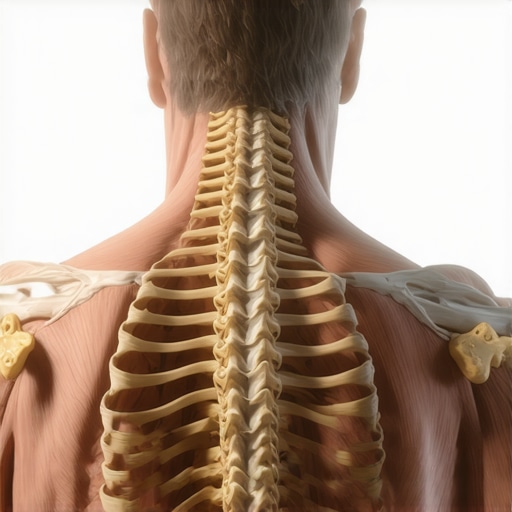
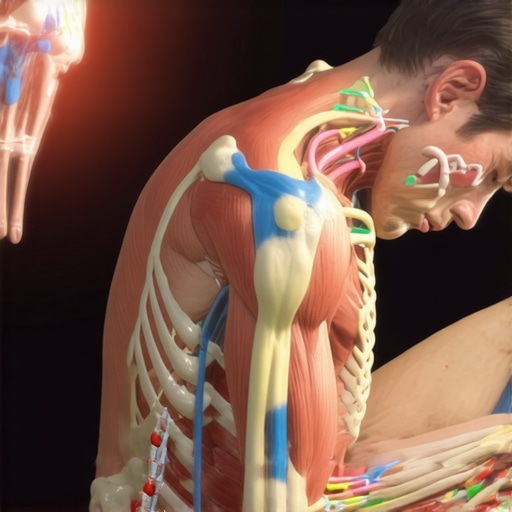
For a long time, I made the classic mistake of thinking my persistent neck tension was a standalone issue. I’d rub my traps and hope for the best. What I didn’t realize back then was that my thoracic spine and rib cage were acting like a frozen block of ice. When your ribs can’t move, your neck and lower back have to pick up the slack, and they aren’t designed for that kind of heavy lifting. This is exactly why we look at your ribcage movement when we talk about total body freedom. Interestingly, research suggests that restricted rib mobility can actually decrease your vital lung capacity by up to 20% because your diaphragm simply lacks the room to do its job. It’s not just about comfort; it’s about how your whole system breathes. Have you ever felt that sharp, ‘stuck’ sensation right under your shoulder blade when you try to take a deep breath?
Is this just another trend that won’t actually fix anything?
I get the skepticism, I really do. I’ve tried every ‘miracle’ stretch on the internet, only to end up more frustrated than when I started. But this isn’t about a complex 20-minute routine; it’s about a specific lateral movement that targets the intercostal muscles—those tiny, stubborn bits of tissue between your ribs. In my early days of trying to fix my own posture, I actually used a foam roller incorrectly on my lower back, which only made my ribs tighter as my body tried to protect my spine. The trick isn’t force; it’s the subtle shift of the rib cage away from the pelvis. By mastering this one move, you can stop the cycle of rounded shoulders and shallow breathing that keeps you feeling exhausted by noon. Let’s dive into how you can start feeling that space open up today.
Stop Pulling Your Muscles and Start Moving Your Bones
To fix that ‘stuck’ feeling, we have to stop thinking of our spine as a single pole and start seeing it as a series of integrated gears. When I first started experimenting with lateral shifts, I was in a small coffee shop, hunched over my laptop. My mid-back felt like it was fused shut. Instead of the usual neck rolls that did nothing, I decided to focus entirely on my lower ribs. I realized that why stretching a tight muscle isnt always the answer is because the bone underneath isn’t positioned correctly to allow the muscle to relax. The moment I shifted my rib cage about an inch to the left, away from my hip, my neck tension evaporated. It wasn’t magic; it was physics. You see, your ribs are like the bellows of an accordion. If one side is permanently compressed, the other side is overstretched, and your spine is forced to compensate by twisting your neck or arching your low back.
How to Perform the Lateral Shift Without Looking Weird
This isn’t about a massive yoga pose; it is a subtle, internal realignment. Stand or sit tall and place your hands on the very bottom of your rib cage. Imagine your pelvis is a steady pedestal that cannot move. Now, try to slide your entire rib cage half an inch to the right without tilting your shoulders. You aren’t leaning; you are sliding. It feels awkward at first because we are so used to moving forward and back, but this lateral glide is what creates the space for your diaphragm to actually expand. If you feel a pinch, you’ve gone too far or you’re tilting. This is the 30-second move to stop mid-day shoulder burn that most people ignore because it looks too simple to work.
Why Breathing Sideways Fixes Everything
Once you have found that small lateral shift, the real work begins with your breath. Most of us breathe ‘up’ into our shoulders, which is a fast track to headaches and trap pain. Instead, while holding that subtle lateral shift, try to send your breath into the hand that is resting on your shifted ribs. You want to feel the intercostal muscles—the ones between the ribs—stretching from the inside out. This creates a natural decompression of the spine. This is a core reason why we look at your ribcage movement for better mobility during a checkup. When these ribs move, the pressure on your discs drops significantly. If you’ve ever wondered why your mid-back feels like it needs to pop, it is usually because these lateral joints are jammed. By shifting and breathing, you are essentially lubricating the joints from the inside.
Master the Art of the Rib Glide
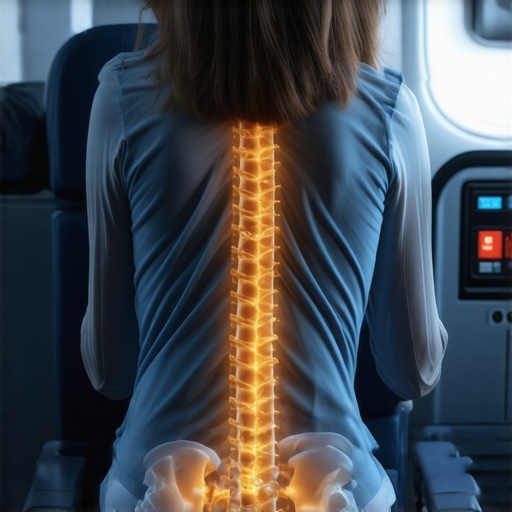
Practice this while driving or sitting at your desk. The goal is to make this shift second nature so your body doesn’t revert to that collapsed, ‘suit of armor’ state. I found that doing this for just three breaths every hour did more for my chronic stiffness than a dozen sessions with a foam roller. It’s about teaching your brain that your ribs are allowed to move independently of your hips. This simple awareness is a gateway to enhance mobility naturally with chiropractic care, as it prepares your nervous system to accept deeper changes. When you stop fighting your anatomy and start working with the way your ribs were designed to glide, the relief is almost instantaneous.
While that lateral rib shift is a game-changer, I see a lot of people take this new awareness and immediately turn it into a new form of rigidity. We have been conditioned to believe that ‘good posture’ is a fixed state—a set of coordinates we need to lock into and hold for eight hours a day. In my experience, this is the biggest lie in the wellness industry. The moment you try to maintain a ‘perfect’ upright position, you stop being mobile and start being a statue. This is exactly why your perfect posture is actually making you stiff. Your body isn’t designed to be stacked like a pile of bricks; it is designed to be a dynamic, oscillating system that thrives on micro-movements.
The Danger of Trying to Sit Too Straight
I used to be the guy who sat at the edge of his chair with a perfectly flat back, thinking I was doing my spine a favor. I was wrong. By forcing that military-style uprightness, I was actually over-recruiting my spinal extensors and creating a constant state of low-level muscle fatigue. When we talk about revitalize your mobility proven strategies for back pain relief, the first step is often unlearning the habit of ‘bracing’ for impact during mundane tasks. Research published in the Journal of Electromyography and Kinesiology has shown that individuals with chronic back pain often exhibit significantly less postural variability than those without pain. In simpler terms: the people who move around ‘badly’ but frequently are often better off than those who sit perfectly still in a ‘good’ position.
Can your core actually be too strong for your own good?
This is a question I get from high-level athletes and yoga enthusiasts alike. The answer is a resounding yes. If you are constantly ‘zipping up’ your abs or sucking in your belly, you are creating a pressure cooker in your midsection. This is why your strong core might actually be too rigid to allow for the very rib expansion we discussed earlier. When the core is always ‘on,’ the diaphragm can’t drop, the ribs can’t expand laterally, and the pressure has nowhere to go but up into your neck or down into your pelvic floor. It’s a sophisticated trap. You think you’re protecting your spine, but you’re actually suffocating its ability to move. This is also why sit up straight is actually bad advice for some people who already struggle with hyper-mobility or compressed spinal segments.
One of the biggest ‘oops’ factors I see is the ‘Bracing Trap.’ People start doing their core exercises—like the ones meant to target the hidden muscle that stabilizes your lower spine—and they carry that tension into their everyday life. They brush their teeth with a braced core; they drive their car with a braced core. This leads to a total loss of ‘gait variability,’ where your body loses the ability to absorb shock through the spine. If you don’t address the foundation, you’re just putting a band-aid on a structural leak. That is why we look at your feet when your neck hurts; if your base isn’t allowing for movement, your upper body will stay locked in a defensive crouch. Have you ever fallen into this trap of trying to sit too straight? Let me know in the comments.
Breaking the ‘bracing trap’ is only the first step; the real challenge is making this newfound fluidity a permanent part of your life. When people ask me how I stayed pain-free after years of chronic stiffness, I always point to ‘Spinal Hygiene.’ This isn’t my own term—it’s a concept championed by Dr. Stuart McGill, a world-renowned expert in spine biomechanics. In his landmark research, McGill demonstrates that it’s the small, repetitive micro-movements of our daily lives, rather than one-off gym sessions, that dictate the long-term integrity of our spinal discs. If you are constantly micro-traumatizing your back by reaching for your shoes with a rounded spine, no amount of stretching will save you. This is why I integrated the 10-second reset for when your shoulder blades start burning into my hourly routine.
The Simple Gear That Stops My Back From Seizing Up
I am a minimalist when it comes to gadgets, but two things changed my life. First, I stopped using ‘ergonomic’ chairs with massive built-in bumps and started using a portable lumbar roll. Most built-in supports are in the wrong place for your unique anatomy. By learning how to use a rolled up towel to fix your cars lumbar support or a dedicated roll, you can place the support exactly where your lumbar spine needs to hinge. Second, I realized that why your screen height is the real cause of your headaches isn’t just about your neck—it’s about the ‘eye-neck’ reflex. If your eyes are looking down, your suboccipital muscles at the base of your skull stay permanently contracted. I now keep my monitor so high that the top third of the screen is at eye level, which naturally encourages my rib cage to stay open and expansive.
How do I maintain these mobility gains over time?
Consistency beats intensity every single time. You don’t need a 60-minute yoga flow; you need a 3-minute morning routine to lubricate your joints. The goal is to ‘grease the groove’ of the movement patterns we’ve discussed. I personally use a combination of the rib glide and the bird dog variation that fixes wobbly core muscles every morning before my first cup of coffee. This signals to my nervous system that it’s safe to move through its full range of motion. Over time, these small check-ins become a form of mobility mastery that protects you when you eventually do something ‘wrong,’ like lifting a heavy grocery bag or sleeping in a weird position.
Wearable Tech is About to Change How We Move
Looking ahead, I believe the future of spinal health isn’t in better chairs, but in biofeedback. We are already seeing the rise of wearable sensors that vibrate when you’ve been static for too long. In the next few years, I predict these tools will move beyond simple ‘posture’ cues and start measuring your rib expansion and lateral shift in real-time. This kind of data will make chiropractic techniques even more effective because we will be able to see exactly when your system starts to compensate. Until then, my best advice is to treat your body like a dynamic instrument rather than a piece of furniture. Try this today: the next time you feel a ‘twinge’ in your neck, don’t rub it. Instead, check your screen height and perform one 30-second lateral rib shift. You’ll be amazed at how quickly the system resets itself.
The Breakthroughs That Only Came When I Stopped Trying to Be Perfect
The journey from a “rusted suit of armor” to fluid movement taught me that tension is often a mask for fear. When I finally stopped obsessing over whether my spine was a straight line, I noticed that the connection between your jaw tension and neck mobility is far stronger than any manual stretch. I realized that if I clenched my teeth during a rib shift, the movement was wasted. Another “lightbulb” moment was discovering that my feet were the anchors of my posture; if I didn’t address how I stood, my ribs would always collapse. I had to learn how to fix your gait for better spinal alignment to truly keep the pressure off my mid-back long-term. Finally, I learned that progress isn’t linear—some days you feel like a gymnast, and some days you feel like a creaky door, and that’s okay as long as you keep moving.
The Non-Negotiables in My Daily Spine Toolbag
I don’t believe in expensive gadgets, but there are a few essentials that saved me from constant relapses. First, ditch the fancy “ergonomic” chairs and master the correct way to use a lumbar roll in your office chair. It’s about placing the support where your spine naturally curves, not where a manufacturer thinks it should. Second, if you work at a computer, the simple wall drill to reverse forward head posture is your best friend. #IMAGE_PLACEHOLDER_E# I do this every time I go to the kitchen for water. Lastly, I keep a physical reminder on my desk to breathe into my side-ribs. These tools aren’t just objects; they are triggers that remind my nervous system to stay in a state of “dynamic readiness” rather than defensive bracing.
Reclaim the Fluidity Your Body Already Knows
You weren’t born with a stiff back or a “heavy” neck. That stiffness was earned through years of repetition, which means it can be unlearned through new, better repetitions. You now have the tools to revitalize your mobility with proven strategies for back pain relief, starting with that simple lateral rib shift. Don’t wait for the perfect time to start; the next time you feel that familiar burn, use the 10-second reset for when your shoulder blades start burning. Your body is incredibly resilient and is just waiting for the right signal to let go of the old armor. Start small, stay consistent, and watch how quickly your world opens up when you finally allow your ribs to breathe. Have you ever noticed that your back gets tighter when you’re stressed or trying to sit “perfectly” straight? Let me know in the comments below!