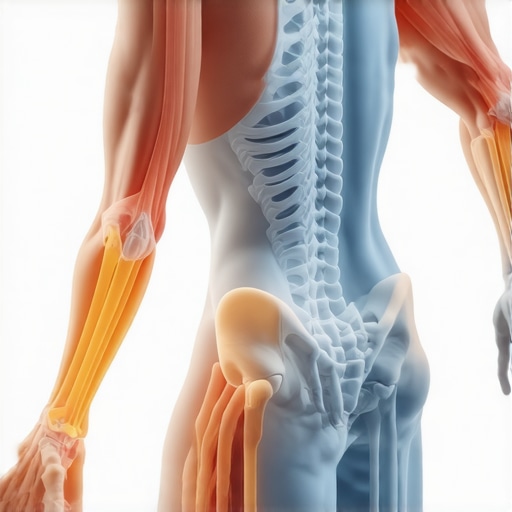
How to stay mobile when you have a desk job and no time for the gym
I remember the exact moment my body decided it had finally had enough of my 9-to-5. I was reaching down to pick up a stray paperclip—one of those tiny, meaningless movements—and my mid-back let out a crack so loud I thought the floorboards had given way. I froze. It wasn’t just the sound; it was the sudden, sharp realization that at thirty-five, I had become as stiff as a Victorian-era radiator. My desk job was paying my mortgage, but it was also slowly fossilizing my joints, and honestly, I was scared.
Stop Letting Your Office Chair Win the War
I spent years thinking the only way to fix this “office body” was to become a gym rat. I would try to force myself into an hour of heavy lifting after a ten-hour day, but I would usually just end up on the couch with a bag of frozen peas on my neck. I made the classic mistake of thinking why sit up straight is actually bad advice for some and tried to hold a rigid, military-style posture all day long. Spoiler alert: it made the discomfort even worse because I was just holding tension in new, more creative ways. Today, I want to show you how to sneak mobility back into your life without ever touching a treadmill. Have you ever felt that mid-day burn between your shoulder blades and just wished you could uncurl your spine like a stretching cat?
Is Doing Less Actually Better for My Spine?
It sounds like a lazy man’s dream, but here is the secret: your joints do not need a marathon; they need grease. Think of your body like a hinge that has not been moved in a decade. If you try to force it open all at once, something breaks. But if you wiggle it back and forth a little bit at a time, it starts to glide. Research from the Mayo Clinic points out that even short bursts of movement every thirty minutes can significantly counteract the negative health impacts of prolonged sitting. I started seeing real progress when I swapped the “go hard or go home” mentality for the 5-minute desk reset for busy professionals.
Small Movements That Save Your Range of Motion
One of my biggest early blunders was believing that why your perfect office chair is still making you slouch was a problem that could be solved by buying more expensive gear. I bought the fancy chairs and the ergonomic keyboards, but I was still stiff as a board. I eventually realized I needed to restore your range-how chiropractic care enhances movement by focusing on the mechanics of my own body rather than the price tag of my furniture. I started using the 10-second stretch for people who type all day every time I finished a long email chain. It felt silly at first, and I worried my coworkers were staring, but that tiny habit was the first step in reclaiming my ability to move without sounding like a rusty gate. We are going to dive into the specific, bite-sized routines that actually work, even if your calendar is double-booked from dawn till dusk. We will focus on how a 30-second reset for tech neck fatigue can change your entire afternoon outlook.
Lubricate Your Internal Hinges One Minute at a Time
Think of your spine like a series of interconnected hinges. If you leave a garden gate shut for five years, you cannot just kick it open and expect it to swing smooth; you would likely snap the wood. Your spine is exactly the same. You need to boost mobility and ease pain with chiropractic techniques unveiled through small, consistent wiggles rather than one aggressive yoga class a month. I used to think I could fix my posture by pulling my shoulders back until they hurt, but that is just fighting fire with fire. Instead, I learned that I needed to restore your back mobility with proven chiropractic strategies that focus on frequent, low-intensity adjustments. For example, during a particularly grueling budget meeting last quarter, I felt that familiar tightness creeping up my neck. Instead of waiting for the break, I performed a subtle chin tuck—the kind of 30-second reset for tech neck fatigue that no one even notices. My boss thought I was just pondering the spreadsheet, but I was actually saving myself from a three-day headache. 
Stop Treating Your Neck Like an Island
Most people make the mistake of looking only where it hurts. If your neck is screaming, you probably reach for a heating pad for your shoulders. But your spine is more like a Jenga tower; if the bottom block is crooked, the top one is going to tilt. This is exactly why we look at your pelvis when your neck hurts. When I finally visited a professional, I was shocked to find out my neck pain was actually coming from my tight hips and an uneven base. To fix this, you have to enhance mobility naturally with chiropractic care by addressing the foundation first. Think of the fascia—the connective tissue around your muscles—like a spiderweb. When you stay still for hours, that web gets sticky and thick. Movement is the heat that melts the glue.
The Power of the Micro-Break
You do not need a gym membership to stay mobile; you need a timer. Every 45 minutes, perform the 10-second posture check you can do anywhere. I started doing this by setting a silent vibrate on my watch. At first, it felt intrusive, but within a week, my body started craving the movement. If you find yourself slouching, do not just sit up straight; instead, use the 5-minute desk reset for busy professionals to reset your neural pathways. It is about teaching your brain that stillness does not mean frozen. If you have been typing for hours, take a second to stretch your forearms to prevent elbow and neck strain. This tiny action stops the chain reaction of tension before it even reaches your shoulder blades. You have to be proactive because by the time you feel the burn, the fossilization process is already well underway.One of the biggest lies we are told in the wellness world is that if something feels tight, you simply need to stretch it harder. But here is the nuance most people miss: tightness is often a protective mechanism, not a lack of flexibility. If your brain senses instability in your spine, it will ‘lock’ the surrounding muscles to prevent what it perceives as a catastrophic injury. In these cases, why stretching a tight muscle isn’t always the answer becomes clear—you are essentially trying to loosen a safety bolt on a structure that already feels wobbly. Instead of forcing length, you often need to restore your range by creating stability in the underlying joints first. I see this all the time with people who have ‘tight’ hamstrings. They stretch every morning, but the tightness never goes away. That is because the tension is actually a secondary symptom of a pelvic tilt. This is a huge reason why we look at your pelvis when your neck hurts. Your body is a kinetic chain; you cannot fix the top link if the bottom one is pulling the entire system out of alignment.
Why Does a Strong Core Sometimes Fail to Protect Your Back?
You would think having ‘abs of steel’ would be the ultimate shield against injury. However, research published in the Journal of Biomechanics suggests that an overly rigid core can actually increase the load on your spinal discs during simple, everyday movements. If your core is so stiff that it cannot breathe or adapt to micro-movements, it stops being a shock absorber and starts acting like a crowbar against your vertebrae. I have found that why your strong core might actually be too rigid is often the missing piece for athletes who still suffer from chronic aches despite their fitness levels. You need ‘reflexive’ stability—the ability for muscles to turn on and off at the right time—not just brute, constant tension. Another common ‘oops’ factor is the misuse of modern recovery tools. We have all seen people in the gym aggressively rolling their lower back on a piece of hard plastic, thinking they are helping. But please, stop rolling your lower back on a hard foam roller. Your lumbar spine lacks the protection of the ribcage; when you press into it with that much force, you are likely just irritating the facet joints and spinal discs rather than releasing muscle. It is much more effective to use a foam roller on your upper back where the thoracic structure is built to handle that type of pressure. 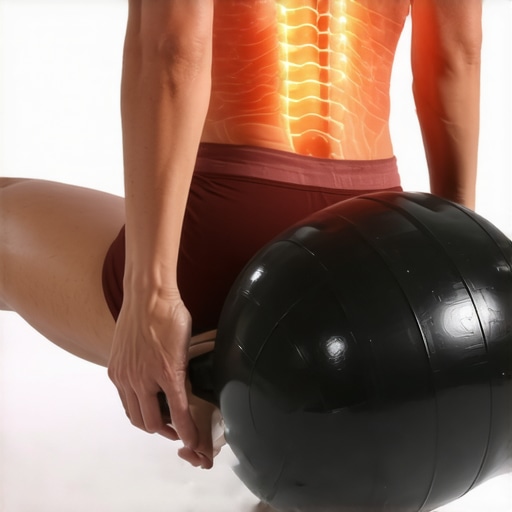 Have you ever fallen into this trap of over-stretching or over-training a specific area only to have it feel worse? Let me know in the comments. We need to shift the focus from ‘fixing’ isolated parts to effective neck pain management that treats the system as a whole. When you understand that why your neck clicks might be related to your breathing patterns or even your jaw tension, you stop chasing symptoms and start finding actual relief. It is about working with your nervous system to boost mobility and ease pain without the constant struggle of fighting against your own body’s natural defense mechanisms.After surviving the ‘everything hurts’ phase, I entered the ‘buy every gadget on Amazon’ phase. Most of it was junk, but a few items changed the game for me. I stopped relying on those massive, puffy chairs and started using a simple, firm lumbar roll. If you do this, make sure you learn how to use a lumbar roll without making your back stiffer, because positioning it too high actually forces your spine into a stressful arch. I also became obsessed with my screen height. It sounds like a minor detail, but performing the 5-second check to see if your monitor is too low saved me more neck grief than a year’s worth of Ibuprofen. As Dr. Stuart McGill, a leading expert in spine biomechanics and author of Back Mechanic, points out, ‘spinal hygiene’—the way you move throughout the day—is just as important as the exercises you do at the gym.
What I Actually Keep in My Desk Drawer
I don’t use fancy electronic massagers anymore. Instead, I keep a simple lacrosse ball for trigger point work and a dedicated space for my morning flow. To truly revitalize your mobility, you need tools that encourage movement, not tools that do the work for you. For example, I swapped my standard mouse for a vertical one to stop the rotational strain on my elbow and shoulder. These are the small, authoritative shifts that keep you from needing an emergency appointment every month. 
How do I maintain my spinal health for the next decade?
Consistency isn’t about being perfect; it’s about having a recovery plan for when life gets busy. For me, that means a non-negotiable morning routine. I don’t do an hour of yoga; I do the 3-minute morning routine to lubricate your joints while my coffee brews. If I feel a ‘wobble’ in my stability, I immediately go back to basics with the bird dog variation that fixes wobbly core muscles. This isn’t just about ‘working out’—it’s about mobility mastery expert tips for back pain prevention and recovery so I can keep playing golf and picking up my kids without fear.
Smart Furniture is the Next Big Thing
I predict that in the next five years, we will see a massive shift toward ‘active’ furniture—desks and chairs that use haptic feedback to nudge you when your spinal shear reaches a certain threshold. We are moving away from passive support and toward tech that trains our nervous systems in real-time. Until those chairs become affordable, you have to be your own sensor. Go check your monitor height right now—if the top third of the screen isn’t at eye level, your neck is paying the price every single minute. Try adjusting it today and see how much lighter your head feels by 5:00 PM.
The Hard Truths About Spinal Pain I Learned the Hard Way
The most important realization I ever had was that pain is often a latecomer to the party. By the time you feel that sharp twinge, the underlying mechanical issues have likely been brewing for months. I spent far too long chasing the ghost of ‘perfect posture’ only to find out that why your perfect posture is actually making you stiff was the very thing holding me back. Your body craves variety, not a frozen, military-style alignment. I also had to learn to differentiate between a healthy ‘workout burn’ and a warning shot from my nerves. Learning the difference between muscle soreness and spinal pain saved me from pushing through injuries that would have sidelined me for weeks. Finally, I stopped looking at my body as a collection of separate parts. It clicked for me when I realized why we adjust the pelvis to fix neck tension—it is all one system, and you cannot tune one string without checking the others.
#IMAGE_PLACEHOLDER_E#
The Practical Tools That Actually Live Near My Desk
I’ve cleared out the expensive massage gadgets that collected dust and replaced them with a few intentional items. First is a simple, firm lumbar support. Using the correct way to use a lumbar roll in your office chair ensures that my lower back maintains its natural curve without me having to think about it. I also keep a kitchen timer nearby. It’s not for productivity; it’s a ‘motion alarm’ to ensure I don’t get stuck in one position for more than forty minutes. If you use a stand-up setup, make sure you know how to use a standing desk without hurting your hips, as standing still can be just as taxing as sitting if your mechanics are off. These tools aren’t just accessories; they are my daily armor against the ‘office fossilization’ I feared years ago.
Your Spine Is Resilient Enough to Change Right Now
It is easy to feel like your body is failing you when you’re stuck in a cycle of stiffness and discomfort, but your nervous system is incredibly adaptable. You are never too old or too ‘stuck’ to start moving toward better health. Seeing how back pain recovery-how chiropractic care transforms lives has shown me that small, consistent changes lead to massive long-term results. You don’t need a total life overhaul—just a commitment to those tiny wiggles and 30-second resets we talked about. Reclaiming your mobility is a journey of listening to your body rather than shouting at it. Have you ever tried to stretch a ‘tight’ muscle only to have it feel even worse twenty minutes later? Let me know in the comments below!