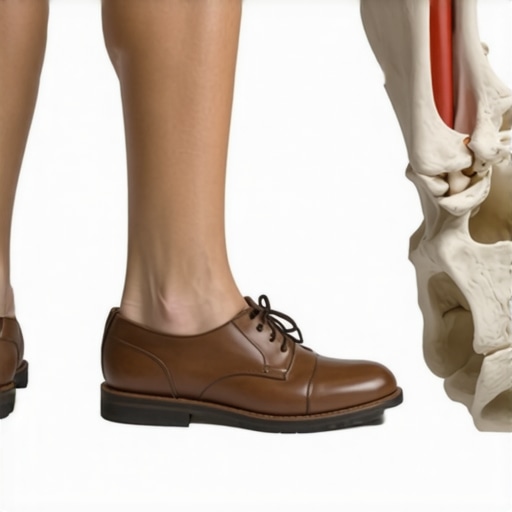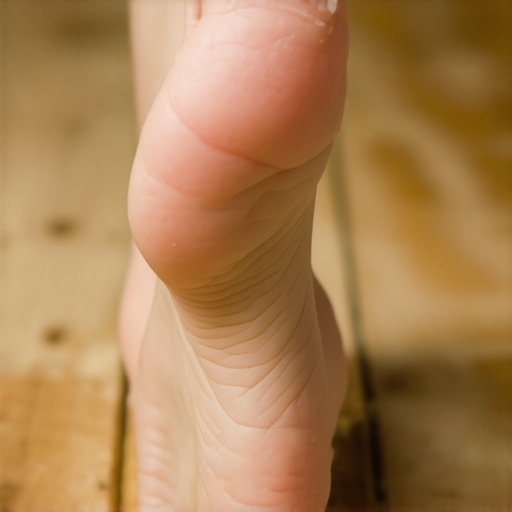
The secret to better balance starts with your big toe
I was standing in the middle of a crowded grocery store, reaching for a jar of fancy marinara on the top shelf, when it happened. I didn’t just wobble; I performed a full-tilt lean that nearly sent me into the display of artisanal crackers. It was humiliating. I’m an active person, I try to stay fit, but there I was, losing a fight with gravity on a perfectly level linoleum floor. I used to think balance was all about core strength or something happening deep inside my ears. I spent months doing endless planks and dead bugs, yet I still felt like a stiff breeze could knock me over. It wasn’t until I looked down that I realized my mistake. My big toes were practically hovering off the ground, completely disengaged from the world around them.
Your Core Is Not the Only Thing Keeping You Upright
Most of us are taught that a strong back and tight abs are the holy grail of stability. While that is partly true, you cannot build a sturdy house on a foundation of marshmallows. Early in my journey to fix my posture, I made the classic mistake of over-relying on stiff, heavily cushioned shoes that basically turned my feet into blocks of wood. I thought I was helping myself, but I was actually letting my foot muscles atrophy. When we test your balance during a spinal checkup, we are not just looking at your back; we are looking at how you connect with the earth. Your big toe is meant to be your anchor. According to research published in the Journal of Foot and Ankle Research, the hallux (your big toe) is responsible for generating a significant portion of the force needed for stability and propulsion. If that toe is not engaged, your whole kinetic chain is off.
Does a single toe really make that much difference?
You might be skeptical. It sounds almost too simple, right? How can one tiny digit dictate whether you trip over a rug or stay upright? I felt the same way until I started practicing how to improve your balance by strengthening your toes. The truth is, your brain gets a massive amount of feedback from your feet. When your big toe is weak or tucked away in a narrow shoe, that feedback loop gets noisy and distorted. This does not just make you clumsy; it creates a ripple effect throughout your entire body. I discovered a surprising link between ankle mobility and lower back stability that explained why my back always felt tight after a simple walk. Today, I want to show you how to wake up those feet and reclaim your stability from the ground up. Have you ever noticed yourself losing your balance on easy terrain, or do your toes feel like they are just along for the ride inside your shoes?
Why Your Feet Have Gone into Hibernation
Our modern world is an enemy to foot function. We walk on flat, hard surfaces and shove our feet into tapered toe boxes that crush our digits together. This environment has effectively put our big toes into a permanent state of hibernation. When I finally started focusing on toe splay and tripod foot engagement, my chronic wobbliness disappeared almost overnight. It was not magic; it was basic mechanics that I had been ignoring for years.
Turn Your Foot into a Stable Tripod
To understand why you are wobbling, think of your foot not as a flat slab, but as a camera tripod. A tripod is stable because it has three distinct points of contact. In your foot, those points are the center of your heel, the base of your pinky toe, and the base of your big toe. Most of us have ‘fallen’ tripods; our arches collapse and our big toes lift off the ground, leaving us to balance on a shaky two-legged stool. I remember the first time I consciously tried to find my tripod while standing in my kitchen. I felt like a newborn giraffe. Every time I tried to press my big toe down, my arch would cramp, and my pinky toe would lift. It was messy, and I felt ridiculous, but it was the first time I actually felt connected to the floor. 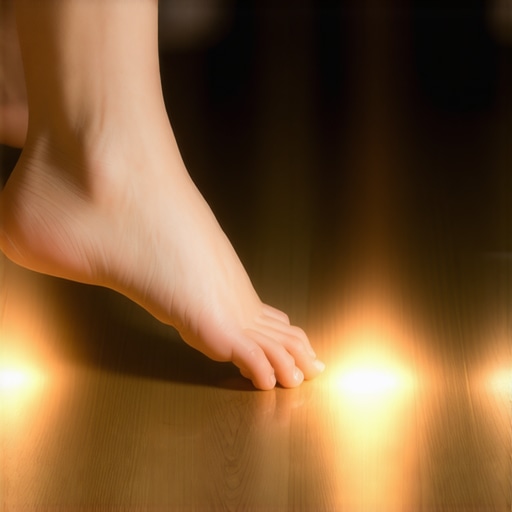
Give Your Toes Room to Breathe
You cannot find stability if your toes are glued together like a single flipper. Start by kicking off your shoes. Try to spread your toes apart until you can see daylight between them. If they won’t move, use your fingers to gently pull them apart. This ‘toe splay’ increases the surface area of your foundation. When I started doing this, I realized that why walking in flat shoes might be worsening your alignment was because my toes had no room to move. By widening your base, you immediately lower the demand on your ankles to micro-adjust every second.
Lock into the Earth with the Big Toe Anchor
Once you have splayed your toes, the ‘active’ part begins. You want to press the pad of your big toe into the floor as if you are trying to leave a deep footprint in wet sand. Do not curl your toes; keep them long. This engagement pulls up the arch of your foot and creates a rigid lever for your body to move against. When you improve your balance by strengthening your toes, you are essentially turning on a GPS for your brain. It finally knows exactly where the ground is.
Fix Your Ankle to Save Your Back
If your foot is the anchor, your ankle is the hinge. If that hinge is rusty and stiff, the force of every step travels straight up to your knees and lower back. I spent years treating my back pain with heat pads, never realizing that the stiffness was coming from my lack of ankle range. There is a direct link between ankle mobility and lower back stability that most people ignore. While you work on your feet, you must also work on ‘pumping’ the ankle joint.
The Simple Wall Hinge for Better Movement
Stand a few inches away from a wall and try to touch your knee to the wall without your heel lifting off the ground. If your heel pops up instantly, your ‘hinge’ is locked. I used to do this every morning while the coffee was brewing. Initially, I couldn’t even get my knee halfway to the wall without a sharp pull in my calf. As that range opened up, the constant ‘pull’ on my lower back started to fade. Learning to restore your range how chiropractic care enhances movement is often about these small, mechanical wins. When your ankle moves freely, your glutes can finally do their job of strengthening your glutes to take the pressure off your spine, rather than your back muscles doing all the heavy lifting.Let’s dig deeper into a mistake I see almost every day: the obsession with being ‘flexible.’ We’ve been conditioned to believe that if a muscle feels tight, we should stretch it until it gives up. But here is the contrarian truth: that tightness is often your brain’s way of protecting you. If your core is weak or your joints are unstable, your nervous system will ‘brake’ the system by tightening the surrounding muscles. When you force a stretch on a muscle that is already fighting to keep you stable, you aren’t fixing the problem; you’re ripping away your only remaining support beam. I’ve seen so many people try to fix a sore back by reaching for their toes, but why stretching your hamstrings won’t fix your back pain is usually because those hamstrings are tight to compensate for a pelvic tilt or a weak lumbar spine.
Stop Stretching the Tension and Start Building Stability
If you feel like you have to stretch the same spot every single morning just to function, that’s a massive red flag. You aren’t dealing with a ‘short’ muscle; you’re dealing with protective tension. This is a classic ‘oops’ factor for fitness enthusiasts: stretching a muscle that is already over-lengthened (like the muscles between your shoulder blades when you slouch) just makes the irritation worse. Instead of mindless pulling, you should be looking at how to restore your back mobility with proven chiropractic strategies that focus on joint function rather than just muscle length. A study published in the Journal of Manipulative and Physiological Therapeutics found that spinal manipulation can actually improve muscle inhibition, effectively ‘turning on’ the muscles that are supposed to be working so the ‘tight’ ones can finally relax.
Can Your Eyes Really Pull Your Spine Out of Alignment?
This is where the nuance gets really interesting. Most people stop at the feet or the hips, but your visual system is the ultimate boss of your posture. If your eyes aren’t tracking correctly, your neck will tilt to compensate, which eventually forces your hips to shift to keep you from falling over. It’s a top-down domino effect. I was shocked when I learned how your eyes are secretly dictating your posture. It explains why someone can have chronic neck issues that never resolve with traditional massage; you have to look at the whole system. 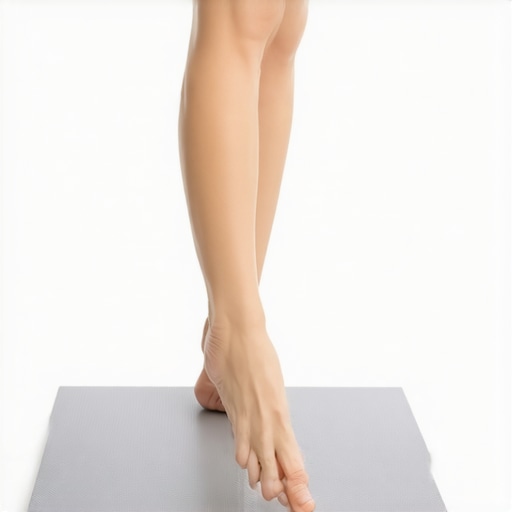 Another trap to avoid is the ‘statue’ approach to posture. We are told to sit up straight, shoulders back, chin tucked. But why your perfect posture is actually making you stiff is because your body was designed for movement, not for holding a rigid pose. ‘Good’ posture is simply your next posture. If you stay in one position too long—even a ‘perfect’ one—you’re cutting off blood flow and creating static load on your discs. For anyone struggling with the daily grind, following an effective neck pain management a step-by-step guide should involve frequent micro-movements, not rigid sitting. Have you ever fallen into this trap of trying to hold yourself perfectly still only to end up more sore? Let me know in the comments.
Why I Swapped Fancy Orthotics for a Humble Lacrosse Ball
I’ve tried the expensive gadgets—the vibration plates, the $500 massage guns, and those posture bras that just make you feel like you are strapped into a harness. None of them stuck. What actually changed my life was a $5 lacrosse ball and a pair of silicone toe spacers. I keep the ball under my desk, and whenever I feel that familiar burning between my shoulder blades, I lean into it against the wall. A tennis ball is too squishy; the lacrosse ball has the density required to actually shear the fascia. Learning how to use a tennis ball to fix that spot under your shoulder blade is a great starting point, but the lacrosse ball is the ‘pro’ version for those of us who spend too much time at a keyboard. I also started wearing toe spacers for 30 minutes every evening while I’m winding down. It feels odd at first, but it forces your feet back into that tripod shape we talked about earlier. When you combine these small daily habits with professional care to restore your back mobility with proven chiropractic strategies, you stop just managing pain and start building a body that can actually handle the stress of modern life.
How can you keep your spine happy for the next decade?
Consistency beats intensity every single time. You don’t need a 90-minute yoga session once a week; you need three minutes of movement every hour. I’ve found that mobility mastery and expert tips for back pain prevention often come down to ‘greasing the groove.’ This is a concept championed by movement expert Dr. Kelly Starrett in his work on human mechanics, emphasizing that short, frequent ‘movement snacks’ are more effective for long-term tissue health than one long workout followed by eight hours of static sitting. I personally use the 30-second reset for tech neck fatigue several times a day to keep my upper spine from locking up.
The Future of Posture is Hiding in Your Smartwatch
Looking ahead, I suspect we are moving toward a world dominated by ‘smart fabrics’ and advanced wearable biofeedback. We are already seeing the first wave of this with apps that track your head tilt. I predict that within five years, your smartwatch won’t just tell you to stand up; it will use haptic feedback to tell you exactly which muscle to engage. We won’t have to think about posture anymore because our tech will remind us to adjust before the pain even starts. Until then, you have to be your own sensor. You have to learn how to stay mobile when you have a desk job by utilizing the tools you have right now. If you want to feel an immediate shift, try this: find a wall, place a lacrosse ball in the ‘meat’ of the muscle between your spine and your shoulder blade, and lean in for 60 seconds. It’s a game-changer for unlocking neck pain relief.
The Lessons That Finally Made My Movement Click
Reflecting on my own journey, I realized that I was trying to solve a 3D problem with a 1D solution. I wanted a single stretch to fix a lifetime of poor mechanics. Here are the lightbulb moments that changed everything:
- The ‘Tightness’ Trap: I stopped viewing stiffness as a muscle length issue and started seeing it as a stability signal. If your body does not feel safe, it will lock you down with protective tension.
- Feet First, Back Second: You cannot fix your lumbar spine if your big toe is not anchoring you to the floor. Your foundation dictates everything above it.
- Consistency Beats Duration: I found more success with two-minute ‘grease the groove’ sessions throughout the day than I ever did with hour-long gym marathons.
By shifting my mindset, I realized that back pain recovery how chiropractic care transforms lives starts with respect for the entire kinetic chain, not just the spot that hurts.
The Tools I Use When My Joints Feel Stuck
I do not believe in expensive gimmicks, but a few low-cost tools have become non-negotiable for my daily routine. If you are serious about mobility, these are the three things I personally trust:
- The Lacrosse Ball: While many start with how to use a tennis ball to fix that spot under your shoulder blade, the firmer density of a lacrosse ball is what finally reached my deep fascia.
- Wide Toe-Box Shoes: Giving my toes room to splay naturally was the single biggest change for my overall balance and posture.
- Silicone Toe Spacers: I wear these for 20 minutes a day while watching TV to undo the damage of years spent in narrow dress shoes.
#IMAGE_PLACEHOLDER_E#
When you combine these home-care habits with mobility mastery and expert tips for back pain prevention, you create an environment where your body can actually thrive instead of just surviving.
Build a Body That Does Not Let You Down
The path to feeling stable and strong is not about reaching perfection; it is about persistence. You do not have to be an elite athlete to deserve a body that moves without fear or hesitation. Start by noticing your big toe today. Press it into the ground, find your tripod, and feel the immediate difference in your stability. You have the tools, the knowledge, and now the plan to reclaim your foundation from the ground up. Have you ever noticed your balance improving after focusing on your feet, or do you still feel a bit wobbly on uneven ground? Let me know in the comments below!