Why we test your balance during a spinal checkup
I stood there, barefoot on the clinic floor, trying to balance on my left leg while my chiropractor watched. I felt ridiculous. My ankles felt like they were made of cooked spaghetti, and I was there because my lower back felt like it was being squeezed in a vise, yet here I was, wobbling like a toddler. “I’m here for my back, not for a yoga audition,” I thought, feeling the frustration of a body that seemed to be failing me way too early. But that moment changed everything I understood about my mobility. I realized that my spine wasn’t just a stack of bones; it was a complex GPS system that had lost its signal.
Your Spine is More Than Just a Support Beam
For years, I made the classic mistake of thinking that if my back hurt, the problem *must* be right where the pain was. I spent a fortune on heat pads and “miracle” rubs, but I ignored the subtle signs that my internal wiring was frayed. When we test your balance, we aren’t just checking your fitness level. We are monitoring the communication between your brain and your joints. If your brain doesn’t know exactly where your feet are in space, it will automatically tighten your back muscles as a survival mechanism to keep you from falling. This is why learning how to fix your gait for better spinal alignment is often more effective than just treating a single sore spot. Today, I’m going to show you why that wobbly feeling is actually the key to getting rid of your chronic stiffness once and for all.
Does balance really matter if I just want the pain to stop?
You might be thinking this sounds like a bit of a stretch. I get it. When you’re in pain, you want relief, not a coordination drill. But according to research from Harvard Health, proprioception—your body’s ability to sense movement and location—is fundamental to preventing injury and maintaining spinal integrity. If your balance is off, your spine is constantly working overtime just to keep you upright. I used to ignore this until a simple trip on a curb laid me out for a week because my stabilizers simply weren’t firing. By strengthening your toes and improving that mind-body connection, you take the “emergency” load off your vertebrae. Have you ever noticed yourself losing your footing more often lately, or perhaps feeling a bit unsteady when you first get out of bed? I’ve seen the link between ankle mobility and lower back stability play out in my own life and with dozens of others. It’s all connected in a kinetic chain. Sometimes, the reason your neck is stiff is actually hidden in your foundation, which is why we look at your feet when your neck hurts. We aren’t just looking for “straightness”; we’re looking for a system that knows how to move through the world without screaming in pain.
Reboot Your System from the Ground Up
I remember the first time I tried a single-leg balance while brushing my teeth. I thought I was in decent shape, but I nearly face-planted into the bathroom mirror. My brain was clearly struggling to communicate with my feet. It was a wake-up call that my physical foundation was crumbling. To fix this, you have to start with the basics of how to improve your balance by strengthening your toes. Think of your toes like the anchors of a tent; if they are weak or curled up, the entire structure—your spine—becomes unstable and prone to collapse. By actively gripping the floor and engaging the arch of your foot, you send a safety signal to your nervous system, which allows your back muscles to finally let go of that chronic, protective tension. 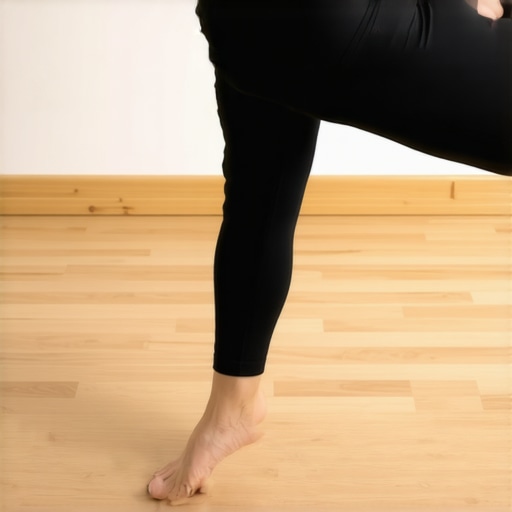
Wake Up Your Feet to Calm Your Spine
Most people treat their feet like blocks of wood stuck inside shoes, but they are actually sophisticated sensory organs. In my practice, I have seen time and again the link between ankle mobility and lower back stability. If your ankles are stiff, your lower back is forced to move excessively to compensate for every step you take. This constant overworking is often why stretching a tight muscle isnt always the answer. If that tightness is actually a brake your brain has pulled to keep you from falling over, stretching it will only make the brain panic more. Instead, focus on slow, controlled ankle circles and toe spreads to restore that vital communication link between your foundation and your brain.
The Hinge That Saves Your Lower Back
Think of your hips as the heavy-duty hinges on a door. If those hinges are rusted shut, you are going to end up prying the door frame—your spine—just to get it open. I learned this the hard way when I threw my back out simply reaching for a laundry basket. I was bending from my waist rather than my hips. Now, I use the hip hinge trick for pain-free gardening and every other daily activity. You shift your weight back into your heels and push your glutes toward the wall behind you, keeping your back flat like a tabletop. By strengthening your glutes to take the pressure off your spine, you ensure that the biggest muscles in your body are doing the heavy lifting, not the small, sensitive discs in your lumbar region.
Why Your Breathing Is Stressing Your Vertebrae
It sounds strange, but if you are a chest breather, you are likely keeping your spine in a constant state of high alert. When you take shallow breaths, your neck and upper back muscles have to pull upward to help you get air, creating a cycle of chronic tension. You must learn how to breathe through your diaphragm to reduce lower back pressure. Imagine your torso as a canister; when you breathe in, that canister should expand 360 degrees, providing internal air pressure that supports your spine from the inside out. This internal support is often the missing piece when why we adjust the pelvis to fix neck tension. When the base is stable and the breathing is deep, the neck no longer has to act as a secondary stabilizer, allowing your whole system to move with effortless ease.But even with deep breaths, I see one massive mistake that ruins everything: the obsession with rigid posture. For years, we’ve been told to ‘sit up straight’ like we have a board strapped to our backs, but this is exactly why sit up straight is actually bad advice for some. When you force a ‘perfect’ upright position, you’re creating a static load on your paraspinal muscles. They aren’t meant to hold you like a statue for eight hours. This constant tension is often why your perfect posture is actually making you stiff. In my experience, the healthiest posture is your *next* posture. Movement is the only way to keep your discs hydrated and your nerves happy.
Don’t Turn Your Core into a Concrete Block
Another ‘advanced’ trap involves the way we think about stability. You’ve likely heard that a strong core is the answer to everything, but why your strong core might actually be too rigid is a nuance that can actually keep you in pain. If you are constantly ‘bracing’ your abs during daily tasks, you’re essentially splinting your spine. This prevents the natural micro-movements needed for fluid motion and is frequently why your core routine is failing your spine. It’s like driving a car with the parking brake partially engaged; you might be moving, but you’re burning out the system. 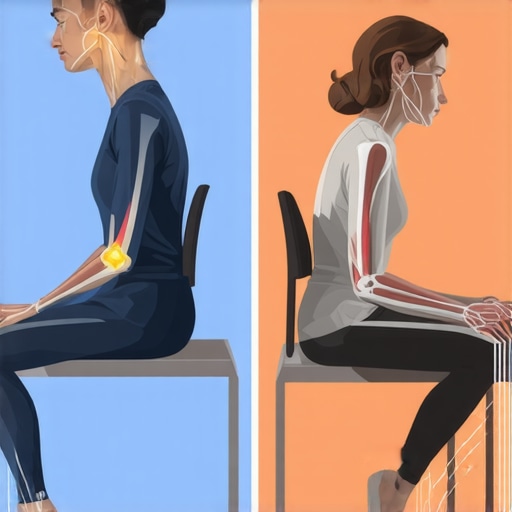
Why does my mid-back feel like it constantly needs to pop?
I hear this question daily from people who have reached a plateau in their recovery. That nagging urge to ‘crack’ your own back is usually a sign of ‘segmental instability.’ When you twist to hear that ‘pop,’ you are usually just moving the joints that are already loose—the hypermobile ones. You aren’t actually hitting the ‘stuck’ segments. According to the Journal of Manipulative and Physiological Therapeutics, specific, targeted adjustments are far more effective than general self-cracking, which can actually lead to long-term ligament laxity. This is exactly the truth about cracking your own back at home: you’re treating the symptom, not the source. Often, the real restriction isn’t even in the spine itself, but in the surrounding cage, which is why we look at your ribcage movement for better mobility. If your ribs can’t expand, your mid-back has no choice but to lock up. Have you ever fallen into this trap of trying to force your posture or over-brace your core? Let me know in the comments.It’s one thing to get out of pain; it’s another to stay out of it for good. I used to think I needed a $1,200 chair to save my lumbar, but I quickly realized that tools are only as good as the person using them. Personally, I swear by a simple lacrosse ball for trigger point release. It’s dense enough to actually change the tissue, unlike those soft foam rollers that just tickle the surface. According to the Journal of Bodywork and Movement Therapies, targeted myofascial release using small, dense tools can significantly reduce the sensitivity of mechanoreceptors in the fascia. This is why I always tell people to learn how to use a tennis ball to release upper back tension before they drop a paycheck on fancy tech. If you’re at a desk all day, you don’t just need a better seat; you need the 5-minute desk reset for busy professionals to keep the blood flowing and prevent those muscles from freezing in place.
Stop Buying Expensive Chairs and Start Using a Tennis Ball
We also need to talk about your visual field. I realized my neck tension wasn’t just physical; it was ocular. If your monitor is too low, your neck extensors are under a constant, grueling load just to keep your head level. This is why your screen height is the real cause of your headaches. I now use a simple riser to keep the top third of my screen at eye level. It sounds simple, but it’s more effective than any neck gadget on the market. For those of you working from home, I highly recommend running through the 4-point check for a healthier home office setup at least once a month. Your environment dictates your posture far more than your willpower ever will. 
How do I keep my spine healthy for the long haul?
Maintenance isn’t a weekend project; it’s a daily hygiene habit. Dr. Stuart McGill, a world-renowned expert in spine biomechanics, often talks about ‘spine hygiene’—the idea that how you brush your teeth or put on your socks matters just as much as your workout. If you are constantly micro-traumatizing your discs by slouching while you tie your shoes, no amount of chiropractic adjustments will fully stick. You have to learn the proper way to get out of bed to protect your discs and integrate it into your subconscious movements. I’ve found that mastering back neck pain relief tips from the pros requires a shift from passive treatment to active ownership of your daily mechanics.
The Future of Movement and the Variable Desk Revolution
I predict that in the next few years, we’ll move away from static standing desks and toward AI-driven variable environments. We are already seeing the rise of wearable sensors that vibrate when your spinal alignment shifts outside of a healthy range. But until that tech is perfected, you need to be your own feedback loop. One advanced method I use to scale my own mobility is the ‘isometric ramp.’ Instead of just holding a plank, I actively try to pull my elbows toward my toes without moving. This creates a massive amount of tension that teaches the nervous system to stay stable under pressure. If you want to stop the cycle of fix and fail, you have to try the isometric hold that builds a bulletproof core. It’s the single most effective way to turn a wobbly spine into a resilient one. Don’t wait for the pain to return before you start the 3-minute morning routine to lubricate your joints. If your shoulder blades are already starting to throb, try the 10-second reset for when your shoulder blades start burning and see how much lighter your posture feels immediately. My challenge to you: find a tennis ball, find a wall, and spend 90 seconds on that one spot that’s been bothering you all week.
What Experts Often Skip When Talking About Your Spine
I’ve spent years observing how people approach recovery, and the biggest “lightbulb moment” is realizing that pain is rarely the actual problem—it is a messenger. If you only treat the spot that hurts, you are just silencing the alarm while the fire still burns. One of the hardest lessons I learned is that chasing flexibility can backfire; for instance, understanding why stretching your hamstrings wont fix your back pain changed how I approached my morning routine entirely. It turned out my hamstrings were tight because my pelvis was unstable, not because the muscles were short.
My Personal Toolkit for Staying Pain-Free
Consistency beats intensity every time. To keep my system running smoothly, I rely on a few specific resources and tools that have proven their worth over decades of clinical practice and personal trial. #IMAGE_PLACEHOLDER_E#
- The Lacrosse Ball: Far superior to a foam roller for pinpointing the specific tissues that lock up your mid-back.
- Daily Mobility Checklists: I frequently revisit the principles of mobility mastery and back pain prevention to ensure I’m not sliding back into old, lazy habits.
- Professional Insights: When things feel “stuck” beyond what I can do at home, I look for expert methods for neck and back discomfort to reset the system.
Your Spine Deserves More Than Just ‘Getting By’
The goal isn’t just to be “pain-free” for a Tuesday afternoon; it’s to build a body that can handle the demands of your life without hesitation. Whether you are lifting a grandchild or sitting through a cross-country flight, your foundations matter. By integrating these small shifts into your lifestyle, you are securing neck pain relief and chiropractic-supported health for the years to come. Don’t be afraid to start small—even a 90-second wall stretch is a victory for your nervous system. What is the one daily habit that has made the biggest difference in your mobility? Let me know in the comments below!