Why your neck feels stiff after using the treadmill
I was three miles into my morning run, the rhythm of my sneakers hitting the belt feeling like pure progress, when it happened. I didn’t trip. I didn’t pull a muscle in my leg. But the next morning, I couldn’t even turn my head to check my blind spot while driving. It felt like someone had replaced my neck muscles with rusted rebar. I’d spent forty minutes “getting healthy” on the treadmill, only to end up more broken than when I started. It was a wake-up call that my cardio routine was secretly sabotaging my posture. [image_placeholder]
Stop Blaming the Cardio and Start Looking at Your Form
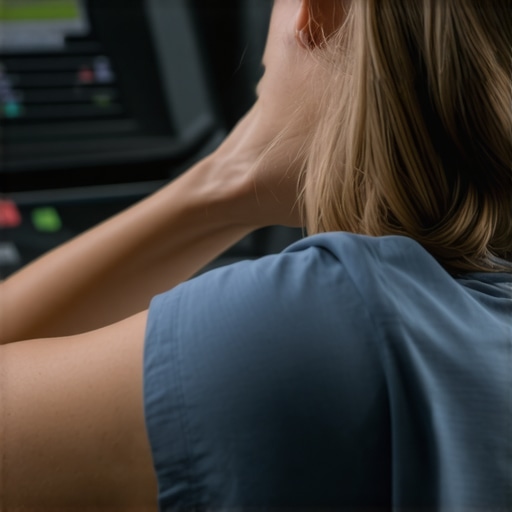
I spent months thinking the treadmill was the culprit. I even considered giving up running altogether because I was tired of the constant ache. But through a lot of trial and error (and a few blunt conversations with a specialist), I realized the problem wasn’t the exercise itself; it was the subtle, destructive habits I was bringing to the belt. I was making the classic mistake of staring down at the treadmill console or, worse, my phone propped up on the display. This creates a massive amount of tension in the upper traps and neck. If you’ve ever felt that mid-back feels like it needs to pop after a run, you know exactly the kind of strain I’m talking about.
Does the treadmill actually ruin your spine?
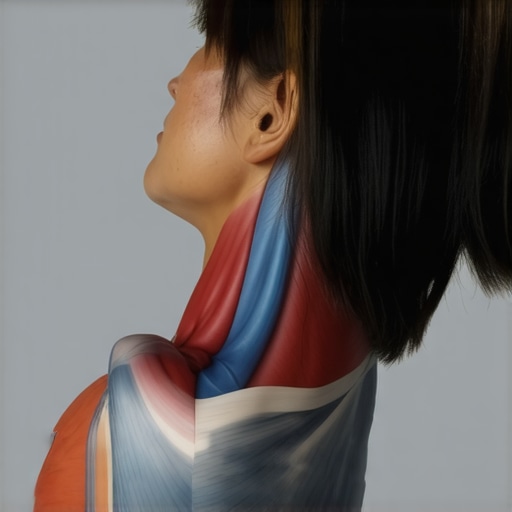
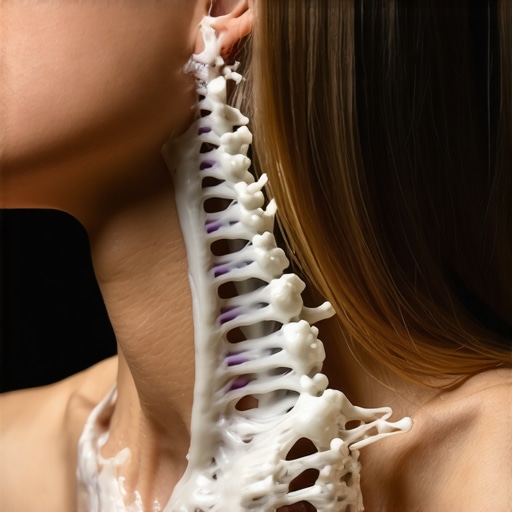
The short answer is no, but it’s a “yes” if you aren’t paying attention to where your eyes go. When we run outside, our eyes naturally scan the horizon, keeping our head upright. On a treadmill, we tend to lock our gaze on a fixed point—usually something lower than eye level like a calorie counter. According to the Mayo Clinic, for every inch your head tilts forward, it adds about 10 pounds of pressure on your cervical spine. No wonder my neck felt like it was in a vice! I had to learn how to fix my gait for better spinal alignment and finally realize that vision problems might be causing neck pain because I was squinting at the small treadmill screen instead of looking ahead.
The Early Mistake That Cost Me Weeks of Comfort
When I first started feeling the stiffness, I tried to “power through” it. I figured more stretching was the answer. But I later learned that stretching a tight muscle isn’t always the answer, especially if that muscle is already overstretched and weak from poor posture. I was literally pulling on a muscle that was already screaming for stability. I should have been looking at why my shoulder blades start burning halfway through my 5K. Have you ever finished a great workout only to feel like you’ve aged twenty years by the time you hit the shower? It’s a frustrating cycle, but I promise we can break it today by adjusting a few simple habits you probably didn’t even know you had. Let’s look at why your screen height is the real cause of the problem, even when that screen is attached to a gym machine.To fix the damage, you have to treat your body like a stack of Jenga blocks. If the top block—your head—is hanging off the edge, the base has to work twice as hard to keep the whole thing from tumbling. I started by implementing a ‘horizon gaze’ strategy. Most treadmills are positioned facing a wall or a mirror, and we naturally gravitate toward the screen. I decided to fight that urge.
Reset Your Gaze to Save Your Cervical Spine
Your eyes act like a steering wheel for your head. If they point down, your chin follows. I once took a bright pink post-it note and stuck it to the wall directly at my eye level, ignoring the treadmill’s dashboard entirely. It felt awkward for the first ten minutes, but by the end of the run, that familiar ‘burning’ in my traps was gone. This is exactly how your eyes are secretly dictating your posture. 
Find a Point Above the Console
If you can’t stick notes on the gym wall, find a clock or a TV that sits higher up. Forcing your gaze upward keeps your cervical spine in its natural curve. When you tuck your chin to check your mileage, you’re essentially asking your small neck muscles to hold up a bowling ball at a 45-degree angle.
Rethink Your Arm Swing and Shoulder Position
Many runners subconsciously hike their shoulders toward their ears as they get tired. It’s a survival mechanism, but it’s a disaster for your upper back. Think of your arms as heavy pendulums that should swing from the shoulder, not the elbow. If you feel tension building, you might realize why your shoulder pain is actually coming from your neck. I learned to ‘drop the weight’ every half-mile by shaking my arms out and resetting my blades.
Avoid the Death Grip on the Handrails
Holding onto the rails is the fastest way to shut off your core and wreck your alignment. It changes your gait and forces your lower back to take the brunt of every step. To truly boost mobility and ease pain with chiropractic techniques, you have to move through a full, natural range of motion.
Engage Your Core Without Getting Rigid
A common mistake is sucking in your stomach so hard you can’t breathe. This is why your core routine is failing your spine. Instead, think about ‘knitting’ your ribs together. I spent a week focusing on the bird dog variation that fixes wobbly core muscles during my warm-ups to wake up my stabilizers before I even hit the belt.
Adjust Your Gait to Dampen Spinal Shock
If your feet are slapping the belt like flat boards, that vibration travels straight up to your skull. You need to consider the link between ankle mobility and lower back stability. Aim for a mid-foot strike and a higher cadence. Shorter, quicker steps reduce the vertical bounce, which means less ‘pounding’ on your intervertebral discs. When I switched from long, heavy strides to a quicker tempo, my mid-back tightness evaporated almost instantly. Getting a better understanding of back pain usually starts with the feet.
But let’s take this a step further, because the most common advice you hear at the gym—’just stand up straight’—might actually be the reason you’re still hurting. In my journey to recovery, I fell into the trap of thinking posture was a static destination. I spent weeks trying to be as rigid as a board while moving, only to realize that stiffness is not stability. In fact, why your perfect posture is actually making you stiff is one of the most overlooked hurdles in mobility training. If you are holding your breath or tensing your shoulders to look ‘correct,’ you are essentially creating a pressure cooker in your spinal column.
Look at Your Hips to Save Your Neck
Most runners focus entirely on where their head is, but they forget that the neck is just the end of a very long whip. If the handle of that whip—your pelvis—is out of alignment, the tip is going to snap. This is precisely why we look at your pelvis when your neck hurts. When I finally saw a specialist, they didn’t just crack my neck; they looked at my hip tilt. A slight anterior pelvic tilt (that ‘Donald Duck’ butt position) forces your upper back to round to compensate, which then shoves your chin forward. You can’t fix the top floor of a building if the foundation is sinking on one side. This is why why we adjust the pelvis to fix neck tension even when the patient insists the problem is ‘just a headache.’
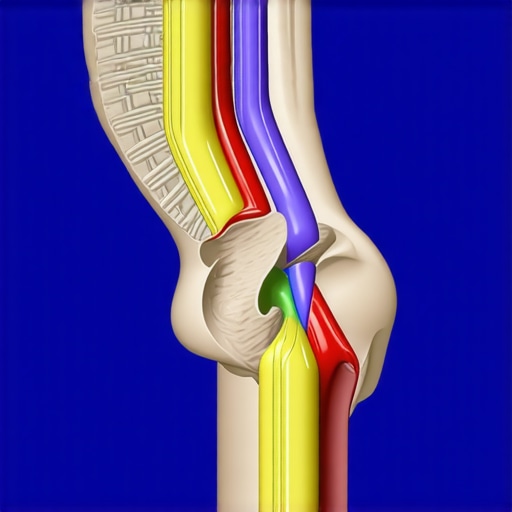
The real ‘oops’ factor for most fitness enthusiasts is over-bracing. I used to think a strong core meant a hard core, but I was wrong. Research published in the Journal of Biomechanics indicates that excessive trunk stiffness can actually increase spinal load and limit the natural micro-movements needed for disc health. You might find that why your strong core might actually be too rigid is the secret reason your mid-back feels like it’s in a vice after a treadmill session. You need ‘reflexive’ stability, not ‘statue’ stability. If you’re struggling to find that balance, focusing on mobility mastery will serve you much better than just doing more crunches.
Why does my neck click when I turn my head to the left?
This is a question I get all the time once people start paying attention to their alignment. That ‘sandpaper’ sound or clicking often points to a minor joint dysfunction or a tendon snapping over a bony prominence because the vertebrae aren’t gliding in their tracks. It’s usually tied to the connection between your jaw tension and neck mobility. If you find yourself wondering why your neck clicks when you turn my head to the left, it might be time to stop stretching and start looking at how your head sits on your shoulders during your daily commute or your morning run. Chasing the sound won’t fix it; correcting the mechanics will.
The biggest mistake is assuming that ‘legs’ and ‘back’ are separate categories in your workout. They are a single, continuous system. For instance, why stretching your hamstrings wont fix your back pain is because the tightness is often a symptom of pelvic instability, not the cause. Have you ever fallen into this trap of trying to hold ‘perfect’ posture only to feel worse? Let me know in the comments. Let’s start treating the body as the connected machine it really is.
The Cheap Gear That Actually Saved My Back
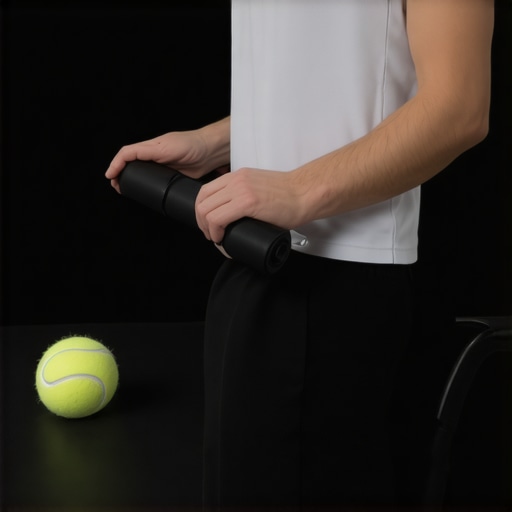
I’ve spent thousands of dollars over the years on fancy chairs and high-end gym memberships, but some of the most profound changes in my mobility came from items that cost less than a lunch at Chipotle. For instance, I used to think I needed a $1,000 ergonomic throne, but I eventually learned the correct way to use a lumbar roll in your office chair to get the same results. Now, I keep a small, dense roll in my car and my carry-on bag. It’s about creating a consistent environment for your discs, rather than hoping a single workout will undo eight hours of slouching. I also swear by the humble tennis ball. If you’ve ever had that nagging ‘itch’ you can’t scratch near your spine, learning how to use a tennis ball to fix that spot under your shoulder blade is a game-changer for releasing the rhomboids without needing a professional massage every week.
Don’t Let Your Tools Become Your Enemy
There is a dangerous trend of ‘aggressive’ self-care that I see all the time at the gym. People take a hard foam roller and go to town on their lumbar spine, not realizing that why your foam roller might be hurting your lower back is because the lower spine lacks the ribcage support of the upper back. You’re essentially smashing your vertebrae into a bridge position they weren’t designed for. Instead, I’ve shifted my focus to the proper way to use a foam roller on your upper back, where it can actually improve extension. This is a distinction emphasized by spine biomechanics experts like Dr. Stuart McGill, who notes in his book Low Back Disorders that repeated spinal flexion—the very thing many of us do on a foam roller—can actually lead to disc herniation if done with too much load or poor form.
How do I maintain my mobility results over the long term?
Maintenance isn’t about doing a two-hour routine every Sunday; it’s about the micro-adjustments you make every day. I’ve found that chiropractic secrets to boost neck comfort and function often boil down to consistency in your movement patterns. I look at mobility as a bank account: you have to make small deposits every day to cover the ‘withdrawals’ of sitting and stress. I predict that in the next five years, we will see a massive shift toward wearable biofeedback sensors that alert you the second your pelvis tilts or your head drops too far forward during a run. Until then, you have to be your own sensor. If you feel that familiar ache, try the 10-second reset for when your shoulder blades start burning to recalibrate your nervous system. My challenge to you today: Don’t just read this and go back to your desk. Take a rolled-up towel, place it in the small of your back while you finish your coffee, and feel the difference in your neck tension immediately. This simple mobility mastery habit is the first step to staying pain-free for decades, not just days.
But let’s take this a step further, because the most common advice you hear at the gym—’just stand up straight’—might actually be the reason you’re still hurting. In my journey to recovery, I fell into the trap of thinking posture was a static destination. I spent weeks trying to be as rigid as a board while moving, only to realize that stiffness is not stability. In fact, why your perfect posture is actually making you stiff is one of the most overlooked hurdles in mobility training. If you are holding your breath or tensing your shoulders to look ‘correct,’ you are essentially creating a pressure cooker in your spinal column.
Why My ‘Correct’ Form Was Actually My Biggest Enemy
Through trial and error, I discovered that the way we approach fitness often ignores the nervous system entirely. Here are the lightbulb moments that finally clicked for me:
- Stability is dynamic, not frozen. I learned that sit up straight is actually bad advice for some because it creates artificial tension that prevents the spine from absorbing shock.
- Your eyes are the master controller. If you’re looking down, your body thinks it’s falling. Keeping your gaze at the horizon signals safety to your brain, allowing your muscles to relax.
- The pelvis-neck connection is real. You cannot fix a neck issue without checking your foundation. This is why we look at your pelvis when your neck hurts, ensuring the entire kinetic chain is aligned.
- Consistency beats intensity. A five-minute daily reset is far more effective than a two-hour monthly massage.
The Low-Cost Essentials I Keep in My Gym Bag
I don’t believe you need expensive gadgets to revitalize your mobility. These are the specific, battle-tested tools I trust to keep my spine happy:
1. The Humble Tennis Ball: I use this for self-myofascial release. Knowing how to use a tennis ball to fix that spot under your shoulder blade has saved me from countless headaches.
2. A Standard Lumbar Roll: Whether I’m in the car or my office chair, I ensure I’m using the correct way to use a lumbar roll to maintain my spinal curves.
3. The Post-it Note Strategy: It sounds silly, but sticking a bright note at eye level on the wall in front of my treadmill is the single most effective tool for keeping my cervical spine aligned during long runs.
Small Shifts Lead to Decades of Pain-Free Movement
The journey to unlock neck pain relief isn’t about a single ‘magic’ adjustment; it’s about reclaiming the way you move through the world. Every mile you run with a neutral gaze and every minute you spend breathing into your belly instead of your chest is a deposit into your long-term health. You have the power to regain full mobility if you stop fighting your body and start listening to its signals. Focus on mobility mastery as a lifestyle, not a chore, and you’ll find that your time on the treadmill becomes the highlight of your day again, rather than a source of dread. Have you ever noticed that ‘perfecting’ your posture actually made your back feel tighter? Let me know in the comments below!