Why your foam roller might be hurting your lower back
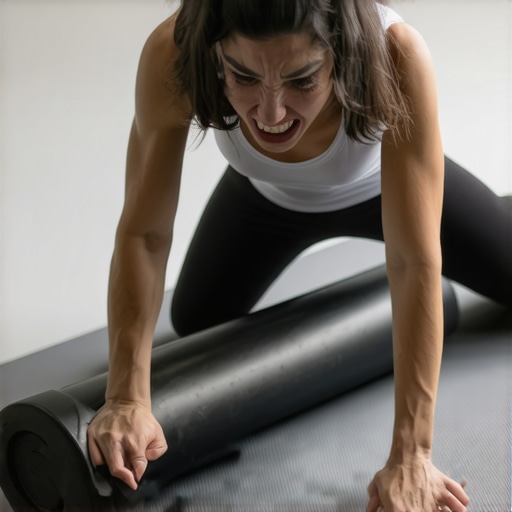
I was horizontal on my living room floor, staring at the underside of my coffee table, and I couldn’t move. My breath was shallow, and every time I tried to shift my hips, a lightning bolt of pain shot straight up my spine. Just ten minutes earlier, I had been ‘fixing’ my soreness by grinding my lower back into a high-density foam roller. I thought I was being proactive. I thought I was being my own therapist. Instead, I was literally crushing the very structures meant to protect me. If you have ever rolled out your lower back only to find that you are more stiff, more sore, or even slightly nauseous the next day, you aren’t doing it wrong—you are likely doing something that shouldn’t be done at all. This was my wake-up call, and today, I want to help you avoid the same trap so you can actually revitalize your mobility without the self-inflicted injury. [image-placeholder]
Why the ‘No Pain, No Gain’ Mentality Fails Your Spine
I used to think that if a stretch or a massage tool didn’t hurt, it wasn’t working. That is a dangerous lie when it comes to your lumbar region. Unlike your upper back, where the ribcage provides a sturdy cage for your internal organs and support for your vertebrae, your lower back is relatively unprotected. When you put your full body weight onto a hard roller in that area, you aren’t just ‘massaging’ muscles; you are forcing your lumbar spine into an exaggerated arch. I learned the hard way that you need to stop rolling your lower back directly if you want to avoid long-term inflammation. The National Academy of Sports Medicine (NASM) explicitly warns that foam rolling the lumbar spine can lead to excessive pressure on the vertebrae and sensitive internal organs, often causing the muscles to go into a protective spasm rather than relaxing. This is why you feel like a piece of wood the morning after a ‘deep’ rolling session. I spent years trying to ‘crunch’ through the tension, never realizing that I was ignoring the hidden muscles that stabilize your spine. Have you ever felt that strange, bruised sensation after rolling that just didn’t feel like normal muscle soreness?
Is my foam roller actually doing more damage than good?
It is a fair question to ask, especially when every fitness influencer on social media seems to live on these things. The truth is that foam rollers are fantastic tools for your quads, your glutes, and even your upper back, but the lower back is a different beast entirely. We often mistake the symptom—tightness—for the cause. My breakthrough came when I realized that my lower back felt tight because it was trying to protect itself from instability elsewhere. By smashing it with a roller, I was just making it more defensive. Instead of finding relief, I was actually making it harder to achieve a true back pain recovery. Today, we are going to pivot. We are going to stop the ‘smash and pray’ method and look at how targeting your hips and mid-back can actually give your lower spine the room it needs to breathe.
Fix Your Mid-Back to Save Your Lumbar
The first thing I had to learn was that my upper back—the thoracic spine—was acting like a frozen, rusted hinge. Because my mid-back couldn’t move, my lower back was forced to do all the bending and twisting to compensate. To fix this, you should focus on the proper way to use a foam roller on your upper back. You want to support your head with your hands, keep your hips on the floor, and gently lean back over the roller only in the area where your ribs are. This creates extension where you actually need it. I remember the first time I did this properly; I heard a satisfying sequence of releases that felt like a pressure valve finally opening. For the first time in months, that nagging ‘pull’ in my tailbone area simply vanished because the tension above it had finally dissipated. #IMAGE_PLACE_PLACEHOLDER_B#
Your Hips Are Pulling Your Spine Out of Alignment
Most people think they have a ‘bad back’ when they actually just have ‘stiff hips.’ If your hip joints are locked up from sitting all day, every step you take forces your lower back to twist and shear to compensate. This is why why stretching your hamstrings wont fix your back pain if the issue is actually coming from the front of your body. I spent years cranking on my hamstrings, only to realize that why tight hip flexors are the real cause of your lower back arch. To fix this, try a half-kneeling hip flexor stretch, but tuck your pelvis under like a scared dog. This ‘tuck’ is the secret sauce. Without it, you are just arching your back further. When I started doing this, my morning stiffness dropped by half within a week. You can even incorporate this into the 3-minute morning routine to lubricate your joints before you even have your first cup of coffee.
Breathe Into Your Belly to Stabilize Your Core
We have been conditioned to suck our stomachs in to look thinner, but this is a disaster for spinal stability. When you ‘suck it in,’ you create a rigid, brittle column that cannot absorb shock. I had to retrain myself to breathe into my sides and back, filling my torso like a 360-degree balloon. There is a deep the connection between shallow breathing and back pain because the diaphragm is physically attached to your lumbar vertebrae. If you aren’t breathing well, your back muscles stay ‘on’ just to help you inhale. Once I started practicing the bird-dog variation that fixes wobbly core muscles while focusing on this deep belly breath, my core finally felt like a supportive brace rather than a suit of armor I couldn’t move in. This shift in how you brace and move is the foundation for any restore your back mobility proven chiropractic strategies that actually last.
Why Sitting Like a Soldier Destroys Your Mobility
The biggest mistake I see—and I was guilty of it for years—is the ‘statue’ approach to posture. Everyone tells you to sit up straight, but forcing yourself into a rigid, military-style position is exactly why your perfect posture is actually making you stiff. Your spine is designed for micro-movements, not for holding a static, high-tension pose for eight hours. In fact, why sit up straight is actually bad advice for some is because it often leads to what experts call ‘extension intolerance.’ By hyper-extending to look ‘perfect,’ you are actually jamming your facet joints together and creating a cycle of chronic inflammation. 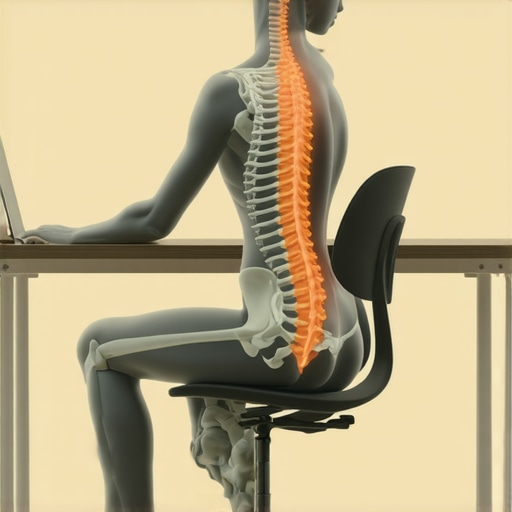
Why does my neck hurt more when I focus on my posture?
It sounds counterintuitive, but the more you focus on ‘pulling your shoulders back,’ the more tension you might be creating in your jaw and upper cervical spine. There is a profound the connection between your jaw tension and neck mobility. When you force your shoulders down and back, you often subconsciously jut your chin forward to balance your gaze, creating a ‘shearing’ force at the base of your skull. This is the hidden link between neck pain and spinal health that most people miss—your body is a closed-loop system, and tension in one area always pays a tax in another. If you have been struggling with ‘tech neck,’ you might find that why we look at your feet when your neck hurts reveals more about your alignment than just staring at your computer screen height.
Stop Stretching Every Tight Muscle You Feel
Here is a contrarian truth: that tight muscle you are trying to stretch might be the only thing keeping your spine from shifting into a dangerous position. We have been taught that ‘tight’ means ‘short,’ but often ‘tight’ actually means ‘overloaded.’ If you have a pelvic imbalance, certain muscles will lock down to provide stability. This is why stretching a tight muscle isnt always the answer. Dr. Stuart McGill, a leading authority on spine mechanics, notes that stretching a ‘guarding’ muscle can actually destabilize the joint further, leading to more pain the following day. I spent years stretching my hamstrings, never realizing that my body was keeping them tight to protect my hyper-mobile lower back. You might find that why your strong core might actually be too rigid is the reason your back feels brittle rather than bouncy. To truly solve this, we often have to look far away from the site of the pain. For instance, why we adjust the pelvis to fix neck tension is one of the most effective ‘secrets’ in advanced care, as it levels the foundation of your entire spinal column. Have you ever fallen into this trap of over-stretching or forcing ‘perfect’ posture only to feel worse? Let me know in the comments. I would love to help you navigate mastering back neck pain relief tips from the pros so you can stop the cycle of self-inflicted stiffness.
Once I stopped treating my back like a problem to be solved and started viewing it as a system to be maintained, everything changed. I traded the aggressive, bone-crushing sessions for a set of high-precision tools that actually respect the anatomy of the spine. My daily arsenal now includes a simple lacrosse ball and a firm lumbar support for my car. I use the lacrosse ball specifically for trigger point therapy in my glutes and around the shoulder blades, where a large roller simply can’t reach. This precision is vital because strengthening your glutes to take the pressure off your spine is only half the battle; you also have to ensure those muscles aren’t knotted up and pulling your pelvis out of alignment. If you are still struggling with finding a rhythm, you might find that how to set up your home office on a budget is the single most important maintenance step you can take today.

How can I keep my spine feeling young and mobile for decades?
The secret isn’t in a once-a-month deep tissue massage; it is in the small, boring habits you do when you aren’t in pain. I swear by the 30-second morning move to hydrate your spinal discs. This simple decompression helps counteract the gravity-induced flattening that happens while we sleep. Dr. Kelly Starrett, author of Becoming a Supple Leopard, emphasizes that ‘maintenance is the price of admission’ for a high-performing body. He suggests that we need to reclaim our natural movement archetypes every day. This means moving through your full range of motion frequently. This proactive approach is exactly how you boost mobility ease pain chiropractic techniques unveiled through consistent, small wins rather than trying to fix a year of neglect in one hour. I’ve found that even the best exercises to keep your spine young fail if you don’t address the mechanical stress of your daily environment, like knowing the correct way to use a lumbar roll in your office chair.
The Future of Spinal Care and Biometric Feedback
Looking ahead, I see a massive shift toward wearable technology that provides real-time biomechanical feedback. We are moving away from guessing why we are sore and toward sensors that alert us when our pelvic tilt is off or when our thoracic spine has remained static for too long. This data-driven approach will make enhance mobility naturally with chiropractic care even more effective because your practitioner will see exactly how you move in the wild. Until that tech is ubiquitous, we have to rely on our own internal sensors. I recommend mastering the hip hinge trick for pain-free gardening and daily chores. It is the gold standard for protecting your discs during any lifting task. If you want to take your recovery to the next level, I challenge you to try the 5-minute decompression routine tonight; it’s the bridge between a ‘stiff’ day and a restorative night’s sleep.
The Hardest Lesson I Learned About My Own Spine
For years, I believed that if my back felt tight, I needed to hammer it into submission. I learned the hard way that chasing the pain is the fastest route to a flare-up. Often, the spot that hurts is just the victim of a restriction elsewhere in the kinetic chain. Realizing that I needed a better way of understanding back pain and better posture was the real turning point for my recovery. I also had to accept that more intensity does not equate to more healing. Sometimes, your body needs a gentle nudge, like a simple 5-minute routine to decompress your spine after work, rather than a brutal session with a hard roller. One of the biggest lightbulb moments was finally learning the truth about using heat versus ice for injuries when I had overdone it. It is about being a student of your own body, not a drill sergeant.
The Small Toolkit That Actually Moved the Needle for Me
I do not believe in buying every gadget on the market. My recovery space is minimalist but incredibly effective. First, I always recommend Dr. Stuart McGill’s Back Mechanic; it is the absolute bible for anyone who wants to stop the guessing game and learn how the spine actually functions. For physical tools, I traded my massive, aggressive foam roller for a simple lacrosse ball to hit specific glute triggers with pinpoint accuracy. I also rely on chiropractic secrets to regain full mobility after injury through professional guidance whenever my home routine hits a plateau. Finally, never underestimate a simple lumbar roll for your car seat or office chair—it is the easiest way to maintain your natural lumbar curve without having to constantly remind yourself to sit up straight.
Start Rebuilding Your Foundation Today
Your journey toward a pain-free life is not a sprint; it is a series of small, intentional choices that add up over time. Do not let a bad experience with a foam roller or a temporary setback discourage you from seeking out revitalize your mobility proven strategies that actually work for your specific anatomy. You deserve to move through your day without fear, to bend without hesitation, and to wake up feeling refreshed rather than rigid. You have the tools and the knowledge now to move forward—it is just a matter of listening to what your body is trying to tell you and respecting its limits. Have you ever felt more stiff or sore the day after a long foam rolling session? Let me know your experience in the comments below!