Why Your Glutes Won’t Fire and How to Fix It
I was at the gym, three sets into what I thought was a leg day masterpiece, when it hit me—or rather, it didn’t. My lower back was screaming, my knees felt like they were full of gravel, but my glutes? Stone-cold silent. It felt like I was trying to drive a car with the parking brake on. For years, I just assumed I had bad genetics or that I simply needed to spend more time on a foam roller. Boy, was I wrong. In fact, stretching your hamstrings won’t fix your back pain if the real culprit is a pair of sleepy glutes. [image_placeholder_1]
My Glutes Went Missing and My Back Paid the Price
Early on, I made the classic mistake of thinking that if I just did more squats, my glute muscles would eventually have to wake up. I spent months loading plates onto the bar, only to end up with a nagging lumbar ache that wouldn’t quit. I was essentially training my body to bypass my largest muscle group entirely. This phenomenon, often called gluteal amnesia, is far more than a fitness buzzword. When your brain loses the ability to efficiently recruit these muscles, your spine and hip joints are forced to pick up the slack. Understanding back pain starts with realizing that your body is a master of compensation. If the engine isn’t running, the chassis starts to buckle. Today, we are going to bridge that neurological gap and get your backside back in the game. Have you ever felt like you’re working out hard but your body just isn’t changing the way it should?
Is this glute amnesia thing actually worth the hype?
It sounds like one of those trendy excuses personal trainers use to sell more sessions, doesn’t it? But the science is surprisingly solid. A study published in the Journal of Orthopaedic & Sports Physical Therapy found a direct correlation between delayed gluteal activation and chronic lower back instability. It’s not that the muscle has physically disappeared; it’s that the signal from your brain is getting garbled. Modern life is the primary offender. We sit on our glutes all day, effectively turning off the neurological switch. By the time we get to the gym or go for a walk, we are move-ready, but our muscles are still in sleep mode.
The Real Reason Your Brain Refuses to Talk to Your Glutes
The problem usually starts with reciprocal inhibition. When your hip flexors are perpetually tight from sitting at a desk, they send a signal to your glutes to stay relaxed. It’s a physiological tug-of-war where your glutes are losing every single time. This is exactly why strengthening your glutes to take the pressure off your spine is the most effective way to find lasting relief. It isn’t just about looking better in jeans; it’s about spinal survival. We also have to look at the chain of command. Often, the link between ankle mobility and lower back stability plays a massive role—if your ankles are locked up, your glutes can’t find the right leverage to fire during a stride. We’re going to dive into the specific resets that actually work, moving past the generic advice and getting into the gritty mechanics of muscle activation.To get your glutes back online, we have to start by silencing the muscles that are screaming the loudest. Imagine your hip flexors are like an over-cautious parent, always holding onto your pelvis and refusing to let it move freely. When they are constantly “on,” they force your lower back to arch excessively, creating a physical roadblock for your glutes.
Stop Your Hip Flexors from Bullying Your Spine
The first step isn’t a heavy lift; it’s a release. You need to tell those hip flexors to stand down so your posterior chain can actually engage. This is why tight hip flexors are the real cause of your lower back arch and why stretching alone rarely fixes the issue. You need to combine a gentle stretch with active abdominal bracing. I remember a Tuesday morning last October when I tried the 90/90 breathing drill for the first time after a particularly rough leg day. I felt like a fool laying on the floor with my feet on a chair, but when I stood up, the tightness that usually lived in my L5-S1 joint felt like it had been erased. It wasn’t magic; it was just neurological permission for my glutes to finally do their job.
The 30-Second Wake-Up Call
Instead of jumping straight into squats, try a “bridge with a reach.” Lay on your back, tuck your pelvis so your lower back is flat against the floor, and drive through your heels. But here is the secret sauce: as you lift, reach your arms toward the ceiling. This reach helps engage your serratus and core, which in turn tells your brain it is safe to fire the glutes. This is a foundational part of restore your back mobility proven chiropractic strategies that we use to rewire the brain-body connection. 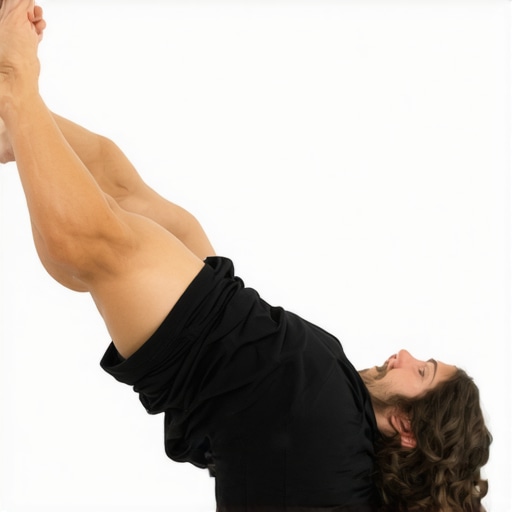
Why Your Ankles Hold the Key to Glute Power
We often treat the body like a collection of separate parts, but it is more like a suspension bridge. If the cables at the bottom are too tight, the towers at the top will lean. If your ankles can not flex properly, your body will shift its weight forward, causing your quads to take over and your glutes to shut down. This is exactly why we adjust your ankles to help your chronic hip pain. By restoring that ankle hinge, you provide the mechanical leverage your glutes need to propel you forward.
Breathe Into Your Back to Kill the Tension
Most of us are “chest breathers,” which keeps us in a state of low-level fight-or-flight and tightens the muscles around the spine. To truly reset your system, you have to learn how to breathe into your lower back to reduce muscle spasms. By expanding your ribcage 360 degrees, you create internal pressure that acts like a natural weightlifting belt, stabilizing the spine from the inside out so the glutes can move the hips. If you are struggling with a persistent “catch” in your back, the 5-minute reset for a stiff lumbar spine can be the bridge that gets you from painful movement to athletic performance.
One of the biggest misconceptions I see in my clinic is the obsession with ‘perfect posture.’ We’ve been told since grade school to ‘sit up straight,’ but for many, sit up straight is actually bad advice for some. If you are forcing yourself into a rigid, upright position, you are likely creating a constant state of isometric contraction in your spinal extensors. This is exactly why your perfect posture is actually making you stiff. True spinal health isn’t about holding a static pose; it’s about dynamic movement. A study in the European Spine Journal noted that frequent changes in posture are more effective for spinal nutrition and disc hydration than maintaining any single ‘correct’ position. By trying to be perfectly upright, you might actually be starving your spinal discs of the movement they need to stay healthy.
Don’t foam roll your way into a disc injury
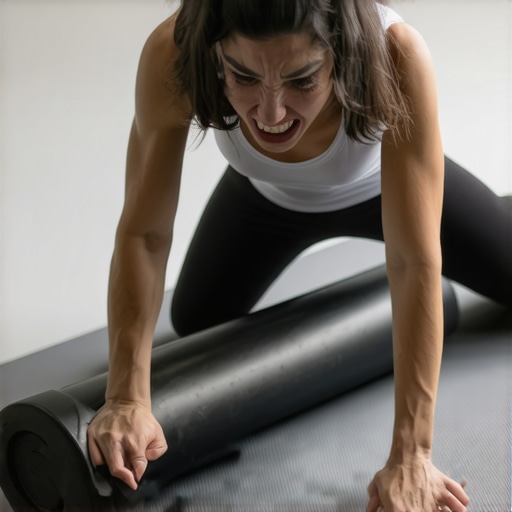
There is also a dangerous trap people fall into when they feel a ‘knot’ in their lower back: the foam roller. I see people aggressively rolling their lumbar spine every day, but why your foam roller might be hurting your lower back comes down to basic anatomy. Your lumbar spine lacks the protective ribcage support that your mid-back enjoys; rolling it directly with a high-density foam roller can increase shear force on your vertebrae and potentially aggravate a bulging disc. Instead of attacking the site of pain, we often find better results when we boost mobility and ease pain with chiropractic techniques that address the segments above and below the site of discomfort.
Can your jaw really be the reason your neck stretches aren’t working?
This is where things get truly nuanced for the advanced reader. If you’ve tried every stretch in the book and your upper traps still feel like steel cables, we have to look north. The connection between your jaw tension and neck mobility is a neurological reality. The trigeminal nerve, which controls your jaw muscles, shares a pathway in the brainstem with the upper cervical nerves. If you are a nighttime tooth-grinder, your brain keeps your neck in a protective ‘guarded’ state. 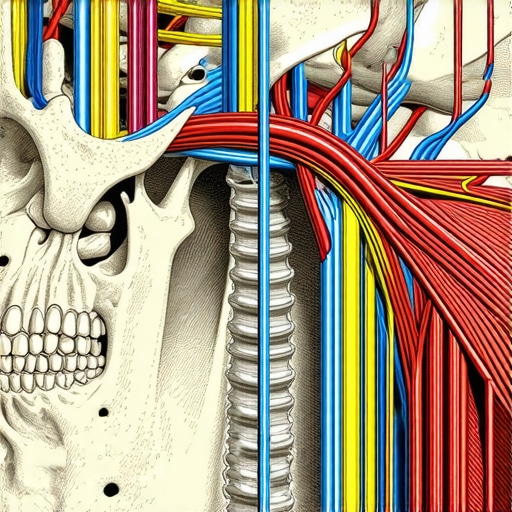 We also need to consider why we look at your ribcage movement for better mobility. If your ribs are stuck in an ‘inhaled’ or flared position, your mid-back can’t rotate properly. This lack of rotation forces the lower back to over-compensate, leading to that familiar sharp pinch. Chiropractic secrets to regain full mobility after injury often involve looking at these ‘quiet’ secondary areas rather than just the spot that is screaming. Have you ever fallen into the trap of trying to ‘stretch’ your way out of a problem only to make it feel worse the next day? Let me know in the comments.
Once you have moved past that initial firefighting stage where every movement feels like a potential crisis, you have to shift your mindset toward long-term architecture. It is one thing to get out of pain; it is an entirely different game to stay there. I have found that the difference between the people who cycle in and out of clinics and those who stay bulletproof comes down to their maintenance toolkit. For me, it is not about expensive gadgets or vibrating foam rollers. I swear by a simple tennis ball. Learning how to use a tennis ball to fix that spot under your shoulder blade is probably the highest ROI skill you can develop for mid-back health. It is cheap, fits in a carry-on, and works better than most high-end massage guns because you can actually pin the tissue while moving your arm through a full range of motion. I also get incredibly specific about my environment, especially sleep. If you are waking up with a stiff neck, understanding why your pillows should be replaced every eighteen months is not just a marketing gimmick—it is about maintaining the structural integrity of your cervical curve while you are unconscious.

The truth about weightlifting belts and long-term stability
When I am back in the gym and feeling strong, I often see people wearing belts for every single set, even the warm-ups. My personal rule? Use them for the top 10% of your heaviest lifts, but do not let them become a crutch for your posture. I wrote a deep dive on the truth about weightlifting belts and spinal stability because over-reliance can actually weaken your natural internal belt—your transverse abdominis. Dr. Stuart McGill, a world-renowned expert in spine biomechanics, emphasizes that true stability comes from stiffness created by muscle co-contraction rather than just external pressure from a piece of leather. By training your body to create its own support, you ensure that boost mobility and ease pain with chiropractic techniques becomes a permanent shift rather than a temporary fix. I predict that in the next few years, we will see a massive shift away from heavy external bracing toward more neuro-muscular training that emphasizes this natural core tension.
How do I maintain my mobility gains over time?
The secret is what I call movement snacks. You do not always need a 60-minute yoga flow or a dedicated gym session every day to keep your back happy. You need consistent habits like the 20-20-20 rule for desk workers and neck health to prevent the cumulative strain of sitting from turning into a full-blown spasm. Think of it as brushing your teeth for your spine. I highly recommend following mobility mastery expert tips for back pain prevention and recovery as your long-term roadmap. My specific advanced tip for you today is this: next time you are stuck at a red light or sitting in a long meeting, do not check your phone. Instead, perform three deep back-body breaths, consciously pushing your lower ribs into the back of your chair. This tiny reset keeps the diaphragm-pelvic floor connection alive and well, preventing the stiffness that usually sets in after thirty minutes of stillness. Try doing this just five times tomorrow and watch how much more fluid your back feels by dinner time.
Hard Truths I Learned While Chasing a Pain-Free Spine
After years of trial and error, I realized that my back wasn’t broken; it was just tired of being ignored. One of the biggest shifts came when I stopped looking for a ‘quick fix’ and started paying attention to why your back feels better when you keep moving. Movement is quite literally the lubricant for your joints. I also had to accept that my ego was often the enemy. I used to push through pain, but now I know how to tell if your back pain is serious versus just a sign that I need a reset. The most important lesson? Consistency beats intensity every single time. Doing a two-minute stretch every day is far more powerful than a two-hour session once a month. My biggest ‘lightbulb moment’ was realizing that pain is often just a request for a change in position, not a signal of structural damage.
The Tools I Keep in My Daily Mobility Kit
You don’t need a basement full of equipment to maintain a healthy spine. My kit is intentionally lean. Beyond the tennis ball I mentioned earlier, I focus heavily on the environment where I spend the most time. If you work from home, look at your setup; why your laptop stand is still causing neck strain often comes down to the simple ergonomics of eye level. I also suggest keeping a small lumbar roll handy for long car rides. These small adjustments are the backbone of boost your back health simple yet effective chiropractic hacks that anyone can implement without a degree in kinesiology. I trust these methods because they focus on the root cause—your daily environment—rather than just masking the symptoms with temporary relief.
Reclaim the Movement Your Body Was Designed For
Taking the first step toward recovery can feel overwhelming, especially if you’ve been in pain for a long time. But remember, your body has an incredible capacity for healing when you give it the right neurological inputs. Whether you are focusing on unlocking neck pain relief expert tips for lasting comfort or trying to wake up those sleepy glutes, the goal is the same: freedom of movement. You deserve to live a life where you aren’t constantly calculating the ‘cost’ of a walk or a gym session. Your spine is your foundation; treat it with respect, and it will carry you wherever you want to go. Have you ever felt that ‘click’ where a specific movement finally made the pain disappear? Let me know below.