How to Tell if Your Back Pain is Serious
I’ll never forget the morning I reached for a laundry basket and ended up pinned to the floor by a white-hot bolt of lightning in my lower back. It wasn’t my first bad back day, but this felt different. I lay there on the cold tile, staring at the dust bunnies under the radiator, terrified that I’d done permanent damage. For years, I’d ignored the minor aches, thinking I could just power through. I’d even tried to pick up your laundry basket safely, but my technique was shot because I was already compensating for a deeper issue. That moment was my wake-up call. I realized that knowing the difference between a simple muscle strain and a structural emergency isn’t just good to know—it’s essential for your long-term freedom. Today, I’m going to help you navigate that terrifying internal debate so you can stop living in fear and start taking the right steps toward recovery.
Stop Guessing and Start Listening to Your Spine
When I first started dealing with chronic discomfort, I made a massive mistake: I treated every single ache like a disaster. I’d freeze up, stop moving, and wait for the pain to vanish. Little did I know, why your back feels better when you keep moving is actually backed by science; movement promotes blood flow and healing. But there’s a flip side. Sometimes, that pain is a loud, screaming alarm bell from your nervous system. According to the Mayo Clinic, while most back pain improves with home treatment, symptoms like unexplained weight loss or pain that spreads down both legs are major red flags that require immediate professional evaluation. We often try to ignore these signs because we don’t want to be that person who overreacts, but your spine is the literal pillar of your life. Ignoring a serious signal can lead to issues like the link between ankle mobility and lower back stability being completely disrupted, affecting how you walk and even how you stand. Have you ever felt a sharp pain and wondered if you should head to the ER or just grab a heating pad?
Will this just go away if I ignore it long enough?
It’s the question we all ask when we’re leaning against the kitchen counter, trying to find a position that doesn’t hurt. We want to believe it’s just tightness. But skepticism is healthy—it keeps us from falling for every magic cure on the internet. You might be worried that a professional will just tell you to take it easy, but the goal is actually the opposite: getting you back to restoring your back mobility through proven strategies. My early blunder was thinking that if the pain was gone, the problem was gone. It wasn’t. It was just waiting for the next laundry basket. We need to identify the root cause before your body decides to force the issue for you.
Look further down the chain for the real culprit
Your spine doesn’t exist in a vacuum. Think of your body like a high-performance suspension bridge; if the foundation at the bottom shifts, the cables at the very top begin to fray and snap. Often, that nagging ache in your upper shoulders isn’t a shoulder problem at all. This is exactly why we look at your feet to solve your neck issues. If your arches are collapsing or your gait is off, your pelvis tilts, forcing your spine to compensate with every single step you take. I spent months rolling out my lower back with a foam roller, only to realize my stiff ankles were the real reason my lumbar was screaming. Once I addressed the link between ankle mobility and lower back stability, the random spasms finally stopped.
Stop the tech neck slump before it sticks
We are the first generation of humans to spend six to ten hours a day staring at a glowing rectangle in our palms. This forward head posture adds up to sixty pounds of extra pressure on your cervical spine. It’s like holding a heavy bowling ball out at arm’s length; eventually, your muscles are going to give up. I remember a specific Tuesday when I spent six hours straight finishing a project on my laptop without a stand. By the end of the day, my mid-back felt like a rusted hinge that had been forced shut. I couldn’t even take a deep breath without a sharp pinch in my ribs. That’s when I started using the 30-second reset for tech neck fatigue every hour. It isn’t just about comfort; it’s about preventing your ligaments from literally reshaping themselves into a permanent slouch.
Build a fortress around your lower back
Many people think a strong core means having six-pack abs, but for spinal health, we need stability, not just surface muscle. If your core is too weak, your spine takes the brunt of every lift; however, why your strong core might actually be too rigid is a nuance many athletes miss. You need a core that breathes and moves. Instead of endless sit-ups, focus on strengthening your glutes to take the pressure off your spine. Your glutes are the engines of your lower body; when they shut down from too much sitting, your lower back has to do their job, leading to that chronic dull ache. This is a primary pillar in restoring your back mobility long-term.
Let a professional realign your internal GPS
Sometimes, you can’t stretch or exercise your way out of a structural misalignment. If a joint in your spine is stuck—what we call a subluxation—your nervous system essentially loses its map of that area. This is where chiropractic secrets to regain full mobility after injury come into play. An adjustment is like hitting the restart button on a glitched computer. It restores the proper communication between your brain and your body. I’ve seen patients who struggled for years with tight hamstrings find instant relief not by stretching their legs, but by getting a specific pelvic adjustment that allowed their nervous system to finally let those muscles relax. When you stop fighting your own anatomy and start working with it, recovery becomes a natural byproduct rather than a constant struggle.One of the biggest lies we’ve been told is that there is a ‘perfect’ posture we should maintain at all costs. You’ve probably heard it since grade school: shoulders back, chest out, sit up straight. However, why sit up straight is actually bad advice for some comes down to the concept of biological rigidity. When you force your body into a static, military-style pose, you’re creating isometric tension that starves your discs of the movement they need to stay hydrated. In my practice, I often find that why your perfect posture is actually making you stiff is the primary reason active people don’t see progress. Your spine thrives on variety, not a frozen ideal. If you are constantly bracing, why your strong core might actually be too rigid becomes a real clinical concern, as it limits the natural micro-movements necessary for spinal health.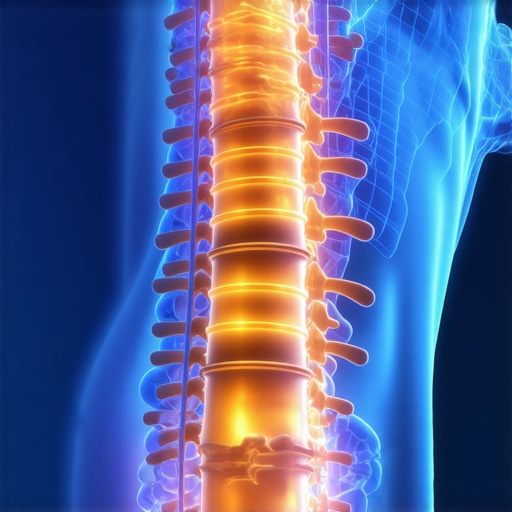
The dangerous trap of over-stretching a screaming muscle
When your lower back feels tight, the first instinct is usually to reach for your toes. But here is the nuance: tightness is often a protective mechanism from your nervous system, not a length issue in the muscle itself. For example, why stretching your hamstrings won’t fix your back pain is because your brain might be keeping those hamstrings ‘on’ to stabilize a weak pelvis. If you force those muscles to stretch, you’re essentially pulling the emergency brake while the car is still moving. This ‘Oops’ factor can lead to further instability and even disc issues. Instead of aggressive stretching, we look at why we look at your ribcage movement for better mobility, as proper rib function allows the lumbar spine to relax without losing its protective support.
Why does the pain return even after I’ve fixed my workstation?
It is a common frustration for the high-level professional. You bought the expensive chair, the standing desk, and the monitor risers, yet the dull ache persists. The truth is that your body is designed for ‘dynamic loading.’ According to research published in the British Journal of Sports Medicine, there is no evidence that one specific ‘upright’ posture prevents back pain better than others; rather, it is the duration of any single posture that causes the issue. This is why why your perfect office chair is still making you slouch is less about the chair and more about your body’s search for comfort through movement. I often recommend the 20-20-20 rule for desk workers and neck health to ensure your nervous system gets a frequent reset. We also have to consider hidden triggers, such as the connection between your jaw tension and neck mobility. If you are clenching your teeth while typing, no amount of ergonomic adjustments will fix your cervical strain. Have you ever fallen into this trap of ‘fixing’ your furniture instead of your movement? Let me know in the comments. By focusing on boosting mobility and easing pain through chiropractic techniques, we address these neurological layers that simple stretching misses.I spent years looking for a magic bullet before I realized that maintenance is less about ‘fixing’ and more about ‘tending.’ It’s like owning a classic car; you don’t wait for the engine to smoke before you check the oil. One tool I swear by isn’t some $500 vibrating gadget, but a simple tennis ball or a specific lumbar roll. I use a tennis ball to hit that nagging spot under my shoulder blade every evening while I’m watching the news. This simple habit keeps the fascia from ‘gluing’ together after a day of typing. In fact, if you’re struggling with that localized burn, learning how to use a tennis ball to fix that spot under your shoulder blade can save you dozens of unnecessary appointments. I also recommend a specific lumbar support for your car. I used to get sciatica every time I drove more than thirty minutes until I mastered how to use a rolled-up towel to fix your cars lumbar support. It sounds low-tech, but the specificity of the placement is what matters more than the price tag of the device.
Ditch the expensive gadgets for these humble tools
If you’re a golfer spending hours in a simulator, you’ve likely felt that mid-back pinch. This is the hidden reason your indoor golf simulator practice is causing a mid-back pinch: repetitive rotation without proper resets. My favorite ‘tool’ here is actually a movement pattern. Mastering the hip hinge trick isn’t just for the garden; it’s for the tee box and the grocery store too. Consistency in these micro-movements is what prevents the ‘white-hot bolt’ I felt that morning with the laundry basket.
How do I maintain my spinal health over time?
Consistency beats intensity every single time. You don’t need a two-hour gym session; you need a five-minute daily check-in. This is where mobility mastery for back pain prevention becomes a lifestyle rather than a chore. Dr. Stuart McGill, a world-renowned expert in spine biomechanics, emphasizes ‘spinal hygiene’—the idea that how you move throughout the day (brushing your teeth, tying your shoes) matters as much as your workouts. If you’re a side sleeper, you need to be diligent about your setup. I’ve found that the side sleeper’s guide to pillow placement is the difference between waking up refreshed and waking up with a kink in my neck. It’s also crucial to remember that your environment is constantly trying to pull you into a slump.
Your spine in the age of AI and wearable tech
I predict we’re moving toward a future where wearable sensors will give us real-time haptic feedback the moment our posture begins to fail or our gait becomes asymmetrical. We’re already seeing the beginnings of this with ‘smart’ clothes, but the real breakthrough will be in predictive analytics that tell you a back spasm is coming forty-eight hours before it hits. I foresee a shift where we stop treating back pain as an event and start treating it as a data point. Imagine a sensor integrated into your work shirt that vibrates gently when your thoracic spine rounds too far forward—effectively automating the 30-second reset for tech neck fatigue. Until then, we have to rely on our internal sensors. This is why why we test your balance during a spinal checkup is so vital; it’s a window into how your brain perceives your body in space. If your balance is off, your risk of injury skyrockets. Don’t wait for the technology to catch up—start enhancing mobility naturally with chiropractic care now so your foundation is ready for whatever the future of work looks like. Try this today: perform the 5-minute reset for a stiff lumbar spine right before bed tonight and notice how much easier it is to get out of bed tomorrow.
Hard Lessons From the Spine Health Trenches
After years of working with patients and managing my own injury, I’ve realized that most of us wait far too long to act. We treat our bodies like appliances we can just replace. Here is what I’ve learned on the front lines: First, your pain is often the last sign of a problem, not the first. By the time you feel that pinch, your alignment has likely been off for weeks. Second, your nervous system prioritizes safety over performance; if your brain doesn’t feel stable, it will lock your muscles down as a protective ‘cast.’ Third, small, daily micro-movements are significantly more powerful than one intense hour at the gym. When you relieve neck and back discomfort using these expert methods, you’re not just fixing a symptom—you’re retraining your brain.
The Minimalist Toolkit That Actually Works
I’ve tested every gadget on the market, but these three are the only ones that stay in my rotation. First, get a copy of ‘Back Mechanic’ by Dr. Stuart McGill. It is the gold standard for understanding how to protect your spine. Second, a simple firm foam roller—but use it correctly on your upper back, never your lumbar. Third, I always keep a standard tennis ball in my desk drawer for that specific burn under the shoulder blade. I trust these because they empower you to take control rather than relying on a battery-operated fix. Learning how chiropractic care transforms lives often starts with these humble, at-home habits.
The Path Back to Moving Without Fear
Your spine is the only one you get, and it is remarkably resilient if you give it the right environment to heal. Don’t wait for a ‘white-hot bolt’ of pain to be your wake-up call. Start today by making one small change, whether it’s adjusting your monitor height or finally booking that assessment. Focusing on mobility mastery for back pain prevention is the best gift you can give your future self. You deserve to live without the constant background noise of discomfort. Have you ever noticed your back feels worse after a long day of stress versus a long day of physical activity? Let me know in the comments below!