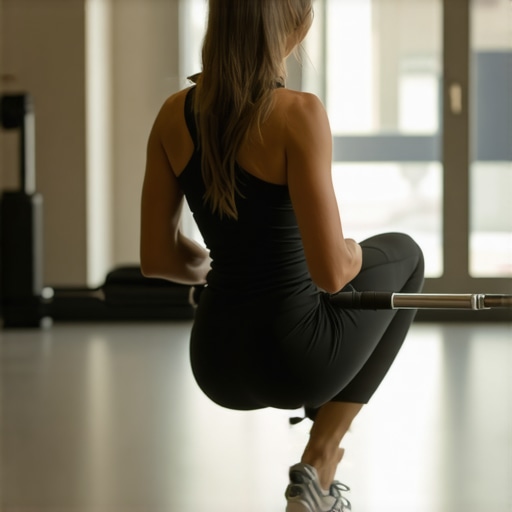
The Bird-Dog Mistake That Puts Stress on Your Spine
I was on my living room rug, face turning red, leg kicked toward the ceiling like I was auditioning for a ballet I wasn’t invited to. I thought I was ‘strengthening my core.’ In reality, I was just grinding my lumbar vertebrae together. My lower back screamed. That was the day I realized the bird-dog isn’t just about moving your limbs; it’s about what stays still. Most of us treat it like a leg lift, but that’s exactly where we go wrong.
That One Cringe-Worthy Move That Nearly Wrecked My Back
It feels silly to admit, but I used to think more height meant more progress. I’d kick my leg out so high that my spine looked like a swaybacked horse. I was trying to revitalize my mobility, but I was actually creating a massive amount of shear force on my discs. When you arch your back during a bird-dog, you aren’t engaging your core; you’re just compressing your spine. It took me three days of muscle spasms to realize I was doing it all wrong. Today, I’m going to show you the one subtle adjustment that turns this ‘risky’ move into the ultimate spinal protector.
Is This Basic Exercise Actually Dangerous?
You might be thinking, ‘It’s just a bodyweight move, how bad can it be?’ The truth is, even simple movements can cause issues if your form is off. Research highlights that excessive lumbar extension—that deep arching—can significantly increase the load on your facet joints. According to a study published by the American Council on Exercise, poor spinal alignment during core exercises is a leading cause of non-contact back injuries. It’s the difference between building stability and begging for a pinched nerve. Have you ever felt a sharp pinch in your mid-back while trying to do a simple stretch at home?
The Arching Trap We All Fall Into
Early in my journey, I made the mistake of focusing on the leg instead of the hips. I thought my glute medius would fire harder if I reached for the stars. Nope. All I did was tilt my pelvis and lose the very stability I was chasing. To fix this, you need to think about your spine as a table that can’t let a glass of water spill. If you’ve been struggling with lower back instability, your bird-dog form is likely the culprit. Instead of kicking up, think about pushing back through your heel. This keeps the pelvis neutral and protects those delicate lower discs from unnecessary grinding.
Stop Guessing Your Alignment
To turn this move into a true stabilizer, you must start with a neutral setup. Get on all fours on a firm mat. Your wrists should be directly under your shoulders and your knees directly under your hips. Most people drop their head, which puts unnecessary strain on the upper spine. Instead, keep your gaze fixed on the floor between your thumbs. This simple adjustment helps you unlock neck pain relief by maintaining a straight line from your skull to your tailbone. Think of your spine as a single iron rod that shouldn’t bend or flex as you move.
Why Your Breath is Your Secret Weapon
Before you move a single limb, you need to create internal pressure. Don’t just ‘suck in’ your stomach. Imagine your torso is a soda can; if it’s empty, it crushes easily, but if it’s pressurized, it’s nearly impossible to bend. Take a deep breath and expand your ribs outward. Learning how to breathe properly to reduce tension ensures that your deep core muscles, like the transversus abdominis, are actually doing the heavy lifting. I remember a Tuesday morning two years ago, recovering from a back tweak. I tried to just ‘squeeze my abs’ and felt a sharp zing. It wasn’t until I focused on that 360-degree breath that the pain vanished during the movement. 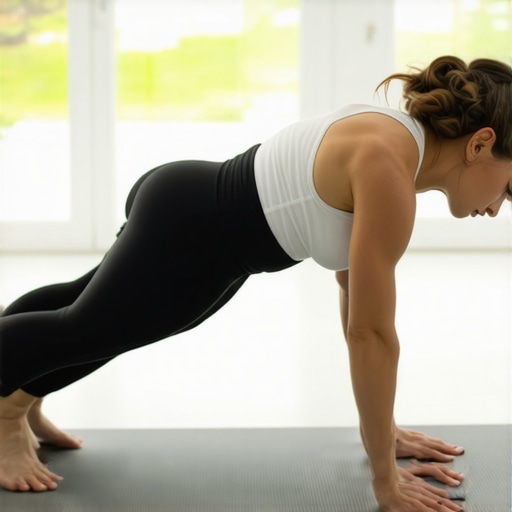
The Secret is in the Slide
The biggest mistake is the ‘kick.’ When you kick your leg up, your lower back arches, and you lose all stability. Instead, use the ‘Glide Rule.’ Imagine there is a heavy glass door behind you that you need to slide open with your heel. Slowly slide your foot along the floor until your leg is fully straight, then lift it no higher than hip level. This keeps the work in your hips and prevents the lumbar spine from collapsing. If you find your leg shaking or your back dipping, it is a clear sign that your glutes won’t fire correctly. By keeping the movement low and controlled, you force the right muscles to engage without sacrificing your discs.
Balance a Bowl on Your Lower Back
Your pelvis should remain perfectly level throughout the entire repetition. Imagine a bowl of hot soup sitting on your lower back. If you tilt your hips even slightly to the side, that soup spills. To master this, you might need a tiny pelvic tilt trick to keep your tailbone tucked slightly. This prevents the ‘rotational shear’ that often leads to SI joint pain. When I first tried this with a foam roller balanced on my back, it fell off six times in a row. It was humbling. But that slow, boring precision is exactly what boosts mobility and eases pain better than any high-intensity workout ever could.
Focus on the Fingertips and Heels
As you reach your opposite arm forward and leg back, focus on length rather than height. You want to be the longest version of yourself. Reach your fingertips toward the front wall and your heel toward the back wall. This creates a traction-like effect on the spine, subtly decompressing the vertebrae while the core works to hold the line. This is a foundational part of understanding back pain management—learning how to create space in the joints while maintaining rigid stability elsewhere. If you feel a pinch in your shoulder, keep your arm lower or keep your hand on the floor until your mid-back strength catches up. Every inch of movement must be earned through stability.Most people assume that because their lower back feels tight, they need to stretch it out with deep toe-touches or aggressive twists. This is one of the most dangerous myths in the world of mobility. In my experience, that ‘tight’ feeling isn’t a call for more flexibility; it’s actually your nervous system ‘splinting’ the area because it lacks stability. When you force a stretch on an unstable spine, you’re essentially picking at a scab. Dr. Stuart McGill, a world-renowned expert in spine biomechanics, frequently points out that many patients with back pain actually have too much mobility in their lumbar spine and not enough stiffness. This is why your back feels better when you keep moving rather than staying in a static stretch.
Stop Stretching Your Way Into More Pain
If you’ve been aggressively stretching your hamstrings or lower back to fix your ache, you might be accidentally making things worse. The ‘trap’ here is confusing tension for shortness. Often, your glute medius is underactive, forcing your lower back muscles to work overtime just to keep you upright. Instead of stretching the back, we need to wake up the stabilizers. Have you ever fallen into this trap? Let me know in the comments.
Why Does My Neck Still Hurt When I’m Training My Core?
It sounds disconnected, but your cervical spine and your lumbar spine are like two ends of the same jump rope. If you’re cranking your neck up during a bird-dog or a dead-bug, you’re creating tension that travels all the way down. This is the hidden link between neck pain and spinal health that most beginners miss. I’ve seen clients struggle for months with lumbar issues, only to find relief once they stopped ‘tucking’ their chin too hard or looking at the mirror. 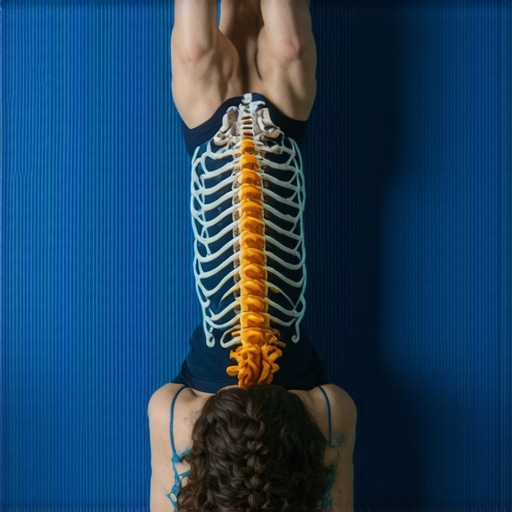
The Feet and Foundation Nuance
Here is a secret most trainers won’t tell you: your back pain might actually start in your arches. At the clinic, we often find that why we look at your feet is just as important as where we place our hands. If your feet are collapsing, your knees rotate, your hips tilt, and your lower back takes the hit. To revitalize your mobility, you have to stop looking at your spine in isolation. Everything is a chain. If you’re serious about mobility mastery, you need to treat the body as a single unit, starting from the ground up.I used to think that once the pain stopped, the work was over. I was wrong. Maintenance is the boring part of recovery that nobody wants to talk about, but it’s where the real magic happens. If you want to keep your spine feeling like a well-oiled machine, you need a toolkit that goes beyond just one exercise. I personally swear by a standard lacrosse ball for those stubborn knots. While many people reach for fancy vibrating foam rollers, I’ve found that the targeted density of a simple ball allows for much better trigger point release. Using a tennis ball to fix that spot under your shoulder blade is a game-changer when you’re stuck at a desk all day. It’s about being proactive rather than reactive to those little twinges before they turn into full-blown spasms. 
How Do I Keep My Back Healthy for the Long Haul?
One of the biggest keys to longevity is the 20-20-20 rule for desk workers. For every 20 minutes of sitting, I look 20 feet away for 20 seconds, and I add a 20-second standing reset. This prevents the cumulative strain that leads to a pinched nerve in the neck. I also rely on these simple yet effective chiropractic hacks that integrate into my morning routine. Dr. Kelly Starrett, author of ‘Becoming a Supple Leopard,’ emphasizes that we should treat our bodies like high-performance vehicles; you don’t wait for the engine to blow up before changing the oil. He argues that ‘maintenance is the price of high performance,’ and that applies to your spine more than anywhere else. This means being consistent with small, daily inputs rather than hoping a single session will fix everything.
My Favorite Gear for Staying Pain Free
Beyond the lacrosse ball, I recommend investing in a high-quality lumbar roll for your office chair. Most built-in ‘ergonomic’ supports are too soft or placed at the wrong height. A firm, portable roll allows you to hit the apex of your lumbar curve precisely. I’ve found that this simple addition is a cornerstone for back pain recovery. Another tool I use daily is a simple wedge for my laptop. It raises the screen so my eye line remains level, which is vital to unlock neck pain relief during long work sessions. It’s not about the most expensive gear; it’s about the tools that actually facilitate better habits.
The Future of Back Health is Wearable
In the next five years, I predict we’ll see a massive shift toward wearable biofeedback. Imagine a small sensor on your shirt that vibrates the second your shoulders start to slump or your lower back loses its neutral curve. We are moving toward a world where regaining full mobility after injury isn’t just about clinic visits, but real-time data tracking that helps us correct our form throughout the day. This technology will bridge the gap between what happens in the doctor’s office and what happens at your kitchen table. Try this advanced tip today: spend just two minutes using a lacrosse ball on your upper traps right before bed. It signals your nervous system to downregulate and release the day’s tension, which is a small win that pays massive dividends for your sleep quality and spinal alignment.
The Hardest Lesson I Learned About Chasing Flexibility
For years, I thought that if my back felt tight, I needed to stretch it more. I was wrong. The biggest lightbulb moment in my recovery was realizing that my brain was tightening my muscles to protect an unstable spine. When I stopped stretching and started stabilizing, that chronic tightness finally vanished. It turns out that enhancing mobility naturally with chiropractic care isn’t about getting more flexible; it’s about getting strong in the right places.
- Height is the enemy of stability: Kicking your leg high in a bird-dog just crunches your lumbar discs. Reach for length, not the ceiling.
- Neck position dictates back health: If you look up during core work, your lower back will automatically arch. Keep your gaze down to find neck and back pain solutions that actually address the root cause.
- Listen to the whispers: A tiny pinch today is a muscle spasm tomorrow. Use the bird-dog to check in with your body daily.
The Gear That Saved My Spine
I don’t believe in expensive gadgets, but three specific things have made a permanent home in my gym bag. First, a standard lacrosse ball. It is dense enough to reach deep knots under the shoulder blade that a soft foam roller simply misses. Second, I highly recommend the book Becoming a Supple Leopard by Dr. Kelly Starrett; it is the ultimate manual for human maintenance. Finally, a firm lumbar roll for your car or office chair is non-negotiable to restore your back mobility through better daily posture. These tools provide the consistent input your nervous system needs to stay out of pain.
Your Spine Deserves Better Habits
Taking care of your back isn’t a one-time event; it’s a series of small, intentional choices you make every single day. Whether you’re refining your bird-dog form or applying tips from the pros to your morning routine, remember that progress is measured in consistency, not intensity. Your body has an incredible ability to heal if you just stop picking at the scab and start building a stable foundation. Which part of the bird-dog felt the most awkward for you to master? Let me know in the comments below!