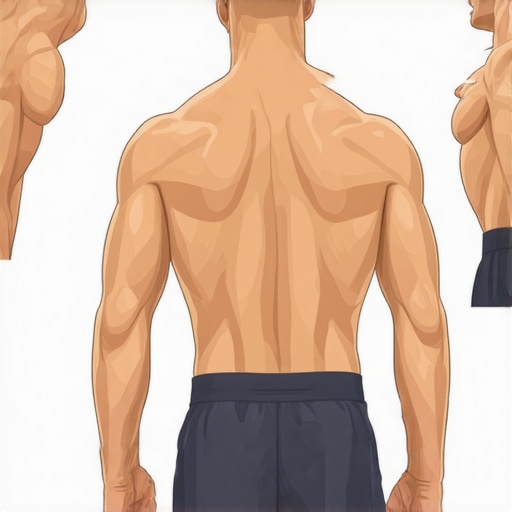
The Dead Bug Variation That Actually Fixes Lower Back Instability
I was lying on my living room floor, staring at the ceiling, wondering why my core felt like a house of cards despite all my hard work. For years, I did every plank and sit-up in the book. Yet, the moment I had to pick up a laundry basket, my spine felt like it was made of wet noodles. It was a classic case of lower back instability. I’d try to fix it with yoga flows that accidentally strained my SI joint, only to end up right back where I started. Then I had my lightbulb moment: I wasn’t actually using my core; I was just moving my limbs while my back did all the heavy lifting. Today, I am going to show you the exact tweak that turned my floppy spine into a pillar of stability.
Stop Doing Dead Bugs the Way Your Gym Teacher Taught You
If you’ve ever tried the standard dead bug and felt your lower back pop off the floor, you know exactly what I’m talking about. Most people just flail their arms and legs around while their spine arches like a bridge. I made that exact mistake for months. I thought “more movement” meant “more progress.” In reality, I was just reinforcing the very instability I was trying to fix. We need to focus on the hidden muscle that stabilizes your lower spine instead of just checking a box on a workout list. This specific variation forces you to engage your deep stabilizers by using a simple wall-press or a yoga block. It’s not about how far you move your legs; it’s about how much you can keep your spine from moving at all. Have you ever felt that annoying “twinge” in your lumbar even when you’re trying to do everything right? Reach out and let me know if you have been there too.
Is this just another “miracle” move that wastes my time?
I get the skepticism. We are bombarded with “one weird trick” ads constantly. But this isn’t a gimmick; it’s about mechanics. According to research in the *Journal of Physical Therapy Science*, nearly 80% of adults will experience low back pain in their lives, and it is frequently tied to a lack of “neuromuscular control” rather than just a lack of raw strength. You can have six-pack abs and still have a back that throbs after five minutes of gardening. This variation fixes the “why” behind the pain. Instead of just “strengthening your abs,” we are retraining how your brain tells your spine to stay still while your body moves. It’s the difference between mastering back and neck pain relief and just putting a temporary bandage on the problem. Before we get into the “how-to,” you need to understand that your pelvic floor matters for spinal stability just as much as your “abs” do. Let’s look at the foundational setup that changed everything for me.
Master the Wall-Press Dead Bug
To stop the flailing that ruins your progress, you need a physical anchor that forces your core to work. Lie on your back with your head toward a wall, your knees bent at ninety degrees in a tabletop position. Reach your arms overhead and press your palms firmly into the baseboard. This isn’t just a resting position; by pushing into the wall, you engage your upper core and lats, which helps ‘pin’ your mid-back to the floor. It is one of those expert methods to relieve discomfort that actually addresses the root cause of instability by using your own body as a lever.
Get Your Back Flat Against the Floor
Before you even think about moving a leg, you must master the setup. Imagine there is a grape sitting right under your lower back. Your goal is to squish that grape into the floor using only your deep abdominal muscles. This is the essence of the pelvic tilt trick for instant lumbar relief. If you cannot maintain this pressure, the exercise has not even started yet. I spent years thinking I was strong because I could hold a three-minute plank, but the first time I tried to hold this ‘squish’ while slowly extending a leg, I realized I had been cheating with my hip flexors the whole time.
Keep Your Ribs Down and Your Spine Safe
As you slowly lower one heel toward the ground, your ribs will naturally want to pop up like a toaster. Do not let them. If you feel your rib cage lifting or a gap forming under your spine, it is a sign that your back is arching and you have lost control. Understanding why your ribs flare when you reach overhead is the key to protecting your spinal discs from unnecessary shear force. You have to use your breath to keep the canister of your core pressurized. You should learn how to breathe into your lower back to reduce muscle spasms during this movement; a sharp, forceful exhale as the leg lowers helps knit those ribs down toward your hips.
The Hotel Floor Reality Check
I remember a specific business trip to Omaha where I spent six hours straight behind the wheel. By the time I checked into my hotel, my lower back felt like a compressed spring ready to snap. I did not reach for a heating pad. Instead, I got on the carpet and did three sets of these wall-press dead bugs. It felt messy at first—my legs were shaking when they were only three inches off the ground—but the relief was almost immediate. It is a perfect example of the posture fix for people who spend hours behind a steering wheel. It was not about a passive stretch; it was about telling my nervous system that my spine was supported and safe. Integrating these effective chiropractic hacks into your routine is what finally builds that ‘pillar’ of stability that survives daily life.
Slow Down to Speed Up Progress
The biggest mistake is rushing the repetition. If it takes you less than five seconds to lower and raise your leg, you are using momentum rather than muscle. You want to feel that deep, internal burn that makes it hard to hold a conversation. When you move slowly, you force the tiny stabilizers to fire rather than letting the big, prime mover muscles take over. This controlled tension is what creates long-term resilience and prevents the ‘house of cards’ feeling I used to have every time I bent over to tie my shoes.
Most people think the answer to a tight back is more stretching. In my experience, that is exactly how you end up in a cycle of chronic flares. I spent years trying to touch my toes to fix my lumbar aches, only to find that my back felt more fragile afterward. This is the biggest contrarian truth in spinal health: your lower back often needs less mobility and more stiffness. When you feel ‘tight,’ it is often your nervous system creating protective tension because it does not trust your muscles to support your spine. If you stretch that tension away without building stability, you are essentially taking the lug nuts off a moving car.
The Stretching Trap That Keeps You Stiff
The trap I see most often is the ‘knee-to-chest’ obsession. While it feels good for thirty seconds, you are actually putting your spinal discs into a high-pressure flexed position. If you have an underlying disc issue, this is a recipe for disaster. According to Dr. Stuart McGill, a world-renowned spine biomechanist, the ‘stretching-is-good’ mantra is often what prevents long-term recovery. Instead of lengthening the lower back, we should be looking at the single best exercise for thoracic mobility to take the pressure off. If your mid-back is stuck, your lower back is forced to move too much to compensate. This is why we adjust your mid-back to help your lower back recover—it is about restoring the natural hierarchy of the spine.
Should You Be Aggressively Stretching Your Lower Back?
The short answer is almost always no. Advanced recovery is about knowing where to be mobile and where to be a rock. A common mistake is thinking a foam roller can solve everything. In fact, why your foam roller might be hurting your lower back usually comes down to the fact that you are rolling over the lumbar spine, which has no rib cage for protection, potentially irritating the very nerves you want to soothe. Instead of mindless rolling, focus on proven strategies for back pain relief that prioritize ‘neuromuscular shielding.’ Have you ever fallen into this trap of stretching a painful spot only to have it feel worse the next day? Let me know in the comments.
Stop Treating the Symptom and Start Training the Anchor
Another nuance people miss is the ‘Oops’ factor of ice. We are told to ice everything, but why icing isn’t always the best move for a stiff neck or back is because it can sometimes slow down the blood flow needed for actual tissue repair. You need to understand that better posture and mobility come from a balance of movement and stillness. If you are constantly chasing ‘relief’ through passive means like heating pads or ice, you are missing the opportunity to build a resilient core. Real expertise means recognizing that insights from wellness experts all point toward one thing: functional stability is the only way to stay pain-free in the long run. By mastering the dead bug variation we discussed earlier and avoiding the stretching trap, you are finally giving your spine the support it has been begging for.
The Small Tools That Make a Massive Difference
I don’t believe in buying a $5,000 ergonomic chair if you haven’t mastered the basics first. My personal “spine kit” is actually quite inexpensive. I use a simple yoga block to squeeze between my knees during dead bugs—this fires up the adductors, which are functionally linked to your pelvic floor and deep core. If you find your hips clicking during leg lowers, this is a total game-changer. I also keep a massage gun in my desk drawer, but I never use it directly on the spine itself. You need to know how to use a massage gun on your lower back safely by targeting the glutes and the thick erector muscles on either side of the vertebrae, rather than the bone. Integrating these effective chiropractic hacks into your week is about maintaining the “stiffness” we built earlier while managing the daily muscular tension that modern life throws at us.
How can I maintain this core stability for years to come?
The secret isn’t a grueling 60-minute gym session; it’s what I call “snackable” movement. I swear by the 5-minute reset for a stiff lumbar spine every single morning before I even check my email. Consistency beats intensity every time when it comes to the nervous system. If you have a demanding schedule, learning how to stay mobile when you have a desk job is the difference between retiring with a healthy back or spending your 60s in a specialist’s office. You have to treat your spine like a bank account—every dead bug is a deposit, and every hour of slouching is a withdrawal. According to research by Dr. Stuart McGill in *Back Mechanic*, the “Big Three” exercises (which include variations of the bird-dog and curl-up) are designed specifically to build the endurance your stabilizers need to stay active all day long. This isn’t about getting a six-pack; it’s about making sure those tiny muscles don’t quit on you by 2:00 PM.
Why the Future of Spinal Health is Proactive, Not Reactive
I predict that over the next decade, we are going to see a massive shift away from “fixing pain” and toward “optimizing biomechanics.” We already see this with chiropractic secrets to regain full mobility that focus on movement patterns rather than just chasing symptoms. We will likely see more wearable tech that vibrates the moment your deep core disengages or your ribs flare during a workout. But you don’t need a robot to tell you how to move if you listen to your body. By applying these proven strategies for back pain relief, you are already ahead of the curve. If you want to take things to the next level today, I challenge you to try the “yoga block squeeze” during your next set of dead bugs. It’s an advanced tweak that will reveal exactly where your stability is leaking. It might feel humbling when you start shaking after three reps, but it is the fastest way to build a spine that lasts a lifetime.
The Most Surprising Lessons I Learned About Lower Back Resilience
Reflecting on my own journey through chronic aches, the biggest shift happened when I stopped chasing ‘more’ and started chasing ‘better.’ First, I realized that traditional sit-ups were often my enemy, as they reinforced the lumbar flexion that caused my flares in the first place. Second, I learned that the truth about weightlifting belts is that they cannot replace the internal pressure your own breath creates. Finally, I discovered that my environment was working against me; seeing why your SI joint hates your soft mattress was a lightbulb moment for my morning stiffness. These insights taught me that stability isn’t just about strength—it is about the nervous system knowing how to lock the spine in place while the rest of the body moves.
My Personal Toolkit for Building a Rock-Solid Core
I don’t believe in expensive gadgets, but a few simple items have made a massive difference in my recovery. I always keep a standard yoga block nearby to squeeze between my knees during dead bugs—it activates the adductors and pelvic floor simultaneously. I also swear by ‘Back Mechanic’ by Dr. Stuart McGill, which is essentially the bible of back pain recovery through movement. For those looking for more hands-on guidance, investigating expert tips for back pain prevention provides a clear roadmap for daily maintenance. These tools aren’t just for ‘rehab’; they are the daily fuel for a high-performing, resilient body.
Your Journey to a Pain-Free Life Starts Now
You have the blueprint now: the wall-press, the pelvic tilt, and the slow, intentional breath. Building a foundation of true stability takes time, but it is the single most rewarding investment you can make in your physical health. By incorporating these small tweaks, you are moving away from reactive fixes and toward a lifestyle of functional strength. Your spinal health is within your control, one rep at a time. Have you ever noticed your lower back popping off the floor during core work, and did the wall-press technique finally help you feel that deep abdominal connection? Let me know in the comments below!