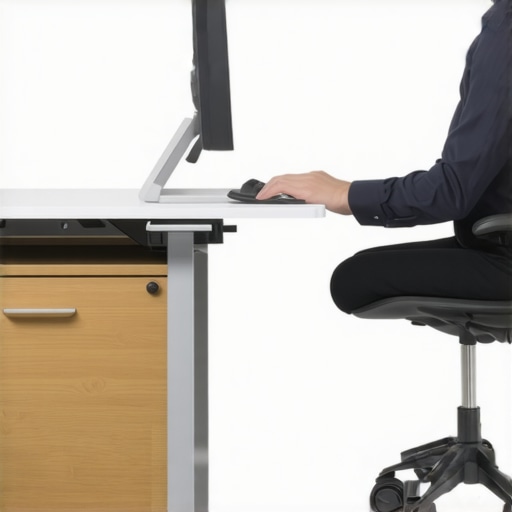
Why Your Shoulder Feels Heavy After Typing
I remember the exact moment I realized my desk job was literally weighing me down. It was 3:00 PM on a rainy Tuesday, and my right shoulder felt like someone had strapped a heavy wet sandbag to it. I tried the classic ‘roll the shoulders back’ move, but all I got was a dull ache and a sudden urge to lie on the floor. I used to think I just needed a better gym routine or a more expensive chair. Man, was I wrong. I spent hundreds on fancy gadgets, yet the heaviness remained because I was treating the symptom, not the source. If you’ve ever reached for your mouse and felt a dragging sensation that starts at your neck and pulls all the way down to your shoulder blade, you aren’t alone. We are going to dig into why this happens and, more importantly, how you can stop feeling like you’re carrying the world on one side of your body. [IMAGE_PLACEHOLDER]
Have you ever felt like one shoulder is permanently hitched two inches higher than the other after a long email chain? Drop a comment below if you’ve tried every stretch in the book and still feel like lead.
That Invisible Weight Is Not Just Muscle Tension
The truth is, that ‘heavy’ feeling is often your nervous system’s way of screaming for help. When we type, we aren’t just moving our fingers; we are engaging a massive chain of muscles from the fingertips to the base of the skull. One of the biggest mistakes I made early on was assuming my shoulder was the problem. I’d rub it, stretch it, and even use a lacrosse ball on it, but the relief lasted about ten minutes. It wasn’t until I started looking at the hidden link between neck pain and spinal health that things started to click. Your shoulder blade is essentially a floating bone that relies on a delicate balance of tension. If your neck is out of whack, your shoulder pays the price. According to the Cleveland Clinic, prolonged static postures can lead to ‘postural syndrome,’ where the muscles literally fatigue to the point of neurological inhibition. This is why your shoulder pain is actually coming from your neck more often than not. When the nerves in your lower neck are compressed, even slightly, they can’t send clear signals to the muscles that support your arm. The result? A limb that feels twice as heavy as it actually is. It’s like trying to run a high-end computer on a frayed power cord. No amount of cleaning the monitor will fix the internal power struggle.
Is a fancy ergonomic setup actually worth the money?
You might be skeptical. I certainly was. I thought if I just bought the $1,000 chair, my problems would vanish. But here’s the kicker: even the perfect office chair is still making you slouch if you don’t know how to carry your own frame. I wasted so much time adjusting armrests and buying vertical mice when I should have been looking at my breathing and my ribcage. If your ribs are ‘locked’ or flared, your shoulders have nowhere to go but up and forward. This creates that lead-heavy sensation that makes you want to quit work by noon. I had to learn the hard way that ribcage movement is essential for better mobility. By ignoring my core stability and focusing only on where it hurt, I was just spinning my wheels. You can have the best keyboard in the world, but if your upper back is shaped like a question mark, the heaviness will always return. We need to look at how the entire system resets itself during the day.When that heavy feeling hits, the natural instinct is to stretch the shoulder. Don’t do it. It is like trying to fix a flickering light by polishing the bulb. Instead, we need to look at the wiring. I remember sitting in a crowded coffee shop last year, my right arm feeling practically paralyzed by a dull, dragging ache. I realized I was ‘telescoping’ my neck—reaching toward my laptop like a turtle. The moment I corrected my head position, the weight lifted by fifty percent.
The Three-Step Reset to Lighten Your Load
Master the chin tuck to decompress your nerves
If you want immediate relief, you have to tackle the ‘tech neck’ that is compressing the nerves in your lower cervical spine. Think of your neck as the mast of a ship. If it leans too far forward, the rigging—your muscles—has to work ten times harder to keep the sail upright. This is exactly why I recommend the 30 second reset for tech neck fatigue. By gently tucking your chin and pulling the base of your skull upward, you create space for those compressed nerves to breathe. I used to do this five times an hour while writing, and it was the only thing that kept me from needing a massage therapist on speed dial. You can also learn how to strengthen your deep neck flexors to make this posture your new default setting rather than a constant struggle.
Fix your breathing to drop your ribs
Your shoulder blades sit on your ribcage like a saddle on a horse. If the horse is startled and its back is arched—meaning your ribs are flared—the saddle simply won’t sit right. Most of us are ‘chest breathers’ when we are stressed or focused. This keeps our ribs high and our shoulders jammed into our ears. I spent years wondering why my traps were always rock hard until I tried the 10 second breath fix for rib pain. When you exhale fully and feel your ribs drop, your shoulder blades finally have a flat surface to rest on. This is one of those chiropractic secrets to boost neck comfort and function that most people ignore. 
Adjust your line of sight to save your spine
You can have the best intentions, but if your screen is too low, gravity will win every time. I have seen people buy expensive setups but still look down at their monitors. Check the 5 second check to see if your monitor is too low. Your eyes should naturally hit the top third of the screen. If they don’t, your chin drops, your neck shears forward, and the heavy shoulder returns. This is often the hidden link between neck pain and spinal health that we overlook because it is so simple. If you are a laptop user, you absolutely need a stand; otherwise, why your laptop stand is still causing neck strain might be your reality if you aren’t using an external keyboard alongside it.
Mobilize the mid-back for long-term freedom
The ‘lead shoulder’ is frequently a sign that your mid-back has become a solid brick. When your mid-back doesn’t move, your neck and lower back have to compensate. I found that performing the scapular squeeze that relieves mid back tension twice a day changed my life. It isn’t just about strength; it is about reminding the brain that those muscles actually exist. If you feel stuck, it might be time to restore your back mobility with proven chiropractic strategies to ensure your joints are actually gliding instead of grinding.
I see it every single day: people sitting like statues because they’ve been told that ‘perfect posture’ is the only way to avoid pain. They pin their shoulders back, arch their lower backs, and hold their breath, thinking they are doing their bodies a favor. But in my experience, this rigid adherence to a static position is exactly why the heaviness in your shoulder won’t go away. The truth is that why your perfect posture is actually making you stiff is because your body was designed for movement, not for posing like a mannequin. When you lock yourself into what you think is a ‘good’ position, you are actually creating a massive amount of isometric tension that fatigues your muscles faster than slouching ever would. A study published in the Journal of Physical Therapy Science found that postural variability—the frequency with which you change positions—is a much stronger predictor of comfort than maintaining a single ‘correct’ alignment. Have you ever fallen into this trap of trying to be perfectly upright only to feel more exhausted? Let me know in the comments.
Stop stretching the muscles that are already over-lengthened
One of the biggest mistakes—the ‘oops’ factor I see most often—is the reflex to stretch the part of the shoulder that feels heavy or tight. If your shoulder feels like lead, your instinct is probably to pull your arm across your chest or tilt your head away to stretch your upper traps. Here is the nuance: those muscles aren’t tight because they are short; they are ‘tight’ because they are being stretched to their limit by your forward-slumping shoulders. They are like a rubber band that is already pulled taut. Stretching them further just makes the nervous system panic, leading to more protective guarding and that deep, dragging ache. This is often why why your foam roller might be hurting your lower back or your neck—you are attacking the symptom rather than the structural imbalance. Instead of stretching the back of your shoulder, you need to open the front of your chest to let the shoulder blade sit back naturally. 
Can your core be too rigid for your own good?
We are constantly told to ‘engage the core,’ but for many high-achievers, this leads to a secondary problem: a spine that lacks the ability to rotate. If you have built a ‘cylinder of iron’ around your midsection, your upper back and neck have to work overtime to compensate for the lack of fluidity. I have found that why your strong core might actually be too rigid is a primary driver of chronic neck tension. You need enough stability to protect your discs, but enough mobility to breathe and twist. If you can’t move your ribcage independently of your pelvis, that heavy shoulder sensation will become your permanent shadow. This is where you can enhance mobility naturally with chiropractic care by focusing on joint play rather than just muscle strength. We also have to look far away from the site of pain to find the real culprit. You might be surprised to learn why we look at your feet to solve your neck issues; if your foundation is off, the ‘weight’ you feel in your shoulder is just the top of a very long leaning tower. Even things like the connection between your jaw tension and neck mobility play a role in how light or heavy your arms feel during a long workday.
I’ve stopped looking for a miracle cure and started looking for a routine I can actually stick to while I’m deep in a project. The biggest shift in my own journey happened when I stopped treating movement as something I only did for an hour at the gym. You have to learn how to stay mobile when you have a desk job and no time for the gym by integrating small, effective micro-habits into your work hours. If you wait until you are already in pain to move, you’ve already lost the battle. My favorite low-effort strategy is the 20-20-20 rule for desk workers, but I’ve tweaked it for my spine: every twenty minutes, I stand up and reach for the ceiling for twenty seconds. This small act resets the neural tension that causes that lead-heavy arm feeling.
Stop waiting for the gym to fix your spine
Maintenance isn’t about intensity; it’s about consistency. I used to think I needed to lift heavy weights to ‘support’ my back, but I realized that revitalize your mobility means focusing on the small stabilizer muscles first. If your big prime movers—like your lats and traps—are doing all the work, they will eventually seize up. Research published in the Journal of Electromyography and Kinesiology highlights that intermittent muscle activation is significantly more effective at preventing long-term postural fatigue than one-off exercise sessions. This is why I advocate for boost your back health with simple chiropractic hacks that you can do while your coffee is brewing or while you are on a conference call.
The personal toolkit for a pain-free office
I am often asked what gear actually works. I’ve tried the vibrating posture sensors and the weird back braces, and most of them ended up in a drawer. What actually stayed on my desk? A simple lumbar roll in my office chair. It’s not fancy, but it forces the low back into a natural curve, which takes the pressure off the neck. I also realized that how to adjust your monitor is the single most important ergonomic change you can make. If you are looking down even five degrees, you are doubling the weight of your head on your neck. I use a dedicated monitor arm so I can move the screen depending on if I am sitting or standing, ensuring my eyes always hit that sweet spot. 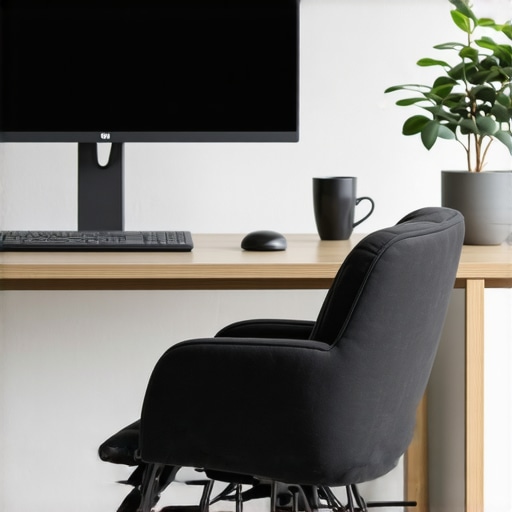
How can I maintain these mobility gains forever?
The future of spinal health is moving toward ‘smart’ environments. I predict that within the next five years, we’ll see haptic feedback built into our desk chairs and shirts that gently buzz when our ribcage stops moving or our breathing becomes too shallow. Until then, you have to be your own biofeedback loop. You need to restore your range and enhance movement by listening to the early warning signs. That ‘heavy’ shoulder is an early warning. Don’t ignore it. I want you to try one thing today: set a timer for thirty minutes and perform the 30 second reset for tech neck fatigue. It is the most effective way to decompress the nerves that make your arm feel like a bag of sand. If you can do that three times today, you are already ahead of 90% of desk workers.
What 1,000 Hours of Desk Work Taught Me About My Skeleton
Looking back, I realize that the most profound shifts in my health didn’t come from a specific gym session, but from understanding how my body actually communicates. Here are a few ‘lightbulb moments’ that changed everything for me:
- Pain is a lag indicator. By the time your shoulder feels like lead, your neck and upper back have likely been struggling for weeks. Don’t wait for the ache to become unbearable before you unlock neck pain relief with these essential tips.
- The site of the pain is rarely the source. I spent years rubbing my shoulder when the real issue was a stiff mid-back and a forward-shifted head.
- Consistency beats intensity every single time. A two-minute postural reset every hour is infinitely more effective for your nervous system than a grueling hour-long massage once a month.
Tools That Keep My Neck From Feeling Like Concrete
I’ve trimmed my workspace down to the essentials that actually move the needle. If you’re looking to build your own relief kit, start here: [IMAGE_PLACEHOLDER]
- A Dedicated Monitor Arm: Being able to adjust your screen to eye level is non-negotiable. If you’re on a budget, even a stack of books helps to relieve neck and back discomfort by preventing that ‘turtle neck’ slump.
- The Humble Tennis Ball: You don’t need fancy massage guns. Knowing how to use a tennis ball to fix that spot under your shoulder blade is a game-changer for those 4:00 PM flare-ups.
- A Supportive Pillow: Your recovery happens while you sleep. If your neck isn’t supported, you’re starting every day at a deficit.
You Aren’t Destined to Feel This Heavy Forever
It’s easy to accept chronic tension as just ‘part of the job,’ but your body is remarkably resilient when you give it the right inputs. You don’t have to quit your career or spend thousands on gadgets to find freedom. By integrating small movements, focusing on your breath, and seeking expert chiropractic solutions that work, you can reclaim that feeling of lightness. Your shoulder doesn’t have to feel like a sandbag, and your desk doesn’t have to be a place of physical dread. Take one small step today—even if it’s just a thirty-second stretch—and watch how your body responds. Have you ever noticed that your shoulder feels heavier on high-stress days? I’d love to hear your experience in the comments below.