Why your pillow choice matters more as you age
I woke up three weeks ago feeling like my neck had been fused together in my sleep. I couldn’t even turn to see my alarm clock without a wince that probably woke up the neighbors. It wasn’t a sports injury, a fall, or a car crash; it was just… sleeping. This is the ultimate betrayal of the aging body. For years, I had just grabbed whatever pillow was on sale at the local superstore, thinking a pillow was just a soft place to land. I was wrong. Dead wrong. I remember it vividly: 6:15 AM on a Tuesday. I tried to roll over to hit the snooze button, and a sharp, electric zip shot from the base of my skull right down to my shoulder blade. I froze. I wasn’t twenty anymore, and my body was making sure I knew it. If you’ve been waking up feeling like you’ve gone twelve rounds in a boxing ring, you aren’t alone. We often blame our mattresses or our desks, but the real culprit is usually hiding right under our heads. Today, I want to help you fix that morning “crunch” once and for all. We’re diving into the science of why your cervical spine needs more love now than it did a decade ago and how to stop the cycle of waking up stiff.
That Stiff Neck Isn’t Just “Part of Getting Older”
The hard truth is that our bodies become less forgiving as the candles on the birthday cake multiply. When we’re nineteen, we can sleep on a pile of laundry and wake up ready to run a marathon. But as we age, the intervertebral discs in our spine lose their natural cushion. According to the Sleep Foundation, these discs naturally dehydrate over time, meaning the margin for error in our spinal alignment shrinks every single year. This is why how your sleeping position dictates morning back stiffness becomes a much bigger deal in your 40s and 50s than it was in your 20s. I made the classic mistake of thinking that more fluff equaled more comfort. I bought the most expensive, overstuffed down pillow I could find, only to realize it was actually pushing my chin toward my chest all night, creating a permanent kink. That “perfect” pillow was actually a one-way ticket to chronic tension. If you’re struggling with this, you need to understand the side sleeper’s guide to pillow placement or, even more importantly, why you must stop sleeping on your stomach if you want to save your neck from constant rotation strain. My goal today is to help you navigate the sea of memory foam and latex to find what actually keeps your spine neutral so you can wake up feeling refreshed instead of wrecked.
Does Spending More Really Buy You a Better Night?
There’s a common fear that “orthopedic” is just a fancy word used to double the price of a regular pillow. I was skeptical too. I thought, “It’s just foam, right?” But the reality is that the right density can be the difference between a restful night and a week of visits to the chiropractor. It’s not just about the pillow itself, though; it’s about the habits we bring to the bedroom. For instance, why looking at your phone in bed is destroying your sleep quality isn’t just about the blue light—it’s about the awkward angle your neck stays in before you even close your eyes. Tell me, have you ever woken up and had to use your hands to physically lift your head off the pillow because your neck muscles felt paralyzed? It’s a terrifying feeling, but it’s a clear signal from your body that your current setup is failing you. We’re going to break down exactly what to look for based on your specific needs, so you can stop guessing and start sleeping.
Find Your Perfect Loft Before Your Next Sleep
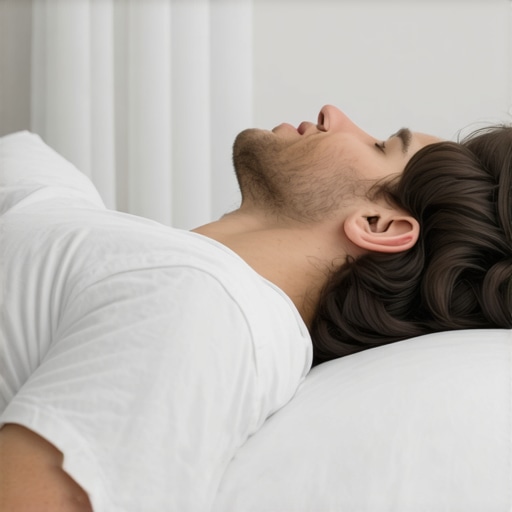
Think of your neck as a high-pressure garden hose. When it’s straight, everything flows perfectly. But if you use a pillow that is too high or too low, you are essentially putting a permanent kink in that hose for eight hours. This is why the side sleeper’s guide to pillow placement emphasizes ‘loft’—the compressed height of the pillow. If you are a side sleeper, your pillow needs to be exactly as thick as the distance from your earlobe to the outside edge of your shoulder. I learned this the hard way two years ago. I bought a ‘cloud-like’ down pillow that looked amazing on the shelf. Within two nights, I was back to that ‘electric zip’ feeling because my head was tilting toward the mattress all night. I swapped it for a contoured memory foam version that actually held its shape, and the relief was almost immediate. If you are a back sleeper, your loft should be significantly lower—almost flat—to prevent your head from being thrust forward. Imagine your spine as a stack of quarters. If one is tilted, the whole stack is unstable. While many people focus on the correct way to use a lumbar roll during the day, your eight hours of sleep is where the real structural recovery happens.
The Secret to Moving Without the Morning Wince
Even if you have the world’s best pillow, you can undo all that good work in five seconds by how you get out of bed. Most of us sit straight up like a vampire rising from a coffin. This puts massive shear force on your lumbar and cervical discs before they have even had a chance to ‘wake up.’ Instead, you should practice the proper way to get out of bed to protect your discs. You roll onto your side, swing your legs over the edge of the mattress, and use your arms to push your torso upright. It is a ‘log roll’ technique that preserves your spinal alignment. I remember a particularly bad morning where I jerked upward to catch a ringing phone and felt my mid-back seize up instantly; now, the log roll is a non-negotiable part of my morning.
Hydrate Your Discs While Your Coffee Brews
Your spinal discs are like sponges; they lose water during the day and rehydrate at night. When you first stand up, they are at their most vulnerable because they are fully ‘inflated.’ If you immediately bend over to pick up a stray sock, you are asking for a herniation. This is where the 30-second morning move to hydrate your spinal discs comes in. Simply standing tall and performing gentle neck retractions—think of making a ‘double chin’ without looking down—helps centralize the disc material. Last month, I started doing these while waiting for my Keurig to heat up. It felt silly at first, but that lingering tightness in my upper traps finally started to dissipate after a week of consistency. While we often think of the neck in isolation, the link between ankle mobility and lower back stability shows that everything is connected. If you start with these small, daily mechanical wins, your neck will finally stop being the loudest voice in the room every morning.I’ve spent the last decade obsessing over these mechanical wins, but I’ve also had to unlearn some of the biggest myths in the ‘wellness’ world. For example, everyone tells you to stretch a tight muscle. It feels intuitive, right? If it’s tight, pull on it until it lets go. But here is the contrarian truth: Your neck isn’t tight because the muscle is short; it’s tight because your brain is using it as a biological parking brake. When your spine feels unstable—perhaps due to a poor pillow or a previous injury—your nervous system sends a ‘lockdown’ signal to the surrounding musculature. This is why stretching a tight muscle isn’t always the answer. If you force that ‘parking brake’ to release through aggressive stretching, your brain will often respond by making the muscle even tighter ten minutes later to protect your joints. This is a classic trap I see people fall into every single day.
Stop Pulling on Your Neck to Relieve Tightness
When you feel that morning ‘knot,’ the natural instinct is to yank your ear to your shoulder. This ‘oops’ factor usually kicks in because you’re actually irritating the nerves further. You might also be falling for the trap of static stretching before you’ve even had your coffee. This is why static stretching might be prolonging your back pain; you’re essentially yanking on cold, ‘sleepy’ ligaments before they have the blood flow to handle the load. Instead of pulling, focus on gentle activation. If you’ve been doing everything ‘right’ for your neck but still feel that morning crunch, the issue might be further down the chain. I also noticed that focusing only on the neck is like trying to fix a leaky roof by mopping the floor. You have to look at the foundation. This is why we look at your feet when your neck hurts. If your arches have collapsed or you’re wearing the wrong shoes, every step you take sends a micro-shudder up your spine. It’s also why walking on concrete is harder on your spine than you think. Your body wasn’t designed for perfectly flat, hard surfaces. It was built for uneven terrain that activates smaller stabilizer muscles.
Can Your Core Be Too Rigid for Your Own Good?
We are often told that a ‘strong core’ is the holy grail of back health. However, many people over-correct and create a torso that is as stiff as a board. This is why your core routine is failing your spine. A healthy spine needs to be like a palm tree—strong but capable of swaying. If you are constantly bracing your midsection, you’re actually transferring all the stress of movement directly into your spinal discs. According to a study published in the Journal of Biomechanics, excessive abdominal bracing can actually increase spinal compression loads by up to 40%. You aren’t building a shield; you’re building a pressure cooker. In reality, why your perfect posture is actually making you stiff is because you’re fighting your body’s natural curves and locking out your joints. Finally, consider the nuance of how you move through space. You might think you’re walking fine, but what your gait analysis reveals about your lumbar health can be eye-opening. A slight limp or a favored side, often why your dominant leg is causing your pelvic imbalance, can create a slow-motion car crash in your spine over thousands of steps. Have you ever fallen into this trap of over-stretching only to feel worse an hour later? Let me know in the comments.I’ve seen those comments before—people who stretch for an hour every morning and still feel like a rusty gate by noon. If that’s you, it’s time to stop the madness. My personal breakthrough happened when I realized that maintenance isn’t about ‘fixing’ a broken part; it’s about calibrating the system. I swapped my generic gym routine for the ‘Big 3’ popularized by spinal biomechanics expert Dr. Stuart McGill, who noted in the Journal of Bodywork and Movement Therapies that endurance in the stabilizer muscles is far more protective than raw strength. Specifically, the bird dog variation that fixes wobbly core muscles became my daily non-negotiable. It doesn’t just work your abs; it re-wires your brain to maintain a neutral spine while your limbs move—something your neck desperately needs if you spend all day at a computer.
How do I keep my spine from relapsing into stiffness?
The key is consistency over intensity. I don’t aim for massive ‘stretches’ anymore. Instead, I use the isometric hold that builds a bulletproof core to create stability and prevent the ‘parking brake’ effect we discussed earlier. If I feel a flare-up coming, I don’t reach for the ibuprofen; I go back to the 30-second morning move to hydrate your spinal discs. Think of your spine like a high-performance engine. You wouldn’t wait for the engine to smoke before checking the oil. This is also why your core routine is failing your spine if you’re only doing crunches; you’re just adding more flexion to a spine that already sits in flexion all day. Looking ahead, I predict we are going to see a massive shift toward ‘active’ furniture—chairs and desks that don’t just hold you up, but subtly force your stabilizers to engage throughout the day using haptic biofeedback sensors. Until then, you are your own best mechanic.
Small tools make a big difference
I keep a simple lacrosse ball in my desk drawer. When my neck starts to feel that familiar ‘burn,’ I don’t yank on it. I place the ball against a wall and find the spot right between my shoulder blades—my ‘tension trigger.’ By applying pressure there while tucking my chin, I get more relief in 60 seconds than an hour of static stretching ever provided. If you really want to see a change, you have to look at how to fix your gait for better spinal alignment because how your feet hit the pavement dictates how your head sits on your shoulders. My challenge to you today: swap your morning ‘toe-touches’ for three rounds of slow, controlled Bird Dogs. Your neck will thank you by lunchtime.
The Hard Truths I Discovered While Chasing a Pain-Free Morning
After years of trial and error, I’ve realized that the ‘magic pill’ for neck pain doesn’t exist; it’s a series of small, intentional shifts. First, stop chasing the ‘stretch.’ I used to think I could pull my way out of tension, but why stretching a tight muscle isnt always the answer became clear when I realized my body was just trying to protect itself. Second, movement is medicine, but only if it’s the right kind. Instead of aggressive yoga first thing in the morning, I started using the 3-minute morning routine to lubricate your joints, which prepares the discs for the day without overstressing them. Lastly, I learned that a rigid core is a fragile core. Knowing why your strong core might actually be too rigid helped me transition from ‘bracing’ to ‘stabilizing,’ which took the secondary pressure off my cervical spine.
The Small Investments That Saved My Spine
I don’t believe in buying every gadget on the market, but three specific things changed the game for me. A lacrosse ball is my go-to for breaking up the ‘tension parking brake’ in my mid-back before it reaches my neck. I also swear by a high-quality contoured pillow that respects my ear-to-shoulder distance—getting this right is the cornerstone of neck pain no more expert chiropractic solutions that work. Finally, I began using a lumbar roll for my office chair to maintain the natural curve of my low back, though I had to learn how to use a lumbar roll without making your back stiffer-2 to ensure I wasn’t creating new problems while solving old ones. These aren’t just ‘tools’; they are the mechanics of a sustainable lifestyle.
Taking Back Your Mornings from Chronic Stiffness
Waking up shouldn’t feel like a chore or a physical risk. You have the power to change the narrative of your aging body by simply respecting its mechanics. By focusing on stability, proper loft, and gentle morning hydration of your discs, you can finally achieve the unlocking neck pain relief expert tips for lasting comfort that you deserve. Don’t let another morning pass where you’re afraid to turn your head. Start with one small change tonight, and watch how your body responds with gratitude. What’s the first thing you feel when you wake up—energy or that dreaded ‘crunch’? Let me know in the comments below.