How to garden for hours without a lumbar flare-up
Last June, I found myself stuck. Literally. I was on my hands and knees in the damp mulch, clutching a trowel, and I realized I couldn’t stand back up without a white-hot flash of agony shooting through my lower back. It was embarrassing, painful, and frankly, it felt like the end of my life as a gardener. I’d only been out there for twenty minutes. If you’ve ever felt that sickening “pop” or that slow-creeping stiffness that makes you walk like a rusty robot for three days, you know exactly why I was ready to trade my rose bushes for a concrete patio.
Gardening shouldn’t feel like a punishment for your spine
[image_placeholder]
I spent years believing that lumbar flare-ups were just the “price of admission” for a beautiful yard. I tried every gadget—the rolling seats, the thick knee pads, even those weird claw gloves. Nothing worked because I was ignoring the fundamental way my body was failing me. We’re going to fix that today. I’m going to show you the specific shifts in movement and preparation that allowed me to spend six hours straight digging, planting, and hauling yesterday without needing a single ibuprofen this morning. This isn’t about working less; it’s about how to garden without throwing out your back by working with your anatomy instead of against it.
Can you really garden for hours if you already have a “bad back”?
I used to be the world’s biggest skeptic. I thought my discs were “done.” But here’s the truth: most of us aren’t broken; we’re just poorly calibrated. Early on, I made the classic mistake of thinking I could “muscle through” the pain by tightening my abs until my torso felt like a concrete block. I ended up making my spine so rigid that it had nowhere to go but to snap under the pressure of a simple reach for a weed. According to research published in the Journal of Biomechanics, the load on your lumbar discs can increase by over 200% when you slouch forward versus maintaining a neutral spine. That’s why the hinge move that protects your spine while gardening is a total game-changer. Have you ever had to cut a gardening session short because your back started screaming at you? It’s a frustrating cycle, but it’s one we can break together.
The hip hinge is your new best friend
The biggest revelation for me was realizing my back was doing the heavy lifting that my glutes were actually designed for. If you are reaching for a weed by curving your spine into a “C” shape, you are essentially asking your smallest vertebrae to act like a construction crane. Instead, learning the hip hinge trick for pain-free gardening shifted the weight to my strongest muscles. It felt awkward at first—kind of like a weird, exaggerated bow to a rose bush—but the relief was almost instantaneous. If you want to revitalize your mobility and get back to the hobby you love, we have to start with how you actually interact with the dirt. It’s time to stop bending and start hinging.
Get down on one knee and stay there
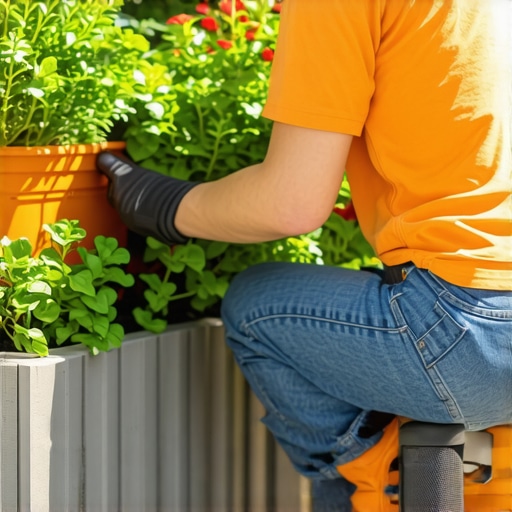
The biggest mistake I see—and the one that sent me to the floor in agony last June—is the ‘long reach.’ When you stand up and bend over a flower bed to pull a weed that’s just a little too far away, you’re turning your spine into a long, vulnerable lever. I remember trying to yank a particularly stubborn dandelion while standing; I was leaning over a row of hostas, reaching about two feet past my comfortable range. I felt that sickening ‘twinge’ instantly. Now, I use the half-kneeling position. By putting one knee on a thick foam pad and keeping the other foot flat, I can get my center of gravity right over the work. This keeps the load off the lumbar discs and allows the hips to do the stabilizing. 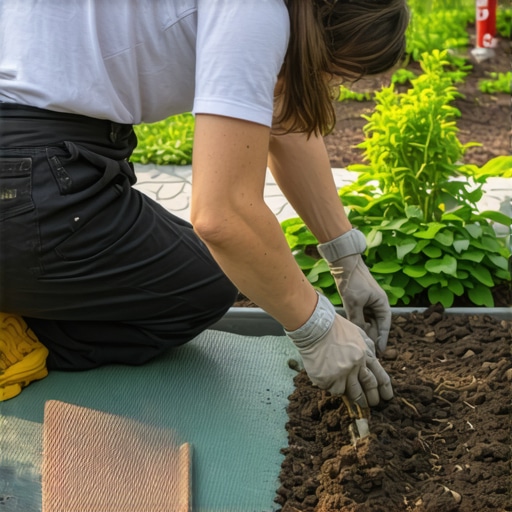
Keep your tools within your personal power zone
Think of your body like a crane. A crane is strongest when the weight is close to its center; the further out the arm extends, the more likely it is to tip or break. Your spine works exactly the same way. When I’m hauling bags of mulch or heavy pots, I treat them like gold—I keep them hugged tight to my chest. It sounds simple, but the best way to carry a heavy grocery bag or a bag of soil is to eliminate the gap between the object and your torso. If you’re reaching out with straight arms to lift a flat of pansies, you’re multiplying the force on your lower back by a factor of ten. I’ve started bringing my wheelbarrow right into the beds with me, even if it means moving a few decorative rocks, just to keep my ‘reach’ to a minimum.
Stop trying to be a human statue
There’s a common myth that a ‘strong core’ means your torso should never move. I used to garden with my abs so tight I could barely breathe, thinking I was protecting myself. In reality, why your strong core might actually be too rigid is a major reason for mid-back fatigue. Your spine needs to be able to micro-adjust. Instead of bracing like you’re about to be punched, think about ‘active’ stability. This involves strengthening your glutes to take the pressure off your spine so your hips provide the power while your back stays fluid. If you feel yourself getting stiff, don’t wait for the pain to start.
The five-minute rule for spinal decompression
Every twenty minutes, I set a timer on my watch. When it goes off, I drop the trowel and stand up. I do a few gentle chest openers and a quick walk around the yard. This isn’t just about ‘resting’; it’s about rehydrating the discs in your back. Constant compression from leaning over ‘squeezes’ the fluid out of your spinal cushions. Stepping away for a moment allows that pressure to equalize. If I’ve been particularly deep in the weeds—literally—I’ll perform the 5-minute reset for a stiff lumbar spine before I even think about moving to the next section of the garden. Last weekend, I spent four hours clearing a brush line using this method, and I woke up the next morning feeling like I’d just gone for a light walk, not like I’d been in a wrestling match with Mother Nature.
Stop trying to stretch your way out of a flare-up
Most of us have been conditioned to believe that ‘tightness’ is a muscle that simply needs to be elongated. I used to spend my garden breaks doing deep forward folds, trying to touch my toes to ‘loosen up’ my lumbar spine. It felt good for about thirty seconds, but then the pain would return with a vengeance. Here is the contrarian truth: why stretching a tight muscle isnt always the answer when your body is using that tension as a secondary splint. If your brain senses instability in your spinal segments, it will lock down the surrounding muscles to prevent a catastrophic injury. When you force a stretch into that protective guard, you’re essentially ripping the bandages off a wound before it’s healed. This is exactly why static stretching might be prolonging your back pain for many of us who suffer from chronic gardening issues.
Your tightness might be a protective shield
Instead of pulling on your muscles like rubber bands, we need to address the underlying neurological signal. This is where enhance mobility naturally with chiropractic care becomes a game-changer. Rather than forcing the muscle to change length, a targeted adjustment resets the ‘thermostat’ of your nervous system, telling those guarding muscles they can finally relax. I’ve seen so many people fall into the ‘Oops’ factor of aggressive foam rolling or deep yoga poses right after a heavy day of mulching, only to find themselves unable to roll out of bed the next morning. According to research by Dr. Stuart McGill, a world-renowned spine biomechanist, ‘passive’ stretching of a sensitized disc can actually increase the risk of herniation by creating micro-instabilities. 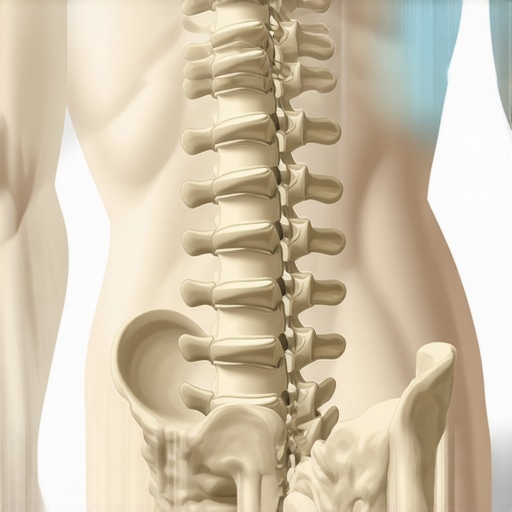
Why is standing still more painful than actual digging?
It’s a common frustration: you can haul bags of soil for an hour, but five minutes of standing still to talk to a neighbor makes your lower back throb. This is due to static loading. When you are moving, your muscles act as pumps, circulating fluid and changing the pressure points on your discs. When you stand still, the weight of your torso settles into the same few millimeters of tissue for too long. To counter this, I focus on mobility mastery expert tips for back pain prevention and recovery that involve dynamic shifting rather than static poses. I also had to realize that why your perfect posture is actually making you stiff because trying to maintain a military-straight spine actually exhausts the small stabilizer muscles, leading to an inevitable collapse later on. Have you ever fallen into this ‘stretch-and-snap’ trap where you thought you were helping but made it worse? Let me know in the comments. We’re in this together, and unlearning these old myths is the first step toward a garden season that doesn’t end in the chiropractor’s waiting room.
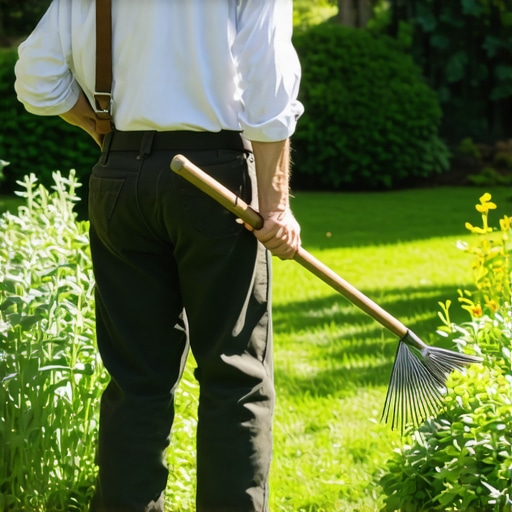
I realized recently that the tools we use are often our own worst enemies. Most standard trowels and cultivators are designed for people with the flexibility of a circus performer. If you have any history of lumbar stiffness, using a short-handled shovel forces you into a perpetual state of spinal flexion. This is why I made the switch to long-handled stand-up weeders. Specifically, the Fiskars 4-claw model has been a lifesaver for me. It allows me to stay completely vertical, using my foot and a lever system to eject weeds rather than my lower back. This kind of equipment shift is one of the most effective restore your back mobility proven chiropractic strategies because it prevents the micro-trauma from happening in the first place.
Your choice of footwear is wrecking your spinal alignment
We often think about our hands while gardening, but our feet are the foundation of our entire spine. I used to head out to the flower beds in old, worn-out flip-flops or flat-soled sneakers. I didn’t realize that why walking in flat shoes might be worsening your alignment was the secret reason for my post-gardening hip pain. When your arches collapse, it creates a kinetic chain reaction that tilts your pelvis and puts extra pressure on your L5-S1 disc. Now, I wear supportive hiking boots even for light weeding. The ankle support and rigid sole help maintain a neutral gait, which is crucial because why walking on concrete is harder on your spine than you think applies even to the hard-packed soil of your garden paths. If you wouldn’t run a marathon in flip-flops, don’t spend four hours hauling mulch in them.
How can I keep my back healthy season after season?
Maintenance isn’t just about the work you do in the dirt; it’s about the prep work you do in the kitchen. Every single morning before I head out to the yard, I perform the 3-minute morning routine to lubricate your joints. Think of your spinal discs like sponges; they need movement to ‘soak up’ hydration and become resilient. If you go from a stiff seated position at breakfast straight into a deep squat in the garden, you’re asking for a flare-up. Beyond the morning prep, you should consider how enhance mobility naturally with chiropractic care can act as a preventative tune-up. A study published in Applied Ergonomics (2021) highlighted that tools with adjustable, ergonomic handle lengths can reduce repetitive spinal compression by up to 25%. I predict that in the next few years, we’ll see ‘gardening exoskins’—lightweight, wearable compression gear with built-in tension bands—becoming a staple for older hobbyists to help assist with the heavy lifting and squatting phases of yard work.
If you want to revitalize your mobility for the long haul, you have to treat your gardening like an athletic event. This means warming up, using the right gear, and cooling down correctly. I’ve found that mobility mastery expert tips for back pain prevention and recovery are only effective if you actually apply them consistently. My challenge to you this weekend: pick one tool you use every time—your trowel, your rake, or your shears—and replace it with an ergonomic version that allows for a more neutral wrist and spine position. You’ll be shocked at how much further you can go when your equipment isn’t fighting your anatomy. We aren’t just growing flowers here; we’re cultivating a lifestyle that doesn’t end in a heating pad and a dark room.
Lessons I Had to Learn the Hard Way in the Dirt
Looking back at my years of struggle, I realized a few fundamental truths that changed my relationship with my backyard. First, I had to accept that pain is a loud signal, not a badge of honor. If you feel a creeping tightness in your lower back, your body is begging you to change your posture immediately. I also learned that the most ‘innocent’ tasks—like pruning a small bush or deadheading marigolds—often cause the most damage because we stop paying attention to our core stability when the work feels light. Finally, I stopped viewing my provider as an emergency resource and started seeing them as a performance coach. Learning how to enhance mobility naturally with chiropractic care is what keeps me agile enough to handle the peak planting season without the usual week of recovery.
Tools That Keep Me Out of the Heating Pad Zone
If you want to stay in the garden longer, you have to let your equipment do the heavy lifting for you. I swear by my extra-thick foam kneeling pad; it’s the difference between a happy spine and three days of lower body stiffness. I also suggest investing in high-quality raised beds to bring the work closer to your chest level. For those mornings when you feel a bit rusty before you even head outside, I always rely on the 3-minute morning routine to lubricate your joints. These small shifts are the real boost your back health simple yet effective chiropractic hacks that make a long-term difference for hobbyists of any age.
Reclaiming Your Place Among the Roses
Gardening should be your sanctuary, not a source of physical dread. By integrating these mobility mastery expert tips for back pain prevention and recovery, you aren’t just protecting your spine; you’re ensuring that you can keep doing what you love for decades to come. Don’t let the fear of a flare-up keep you indoors this spring. You now have the techniques and the mindset needed to restore your back mobility and get back to the soil where you belong. What’s the one tool or specific movement that always seems to trigger your back stiffness? Let’s troubleshoot your garden setup together in the comments below.