How to get out of bed without that morning back twinge
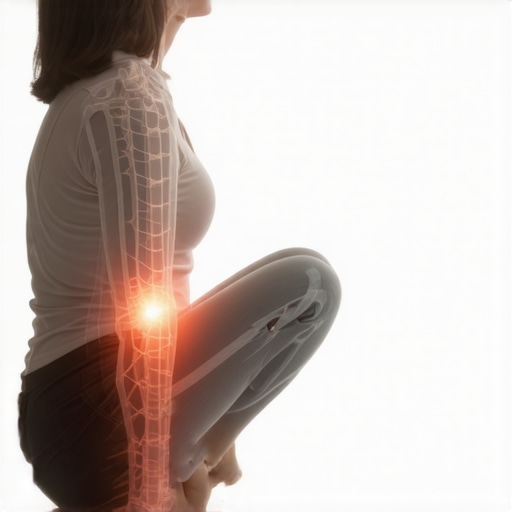
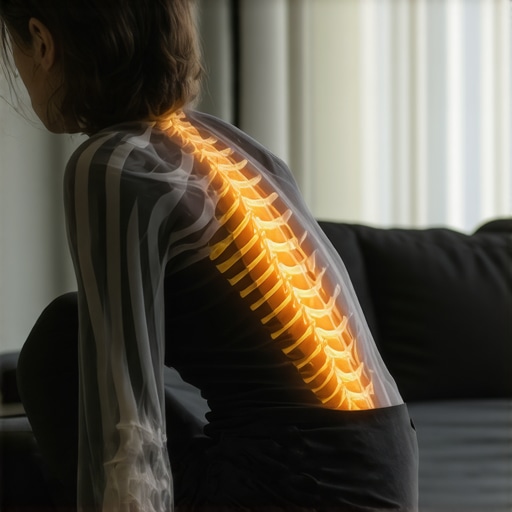
I’ll never forget the Tuesday morning I reached for my phone to snooze the alarm and felt my lower back seize up like a rusted engine. I wasn’t doing anything heroic. I wasn’t lifting a heavy crate or sprinting for a bus. I was just… waking up. I ended up stuck on the floor for twenty minutes, trying to figure out how to breathe without a lightning bolt of pain shooting down my leg. I spent three days horizontal because I didn’t respect the way my spine transitions from a state of rest to a state of gravity. That was my rock bottom. If you’re here, you probably know that feeling—the ‘old man’ groan you make before you’ve even had a sip of coffee. Today, we’re fixing your exit strategy. I’m going to show you exactly how to navigate those first thirty seconds of your day so you can actually stand up straight without that dreaded morning twinge.
Stop rolling out of bed like a sack of potatoes
Most of us treat our bodies like a ragdoll when the alarm goes off. We twist, we lunge, and we put a massive amount of sheer force on our lumbar discs before they’ve even had a chance to ‘rehydrate’ after a long night. I used to think I was just ‘getting on in years,’ but the truth is that how your sleeping position dictates morning back stiffness is only one piece of the puzzle. The real culprit is your morning transition. If you’re just throwing your legs over the side of the mattress and hoping for the best, you’re playing a dangerous game with your vertebrae. It’s a harsh reality, but according to research published in The Lancet, lower back pain remains the single leading cause of disability worldwide, often exacerbated by the cumulative effect of poor mechanical habits we repeat every single day.
Is a morning stretch actually worth the hype?
You might be skeptical. I certainly was. I used to think the answer was just ‘more yoga’ or spending a fortune on a new mattress. But the reality is that the proper way to get out of bed to protect your discs has almost nothing to do with how flexible you are and everything to do with simple physics. Have you ever felt that sudden, sharp ‘catch’ in your lower back the moment your feet hit the carpet? I want to know if this is a daily struggle for you, because you aren’t alone.
My biggest mistake was trusting gravity
Early on in my journey toward a pain-free life, I made the classic error of thinking that if I just moved faster, the pain wouldn’t have time to settle in. I’d spring out of bed like a jack-in-the-box, thinking momentum was my friend. Big mistake. That sudden vertical pressure on cold, stiff joints is a recipe for a mid-back spasm. Instead, I had to learn about the 30-second morning move to hydrate your spinal discs, which completely changed the game for me. It’s about gentle lubrication and spinal hygiene, not forceful stretching. We often forget that back pain recovery starts with the small, smart choices you make before you even leave the bedroom. It’s time to stop the ‘jerk and twist’ and start moving with intention. Let’s dive into the ‘Log Roll’—the one mechanical move that will save your spine this week.
Master the log roll to save your lumbar
Think of your spine as a delicate stack of wet dinner plates. If you try to pull one out from the middle with a quick, twisting motion, the whole stack risks cracking under the pressure. This is exactly what happens when you lunge out of bed. Instead, you need to move your torso as a single, solid unit. This is the ‘Log Roll.’ Before your feet even touch the floor, you must transition from your back to your side by moving your shoulders, hips, and knees at the exact same time. By keeping your spine neutral, you avoid the ‘sheer force’ that grinds those cold vertebrae together. I remember a particularly cold morning last winter when I forgot this rule. I was rushing to catch a flight and did the classic ‘sit-up’ move to reach my phone. That familiar, sickening pop in my lower back sent me straight back to the pillow. I spent the rest of my trip walking with a gingerly limp, a painful reminder that boost your back health simple yet effective chiropractic hacks are only effective if you actually use them. 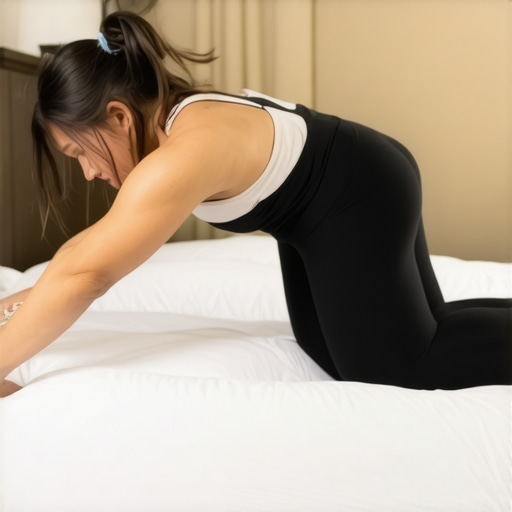
Turn your body like a solid unit
The secret is in the knees. While lying on your back, gently bend both knees so your feet are flat on the mattress. This takes the immediate tension off your hip flexors, which are often the hidden culprits behind that morning arch. From here, roll onto your side. Do not let your shoulders lead the way while your hips stay flat—that’s a recipe for a facet joint sprain. You want to feel like a rolling pin. If you’ve been struggling with limited range of motion, you might find that restore your back mobility proven chiropractic strategies can help loosen the tissues that make this rotation feel difficult. Once you are on your side, you are halfway to safety.
The leg lever trick for zero-strain sitting
Now comes the most critical part of the exit strategy: using your legs as a counterweight. As you lie on your side, slowly scoot toward the edge of the bed. In one fluid motion, drop your feet off the side of the mattress while simultaneously pushing up with your bottom elbow and top hand. Your legs act like a lever, swinging your upper body into a seated position without requiring your back muscles to do the heavy lifting. This is a fundamental part of revitalize your mobility proven strategies for back pain relief because it relies on physics rather than raw muscle power. If you feel a ‘catch’ here, it’s usually because you’ve allowed your mid-back to twist.
Bracing your core is your internal seatbelt
Before you even think about standing up from the edge of the bed, you need to engage your internal support system. I like to imagine someone is about to poke me in the stomach—that slight tensing of the midsection is your ‘bracing.’ It creates intra-abdominal pressure that acts like a natural weightlifting belt. Many people find that why your core routine is failing your spine is often due to a lack of this simple, functional engagement during daily transitions. Hold that brace, plant your feet firmly on the ground, and push through your heels to stand. By following this sequence, you’ve protected your discs during their most vulnerable window of the day.
Your ‘perfect’ posture is probably making you stiffer
Most people believe that to fix back pain, they need to stand as straight as a military cadet. I spent years trying to maintain that ‘chest out, shoulders back’ rigidity, only to find my mid-back feeling more like a block of concrete than a living organism. Here is the contrarian truth: a static ‘perfect’ posture is a myth. Our spines are designed for movement, not for being frozen in a specific alignment. When you force yourself into what you think is a good position, you often create unnecessary muscular tension. I’ve seen so many patients realize that why your perfect posture is actually making you stiff is because you are fighting your body’s natural curves. Instead of ‘sitting straight,’ you should be focused on ‘sitting next’—meaning your best posture is your next posture. Movement is the only real solution to spinal stagnation.
The mistake of the permanent core brace
We’ve all heard that a strong core is the ultimate shield against injury. While that’s true, there’s a massive ‘oops’ factor that most beginners miss: over-bracing. I used to walk around with my abs constantly clenched, thinking I was protecting my discs. In reality, I was just increasing the internal pressure on my spine and restricting my breathing. Research published in the Journal of Electromyography and Kinesiology suggests that excessive co-contraction of the trunk muscles can actually lead to increased spinal loading and potentially exacerbate disc issues rather than solve them. It turns out that why your strong core might actually be too rigid is a nuance that even seasoned athletes overlook. You need a core that reacts to movement, not one that acts like a permanent cast. Have you ever fallen into this trap of ‘over-protecting’ your back? Let me know in the comments.
Why does your neck hurt when your feet are the real culprit?
The most sophisticated trap in spinal health is looking only at where it hurts. This is what we call the kinetic chain. If your ankles are locked up or your arches have collapsed, your pelvis has to tilt to compensate. That tilt travels up the spine until your neck has to crane forward just to keep your eyes level with the horizon. This is the link between ankle mobility and lower back stability that most people ignore. I’ve had cases where we spent weeks on neck adjustments with only temporary relief, only to find the permanent fix by addressing a stiff heel. This is exactly why we look at your feet when your neck hurts; the body is a single integrated system, not a collection of isolated parts.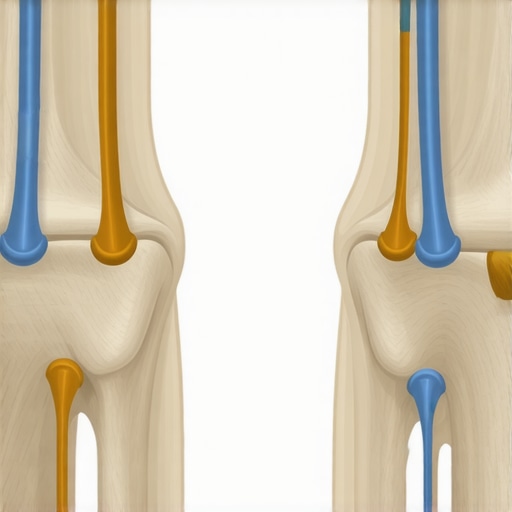
The ‘oops’ factor of stretching through the pain
The biggest mistake I see in my practice is the ‘hamstring obsession.’ People feel a pull in their lower back and immediately start cranking on their hamstrings, thinking more flexibility will solve the problem. But here’s the advanced nuance: sometimes your hamstrings are tight because they are trying to stabilize a weak pelvis. If you stretch away that ‘useful’ tension without building stability elsewhere, you’re essentially pulling the kickstand out from under a bike. You have to understand why stretching a tight muscle isn’t always the answer before you cause a secondary strain. Often, what feels like a ‘tight’ muscle is actually a ‘weak’ muscle screaming for help. Before you reach for your toes tomorrow morning, ask yourself if you’re actually solving the root cause or just stretching a symptom.I used to spend thousands on ergonomic gadgets that promised a pain-free life, only to realize I was sitting on a pile of expensive junk. The truth is, some of the most effective tools for your back cost less than a lunch out. For example, knowing the correct way to use a lumbar roll in your office chair is worth far more than a high-end mesh seat that doesn’t fit your individual curve. I personally keep a simple roll in my car and my office because it prevents that ‘slump’ that slowly kills your mobility over an eight-hour shift. If you aren’t using one, you’re essentially asking your ligaments to hold up your skeleton, which is a battle they will eventually lose.
A cheap lumbar roll beats an expensive chair
Most people make the mistake of thinking a standing desk is a cure-all. I’ve seen just as many hip issues from standing all day as I have back issues from sitting. The secret is knowing how to use a standing desk without hurting your hips, which involves shifting your weight and using a footrest to keep your pelvis neutral. I also highly recommend a high-quality foam roller, but with a major caveat: most people use it as a torture device rather than a mobility tool. If you are bruising your muscles, you aren’t helping. You should be focused on the proper way to use a foam roller on your upper back to open up the thoracic spine, which takes the massive ‘compensation load’ off your neck. 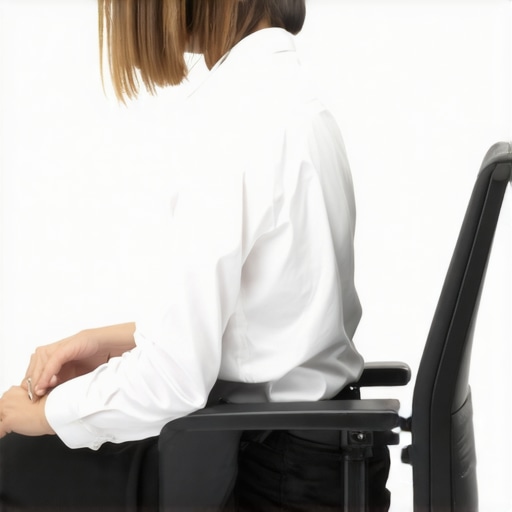
How do I maintain my spinal health for the long haul?
Maintenance isn’t about two-hour gym sessions; it’s about ‘spinal hygiene.’ I’ve adopted the ‘Big 3’ routine popularized by Dr. Stuart McGill in his book Back Mechanic. Dr. McGill is a world-renowned spine biomechanist who argues that building ‘stiffness’ in the core is actually more important than flexibility for long-term disc health. I personally swear by the bird dog variation that fixes wobbly core muscles because it teaches your spine to stay stable while your limbs move. It takes exactly four minutes, and I do it every single morning. This consistency is the only way to ensure the best exercises to keep your spine young actually yield results. If you skip the small stuff, the big adjustments won’t stick.
Smart sensors are the future of posture
Looking ahead, I predict we will move away from manual ‘posture checks’ and toward wearable haptic feedback. We are already seeing the emergence of small sensors that clip to your shirt and vibrate the second your shoulders roll forward. This real-time biofeedback is a game-changer for people who get ‘lost’ in their work and forget to move. It’s part of a broader trend where revitalize your mobility proven strategies for back pain relief become automated rather than a chore. Before we wrap up this journey, I want you to try one thing today: set a timer for 5:00 PM and perform the 5-minute routine to decompress your spine after work. Your future self will thank you for those few minutes of decompression.
The hard-won lessons from my horizontal days
After years of treating patients and dealing with my own flare-ups, I’ve realized that pain isn’t your enemy—it’s a messenger. One major lightbulb moment was discovering why walking on concrete is harder on your spine than you think; we often blame our beds for pain that actually started on the sidewalk. I also learned that if you can’t breathe while bracing, you’re just creating a pressure cooker in your abdomen. Understanding the connection between shallow breathing and back pain changed how I approach every single lift. Lastly, remember that your spine loves variety. Even the ‘best’ chair becomes a prison if you stay in it for four hours straight.
My non-negotiable toolkit for daily relief
I don’t believe in cluttering your home with gadgets, but these three items are worth their weight in gold. First, I always recommend the ‘Back Mechanic’ by Dr. Stuart McGill; it’s the most comprehensive guide to self-recovery I’ve ever read. Second, I use the bird dog variation that fixes wobbly core muscles every single morning to set my ‘internal corset.’ Finally, never underestimate a simple lumbar roll. It’s a low-tech fix that provides high-level protection for your discs during your commute.
Take that first step toward a fluid life
You don’t need to be an athlete to have a healthy spine; you just need to be a better advocate for your own mechanics. Every time you use the log roll or engage your core before standing, you are casting a vote for a future without that dreaded morning seize-up. Focus on mobility mastery expert tips for back pain prevention and recovery, and soon these movements will become second nature. You’ve got the knowledge—now it’s time to put it into practice. Which part of your morning routine do you think is the biggest culprit for your stiffness? Let me know in the comments below!