How to Use a Massage Ball to Release Hip Flexor Tension
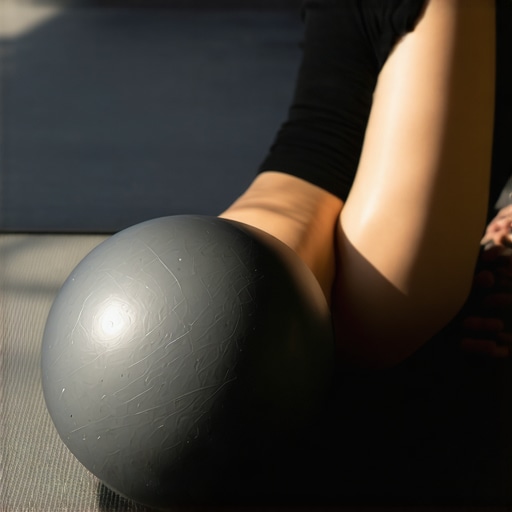
I remember the exact moment I realized I had become a human L-shape. I was trying to stand up after a two-hour conference call, and my hips felt like they had been fused together with industrial-strength epoxy. There was this sharp, angry tug right at the crease of my leg that made me catch my breath. I used to think I just needed more yoga, but the truth is, no amount of standard stretching could touch the knot buried deep in my psoas. If you’ve ever felt that same ‘locked’ sensation, you aren’t alone. Today, I’m going to show you how a simple, inexpensive rubber ball can do more for your mobility than a dozen fancy gadgets. [image_placeholder]
Why Your Hips Feel Like Rusty Door Hinges
My biggest mistake early on was thinking I could just stretch my way out of this. I spent hours on my living room floor doing lunges, yet I couldn’t understand why stretching your hamstrings won’t fix your lower back pain or the tension in my front. It felt like I was pulling on a knot instead of untying it. That’s because our bodies are masters of compensation. When you sit for hours, your hip flexors shorten and stay ‘on’ indefinitely. This is exactly why standing desks cause hip pain and how to fix it becomes a hot topic; even standing doesn’t always turn those muscles off. We need to go deeper than a stretch. We need to physically signal those tissues to release. A study published in the International Journal of Sports Physical Therapy found that self-myofascial release can increase range of motion by up to 10% almost instantly, which is a game-changer when you’re feeling stuck. Have you ever felt that sharp catch in your hip when you finally stand up after a long meeting? I’d love to hear about your experience in the comments.
Does a tiny rubber ball really work better than a $200 massage gun?
It sounds almost too simple to be true. How can a $10 lacrosse ball outperform a high-tech percussion device? In my experience, the ball allows for a specific type of sustained, static pressure that guns just can’t mimic. While a massage gun is great for blood flow, the massage ball allows you to ‘sink’ into the psoas and iliacus, forcing the nervous system to relax the guard. I’ve found that using it as part of a 3-step morning routine for hip mobility creates a much more lasting change than just vibrating the surface of the skin. If you’ve wondered why your hips feel locked after a long run or a long day at the office, the answer is often buried in those deep trigger points that only a targeted tool can reach. We’re about to move past the ‘why’ and get into the ‘how,’ so grab your ball and find a clear spot on the floor.
How to hunt down the psoas without guessing
Finding the right spot is like trying to find a specific key on a messy desk. You are looking for the ‘nook’ between your belly button and the bony protrusion on the front of your hip. I once spent twenty minutes rolling around like a confused puppy before I realized I was too far toward my midline. You want to be about two inches to the side of your navel and an inch down. This is the gateway to the psoas. Once you have got the ball—a lacrosse ball is my weapon of choice because it doesn’t squish under pressure—lie face down on the floor. Let the ball sink in. This isn’t a quick roll; it is a slow-motion excavation. Think of it as a deep-tissue conversation with a muscle that has been screaming for attention. If you find yourself holding your breath or tensing your shoulders, you are fighting the process and your body will guard itself. This is why learning how to breathe into your lower back to reduce muscle spasms is actually a prerequisite for hip work. If the diaphragm is tight, the psoas simply won’t budge.
Park the ball inside your hip bone
When you feel that deep, dull ache—the one that feels like a ‘good’ hurt—stay there. Don’t move yet. Imagine the ball is a hot stone slowly melting through a block of cold butter. This is the ‘sink’ phase. In my early days, I used to rush this and just mash the tissue, which only made me more sore the next day. Now, I wait at least thirty seconds before adding any movement. This patience allows the nervous system to stop seeing the ball as a threat. By staying still, you are effectively using restore your back mobility proven chiropractic strategies from the comfort of your living room floor.
Slide your way to freedom
Once the initial intensity drops, you can start ‘pinning and stretching.’ While keeping the weight on the ball, slowly straighten your leg on the same side as the tool. As your leg extends, the ball pins the psoas while the muscle is forced to lengthen underneath it. I remember the first time I actually got this sequence right; my leg gave a little involuntary twitch, and suddenly, my hip felt three inches longer. It was a messy process—I was sweating and probably making some very un-glamorous noises—but the ‘unlocked’ feeling when I stood up was undeniable. This technique helps reset the relationship between the front and back of your core. When these muscles finally stop their constant tug-of-war, you might finally understand why your glutes won’t fire and how to fix it, as the overactive hip flexors are no longer shutting down the muscles on the opposite side. If you need a little extra leverage, you can even incorporate the pelvic tilt trick for instant lumbar relief while the ball is pinned to create a more dynamic stretch in the deep tissue.
Stop stretching a muscle that is actually just tired
We have been conditioned to believe that if a muscle feels tight, we must stretch it until it yields. However, here is the contrarian truth: most ‘tight’ hip flexors aren’t actually short; they are exhausted. When your core is weak, your psoas pulls overtime to keep you upright. If you keep yanking on it with aggressive lunges, you are just aggravating an already overworked muscle. This is where mobility mastery expert tips for back pain prevention and recovery come into play. We need to stop the cycle of irritation. Dr. Stuart McGill, a world-renowned expert in spine biomechanics, has often noted that ‘stiffness’ is frequently a survival mechanism the body uses to create stability when it doesn’t feel safe. If you keep stretching that protection away without building strength, your brain will just lock the hip down even tighter the next day. Have you ever fallen into this trap? Let me know in the comments.
The sneaky way your ribs ruin your hip progress
I see this ‘oops’ factor every single week: the rib flare. If your ribs are jutting out while you use the lacrosse ball, you are actually arching your lower back and putting the psoas under even more tension. You cannot effectively release the front of the hip if the back of your spine is compressed. This is why I always emphasize understanding back pain a guide to better posture and mobility before you start digging into the deep tissue. You have to ‘stack’ your ribcage over your pelvis. If you don’t, you are just jamming the head of your femur into the hip socket, which can lead to labral tears or impingement over time.
Is it possible your ‘tight’ hips are actually protecting you?
For the more advanced movers, we have to talk about ‘protective tension.’ Sometimes the hip flexors feel like iron because your deep stabilizers are ‘off.’ If you spend all your time on the ball but ignore why your glute medius is more important than your abs for back health, you are only treating the symptom. A study in the Journal of Bodywork and Movement Therapies suggests that muscle tonus is often a neurological state rather than a physical change in tissue length. This means the ball is just a reset button, not the whole solution. To make the changes stick, you should follow your ball work with the dead bug variation that actually fixes lower back instability. This teaches your body that it can stay stable without relying on a gripped-up psoas. You might also find that why your pelvic floor matters for spinal stability is the missing link in your routine, as these deep systems work in tandem. If you have ever felt like you are making progress only to wake up stiff again, you are likely missing the stability component. Don’t make the bird dog mistake that puts stress on your spine by over-arching; keep that spine neutral and let the ball do the work while your breath keeps the system calm.
The gear I actually pack in my gym bag
I’ve tried the vibrating rollers, the $500 massage chairs, and the plastic hooks that look like medieval torture devices. None of them stay in my rotation like a standard, high-grip lacrosse ball. The reason is simple: density. A tennis ball is too soft—it yields to the muscle before the muscle yields to it. A baseball is too hard and slick, often sliding away just as you hit the sweet spot. I personally use a slightly ‘tacky’ rubber ball because it grips the skin, allowing for a shear force that helps restore your range how chiropractic care enhances movement by pulling the fascia as you move your leg. If you want to scale this up, try placing the ball on a yoga block or a thick book. This extra height allows your leg to drop further into extension, deepening the release without you having to press harder. It’s one of those boost your back health simple yet effective chiropractic hacks that makes a five-minute session feel like twenty.
How do I maintain these hip gains over time?
Consistency is the only ‘secret’ that actually works. You can’t undo eight hours of sitting with a single three-minute session on Tuesday. I treat my psoas release like brushing my teeth—it’s a non-negotiable part of my mobility mastery expert tips for back pain prevention and recovery. Dr. Kelly Starrett, author of Becoming a Supple Leopard, emphasizes that ‘all human beings should be able to perform basic maintenance on themselves.’ This mindset shifted everything for me. Instead of waiting for a flare-up, I use the ball every evening while I’m watching TV. If I feel a 4/10 on the ‘discomfort scale,’ I know I need to spend extra time there before it turns into a 9/10 back spasm. This proactive approach is exactly how revitalize your mobility proven strategies for back pain relief become a permanent part of your lifestyle rather than a temporary fix.
The future of personal mobility is biofeedback
I suspect we are moving toward a world where ‘smart’ apparel will track the tonicity of our deep stabilizers. I predict that in the next five years, we will see haptic-feedback wearables that vibrate when your psoas starts to grip from stress, serving as a real-time notification to breathe or move. Until then, we have to be our own sensors. You can learn relieve neck back discomfort using these expert methods by simply paying attention to when your breath becomes shallow. That is your first sign the hips are locking up. If you want to take your progress to the next level, I challenge you to try the ‘weighted release’ tonight. Place a 10-pound kettlebell or a heavy book on top of your hip while you are lying on the ball. The added downward pressure forces a level of relaxation that body weight alone can’t reach. Give it a shot—just remember to keep breathing into your belly.
Why chasing the pain actually keeps you stiff
After years of trial and error, I realized that the ‘no pain, no gain’ mentality is a recipe for disaster when dealing with the psoas. If you dig too hard, your nervous system treats the lacrosse ball like a spear and tenses up to protect your vital organs. The real breakthrough comes when you learn to ‘melt’ rather than ‘mash.’ I have seen people find more relief in two minutes of gentle, diaphragmatic breathing than in twenty minutes of aggressive tissue work. It is about teaching the brain that the area is safe. This mindset is a core pillar of mobility mastery expert tips for back pain prevention and recovery. Another lightbulb moment was realizing my ‘hip pain’ was often just my lower back screaming for help because the hips were too glued down to rotate. Once I started using restore your back mobility proven chiropractic strategies to address both areas, the pieces finally started falling into place.
My non-negotiable toolkit for a happy spine
You do not need a home gym to fix your movement patterns; you just need the right leverage. I keep my routine extremely minimalist: a standard rubber lacrosse ball for deep psoas work, a yoga block to elevate my hips for better reach, and the ‘Supple Leopard’ methodology for understanding mechanics. These simple tools allow me to apply boost mobility ease pain chiropractic techniques unveiled from my living room. I also recommend keeping a foam roller nearby for broader strokes after you have finished the targeted ball work. If you are consistent, these humble tools become more powerful than any expensive electronic gadget. You can find more about these approaches in our understanding back pain a guide to better posture and mobility guide.
[image_placeholder_final]
Give your body permission to move again
The journey to better hip mobility is rarely a straight line. There will be days when you feel ‘locked’ again after a long flight or a high-stress week at the office. The difference now is that you are no longer guessing; you have a specific, actionable plan to handle the tension before it cascades into a crisis. By taking five minutes tonight to breathe and use the ball, you are choosing to revitalize your mobility proven strategies for back pain relief. Your body inherently wants to be efficient and move without restriction. You just have to provide the right physical signals to let go of old guarding patterns. I am excited for you to feel that ‘light’ sensation in your stride again. Have you ever tried using a massage ball and felt like the pressure was just too intense? Let me know how you adjusted your technique in the comments below!